Choosing a Metal Stamping Equipment Manufacturer for EV Battery Trays
Discover how selecting the right metal stamping equipment manufacturer impacts EV battery tray production. A technical case study on servo vs hydraulic presses.
The transition to 800V electric vehicle architectures in 2026 has forced battery enclosures to evolve from simple stamped steel pans into complex, crash-resistant structural components. Stamping these trays requires managing severe springback in 6000-series aluminum and DP980 dual-phase steel. For Tier-1 and Tier-2 suppliers, the decision of which metal stamping equipment manufacturer to partner with dictates whether a production line yields 98% Overall Equipment Effectiveness (OEE) or bleeds capital through die crashes and scrap.
The Engineering Bottleneck in EV Enclosure Stamping
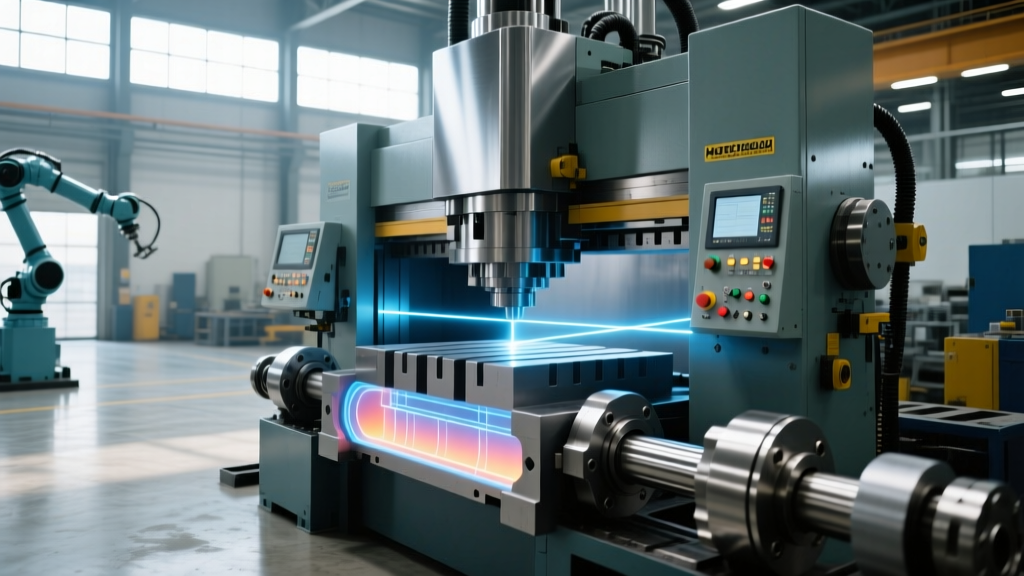
Modern battery trays span up to 2,200mm in length and require deep draws of up to 150mm. Traditional hydraulic presses struggle with the slide velocity control needed to prevent material tearing at the draw radii. Furthermore, the massive bed sizes required—often exceeding 4,000mm x 2,500mm—introduce significant deflection under load. If the press frame and slide are not engineered to compensate for this deflection, the die clearance varies across the bed, leading to inconsistent part quality and accelerated die wear.
2026 Material Spec Shift: OEMs are increasingly mandating Al 6061-T6 and 1.5mm DP980 steel for battery enclosures to meet updated IIHS side-pole impact standards. Stamping these alloys reliably requires a minimum 4,000-ton capacity, active deflection compensation, and programmable slide motion.Case Study: Upgrading to a Tier-1 Metal Stamping Equipment Manufacturer
A mid-western Tier-2 automotive supplier recently secured a $40M contract to stamp lower battery trays for a major EV startup. Their existing 1998 3,000-ton hydraulic line lacked the physical bed size (limited to 2,500mm x 1,500mm) and the motion control required for high-strength alloys. To fulfill the contract, they needed to procure a 5,000-ton press with a 4,000mm x 2,500mm bed. The procurement team evaluated three top-tier manufacturers to find the optimal balance of CapEx, energy efficiency, and forming capability.
Evaluating the Contenders
The selection process focused heavily on the manufacturer's ability to deliver active motion control and robust frame rigidity. Below is the comparative matrix used during the RFQ process.
| Manufacturer | Flagship Model (5000T Class) | Drive Type | Max Bed Size (mm) | Slide Motion Control | Base Price Estimate (USD) |
|---|---|---|---|---|---|
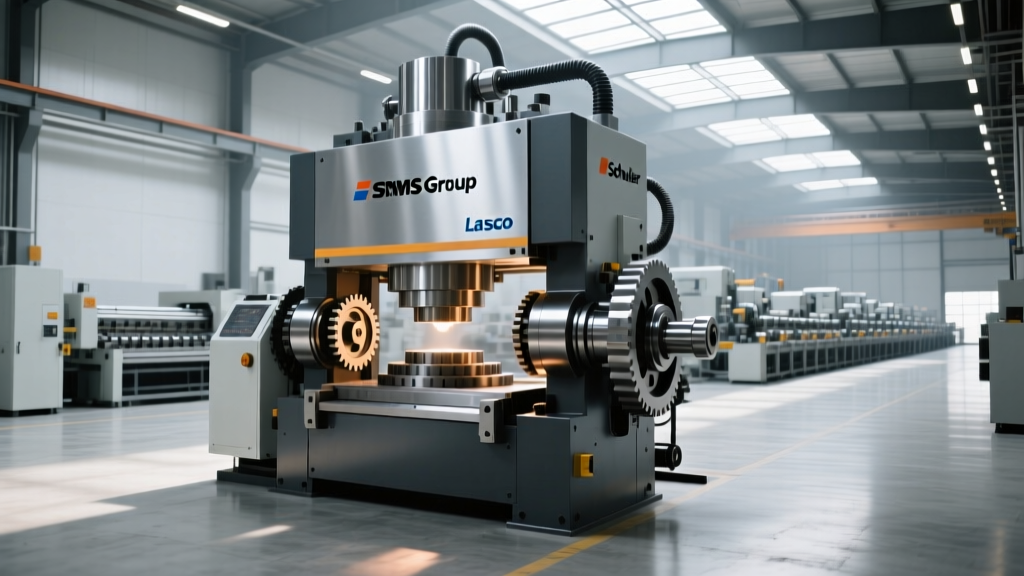
| Schuler Group | PSH 5000 (Hydraulic) | Hydraulic w/ CNC | 4200 x 2800 | Limited (Valve controlled) | $7,100,000 |
| Aida America | DSF-5000 | Direct Drive Servo | 4000 x 2500 | Fully Programmable | $8,400,000 |
| Nidec Minster | E2W-5000 | Servo / Link | 3800 x 2400 | Link-Optimized | $8,900,000 |
The supplier ultimately selected the metal stamping equipment manufacturer offering the direct-drive servo technology. While the initial CapEx was $1.3M higher than the hydraulic alternative, the total cost of ownership (TCO) and part quality metrics heavily favored the servo architecture for this specific application.
Technical Deep Dive: Servo Motion Profiles vs. Hydraulic Dwell
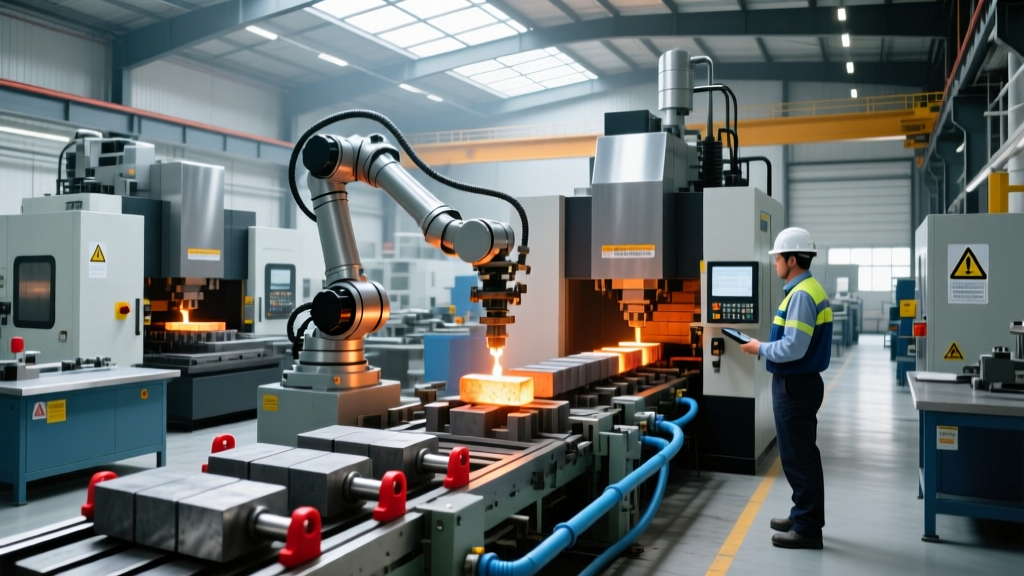
The primary technical advantage of the selected servo press lies in its programmable slide motion profile. When stamping DP980 steel, springback is a massive issue. A standard hydraulic press follows a fixed velocity curve, meaning the material is subjected to rapid deformation and immediate release, resulting in 8 to 12 degrees of springback. This typically requires secondary coining operations or massive over-bending in the die.
By utilizing a servo-driven system, the engineering team programmed a custom motion profile specifically for the battery tray:
- Rapid Approach: Slide drops at 400mm/s until 50mm above the material.
- Controlled Forming: Velocity drops to 80mm/s during the actual draw to prevent tearing at the radii.
- Bottom Dead Center (BDC) Dwell: The slide holds at maximum tonnage (5,000T) for 1.5 seconds. This dwell time allows the high-strength steel lattice to relax, permanently setting the bend and reducing springback to less than 2 degrees.
- Fast Return: Slide retracts at 500mm/s to maximize strokes per minute (SPM).
"According to data from the Precision Metalforming Association, servo press adoption in high-strength automotive stamping has reduced die tryout times by up to 35%, primarily because engineers can tune the press motion to the material rather than relying entirely on die geometry to compensate for press limitations."
CapEx Breakdown and Implementation Timeline
Procuring heavy forging and stamping equipment requires rigorous project management. The supplier mapped out a 56-week timeline from Purchase Order (PO) to Site Acceptance Test (SAT). Below is the actualized CapEx breakdown for the complete stamping cell.
- Main Servo Press (5,000T): $8,400,000
- Heavy-Duty Coil Feed Line (up to 10mm thick, 2000mm wide): $1,650,000
- Automated Destacking and Part Transfer (Güdel gantry system): $1,100,000
- Foundation Pit Excavation and Vibration Isolation: $450,000
- Rigging, Installation, and Calibration: $380,000
- Total Project CapEx: $11,980,000
Timeline Milestones
The lead time for a 5,000-ton class press from a premium metal stamping equipment manufacturer is substantial. The supplier adhered to the following critical path:
- Weeks 1-12: Mechanical and electrical engineering, die simulation integration (AutoForm), and control panel customization.
- Weeks 13-38: Casting of the main frame components, machining of the slide and bed, and assembly of the servo motor arrays.
- Weeks 39-42: Factory Acceptance Test (FAT) at the manufacturer's facility, including no-load run-offs and safety system validation.
- Weeks 43-48: Disassembly, ocean/ground freight shipping, and delivery to the Ohio production facility.
- Weeks 49-56: Reassembly, power integration, Site Acceptance Test (SAT), and initial die tryouts.
Procurement Framework: 4-Point Evaluation Matrix
When evaluating a metal stamping equipment manufacturer for large-format EV components, procurement and engineering teams must look beyond basic tonnage and bed size. Use this 4-point framework during the RFQ process to ensure the equipment meets modern metallurgical demands.
1. Active Deflection Compensation
At 5,000 tons of force, even the thickest steel frames will deflect. Require the manufacturer to provide active hydraulic crowning in the bed and slide. Passive mechanical crowning is insufficient for DP980 steel, as the material thickness variations require dynamic, real-time adjustment to maintain uniform die clearance across a 4-meter bed.
2. Energy Regeneration Capabilities
A 5,000-ton hydraulic press running continuously can consume upwards of 400 kWh per hour. Modern servo presses from top-tier manufacturers feature regenerative braking systems that capture kinetic energy during the deceleration of the massive slide and feed it back into the plant's grid or store it in capacitor banks. This can reduce net energy consumption by 20% to 30% compared to traditional hydraulics.
3. Die Protection and Tonnage Monitoring
EV battery tray dies cost between $1.5M and $3M. The press must include integrated, high-resolution tonnage monitors at all four corners of the slide. If an imbalance exceeding 5% is detected—indicating a potential slug pull or material misfeed—the press must be capable of executing an emergency stop within 20 milliseconds to prevent catastrophic die damage.
4. Local Service and Spare Parts Inventory
A downed 5,000-ton press halts the entire EV assembly supply chain. Evaluate the manufacturer's regional support infrastructure. Do they maintain a localized inventory of critical spare parts, such as servo drive amplifiers and main gearbox bearings? Require a contractual guarantee of 24-hour on-site technical response and 48-hour parts delivery for critical failures.
Selecting the right partner is not merely a purchasing decision; it is a foundational engineering choice that dictates the viability of high-strength alloy stamping for the next decade of electric vehicle manufacturing.