2026 Food Packaging Machinery Trends: Smart Multi-Head Weighers
Discover 2026 innovations in multi-head weigher systems for snack foods. Learn how AI and machine vision are transforming food packaging machinery efficiency.
The Combinatorial Core of Modern Snack Packaging
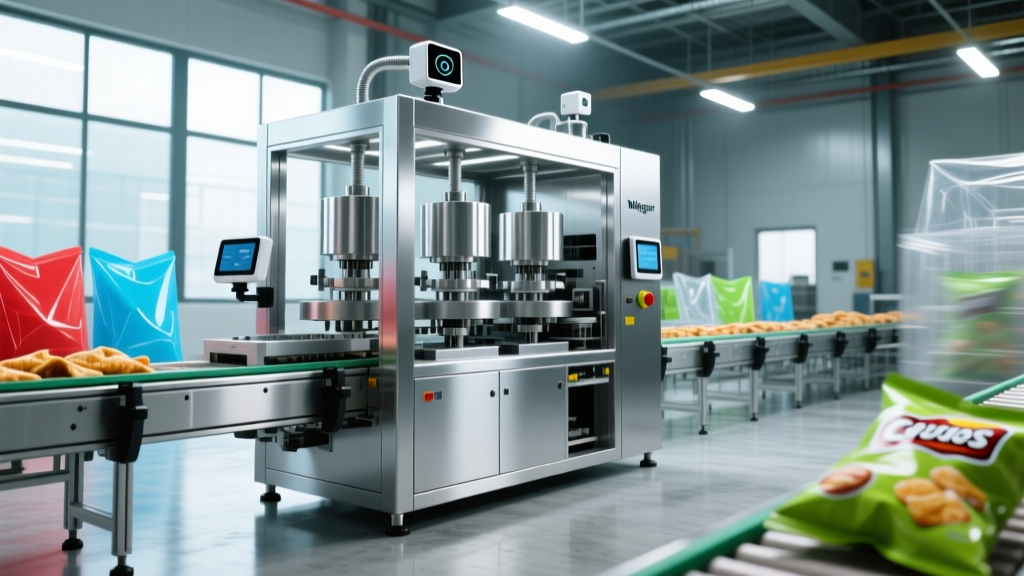
Snack food packaging presents a unique triad of engineering challenges: extreme product fragility, irregular geometries, and high-velocity throughput requirements. Whether handling ridged potato chips, seasoned plantain crisps, or mixed trail nuts, the multi-head weigher (also known as a combinational weigher) remains the undisputed bottleneck and brain of the line. As of 2026, advancements in food packaging machinery have shifted the multi-head weigher from a purely mechanical dispensing tool into an AI-driven, edge-computing node capable of real-time quality assurance and predictive maintenance.
Traditional volumetric fillers and auger systems simply cannot match the speed and accuracy required for high-value snack foods. A standard 14-head multi-head weigher calculates 16,384 possible weight combinations in under 0.1 seconds to find the exact match for a target bag weight. Modern 24-head and 32-head configurations push this combinatorial math into the millions, virtually eliminating product "giveaway" while sustaining speeds upward of 210 bags per minute (bpm).
Algorithmic Evolution: From Standard Logic to AI Filtering
Early combinational algorithms relied on simple nearest-weight calculations. If the target was 150g, the system selected the hopper combination closest to 150g without exceeding it. In 2026, AI-enhanced neural networks govern the dispensing logic, factoring in variables beyond mere mass.
Machine Vision and Pre-Weigh Inspection
The most significant leap in recent food packaging machinery innovation is the integration of inline machine vision directly above the dispersion table. High-speed CMOS cameras inspect the product stream before it enters the weigh hoppers. The AI algorithm is trained to recognize and reject broken chips, excessive clumping, or foreign debris. If a hopper receives a cluster of fused, seasoning-caked chips that might cause a jam in the forming tube below, the system flags that specific hopper and excludes it from the combinatorial calculation for that cycle, automatically triggering a micro-purge.
Expert Insight: The Cost of GiveawayConsider a mid-sized snack producer running 100 bags per minute, across two 8-hour shifts, 5 days a week. That equates to 48,000 bags per day. If an older weigher operates with a 4-gram giveaway per bag to ensure compliance, the plant loses 192 kg of product daily. At a wholesale snack valuation of $6/kg, that giveaway costs $1,152 per day, or roughly $288,000 annually. Upgrading to a 2026-era 24-head system with electromagnetic force restoration (EMFR) load cells routinely drops giveaway to 0.8 grams, yielding an ROI in under seven months.
Sensor Technology: Strain Gauge vs. EMFR Load Cells
The accuracy of any multi-head weigher is dictated by its load cells. Historically, strain gauge load cells were the industry standard. While cost-effective, they are susceptible to temperature fluctuations and mechanical creep, requiring frequent calibration in environments where washdowns cause rapid thermal shifts.
The 2026 benchmark for premium snack packaging is the Electromagnetic Force Restoration (EMFR) load cell. EMFR technology uses a magnetic field to balance the weighing pan, measuring the electrical current required to maintain equilibrium. This eliminates physical metal fatigue and delivers a resolution down to 0.01g, compared to the 0.1g resolution of high-end strain gauges. For snack foods where a single macadamia nut or large tortilla chip can weigh 8 to 12 grams, this 10x improvement in resolution is the difference between profitable compliance and chronic overfilling.
Hygienic Design and IP69K Washdown Standards
Snack foods are heavily seasoned. Cheese dust, ranch powder, and spicy oleoresins are highly hygroscopic and electrostatically charged. They coat optical sensors, bind to stepper motors, and create acidic environments when mixed with washdown water. According to guidelines supported by the FDA's Food Safety Modernization Act (FSMA), equipment must be designed to prevent harborage points for pathogens like Salmonella, which thrive in dusty, low-moisture environments.
Warning: The IP69K Mandate for Seasoned SnacksDo not specify IP65 or IP66 rated weighers for heavily seasoned snack lines. IP65 only protects against low-pressure water jets. The aggressive, high-temperature (80°C+), high-pressure (100 bar) washdowns required to remove caked cheese dust demand IP69K certification. Furthermore, specify 316L stainless steel for the contact parts and chassis; 304 stainless steel will suffer from pitting corrosion when exposed to the chlorides in standard quaternary ammonium sanitizers used in snack plants.
Piezoelectric vs. Electromechanical Feeders
To move product from the center dispersion cone to the radial feed trays, modern systems utilize piezoelectric vibratory feeders rather than traditional electromagnetic drives. Piezoelectric feeders operate at higher frequencies with lower amplitudes. This provides a gentler, more controlled "flow" of fragile items like pita chips or kettle-cooked potato chips, drastically reducing the fracture rate that occurs when products crash into the weigh buckets.
2026 Comparison Matrix: Standard vs. AI-Enhanced Multi-Head Weighers
When evaluating food packaging machinery for a new snack line or a facility upgrade, understanding the capability gap between legacy systems and current-generation smart weighers is critical. The following matrix outlines the operational differences based on current industry benchmarks.
| Feature / Metric | Legacy 14-Head (Strain Gauge) | 2026 Smart 24-Head (EMFR + AI) |
|---|---|---|
| Combinatorial Calculations | 16,384 per cycle | 16,777,216+ per cycle |
| Average Giveaway (Target 150g) | 3.5g - 5.0g | 0.5g - 1.2g |
| Maximum Throughput | 90 - 110 bpm | 180 - 220 bpm |
| Defect / Clump Rejection | None (Manual inspection required) | Inline AI Vision Auto-Purge |
| Load Cell Calibration | Weekly manual calibration | Continuous auto-calibration via IoT |
| Typical Capital Cost (USD) | $45,000 - $60,000 | $110,000 - $145,000 |
Predictive Maintenance and Edge Telemetry
Unplanned downtime on a high-speed snack line costs thousands of dollars per hour in lost throughput and wasted upstream product. The latest generation of multi-head weighers, championed by engineering leaders documented via Packaging Machinery Manufacturers Institute (PMMI) reports, feature embedded IoT telemetry. Accelerometers and acoustic emission sensors are mounted directly to the stepper motors driving the weigh bucket gates.
By analyzing the vibration signature of a gate opening and closing, the edge-computing module can detect the microscopic increase in friction that indicates bearing wear or seasoning buildup weeks before a catastrophic failure occurs. The system automatically generates a maintenance ticket, ordering the specific replacement gate assembly and scheduling the swap during the next planned CIP (Clean-In-Place) washdown cycle.
Digital Twin Integration
For enterprise-level snack manufacturers, 2026 has seen the rollout of digital twin technology for packaging lines. The multi-head weigher's PLC (Programmable Logic Controller) streams real-time operational data to a cloud-based digital replica. Packaging engineers can simulate the introduction of a new, highly irregular snack shape—such as a 3D-printed vegetable crisp—into the digital twin. The software predicts hopper jam probabilities and automatically adjusts the piezoelectric feeder frequencies and gate open-times before the physical product ever hits the factory floor.
Purchasing Framework: Specifying Your Multi-Head Weigher
When procuring a multi-head weigher for snack food applications, avoid the trap of over-specifying head counts while under-specifying material handling. Use this decision framework to guide your capital expenditure:
- Define the Product Fragility Index: If packaging delicate items like cheese puffs or thin tortilla chips, mandate piezoelectric feeders and dimpled, soft-touch polyurethane bucket liners to absorb impact energy. Standard stainless steel buckets will shatter the product.
- Calculate the Seasoning Load: For products with >5% seasoning by weight (e.g., heavy nacho cheese), require IP69K certification, 316L stainless steel construction, and enclosed, purge-vented optical sensors to prevent dust-induced false readings.
- Map the Downstream Synchronization: A 24-head weigher capable of 210 bpm is useless if your downstream VFFS (Vertical Form Fill Seal) machine maxes out at 120 bpm. Ensure the weigher's PLC supports high-speed Ethernet/IP or PROFINET protocols to dynamically throttle its combinatorial logic to the exact pacing of the bagger, preventing product backlog in the discharge chute.
- Demand Open-Source Data Access: Do not accept proprietary, locked data ecosystems. Ensure the OEM provides unencrypted MQTT or OPC-UA data streams so your plant's existing SCADA system can ingest giveaway metrics and OEE (Overall Equipment Effectiveness) data without expensive middleware licenses.
The evolution of the multi-head weigher from a simple mechanical scale to an intelligent, vision-guided node represents the cutting edge of food packaging machinery. By prioritizing EMFR load cells, AI-driven defect rejection, and rigorous IP69K hygienic design, snack food manufacturers can secure a massive competitive advantage through reduced giveaway, lower fracture rates, and near-zero unplanned downtime.