Budgeting Triangle Package Machinery Company Pharma Blister Lines
Analyze 2026 CapEx and OpEx for pharmaceutical blister lines integrating Triangle Package Machinery Company secondary and VFFS equipment.
The Blister vs. Pouch Paradigm: Clarifying the OEM Landscape
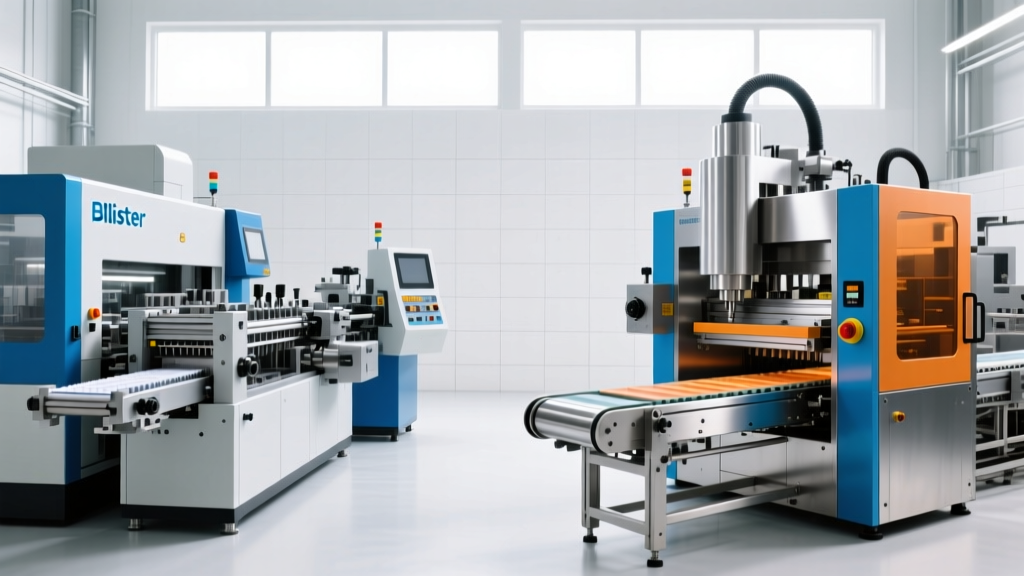
When pharmaceutical packaging engineers and procurement teams search for Triangle Package Machinery Company in the context of blister packaging, a critical industry misconception often arises. Triangle—now operating primarily under the Matrix Packaging Machinery brand following its acquisition by ProMach—is globally renowned for its vertical form-fill-seal (VFFS) systems, combination weighers, and secondary cartoning solutions. They do not manufacture primary thermoform-fill-seal (TFS) blister machines, which are the domain of specialized OEMs like Uhlmann, Romaco, and Marchesini.
However, a modern pharmaceutical blister line is never just a primary thermoformer. It requires a synchronized ecosystem of desiccant sachet insertion, leaflet folding, and secondary cartoning. This is exactly where the legacy engineering of the Triangle Package Machinery Company (and its modern Matrix equivalents) becomes the financial and operational backbone of the secondary packaging phase. Budgeting for a complete, compliant pharmaceutical blister line in 2026 requires a bifurcated approach: allocating capital for primary TFS blister formation, and strategically integrating Triangle/Matrix flexible and secondary equipment to complete the package.
Expert Insight: Attempting to source a primary blister machine from a VFFS specialist will lead to dead ends. Instead, leverage Triangle/Matrix for the high-speed secondary cartoning of blister packs and the cleanroom-spec VFFS systems used to produce the desiccant sachets or single-dose powder pouches that run parallel to your blister line.2026 CapEx Breakdown: Primary Blister vs. Triangle Secondary Integration
To build a realistic 2026 budget, we must separate the primary blister formation costs from the secondary handling and flexible packaging costs. Below is a capital expenditure matrix for a mid-to-high-speed pharmaceutical packaging line (150–300 blisters per minute).
| Equipment Node | OEM Example | 2026 Est. CapEx (USD) | Footprint & Utility Notes |
|---|---|---|---|
| Primary TFS Blister Machine | Uhlmann / Romaco | $1.8M – $3.2M | Requires heavy 3-phase power, chilled water, and compressed air. |
| Desiccant/Sachet VFFS | Matrix (Legacy Triangle) | $180,000 – $260,000 | Stainless steel washdown spec; cleanroom compatible. |
| Secondary Cartoner | Matrix / Triangle Cartoning | $350,000 – $650,000 | Integrates blister infeed, leaflet folder, and checkweigher. |
| End-of-Line Case Packer | ProMach / Pearson | $220,000 – $400,000 | Robotic or wrap-around; requires minimal floor space. |
| Line Integration & Conveyor | System Integrator | $150,000 – $250,000 | Pharma-grade belting, reject diversion, and accumulation tables. |
Triangle Package Machinery Company Equipment Cost Profiles
VFFS for Desiccants and Sachets (Cleanroom Spec)
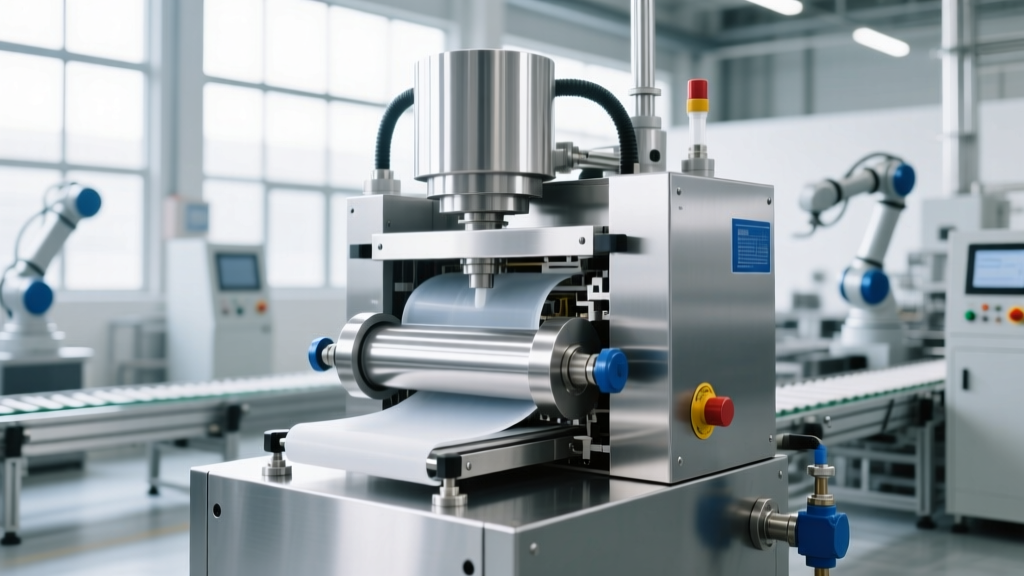
Blister packs for moisture-sensitive solid oral dosage forms (SODF) require desiccant sachets. While some primary blister machines feature inline desiccant feeders, many high-output facilities prefer a dedicated VFFS system to produce these sachets on-demand or run parallel flexible pouch packaging for clinical trial kits. A stainless-steel, washdown-rated VFFS system from the Matrix/Triangle lineage typically costs between $180,000 and $260,000. This includes the multi-head weigher or volumetric cup filler, the film transport system, and the HMI. For pharmaceutical applications, you must budget an additional $35,000 for cleanroom-grade HEPA shrouds and specialized tooling that prevents film dusting.
Secondary Cartoning for Blister Packs
Once the primary blister is sealed and perforated, it must be cartoned with a patient information leaflet (PIL). Secondary cartoners engineered with Triangle's legacy mechanical expertise (now modernized under ProMach) utilize continuous motion rotary cartoners or intermittent servo-driven systems. Budget $450,000 for a mid-range continuous motion cartoner capable of handling 250 cartons per minute. This price includes the friction feeder for the leaflets, the blister bucket infeed, and the hot-melt glue or tuck-in closure system. If your product requires tamper-evident glue closure with vision inspection, add $65,000 for the integrated camera systems.
Hidden Costs: 21 CFR Part 11 Validation and IQ/OQ/PQ
The most frequent budget overruns in pharmaceutical packaging occur not in the mechanical hardware, but in the software validation and regulatory compliance phases. According to FDA guidance on container closure systems, packaging equipment must ensure the integrity of the drug product, which mandates rigorous Computerized System Validation (CSV).
'Any automated packaging system, including secondary cartoners and VFFS units equipped with electronic records and signatures for recipe management, must comply with 21 CFR Part 11. Budgeting for hardware without allocating for CSV is a critical planning failure.'
For a fully integrated line featuring a primary blister machine and a Triangle/Matrix secondary cartoner, expect to pay a specialized validation firm between $80,000 and $140,000 to execute the Installation Qualification (IQ), Operational Qualification (OQ), and Performance Qualification (PQ) protocols. This includes mapping the HMI user access controls, audit trails for recipe changes, and electronic signature integrations for batch release.
Operational Expenditure (OpEx) and Format Changeovers
Pharmaceutical packaging lines frequently switch between different pill counts (e.g., 30-count vs. 90-count blisters), which dictates the size of the blister web and the corresponding secondary carton. The OpEx impact of these changeovers is where the engineering quality of the machinery pays dividends.
- Tooling Costs: Primary blister forming and sealing dies cost $15,000 to $25,000 per SKU set. Secondary cartoner format parts (bucket chains, carton magazines) cost $8,000 to $12,000 per set.
- Changeover Time (SMED): Modern Matrix/Triangle cartoners feature tool-less, color-coded format adjustments. A skilled operator can complete a full secondary changeover in 35–45 minutes. Older or cheaper alternatives may require 2+ hours, resulting in massive OEE (Overall Equipment Effectiveness) losses.
- Material Yield: High-precision VFFS systems used for desiccant sachets maintain seal integrity at higher speeds, reducing film waste. Budget for a 2-4% material waste rate during startup and changeover phases.
Strategic Sourcing Framework
When planning your 2026 pharmaceutical packaging budget, adopt a 'Best-in-Class Node' strategy. Do not force a single OEM to provide the entire line if it falls outside their core competency. Source your primary TFS blister machine from dedicated thermoforming specialists. Then, look to the ProMach Matrix portfolio (the modern home of Triangle Package Machinery Company's engineering) for your secondary cartoning, flexible pouch alternatives, and end-of-line case packing. This hybrid approach ensures you are paying for specialized, high-reliability engineering at every node of the packaging line, minimizing downtime and ensuring strict adherence to cGMP standards.