School Nutrition Packaging Machinery: Shrink vs Stretch Wrappers
Compare shrink vs stretch wrapping for school nutrition packaging machinery. Discover costs, film gauges, and throughput specs for meal programs.
The Core Divergence: Unitizing Grab-and-Go vs. Palletizing Bulk Transit
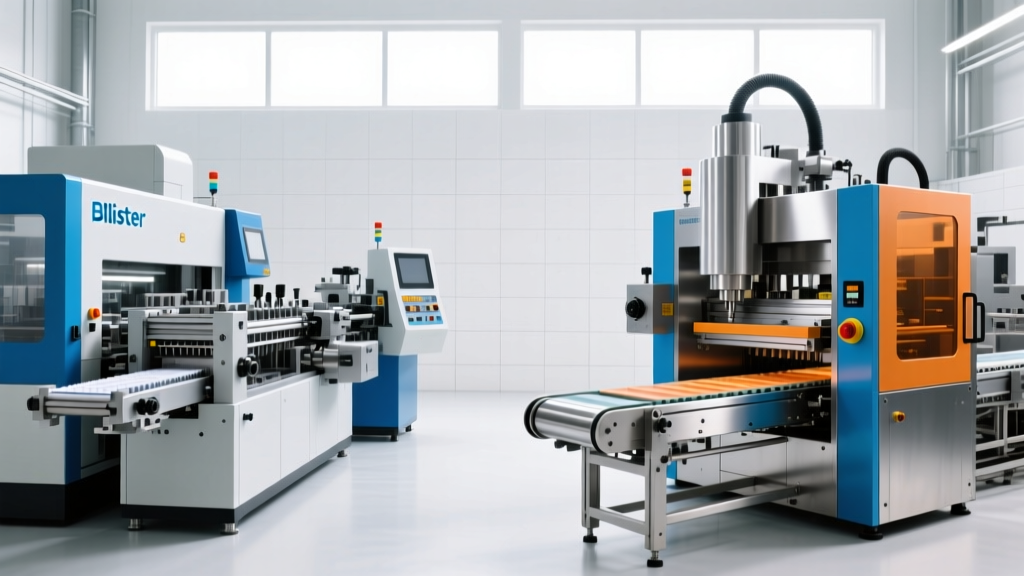
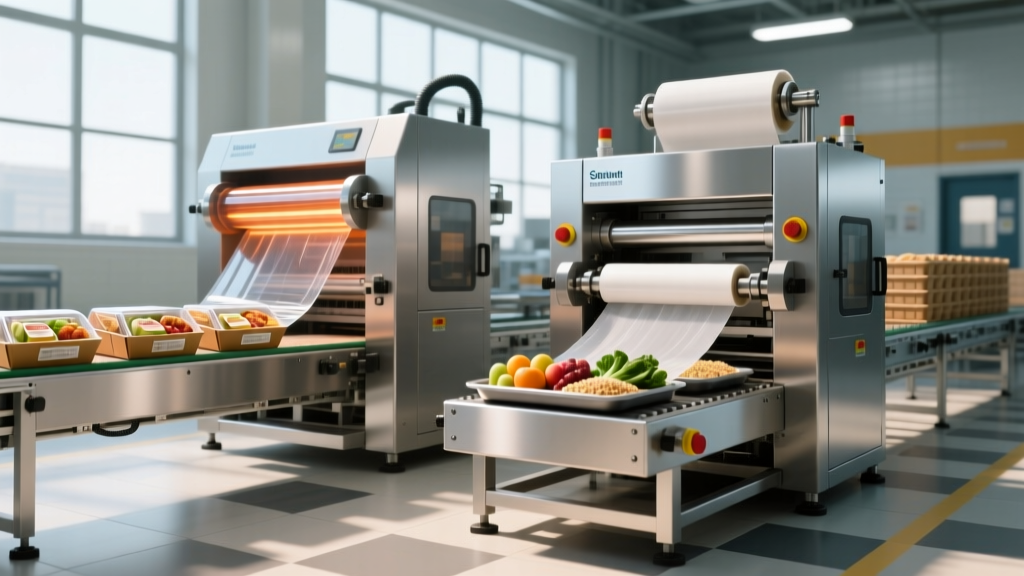
Selecting the correct school nutrition packaging machinery requires a strict delineation between consumer-facing unitizing and logistics-facing palletizing. In K-12 food service, shrink wrapping and stretch wrapping serve entirely different operational nodes. Shrink wrapping is deployed at the end-of-line for multi-packing grab-and-go items—such as bundling eight 8oz milk cartons, yogurt tubes, or fruit cups for USDA Smart Snacks compliance and breakfast carts. Stretch wrapping is reserved for the warehouse dock, securing mixed corrugated cases of produce, canned goods, and dairy onto pallets for transit from a district central kitchen to satellite school cafeterias.
Conflating these two technologies leads to catastrophic line bottlenecks and film waste. Below is the technical procurement framework for evaluating shrink versus stretch systems in a 2026 institutional food production environment.
Procurement Decision Matrix
- Choose Shrink Wrapping IF: You are bundling 2 to 24 primary food containers into a single consumer-ready SKU, requiring tamper-evident seals, high-clarity film for barcode scanning, and heat-activated contraction.
- Choose Stretch Wrapping IF: You are unitizing 20 to 80 corrugated secondary cases onto a standard 40x48-inch GMA pallet, requiring load containment force (LCF) to prevent shifting during box-truck transit to satellite schools.
Shrink Wrapping Equipment for Grab-and-Go Bundles
Modern school nutrition programs rely heavily on decentralized breakfast and lunch models. This necessitates high-speed bundling of rigid containers. For throughputs exceeding 20 bundles per minute, continuous side-seal shrink wrappers are mandatory, replacing the slower L-bar sealers.
Machine Configurations and Throughput Specs
Continuous side-sealers (such as the Eastey SE-25 or equivalent OEM models) utilize a continuous sealing blade that accommodates products of varying lengths without requiring seal-bar adjustments. In a typical school dairy line, these machines run at conveyor speeds of 30 to 45 feet per minute, yielding up to 45 bundles per minute. The sealing mechanism relies on Teflon-coated bands or hot-knife systems to cut and seal the film simultaneously.
Following the seal, the loosely wrapped bundle enters a heat tunnel. For institutional food packaging, turbulent airflow heat tunnels are preferred over laminar flow. Turbulent air aggressively targets the film's micro-perforations, exhausting trapped air to prevent the 'ballooning' effect that obscures nutritional labeling and expiration dates.
Film Selection: Polyolefin over PVC
Polyolefin (POF) is the exclusive standard for food-adjacent shrink packaging. PVC shrink film emits hydrogen chloride gas during the sealing process, which corrodes machine components and poses contamination risks in food-safe environments. Procurement teams must specify 60-gauge to 75-gauge centerfold POF film. Crucially, the film must be micro-perforated (typically 3 to 5 needle holes per linear inch) to allow air evacuation during the 285°F to 315°F heat tunnel transit.
Stretch Wrapping Equipment for Bulk Case Palletizing
District central kitchens processing thousands of meals daily require robust stretch wrapping to stabilize mixed-SKU pallets. Unlike uniform manufacturing pallets, school food pallets often feature irregular column heights (e.g., heavy canned vegetables on the bottom, lightweight paper goods on top), demanding advanced film delivery systems.
Turntable vs. Rotary Arm Architecture
Standard turntable stretch wrappers (like the Lantech Q-Series) rotate the pallet at 10 to 14 RPM while the film carriage ascends the mast. These are suitable for stable, uniform loads up to 4,000 lbs. However, for mixed school nutrition pallets containing fragile items like applesauce cups or chip bags, the centrifugal force of a spinning turntable can cause load shifting.
For high-volume central kitchens, rotary arm stretch wrappers are the superior investment. The pallet remains stationary on the floor while a robotic arm orbits the load at speeds up to 60 RPM. This eliminates the risk of toppling irregular loads and accommodates pallet jacks driving directly into the wrap zone without ramp navigation.
Pre-Stretch Carriage Technology and Load Containment
The critical metric in stretch wrapping is not film thickness, but Load Containment Force (LCF). Modern powered pre-stretch carriages stretch the film by 250% to 300% before application. A 51-gauge cast stretch film stretched at 250% effectively performs like a 150-gauge film while using a fraction of the material. Cast film is strictly recommended over blown film for school logistics; its high clarity allows warehouse laser scanners to read case-level barcodes and USDA lot codes through the film layers without manual unwrapping.
Head-to-Head Specification Matrix
| Parameter | Shrink Wrapping (Bundle) | Stretch Wrapping (Pallet) |
|---|---|---|
| Primary Use Case | Multi-packing primary food containers | Unitizing secondary corrugated cases |
| Typical Speed | 25 - 45 bundles / minute | 15 - 35 pallets / hour |
| Film Chemistry | Polyolefin (POF) | Linear Low-Density Polyethylene (LLDPE) |
| Standard Gauge | 60 - 75 gauge (15-19 micron) | 51 - 60 gauge (pre-stretched) |
| Energy Requirement | High (220V/3-phase for heat tunnels) | Low (110V/220V for motors) |
| CapEx Range (2026) | $28,000 - $45,000 (Auto Side-Seal) | $45,000 - $75,000 (Rotary Arm) |
Navigating USDA and FDA Compliance Constraints
Packaging machinery in school nutrition programs operates under strict federal oversight. Any film contacting or immediately enclosing food items must comply with FDA food packaging regulations regarding indirect food additives and migration limits. While shrink film rarely touches the food directly (it encloses the primary carton or plastic cup), the heat tunnel process can cause volatile organic compounds (VOCs) to off-gas if non-food-grade PVC is mistakenly procured.
Furthermore, the USDA Food and Nutrition Service mandates strict chain-of-custody and tamper-evidence for reimbursable meal components. Shrink wrapping provides an inherent tamper-evident seal for grab-and-go breakfast bundles. If the POF film is punctured or torn, the bundle loses its structural integrity, immediately signaling to cafeteria staff that the product has been compromised. For stretch wrapping, compliance focuses on load stability; improperly wrapped pallets that shift and crush corrugated cases of USDA-donated commodities result in massive financial write-offs for the school district.
Capital Expenditure and Consumable ROI Analysis
When budgeting for school nutrition packaging machinery, directors must evaluate the Total Cost of Ownership (TCO), heavily weighting consumable film costs against machine capabilities.
Shrink Wrap Consumable Economics
High-quality, FDA-compliant 60-gauge POF centerfold film costs between $1.90 and $2.40 per pound. A standard 8-pack of 8oz milk cartons requires approximately 18 inches of 12-inch wide centerfold film. At typical yields, the film cost per bundle sits at $0.06 to $0.09. However, scrap rates can inflate this cost. If the heat tunnel's conveyor speed is mismatched with the tunnel temperature, 'dog-ears' (unsealed corners) or burn-throughs will force operators to re-run the bundle, increasing film waste by up to 12%.
Stretch Wrap Consumable Economics
Cast LLDPE stretch film is cheaper by weight, averaging $1.40 to $1.80 per pound. The ROI in stretch wrapping is entirely driven by the pre-stretch carriage. A machine locked at a 200% pre-stretch ratio will consume roughly $1.80 in film per standard pallet. Upgrading to a machine with a 300% powered pre-stretch carriage reduces the film cost per pallet to approximately $1.15. For a central kitchen shipping 40 pallets daily across a 180-day school year, upgrading to a high-pre-stretch carriage saves the district over $4,600 annually in film consumables alone, paying for the machine upgrade in under 18 months.
Maintenance Warning: Stretch wrapper pre-stretch rollers require weekly cleaning with isopropyl alcohol. In food-warehousing environments, airborne dust and corrugated particulate accumulate on the rubber rollers, causing film slippage. This slippage drops the actual pre-stretch ratio from 250% down to 150%, silently inflating your film costs by 40% until the rollers are degreased.Final Procurement Checklist for District Buyers
- Audit the SKU Profile: Map your top 10 grab-and-go bundles. If product heights vary by more than 4 inches, specify a side-seal shrink wrapper with an automatic film scrap winder and adjustable infeed conveyor guides.
- Verify Electrical Infrastructure: Shrink heat tunnels draw massive amperage (often 20-30 amps at 220V/3-phase). Confirm central kitchen panel capacity before ordering.
- Demand Cast Film Compatibility: Ensure the stretch wrapper's carriage is calibrated for cast film, not blown film, to maintain barcode scannability for USDA commodity tracking.
- Require Micro-Perforation Specs: Mandate that your POF film supplier guarantees micro-perforation consistency to prevent tunnel ballooning on sealed dairy and liquid containers.
By aligning the wrapping technology with the specific logistical node—shrink for consumer-facing bundle integrity and stretch for transit-facing load containment—school nutrition directors can optimize both packaging line throughput and district-wide freight security.