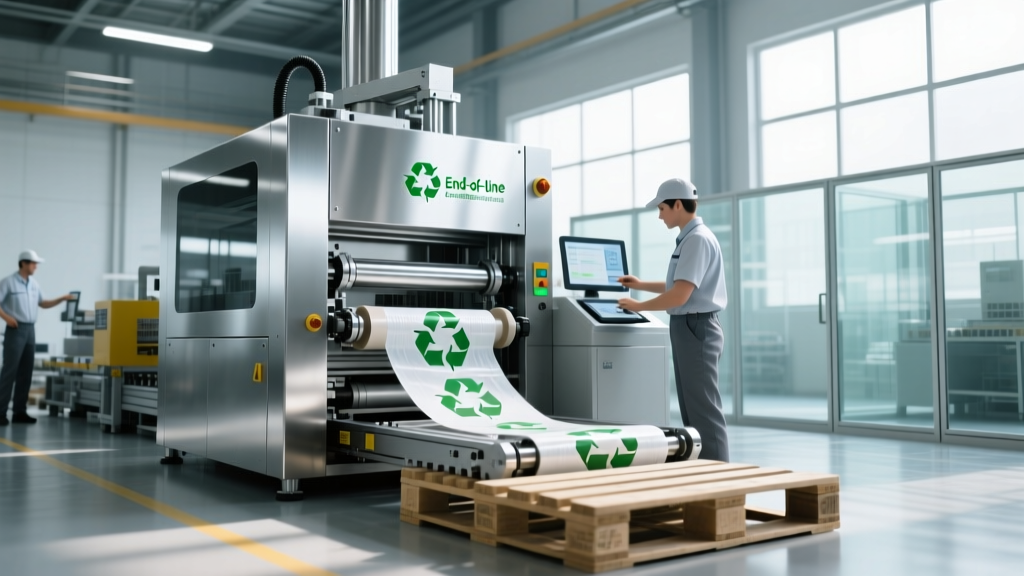
E-Commerce Packaging Machinery: Automated Case Packing Specs
Explore technical specifications, drive systems, and operational workflows of automated case packing e-commerce packaging machinery for fulfillment centers.
Core Architecture of E-Commerce Case Packing and Cartoning
Fulfillment centers processing high-SKU variability rely on automated case packing and cartoning as the critical bottleneck control point. Unlike legacy FMCG (Fast-Moving Consumer Goods) lines that run uniform products at 120+ cases per minute (CPM), modern e-commerce packaging machinery must accommodate randomized order profiles, variable corrugated blank sizes, and rapid changeovers. The technical baseline for a mid-tier e-commerce automated case packer involves handling 32 ECT to 48 ECT corrugated materials (B-flute and C-flute) at throughput rates of 15 to 45 CPM, with changeover times strictly under 15 minutes.
Baseline Operational Thresholds (2026 Standards)
- Throughput: 15–45 CPM (Mixed SKU E-Commerce) | 60–120 CPM (Uniform Subscription Boxes)
- Corrugated Weight: 32 ECT (Single Wall) to 48 ECT (Double Wall)
- Changeover Time: < 15 minutes (Servo-driven) | 45+ minutes (Manual crank/pneumatic)
- Seal Integrity: Minimum 1.5 lbs/inch peel strength on hot melt adhesive flaps
The Mechanical Workflow: From Blank to Sealed Case
Understanding the mechanical sequence of automated cartoning machinery is essential for diagnosing downtime and optimizing line speed. The process is divided into four distinct mechanical zones.
1. Magazine Feeding and Blank Extraction
Blanks are loaded into an inclined magazine holding up to 1,500 blanks. Extraction is typically handled by pneumatic suction cups. For standard virgin kraft, standard flat vacuum cups suffice. However, e-commerce operations heavily utilize recycled corrugated board, which is highly porous and prone to dust shedding. Engineering best practice dictates the use of Schmalz SPB1 bellows suction cups, which feature flexible sealing lips that conform to uneven, dusty surfaces, maintaining the required -0.6 bar vacuum threshold without dropping blanks during high-speed extraction.
2. Case Squaring and Forming
Once extracted, the flat blank is pulled through a forming mandrel or squared via mechanical lugs. In wrap-around case packers, the product group is placed directly onto the flat blank, and the carton is folded around the product. For standard top-load e-commerce cartoners, the blank is pushed through a static steel or UHMW (Ultra-High Molecular Weight) polyethylene mandrel. UHMW is preferred in high-speed machinery as it reduces the coefficient of friction to 0.10-0.20, preventing micro-tears on the corrugated liner during the forming stroke.
3. Product Infeed and Loading
Product loading in e-commerce packaging machinery utilizes either gravity drop-packers or robotic gantries. Drop packers use a split-belt or trap-door mechanism to release grouped items into the formed case. While cost-effective (typically $85,000 to $120,000 per unit), drop packers risk damaging fragile e-commerce goods like electronics or glass. Robotic pick-and-place systems, utilizing Delta or SCARA configurations with soft-touch pneumatic grippers, are required for fragile SKUs, though they cap throughput at roughly 25 CPM and increase capital expenditure to the $180,000–$250,000 range.
4. Flap Folding and Sealing
Top and bottom minor and major flaps are folded via static plows or dynamic tucker bars. Sealing is predominantly achieved using Hot Melt Adhesive (HMA). Systems like the Nordson ProBlue Liberty melt-on-demand units maintain precise adhesive temperatures between 350°F and 380°F. For e-commerce lines requiring easy consumer opening, tear-tape applicators or pressure-sensitive tape (PST) heads are integrated post-gluing.
Drive Systems: Servo vs. Pneumatic Actuation
The transition from pneumatic to fully servo-driven architectures is the defining technical shift in modern e-commerce packaging machinery. Servo motors (e.g., Rockwell Automation Kinetix or Siemens SIMOTICS) replace air cylinders, providing absolute positional control and eliminating the compressed air latency that limits cycle times.
| Feature | Servo-Driven (Modern E-Commerce) | Pneumatic/Mechanical (Legacy/Uniform) |
|---|---|---|
| Changeover Mechanism | Automated via HMI recipe recall (motors reposition guides) | Manual hand-cranks, dial indicators, and physical change parts |
| Changeover Time | 3 to 15 minutes | 45 to 120 minutes |
| Motion Profile | Programmable electronic camming (soft start/stop) | Fixed mechanical linkages and harsh pneumatic impacts |
| Energy Consumption | High electrical draw, zero compressed air dependency | Low electrical, high compressed air (leakage prone) |
| Capital Cost (Approx.) | $160,000 – $280,000+ | $75,000 – $130,000 |
Vision Systems and PLC Integration for Variable SKUs
E-commerce fulfillment is defined by unpredictability. Automated case packing machinery must verify that the correct, albeit randomized, items are loaded into the shipping carton before sealing. This requires tight integration between 2D/3D vision systems and the central Programmable Logic Controller (PLC).
Overhead 3D vision cameras (such as Cognex In-Sight 3D-L4000 or SICK Ranger3) scan the case interior post-loading. The vision system generates a point cloud to verify item count, orientation, and height clearance. This data is transmitted via EtherNet/IP to the safety PLC—typically an Allen-Bradley GuardLogix 5580 or Siemens S7-1500F. If the vision system detects an over-height condition (e.g., a polybagged apparel item inflating above the major flap fold line), the PLC instantly halts the sealing sequence and diverts the case to a manual rework spur, preventing jammed flap folders and crushed merchandise.
Real-World Failure Modes and Edge Cases
Even highly engineered e-commerce packaging machinery experiences specific failure modes tied to the harsh realities of warehouse environments. Recognizing these edge cases is critical for maintenance engineering.
- Corrugated Dust Blinding Optical Sensors: Recycled e-commerce boxes shed immense amounts of paper dust. This dust coats photoelectric sensors and laser scanners, causing false 'case jam' faults. Solution: Specify polarized retro-reflective sensors with built-in air purge nozzles, and schedule weekly sensor lens wipes.
- Hot Melt Adhesive Stringing in High Heat: During summer months, un-air-conditioned fulfillment centers can exceed 95°F. Standard HMA adhesives lose viscosity, leading to 'stringing' (thin threads of glue) that foul the compression belts. Solution: Switch to metallocene-based hot melt adhesives, which maintain tighter viscosity curves across a 60°F to 110°F ambient range, and reduce nozzle operating temperature by 15°F.
- Warping on Asymmetric Loads: E-commerce cases often contain a single heavy item (e.g., a dumbbell) and several light items (e.g., bubble wrap). When conveyed through the compression section, the asymmetric weight distribution causes the case to skew, resulting in misaligned tape or glue application. Solution: Install active side-guide belts with independent variable frequency drives (VFDs) that dynamically adjust tension based on real-time load cell feedback.
Sizing and Selecting Cartoning Machinery: A Decision Framework
Selecting the correct architecture for your e-commerce packaging machinery depends strictly on your SKU velocity and fragility matrix. Refer to the following framework when evaluating vendors like Pearson Packaging Systems, Wexxar Belvins, or ProMach.
Procurement Decision Matrix
Choose Robotic Pick-and-Place Top Loaders IF: Your catalog features high-fragility goods (electronics, glass, cosmetics), you require frequent changeovers (10+ box sizes per shift), and your target throughput is under 30 CPM.
Choose Wrap-Around Case Packers IF: You are shipping uniform, rigid items (beverage cans, rigid subscription boxes) at high speeds (60+ CPM) and require maximum corrugated material savings (wrap-arounds use 10-15% less board than RSC cartons).
Choose Intermittent Motion Drop Packers IF: Capital expenditure is strictly capped below $120,000, your products are non-fragile (apparel, books, dry goods), and your box size variability is low (3 or fewer standard shippers).
For further benchmarking on warehouse automation standards and integration protocols, consult the guidelines published by the MHI Robotics and Automation Council and the Association for Packaging and Processing Technologies (PMMI). Proper specification of drive systems, vision integration, and adhesive technologies ensures your e-commerce packaging machinery delivers maximum OEE (Overall Equipment Effectiveness) in a high-variance fulfillment environment.