Pharmaceutical Packaging Machinery: Blister Line Cost Guide 2026
Analyze blister pharmaceutical packaging machinery costs in 2026. CapEx, OpEx, tooling, and ROI breakdown for thermoforming vs. cold form blister lines.
The Financial Reality of Blister Line Procurement
Procuring blister packaging equipment for pharmaceutical manufacturing is rarely a simple transaction; it is a complex capital allocation decision with compounding operational variables. When evaluating pharmaceutical packaging machinery, facility directors and process engineers frequently encounter a gap between the quoted base price of a blister machine and the actual Total Cost of Ownership (TCO). In 2026, the integration of mandatory track-and-trace serialization, advanced vision inspection, and rapid-changeover tooling has fundamentally shifted the cost baseline.
This analysis deconstructs the CapEx and OpEx realities of modern blister lines, contrasting flatbed thermoforming systems with rotary cold-form (Alu-Alu) architectures to provide a precise budgeting framework for mid-to-large-scale pharmaceutical producers.
2026 CapEx Baseline Snapshot
Base machine pricing has increased by an average of 14% since 2023 due to servo-driven automation upgrades and integrated IoT edge-computing modules. Expect to allocate an additional 22% to 35% above the base machine cost for downstream integration (cartoning, vision systems, and aggregation).
Capital Expenditure (CapEx) Breakdown by Blister Architecture
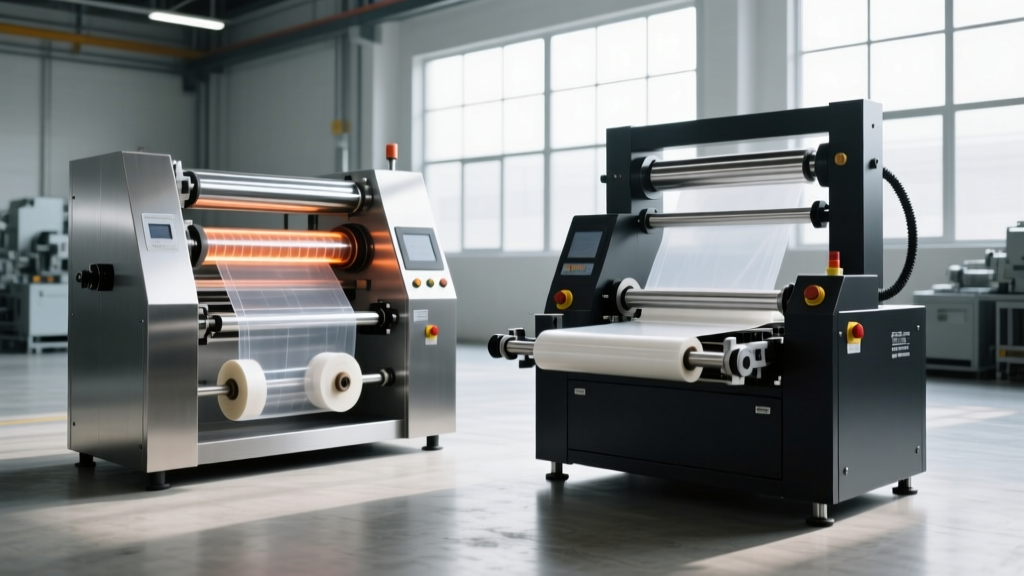
The choice between thermoforming (PVC/PVDC) and cold-forming (Aluminum/Aluminum) dictates the mechanical complexity and, consequently, the capital outlay. Cold-form lines require significantly higher tonnage forming stations and precision web-tension control systems, driving up the initial purchase price.
| Machine Tier & Type | Representative Models | Speed (Cycles/Min) | 2026 Price Range (USD) |
|---|---|---|---|
| Entry-Level Thermoform (Flatbed) | Rommelag BQS 300, Hoonga HDP | 2 - 4 | $180,000 - $320,000 |
| Mid-Range Thermoform (Rotary/Flatbed) | Uhlmann B 1550, Marchesini MB 250 | 5 - 8 | $650,000 - $950,000 |
| High-Speed Cold Form (Alu-Alu) | Marchesini MB 450, Uhlmann B 1880 | 6 - 10 | $1.4M - $2.6M |
| Combo Lines (Thermoform + Cold Form) | Uhlmann B 1240 Duo, Rommelag BQS 500 | Variable | $2.1M - $3.5M+ |
The Hidden OpEx: Tooling and Format Changeovers
The most frequently underestimated variable in blister line budgeting is format tooling. Unlike liquid fillers where changeovers might only require a nozzle swap, blister machines require complete forming dies, sealing plates, perforation units, and cutting dies for every unique SKU or blister card geometry.
Tooling Costs and Lifecycle
A complete format set for a mid-range flatbed machine costs between $18,000 and $32,000 per SKU. For a contract manufacturing organization (CMO) running 40 distinct SKUs, the tooling budget alone can exceed $1 million. Furthermore, hard-anodized aluminum forming dies degrade after approximately 2.5 million cycles, requiring re-machining or replacement to prevent PVC thinning at the cavity corners.
Changeover Downtime Economics
Standard manual changeovers on legacy equipment take 90 to 120 minutes. Modern pharmaceutical packaging machinery utilizes tool-less, cassette-based changeover systems. While these cassette systems add roughly $85,000 to the initial CapEx, they reduce changeover time to 12–18 minutes. If your facility executes more than three SKU changeovers per shift, the ROI on automated cassette tooling is realized within 14 months through recovered production uptime.
Material Web Costs and Yield Loss Variables
The selection of web material is dictated by the drug's Moisture Vapor Transmission Rate (MVTR) requirements, but it severely impacts ongoing OpEx.
- PVC (Polyvinyl Chloride): The cheapest option (~$1.20 - $1.80 per kg). Suitable for standard OTC solid oral dose products with low moisture sensitivity.
- PVDC (Polyvinylidene Chloride): Coated PVC offering superior moisture barriers (~$3.50 - $5.00 per kg). Requires precise heating station calibration; excessive heat causes PVDC to stick to the forming mold, increasing scrap rates by up to 4%.
- Cold Form Aluminum (Alu-Alu): Provides a near-zero moisture and light barrier. Material costs are 300% to 500% higher than PVC (~$12.00 - $18.00 per kg).
Cold-form aluminum is highly unforgiving. If the dancer roll tension on the infeed drops below 150N, the aluminum web wrinkles before entering the forming station. This causes a mechanical jam that requires 45 minutes to clear and wastes up to 12 meters of web ($180+ in scrap per incident). Budgeting for laser-web tracking sensors ($12,000 upgrade) is mandatory for Alu-Alu lines to mitigate this specific failure mode.
Serialization and DSCSA Compliance Premiums
With the final interoperability phases of the FDA Drug Supply Chain Security Act (DSCSA) now fully enforced, serialization is no longer an optional upgrade. Every blister card must be uniquely coded, and aggregated to the bundle and case level.
Integrating a fully compliant serialization module—including thermal inkjet (TIJ) printers, 2D DataMatrix OCR/OCV vision cameras, and reject mechanisms—adds $95,000 to $145,000 to the blister line CapEx. Furthermore, the software licensing for enterprise Track & Trace aggregation platforms typically requires an annual SaaS fee of $15,000 to $25,000 per production line.
Total Cost of Ownership (TCO) Decision Matrix
Use the following framework to determine the optimal machinery architecture based on your specific product portfolio. According to data compiled in recent PMMI Industry Reports, mismatching the machine type to the product portfolio is the leading cause of negative ROI in packaging expansions.
| Product Profile | Required MVTR | Optimal Machine Type | Est. 5-Year TCO |
|---|---|---|---|
| Standard Analgesics / Vitamins | > 1.0 g/m²/24h | Flatbed Thermoform (PVC) | $1.1M - $1.5M |
| Antibiotics / Hygroscopic APIs | 0.1 - 0.5 g/m²/24h | Rotary Thermoform (PVDC) | $1.8M - $2.4M |
| Biologics / Highly Sensitive APIs | < 0.05 g/m²/24h | Cold Form (Alu-Alu) | $3.5M - $5.2M |
Automation and Industry 4.0 Integration
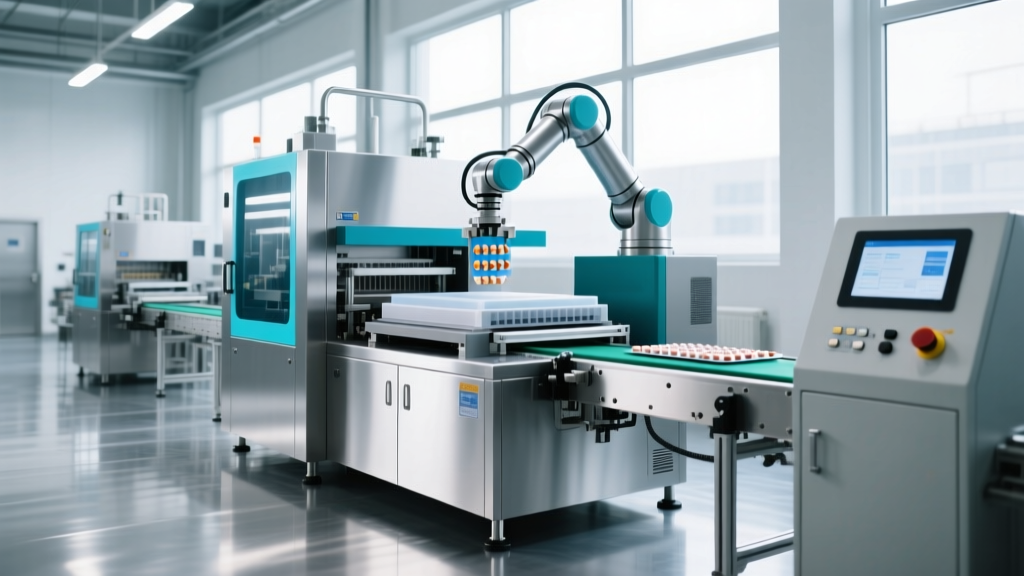
Modern pharmaceutical packaging machinery is heavily integrated with plant-level MES (Manufacturing Execution Systems). Budgeting must account for the 'digital thread'. Features like automated reject verification, predictive maintenance sensors on the main sealing crank, and OEE (Overall Equipment Effectiveness) dashboards are now standard on Tier-1 machines but remain expensive add-ons for Tier-2 equipment.
"Facilities that invest in predictive vibration analysis on the sealing station bearings reduce unplanned downtime by 31%. A $4,000 sensor array prevents catastrophic crank failures that typically result in $45,000 in replacement parts and three weeks of lead time."
— Validation Engineer, Top 10 Global Pharma CMO
Furthermore, as global supply chains combat counterfeit medicines—a crisis detailed extensively in the WHO Fact Sheet on Medical Products—investing in advanced tamper-evident blister lidding stations and RFID embedding capabilities is becoming a prerequisite for premium market access, adding another $60,000 to $90,000 to the line configuration.
Final Budgeting Directives for 2026
When drafting your URS (User Requirement Specification) and subsequent budget requests, apply a 1.35x multiplier to the base machine quote to account for FAT/SAT (Factory/Site Acceptance Testing) travel, installation, IQ/OQ validation documentation, and initial spare parts kits. Never evaluate pharmaceutical packaging machinery solely on cycle speed; evaluate it on the cost per successfully serialized, leak-free blister card over a 10-year depreciation cycle.