Pharma Blister Costs vs Cosmetics Packaging Machinery Market
Analyze pharmaceutical blister packaging machinery CAPEX and OPEX, exploring how the cosmetics packaging machinery market influences modern tech costs.
The Cross-Industry CAPEX Shift: Why Pharma Blister Costs Are Changing
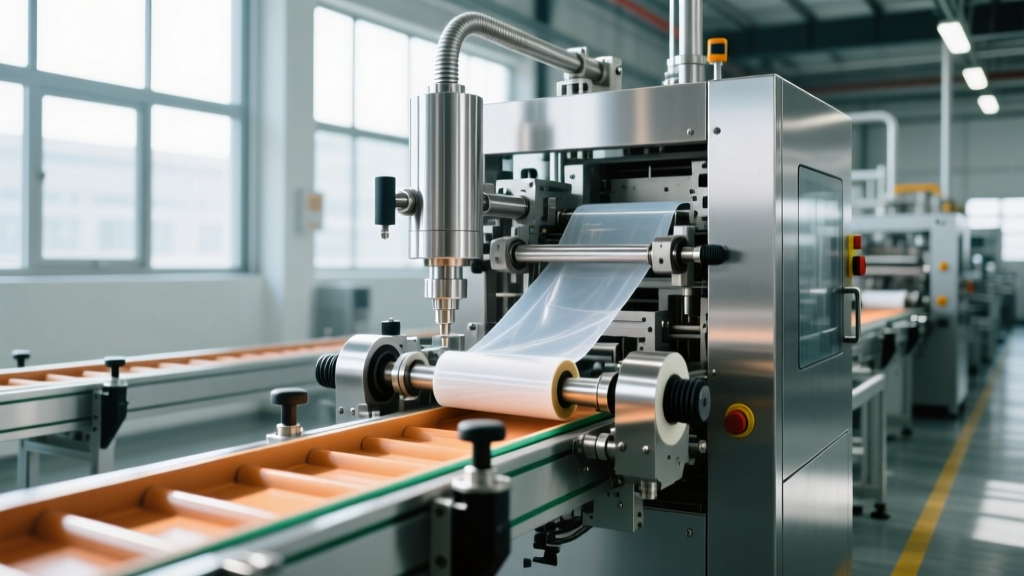
Historically, pharmaceutical and cosmetic packaging lines evolved in silos. Pharma prioritized barrier protection, child-resistance, and strict FDA validation, while cosmetics prioritized aesthetics, rapid SKU changeovers, and seasonal flexibility. However, as contract packaging organizations (CPOs) consolidate and equipment manufacturers seek broader revenue streams, these silos have collapsed. Procurement teams evaluating pharmaceutical thermoform-fill-seal (TFFS) equipment must now account for technological premiums driven by the cosmetics packaging machinery market, which has aggressively subsidized R&D in servo-driven quick-change tooling and sustainable mono-material sealing.
When budgeting for a new pharmaceutical blister line in 2026, the baseline capital expenditure (CAPEX) is no longer just a reflection of medical-grade stainless steel and HEPA filtration. It now includes advanced motion-control systems and specialized heating zones originally engineered to handle the complex, eco-friendly polymers demanded by the beauty sector. Understanding this cross-industry cost contamination is critical for accurately forecasting your total cost of ownership (TCO).
2026 CAPEX Breakdown: Pharmaceutical Thermoform-Fill-Seal Lines
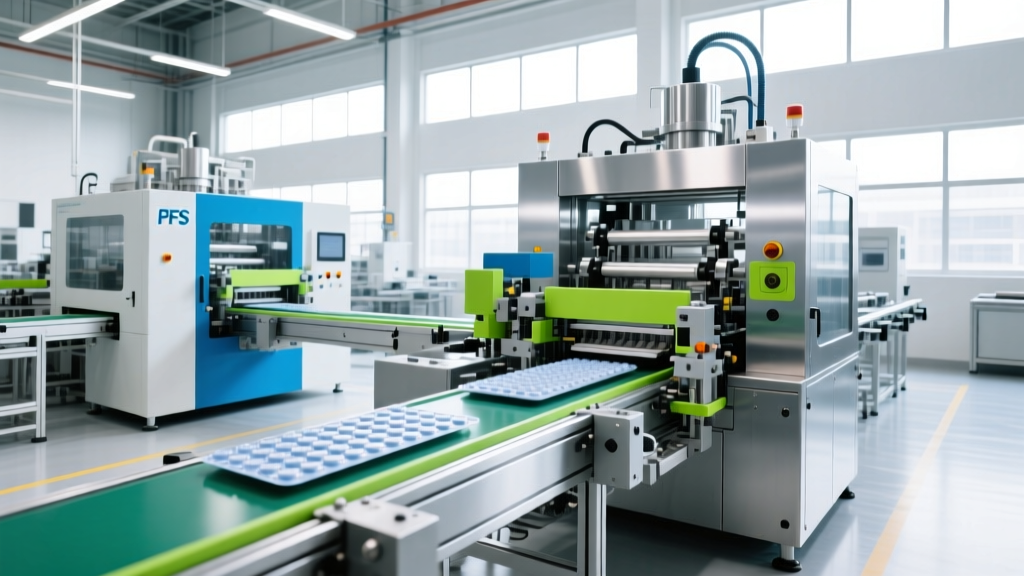
The base cost of pharmaceutical blister machinery varies drastically based on motion type (intermittent vs. rotary) and throughput requirements. Below is a realistic CAPEX matrix for mid-to-high-tier equipment currently dominating the pharma sector.
| Machine Class | Representative Models | Motion Type | Speed (Cycles/min) | Estimated 2026 CAPEX |
|---|---|---|---|---|
| Entry-Level Intermittent | Hoong-A HAP-500, CAM CP400 | Intermittent | 15 - 30 | $350,000 - $550,000 |
| High-Speed Intermittent | Uhlmann B 1340, Rommelag bosi | Intermittent | 30 - 60 | $650,000 - $950,000 |
| Continuous Rotary | Uhlmann BEC 700, Hoong-A HPR | Rotary | Up to 150+ | $1,400,000 - $2,800,000 |
Note: These figures represent the base machine with standard PLC integration. Add 15-22% for integrated vision inspection systems (e.g., Cognex or Keyence) and automated reject mechanisms required for modern pharma compliance.
Hidden OPEX: Tooling, Format Parts, and Changeover Downtime
The most frequent budgeting error in blister packaging procurement is underestimating the ongoing operational expenditure (OPEX) of format parts. Unlike cosmetic blister packs, which often utilize shallow, uniform cavities for compacts or pods, pharmaceutical blisters require deep-drawn cavities with precise web-spacing to accommodate varying tablet geometries and capsule sizes.
⚠️ Procurement Warning: The Tooling MultiplierFor every distinct SKU (tablet size/shape), you must purchase a dedicated forming die, sealing plate, and perforation/cutting tool set. A single hardened-steel format set for a high-speed rotary machine costs between $18,000 and $35,000. If your facility runs 15 different oral solid dosages, budget an immediate $350,000+ in tooling CAPEX on top of the machine cost.
The 'Cosmetics Effect' on Changeover Economics
This is where the influence of the cosmetics packaging machinery market directly alters pharma OPEX. The beauty industry's reliance on short-run, limited-edition seasonal packaging forced OEMs to develop 'tool-less' or 'quick-release' servo-driven format changeovers. Pharmaceutical machines equipped with these servo-adjustable guide rails and digital recipe memory systems reduce changeover time from 45 minutes to under 12 minutes. While this servo-upgrade adds roughly $65,000 to the initial machine quote, it reclaims up to 400 hours of annual machine uptime for facilities running more than 5 SKUs, yielding a positive ROI within 14 months.
Material Compatibility: The Mono-Material Premium
Pharmaceutical blisters have traditionally relied on PVC/PVDC or PVC/Aclar laminates for moisture and oxygen barriers. However, global sustainability mandates are pushing pharma toward mono-material structures like PP/EVOH/PP (Polypropylene with an Ethylene Vinyl Alcohol barrier).
Developing the thermal profiles to seal these sensitive mono-materials without burning the EVOH layer was largely pioneered by equipment suppliers catering to the cosmetics packaging machinery market, which faced consumer backlash over mixed-plastic compacts years before pharma did. To run these next-gen pharma materials, standard conduction heating plates are insufficient. You must budget for advanced IR (Infrared) pre-heating zones and closed-loop temperature-controlled sealing stations. Expect a $45,000 to $80,000 surcharge on your equipment quote for these specialized thermal management systems.
Budgeting Framework: Rotary vs. Intermittent Motion
Choosing between intermittent and rotary motion dictates your facility's labor, energy, and maintenance budgets for the next decade. Use this decision matrix to align your CAPEX with your production reality.
- Choose Intermittent Motion If: Your batch sizes are under 500,000 units, you require frequent format changes (3+ per shift), and your facility relies on manual or semi-automated feeding. Intermittent machines utilize a 'stop-and-go' web transport, which is gentler on delicate, experimental barrier films but consumes 20% more energy per cycle due to constant motor acceleration/deceleration.
- Choose Rotary Motion If: You are running dedicated, high-volume OTC (Over-The-Counter) products like ibuprofen or antacids in batches exceeding 2 million units. Rotary machines maintain constant web tension and continuous motion, reducing mechanical wear on the drive train and lowering per-unit energy costs by up to 35%. However, format changes on rotary machines are highly complex and require specialized mechanical technicians.
The Validation Tax: Where Pharma Diverges from Cosmetics
A critical budgetary line item that does not exist in the cosmetic sector is FDA 21 CFR Part 11 and GAMP 5 compliance validation. While a cosmetic blister machine can be plugged in and run after basic mechanical calibration, pharmaceutical blister lines require rigorous IQ (Installation Qualification), OQ (Operational Qualification), and PQ (Performance Qualification).
According to guidelines outlined by the FDA's pharmaceutical quality resources, packaging systems must demonstrate absolute repeatability in seal integrity and temperature distribution. Budget for $85,000 to $120,000 in third-party validation engineering services, plus the cost of specialized data-logging SCADA software (typically $15,000/year in licensing) to ensure audit-ready electronic records. Furthermore, ensuring your packaging meets the stringent barrier testing requirements of ISO 11607-1 for terminally sterilized medical devices and pharmaceuticals will require offline destructive testing equipment, adding another $30,000 to your lab budget.
ROI and Payback Period Calculations
When presenting your capital request to the CFO, frame the blister line investment around the cost of manual bottling versus automated blistering. A standard manual pharmaceutical packaging line requires 8-12 operators and yields roughly 80-100 blisters per minute. A mid-range intermittent blister line (e.g., Uhlmann B 1340) requires only 2 operators (one for web loading, one for cartoner feeding) and outputs 350+ blisters per minute.
The 2026 Automation Premium: Based on current fully-burdened labor rates of $32/hour per packaging operator, automating a 2-shift operation with a $750,000 intermittent blister line typically achieves hard-cost payback in 22 to 28 months. When factoring in the reduction of product giveaway and the elimination of manual counting errors (which trigger costly pharma recalls), the true payback compresses to 16 months.
Ultimately, successful budgeting for pharmaceutical blister machinery requires looking beyond the medical-spec price tag. By understanding how innovations from the cosmetics packaging machinery market have inflated base prices while simultaneously offering massive OPEX reductions in changeover and material flexibility, procurement leaders can build highly accurate, defensible capital expenditure models for 2026 and beyond. For further benchmarking on packaging line efficiencies, consult the operational guidelines published by the PMMI OpX Leadership Network.