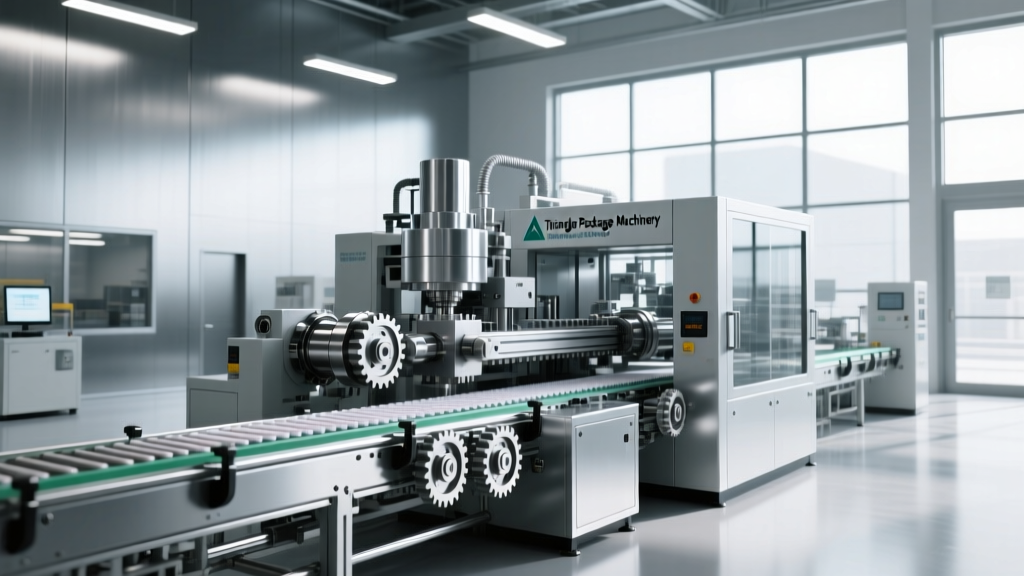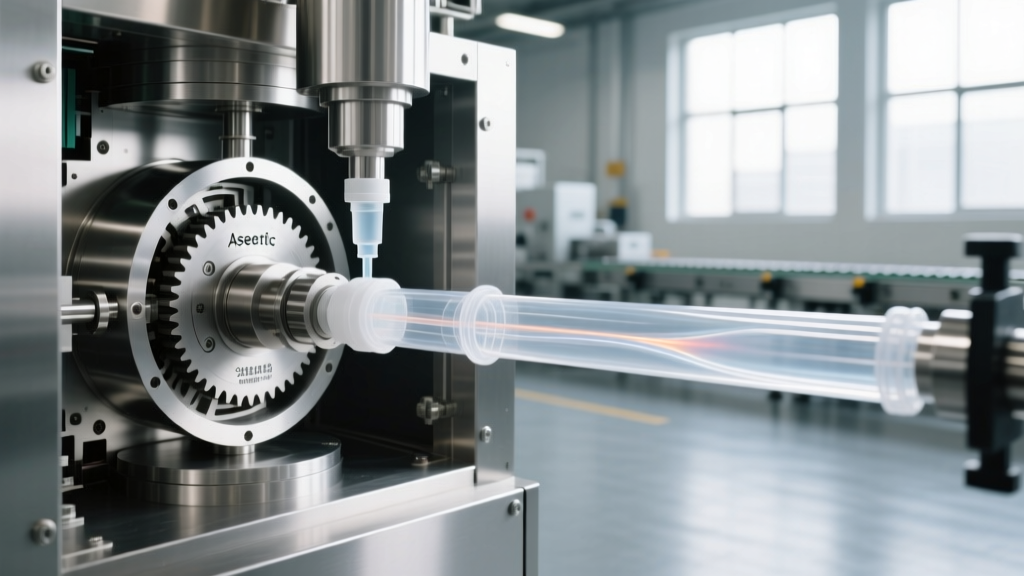
Aseptic Filler Faults: Guide for a Manufacturer of Packaging Machinery
Learn how to troubleshoot aseptic food and beverage filler faults, from sterilization failures to seal leaks, before calling the manufacturer.
The High Cost of Aseptic Line Downtime in 2026
Aseptic packaging machinery for food and beverage operates at the absolute limit of mechanical and thermal engineering. When a high-speed aseptic filler running at 18,000 to 24,000 bottles per hour (BPH) faults, the financial bleed is immediate. A single hour of unplanned downtime on a modern PET or carton aseptic line costs between $15,000 and $35,000 in lost throughput, not including the mandatory 90-to-120-minute Clean-In-Place (CIP) and Sterilize-In-Place (SIP) reset cycles required to re-establish the sterile zone.
Maintenance technicians must distinguish between operator-level sensor faults and catastrophic sterile breaches. As of 2026, advanced edge-computing PLCs (like the Siemens S7-1500 or Allen-Bradley ControlLogix) provide granular diagnostic data, but interpreting this data requires deep mechanical intuition. This guide provides actionable troubleshooting frameworks for aseptic filler faults, detailing exactly when in-house teams can resolve the issue and when you must escalate to the original manufacturer of packaging machinery.
CRITICAL WARNING: Never bypass sterile chamber interlocks or HEPA over-pressure alarms to maintain line speed. A micro-breach in an ISO Class 5 environment will compromise the entire batch, leading to severe product recalls and potential FDA enforcement actions under 21 CFR Part 113 regulations for thermally processed low-acid foods.Diagnostic Decision Tree: Operator Fix vs. OEM Intervention
Before tearing down a filling valve or replacing a robotic arm, run the fault through this decision matrix to determine the correct escalation path.
- Step 1: Isolate the Fault Domain. Is the alarm originating from the wet zone (product contact, CIP/SIP), the dry zone (cap handling, induction sealing), or the sterile chamber (H2O2 bath, HEPA airflow)?
- Step 2: Check Sensor vs. Mechanical Reality. If a level sensor throws a low-level alarm, manually verify the tank sight glass. If the fluid is present, the fault is electrical (e.g., fouled Endress+Hauser capacitive probe). If the fluid is absent, the fault is mechanical (e.g., blocked diaphragm valve).
- Step 3: Evaluate Sterile Integrity. Did the fault cause a drop in sterile chamber overpressure? If yes, halt production immediately. If no, proceed to localized troubleshooting.
- Step 4: Escalation Trigger. If the fault involves kinematic drift in delta robots, micro-cracks in 316L stainless steel product bowls, or proprietary PLC logic corruption, stop troubleshooting and contact the manufacturer of packaging machinery.
Troubleshooting Matrix: Common Aseptic Filler Faults
The following table outlines the most frequent alarms encountered on rotary and linear aseptic fillers, complete with specific diagnostic parameters.
| Alarm / Fault Code | Probable Root Cause | Immediate Action & Measurement |
|---|---|---|
| H2O2 Conc. Low (Err 402) | Degradation of hydrogen peroxide bath or refractometer fouling. | Draw manual sample. Verify 35% concentration at 70°C. Clean optical sensor. |
| Chamber Delta-P Low (Err 118) | HEPA filter breach, door seal leak, or blower motor VFD fault. | Check Magnehelic gauge. Target is 120-180 Pa. If <90 Pa, abort run. |
| Induction Seal Weak (Err 885) | Cap liner misalignment, foil burn-through, or generator power drop. | Inspect polymer liner. Adjust generator to 2.5 - 4.0 kW. Check conveyor speed. |
| Fill Volume Variance (Err 210) | Fouled mass flow meter or sticking filling valve actuator. | Run CIP flush. Manually stroke the pneumatic actuator. Recalibrate flow meter. |
Deep Dive: H2O2 Sterilization Bath Degradation
The sterilization bath is the heart of the aseptic process for packaging materials like PET preforms or carton webs. The bath must maintain a strict 35% hydrogen peroxide concentration at a temperature of 70°C to 75°C. If the inline refractometer triggers a low-concentration alarm, operators often assume the chemical dosing pump has failed.
However, in 60% of cases, the root cause is thermal degradation. If the bath heater PID controller overshoots and pushes the liquid past 80°C, the H2O2 rapidly decomposes into water and oxygen, dropping the concentration. To troubleshoot, pull a manual sample and test it with a calibrated handheld refractometer. If the manual test reads 35% but the PLC reads 31%, the inline optical sensor is fouled with mineral scale from the preforms. Soak the sensor in a 5% citric acid solution for 15 minutes. If the manual test confirms a true drop in concentration, inspect the dosing pump check valves for crystallization blockages.
Deep Dive: Sterile Chamber HEPA Filter Delta-P Alarms
Aseptic fillers rely on HEPA-filtered laminar airflow to maintain an ISO Class 5 (Class 100) sterile zone. The chamber must remain at a positive pressure relative to the surrounding factory floor. The differential pressure (Delta-P) is monitored continuously. A standard target is 120 to 180 Pascals (Pa).
When a high Delta-P alarm triggers (>250 Pa), the filter is loading with particulates, restricting airflow. This requires a scheduled filter change during the next SIP cycle. However, a low Delta-P alarm (<90 Pa) is a critical emergency. This indicates a loss of sterile integrity. Immediately check the inflatable silicone door seals. Over time, the constant thermal cycling of the SIP process (typically 121°C steam) causes the silicone to take a compression set, leading to micro-leaks. Replace door seals every 2,000 operating hours, adhering strictly to 3-A Sanitary Standards for elastomer surface finish and material traceability.
Deep Dive: Induction Cap Seal Inconsistencies
Aseptic beverage lines frequently use induction sealing to apply a tamper-evident foil barrier under the plastic cap. The most common fault is a 'weak seal' or 'burn-through' detected by the downstream vision inspection system. The induction sealer (such as those from Enercon) uses an electromagnetic field to heat the aluminum foil liner, melting the polymer backing onto the bottle lip.
If you see burn-through (blisters on the foil), the conveyor speed has dropped, increasing the dwell time under the coil, or the generator power is too high (above 4.0 kW for standard 38mm caps). If the seal is weak or peeling, check the bottle lip for residual product splash. Even a microscopic droplet of dairy or juice on the sealing surface will prevent the polymer from bonding. Adjust the upstream nozzle drip-retraction timing by 50 milliseconds to eliminate lip fouling.
PRO TIP: When replacing HEPA filters in the sterile chamber, always perform a PAO (Polyalphaolefin) aerosol leak test. Scanning the filter face and the gasket seal with a photometer ensures no microscopic bypasses exist before committing to a 4-hour SIP cycle.When You Must Escalate to the Manufacturer of Packaging Machinery
While in-house maintenance teams can handle sensor calibration, seal replacements, and basic pneumatic troubleshooting, certain faults require the proprietary tools, software, and engineering support of the original manufacturer of packaging machinery. Do not attempt to resolve the following issues internally:
- Delta Robot Kinematic Drift: If the ABB or Fanuc delta robots handling cap placement or carton forming begin dropping items or misaligning by more than 0.5mm, the kinematic model in the controller has drifted. This requires OEM-certified technicians to run laser-tracker recalibration routines.
- Product Bowl Micro-Cracks: The 316L stainless steel product contact bowls undergo immense thermal shock during SIP steam cycles. If you detect unexplained pressure drops during the sterile air-overpressure phase, the bowl may have a hairline crack in the weld seams. The OEM must perform specialized dye-penetrant testing and orbital re-welding in a controlled environment.
- Proprietary PLC Logic Corruption: If the safety PLC loses its handshake with the main motion controller following a power brownout, the machine will lock out. Reflashing the firmware requires proprietary OEM software licenses and secure access tokens that are not available to end-users.
Preventative Calibration Schedules for Aseptic Lines
Reactive troubleshooting on aseptic lines is a losing battle. Implementing a rigorous, data-driven preventative maintenance schedule is the only way to protect OEE (Overall Equipment Effectiveness). According to recent PMMI industry benchmarks, top-quartile aseptic lines achieve 85%+ OEE by strictly adhering to component-level lifecycles.
- Weekly: Verify H2O2 refractometer calibration against manual titration. Inspect all CIP spray balls for clogging using a borescope.
- Monthly: Test sterile chamber door seal inflation pressure (target 2.5 bar). Calibrate mass flow meters using a certified master meter.
- Quarterly: Perform PAO aerosol integrity testing on all HEPA filters. Inspect induction sealer cooling fans and air filters.
- Annually: Full OEM audit. Replace all sterile zone elastomers, diaphragm valves, and pneumatic actuators. Recalibrate robotic kinematics and update PLC firmware to the latest secure release.
Mastering these troubleshooting protocols ensures your aseptic packaging line maintains absolute sterile integrity while maximizing throughput. By knowing exactly where the line between operator maintenance and OEM intervention lies, you protect both your product quality and your bottom line.