Shrink vs Stretch Wrappers: Packaging Machinery Company Selection
Compare shrink vs stretch wrapping equipment. Analyze film costs, machine pricing, and power needs to select the best packaging machinery company.
The Core Divergence: Containment Force vs. Visual Appeal
Selecting between shrink and stretch wrapping equipment requires analyzing the end-of-line objective: retail presentation versus transit containment. While both secure products, the physics, material economics, and electrical requirements diverge sharply. Shrink wrapping relies on thermal energy to conform a polymer film tightly to a product's exact geometry, creating a tamper-evident, high-clarity barrier. Stretch wrapping utilizes mechanical tension to bind irregular or heavy loads to a pallet, prioritizing puncture resistance and load stabilization over visual aesthetics.
In 2026, the push toward sustainable packaging has forced both technologies to adapt. According to industry data from PMMI, The Association for Packaging and Processing Technologies, manufacturers are increasingly adopting mono-material films with high post-consumer resin (PCR) content. This shift alters sealing temperatures for shrink films and tensile memory for stretch films, making equipment calibration more critical than ever.
Quick Decision Matrix
- Choose Shrink Wrapping If: You are packaging multi-packs (e.g., beverage cans, retail boxes), require tamper-evident seals, need high optical clarity for barcode scanning, and have access to 3-phase electrical power.
- Choose Stretch Wrapping If: You are unitizing pallet loads for warehouse storage or freight transit, need to protect against dust and moisture, handle heavy or unstable loads, and operate in facilities with standard 1-phase power.
Technical Specifications & Film Economics
Understanding the baseline material costs and equipment capabilities is the first step in evaluating packaging machinery costs. The table below contrasts the operational realities of both systems.
| Feature | Shrink Wrapping (POF / PVC) | Stretch Wrapping (LLDPE) |
|---|---|---|
| Primary Film Type | Polyolefin (POF), 60-75 gauge | Cast/Blown LLDPE, 80-100 gauge |
| Cost Per Load | $0.08 - $0.25 (varies by surface area) | $0.35 - $0.75 (per standard pallet) |
| Tension Mechanism | Thermal contraction (Heat Tunnel) | Mechanical pre-stretch (250% - 300%) |
| Power Requirement | 208V/240V 3-Phase (15kW - 35kW) | 115V/15A Standard 1-Phase |
| Throughput Speed | 15 - 40 packages per minute (Automatic) | 20 - 60 pallets per hour (Rotary Arm) |
Shrink Wrapping Equipment: Models, Pricing, and Failure Modes
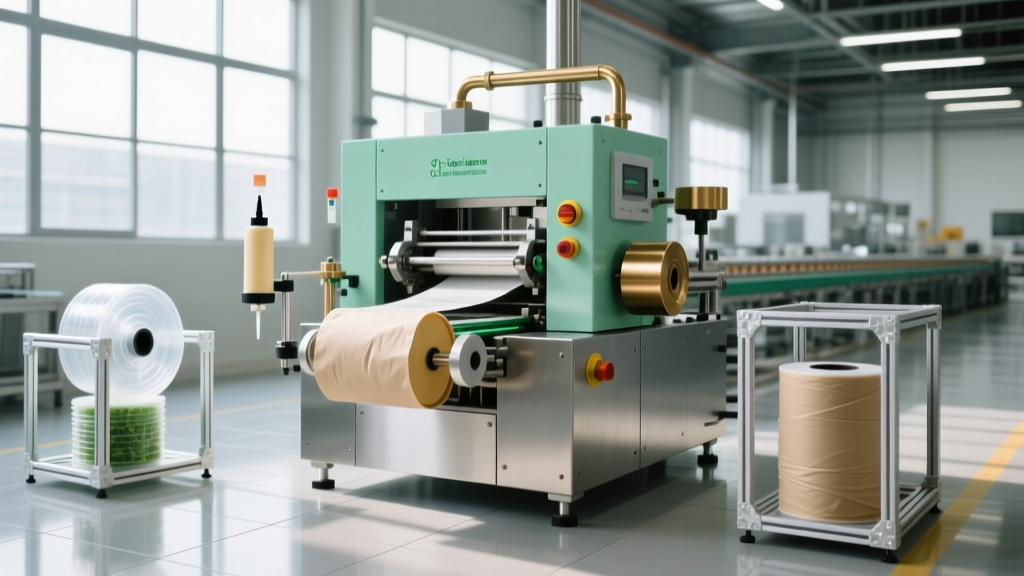
Shrink wrapping systems generally consist of a sealer (L-bar or sleeve) and a heat tunnel. For retail and multi-pack applications, Polyolefin (POF) film has largely replaced PVC due to its superior clarity, lack of toxic chloride emissions during heating, and better seal integrity.
Equipment Tiers and Pricing
- Semi-Automatic L-Bar Sealers with Tunnel: Ideal for low-to-medium volume (e.g., Eastey SE-1824 or equivalent models). Pricing ranges from $4,500 to $8,500. Operators manually place the product, pull the seal bar down, and transfer the package to a conveyorized tunnel.
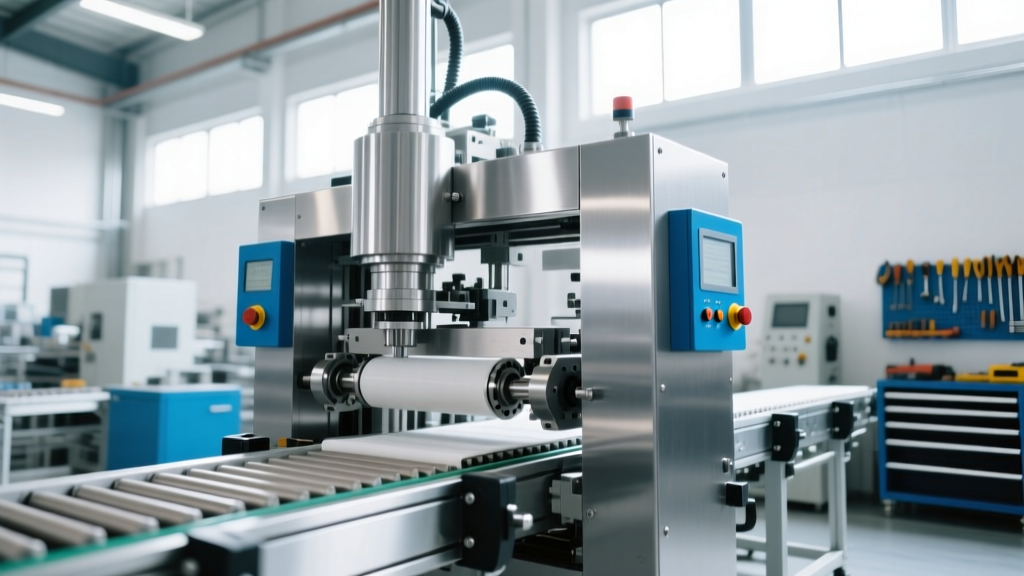
- Automatic Side-Seal Sleeve Wrappers: Designed for high-speed continuous motion lines (e.g., beverage trays). These systems use a continuous band of film and a cross-seal mechanism. Expect capital expenditures between $35,000 and $65,000, depending on conveyor integration and servo-driven controls.
Real-World Failure Modes and Maintenance
A common operational failure in shrink tunnels is 'dog-earing'—where the corners of the film shrink unevenly, creating thick, unshrunk pockets. This is rarely a temperature issue; it is an air velocity issue. Modern tunnels use variable-speed blowers to balance recirculating air. If the airflow is too aggressive, it blows the film off the product before it seals; if too weak, the film pools.
Furthermore, the Teflon sleeve covering the L-bar seal wire degrades over time. In a high-volume environment, expect to replace the Teflon sleeve every 40,000 to 60,000 cycles. Ignoring this leads to film sticking to the seal bar, resulting in jagged tears and line stoppages.
Stretch Wrapping Equipment: Turntable vs. Rotary Arm
Stretch wrapping relies on the elastic memory of Linear Low-Density Polyethylene (LLDPE) film. The critical innovation in modern stretch wrappers is the pre-stretch carriage, which uses a dual-roller system to stretch the film up to 300% before application. This reduces film consumption by up to 50% compared to hand wrapping, a metric frequently highlighted in sustainability reports by Packaging World.
Choosing the Right Architecture
Turntable Wrappers
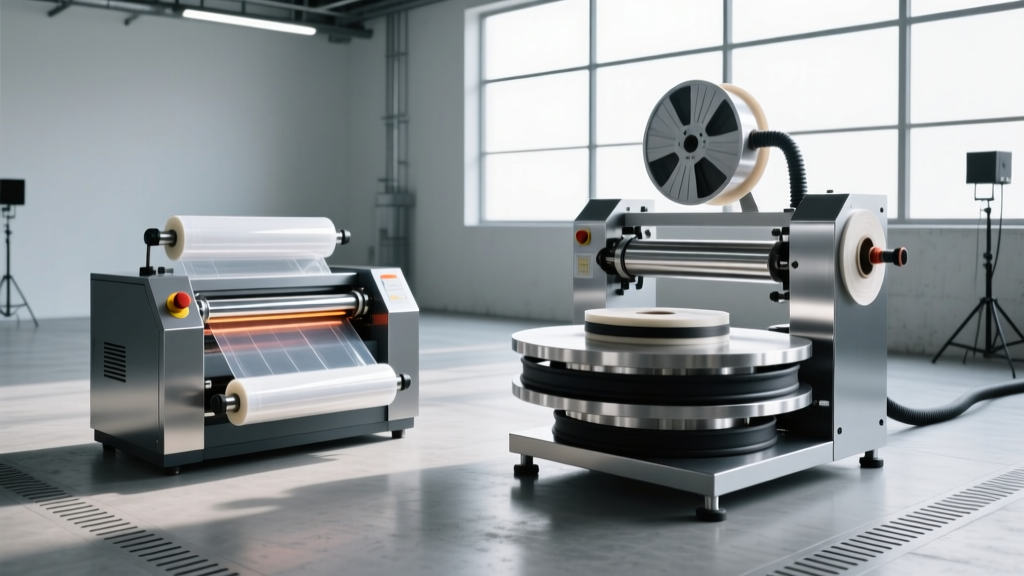
The load sits on a rotating base while the film carriage moves vertically on a mast. Best for: Standard, stable pallet loads up to 4,000 lbs. Pricing: $5,800 to $12,000 for semi-automatic models (e.g., Lantech Q-Series). Drawback: The rotation can shift unstable loads, and the turntable mechanism requires frequent bearing lubrication and floor cleaning.
Rotary Arm Wrappers
The pallet remains stationary on the floor while a rotating arm circles the load, dispensing the film. Best for: Heavy, unstable, or lightweight loads that would crush or shift on a turntable. Pricing: $65,000 to $110,000 for fully automatic inline models (e.g., Robopac Octopus). Drawback: Requires a larger safety footprint and higher initial capital investment.
Ergonomics and Safety Compliance
Manual stretch wrapping is a leading cause of musculoskeletal disorders in warehouses due to the repetitive bending and pulling forces required. Transitioning to semi-automatic or automatic stretch wrappers directly aligns with OSHA ergonomic guidelines for reducing manual material handling injuries. When evaluating equipment, prioritize wrappers with automatic film cut-and-clamp mechanisms, which eliminate the need for operators to manually tie off the film tail at the end of the cycle.
Hidden Costs: Energy, Footprint, and Line Integration
When calculating total cost of ownership (TCO), facility managers must look beyond the initial equipment quote and film cost.
'A 30-inch wide shrink tunnel operating at 350°F draws approximately 25 kW of power continuously. In a facility running two shifts, the electrical cost alone can exceed $8,000 annually. Stretch wrappers, by contrast, utilize fractional horsepower motors for the turntable and carriage, drawing less than 1 kW per hour, making them vastly more energy-efficient.'
Step-by-Step Line Integration Flow
Integrating a new wrapper into an existing conveyor line requires precise sequencing. Follow this framework to prevent bottlenecks:
- Audit Upstream Accumulation: Ensure you have a zero-pressure accumulation conveyor feeding the wrapper. If the wrapper cycles in 45 seconds, the accumulation table must hold at least 90 seconds of product to prevent upstream starvation during film roll changeovers.
- Verify Photoeye Alignment: Stretch wrappers rely on photoelectric sensors to detect the top of the load. For dark or black-wrapped products, specify retro-reflective sensors with polarizing filters to prevent false readings from shiny stretch film.
- Establish Safety Perimeters: For rotary arm stretch wrappers and automatic sleeve shrink wrappers, install light curtains or physical fencing with interlocked gate switches. The machine must trigger an E-stop within 0.5 seconds of a perimeter breach.
- Calibrate PLC Handshakes: Ensure the wrapper's PLC (Programmable Logic Controller) communicates via Ethernet/IP or Profinet with the main line SCADA system to track cycle counts, film usage, and fault codes in real-time.
Vetting Your Packaging Machinery Company
The success of your end-of-line automation hinges on the vendor you select. When evaluating a packaging machinery company, distinguish between Original Equipment Manufacturers (OEMs) and System Integrators.
- OEMs manufacture the specific wrapper. They offer the best pricing and deep technical support for their specific models but may lack the expertise to integrate their machine with your existing upstream case packers or downstream palletizers.
- System Integrators design the entire line. They charge a 15% to 25% engineering premium but take single-source responsibility for the entire line's throughput guarantees, PLC programming, and safety compliance.
Demand a Factory Acceptance Test (FAT) using your actual production film and product samples. A reputable vendor will run a 4-hour continuous test at your target speed, measuring film breakage rates and seal integrity before the equipment ships. If a vendor refuses a FAT with your specific materials, walk away.