Eco-Friendly Packaging Machinery Solutions: EOL Palletizer Training
Train operators on eco-friendly packaging machinery solutions for end-of-line palletizing. Master sustainable wraps, EOAT calibration, and energy savings.
Adapting to Sustainable Wrap Alternatives in EOL Automation
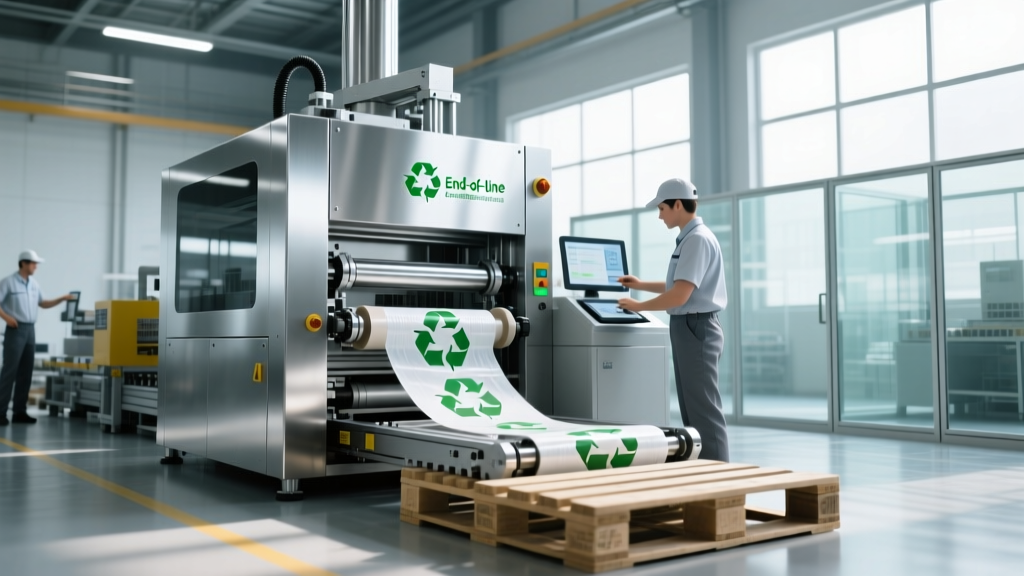
End-of-line (EOL) automation is undergoing a radical material shift. As facilities integrate eco-friendly packaging machinery solutions to meet 2026 sustainability mandates, the physical properties of consumables have fundamentally changed. Recycled corrugated, paper-based stretch wraps, and lightweight slip sheets behave entirely differently than their virgin plastic and wood predecessors. For operators and maintenance technicians, this transition introduces new failure modes, requiring specialized training on tension control, vacuum dynamics, and servo energy management.
The Friction and Elongation Problem
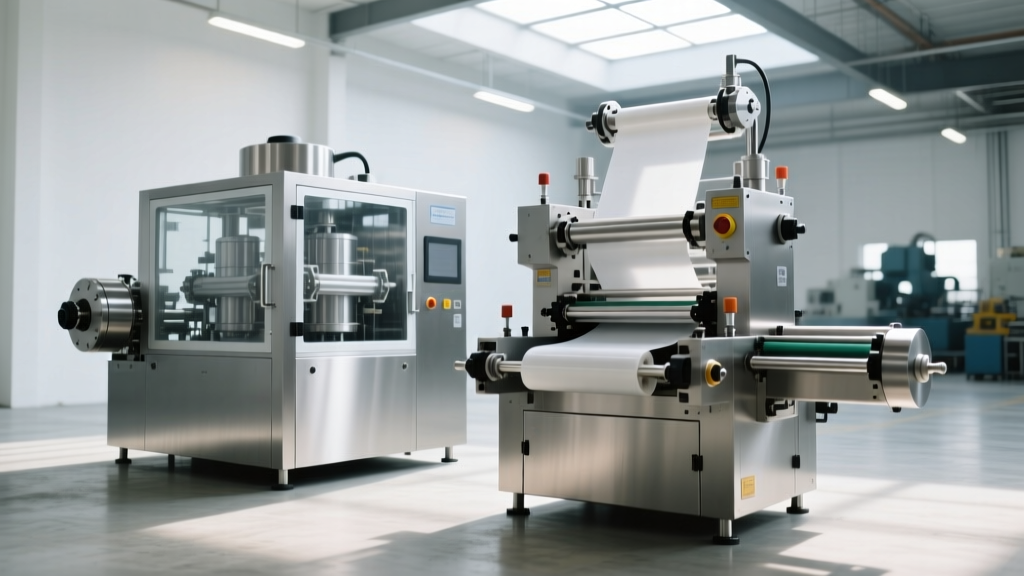
Traditional LLDPE stretch film stretches 250% to 300% before breaking. Eco-friendly alternatives, such as paper-based pallet wraps or nano-perforated biopolymers, possess a drastically lower elongation threshold—often tearing at just 12% to 15% stretch. Operators trained on legacy equipment frequently snap eco-wraps by leaving standard pre-stretch carriage settings engaged. Training must focus on transitioning from geared pre-stretch systems to friction-brake tensioning.
On machines like the Lantech Q-300, operators must learn to dial the mechanical brake tension down to 1.2 kg to 1.5 kg, relying on the paper's inherent stiffness rather than elastic memory to secure the load. Furthermore, paper wraps lack the 'tack' of LLDPE. Operators must be trained to apply a specialized water-based adhesive spray or utilize heat-activated sealing bars at the tail end of the wrap cycle to prevent tail-whip during transit.
⚠️ Operator Warning: Paper Wrap Dust AccumulationPaper-based wraps shed microscopic fibers that accumulate on tension rollers and photoelectric sensors. Operators must be trained to execute a dry-brush and compressed-air purge of the carriage rollers every 4 hours to prevent friction spikes that lead to web snapping.
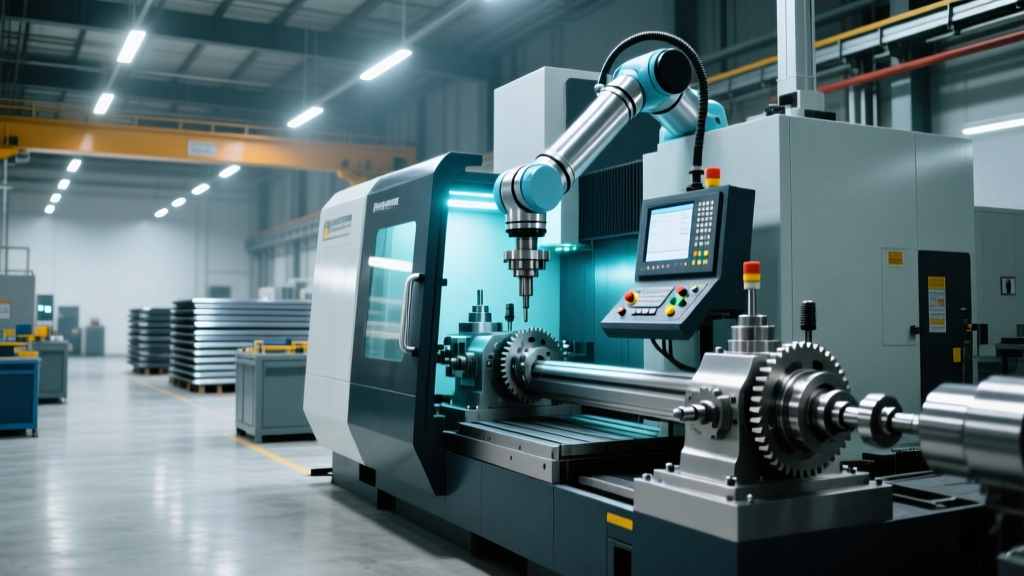
EOAT Calibration for High-Dust Recycled Corrugated
The push for circular economies, championed by organizations like the Ellen MacArthur Foundation, has led to widespread use of 100% post-consumer recycled (PCR) corrugated board. PCR board generates significantly more surface dust and possesses lower porosity than virgin kraft. This wreaks havoc on standard vacuum End-of-Arm Tooling (EOAT).
If an operator attempts to pick a 25 kg PCR case using standard 80 Shore A polyurethane suction cups, the vacuum seal will fail mid-transfer due to dust clogging the micro-pores. Training protocols must mandate the switch to 60 Shore A Nitrile Butadiene Rubber (NBR) foam lip cups, such as the Schmalz SPZG series, which conform to warped, dusty surfaces and maintain seals despite particulate ingress.
Step-by-Step EOAT Changeover & Maintenance Protocol
- Inspect Cup Wear: Check NBR foam lips for compression set. Replace if the foam does not rebound to 90% of its original height within 3 seconds.
- Adjust Vacuum Generator Flow: Increase the venturi flow rate by 18% to 22% to compensate for the micro-leaks caused by PCR board surface roughness.
- Install Inline Filters: Fit 40-micron sintered bronze filters directly upstream of the vacuum cups to trap corrugated dust before it reaches the solenoid valves.
- Program Blow-Off Pulses: Configure a 0.2-second positive pressure blow-off pulse upon case release to clear dust from the cup surface before the next pick cycle.
Servo Palletizing and Energy Recovery Algorithms
Modern eco-friendly packaging machinery solutions extend beyond materials to the energy footprint of the machinery itself. The EPA's Sustainable Materials Management guidelines heavily incentivize energy-efficient manufacturing. Palletizers like the ABB IRB 460 equipped with OmniCore controllers utilize regenerative braking, feeding kinetic energy back into the plant's microgrid during deceleration.
However, this feature only yields its advertised 18% to 22% energy savings if operators program optimal acceleration profiles. Jerky, high-peak acceleration profiles negate regenerative gains by overloading the drive capacitors. Operators must be trained to use trapezoidal or S-curve motion profiles in the robot's teach pendant, smoothing out the torque spikes and maximizing the regenerative capture window.
📊 Data Highlight: Energy Capture EfficiencyTesting on a 4-axis ABB IRB 460 handling 15 cycles per minute shows that switching from a standard linear acceleration profile to an optimized S-curve profile increases regenerative energy capture by 14.3 kWh per 8-hour shift, reducing overall EOL cell power consumption by 19%.
EOL Material Shift & Machine Parameter Matrix
Operators must understand that changing a consumable requires a corresponding adjustment in machine parameters. Use the following matrix as a quick-reference guide on the shop floor.
| Material Transition | Legacy Parameter | Eco-Friendly Parameter | Primary Failure Mode if Ignored |
|---|---|---|---|
| LLDPE to Paper Wrap | 250% Pre-stretch | Friction brake at 1.5 kg | Web snap at carriage |
| Virgin Kraft to 100% PCR | 80 Shore A PU Cups | 60 Shore A NBR Foam Cups | Dropped cases / vacuum loss |
| Wood Pallets to Corrugated Slips | Standard Magazine Feeder | Anti-static blower + vacuum pick | Double-feeding / static cling |
| Standard to Lightweight PET Strapping | 300°C Heat Seal | 220°C + Ultrasonic Weld | Strap burn-through / weak joints |
Troubleshooting Edge Cases in Eco-Friendly EOL Lines
Static Cling on Corrugated Slip Sheets
When replacing wood pallets with corrugated slip sheets, operators frequently encounter static cling, causing the automated dispenser to feed two sheets at once. Because slip sheets are significantly thinner (typically 1.5 mm to 2.0 mm), a double-feed will jam the conveyor and halt the palletizer. The corrective action is to install an ionizing air blower directly above the slip sheet magazine and train operators to clean the emitter pins with isopropyl alcohol weekly to maintain the ion output.
Vision System Calibration for Warped Recycled Board
PCR corrugated is highly susceptible to humidity-induced warping. When a robotic palletizer relies on mechanical hard stops to align cases, warped eco-board will bind and crush. Facilities upgrading to eco-friendly packaging machinery solutions must train vision technicians to calibrate 2D cameras, such as FANUC iRVision, to detect the leading edge of warped cases dynamically. Operators must learn to set the edge-detection contrast threshold to 45-55 to account for the inconsistent print quality and mottled brown surface of unbleached recycled board, ensuring the robot adjusts its pick coordinates in real-time without crushing the packaging.