Case Packing Tech: Companies Driving Innovation in Packaging Machinery
Explore the technical specifications, servo kinematics, and payload metrics of automated case packers from top packaging machinery innovators.
The Shift to Continuous Motion Servo Kinematics
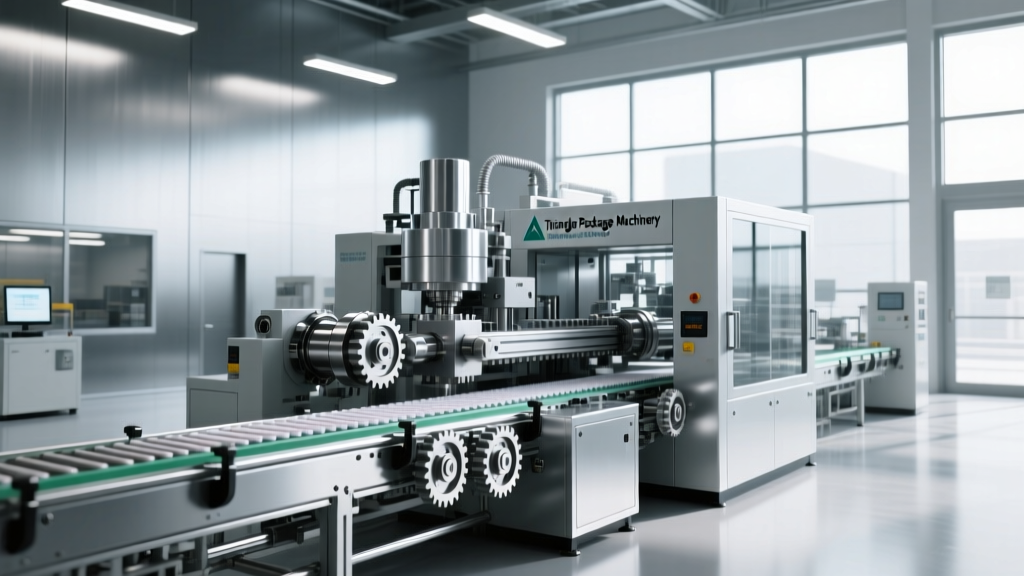
The mechanical architecture of automated case packing has fundamentally transitioned from intermittent pneumatic actuation to continuous motion multi-axis servo kinematics. Historically, case packers relied on mechanical line shafts, clutches, and pneumatic cylinders to index blanks and drop products into corrugated trays. This approach capped speeds at roughly 40 cases per minute (CPM) and suffered from high mechanical wear. Today, the companies driving innovation in packaging machinery utilize electronic camming via high-resolution servos (typically 24-bit absolute encoders) to synchronize product collation, blank erection, and case sealing on the fly.
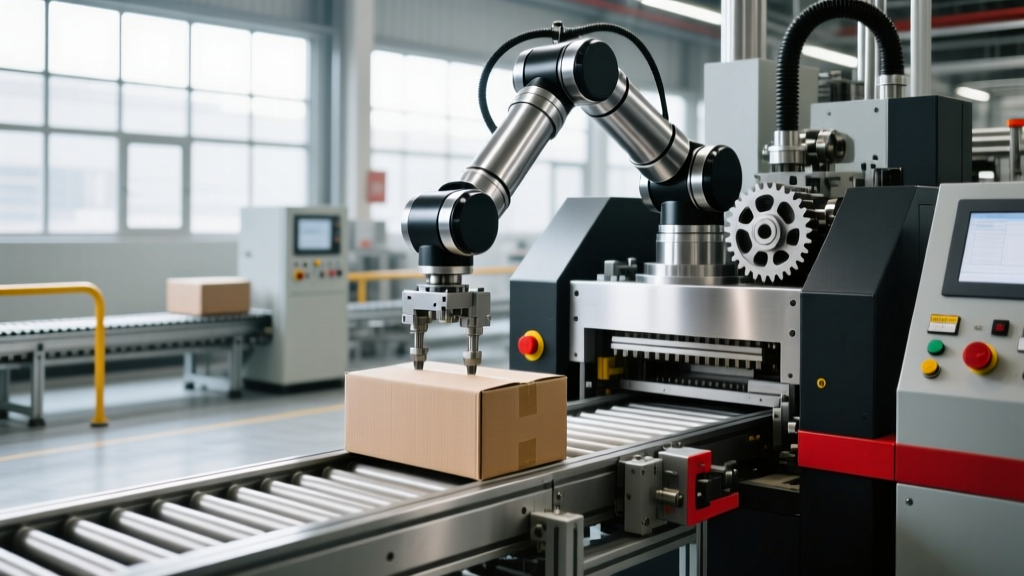
In a modern continuous motion wrap-around case packer, the primary drive train is decoupled into modular servo nodes. A central programmable automation controller (PAC) orchestrates the motion profile. For example, the product grouping infeed operates on a 3-axis delta or gantry configuration, while the blank magazine utilizes a dedicated rotary servo feeder. This decoupling allows operators to adjust the sealing dwell time independently of the infeed speed via the HMI, a critical capability when switching between standard B-flute and heavier double-wall corrugated grades.
Comparative Architecture: Wrap-Around vs. Drop-Pack vs. Side-Load
Selecting the correct case packing architecture requires matching the kinematic profile to the primary packaging geometry and corrugated material constraints. Below is a technical comparison of the three dominant configurations deployed in 2026 production environments.
| Architecture | Max Speed (CPM) | Corrugate Grade | Primary Use Case | Typical Changeover Time |
|---|---|---|---|---|
| Wrap-Around (Continuous) | 60 - 85 CPM | B-Flute, C-Flute, E-Flute | Beverages, cans, glass jars | 10 - 15 mins (Tool-less) |
| Drop-Pack (Intermittent) | 80 - 120 CPM | RSC (Regular Slotted Cartons) | Pouches, flow-wrapped bars, loose bulk | 15 - 25 mins (Format parts) |
| Side-Load (Cartoning) | 40 - 70 CPM | Folding Cartons, Micro-flute | Pharmaceuticals, cosmetics, fragile goods | 5 - 10 mins (Digital indicators) |
Inside the Wrap-Around Erector: A Mechanical Breakdown
To understand the engineering rigor applied by top-tier manufacturers, we must examine the sequential mechanical flow of a high-speed wrap-around case packer. This process relies on precise tension control and adhesive timing.
- Blank Magazine & Pick-Off: A servo-driven rotary feeder pulls a flat corrugated blank from a gravity-fed magazine. Vacuum cups mounted on a rotary arm engage the blank. Specification: Vacuum generators must pull a minimum of -75 kPa to ensure grip reliability on highly porous recycled kraft.
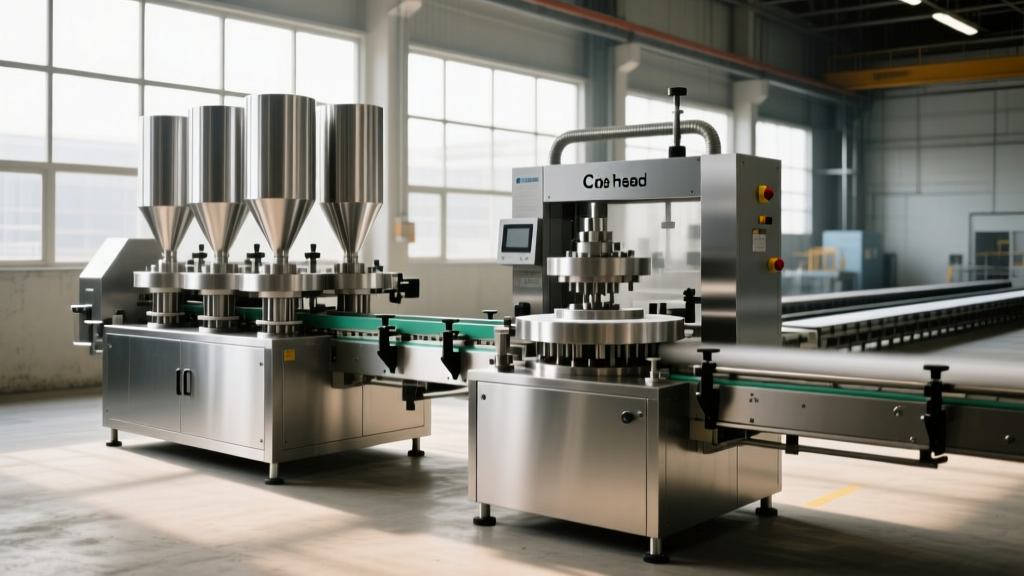
- Product Collation & Loading: While the blank is in transit, a servo-driven flighted conveyor groups the primary packages (e.g., PET bottles or aluminum cans) into the required matrix (e.g., 4x3 or 6x4). The blank is positioned directly beneath the product group.
- Folding & Wrapping: As the blank and product group move synchronously through the folding tunnels, stationary mechanical rails score and fold the minor and major flaps around the product group. This continuous wrapping eliminates the need for a dedicated pre-erection station.
- Hot-Melt Adhesive Application: Tankless hot-melt systems (such as the Nordson ProBlue Liberty) apply precise bead patterns to the major flaps. Tankless melters reduce adhesive charring and lower energy consumption by up to 40% compared to legacy tank systems.
- Compression & Discharge: The sealed case passes through a top-and-side compression belt section. The dwell time in this section is dynamically adjusted by varying the belt length or speed, ensuring the hot-melt adhesive cures before the case is palletized.
Edge Cases: High-Recycled Kraft and Vacuum Degradation
One of the most significant technical hurdles in modern case packing is the industry-wide shift toward high-recycled-content corrugated board. While sustainable, this material introduces severe edge cases in automated handling.
Engineering Warning: Vacuum PorosityStandard Venturi vacuum ejectors designed for virgin kraft paper often fail on 100% recycled board due to microscopic surface porosity. Air leaks through the corrugated fibers, causing the vacuum level to drop below the -60 kPa threshold required to lift the blank. To resolve this, innovators are integrating multi-stage ejectors with high-flow volume capabilities, or switching to regenerative side-channel blowers that prioritize volumetric flow (CFM) over absolute vacuum pressure to maintain grip on porous substrates.
Furthermore, recycled board generates significantly more corrugated dust during the folding and scoring phases. This abrasive dust infiltrates standard servo motor encoders, leading to catastrophic communication faults on the EtherCAT or PROFINET networks. Procurement specifications for 2026 must mandate IP65-rated or IP67-rated servo motors with sealed, aviation-grade connectors to mitigate dust ingress.
Controls Integration and OMAC/PackML Compliance
Mechanical speed is irrelevant if the machine cannot communicate effectively with upstream fillers and downstream palletizers. Leading packaging machinery companies have universally adopted the OMAC PackML standard for state machine control. PackML standardizes the machine states (e.g., Starting, Execute, Holding, Aborted) and provides a uniform method for calculating Overall Equipment Effectiveness (OEE).
When integrating a new case packer into an existing line, engineers should verify that the PLC supports PackML state transitions natively. This allows the supervisory SCADA system to automatically throttle the case packer's infeed conveyor if the downstream palletizer enters a 'Held' state, preventing product accumulation and line crashes without requiring custom PLC logic programming.
Procurement Specifications & Maintenance Framework
When evaluating automated case packing equipment, facility engineers must look beyond the quoted CPM rating. The true cost of ownership is dictated by changeover efficiency and maintenance intervals. According to recent automation trend analyses published by Packaging World, tool-less changeovers are now a baseline expectation, not a premium upgrade.
Modern machines utilize digital position indicators (such as SIKO or Balluff IO-Link modules) on all adjustable guide rails. When an operator selects a new SKU recipe on the HMI, the digital indicators display the exact target position. Some fully automated systems use stepper motors to adjust the rails automatically, reducing changeover time from 20 minutes to under 3 minutes.
Preventative Maintenance Matrix
| Component | Interval | Technical Action | Failure Consequence |
|---|---|---|---|
| Vacuum Cup Lips (Polyurethane) | 500 Hours | Inspect for micro-tears and durometer hardening. | Blank misalignment, folding tunnel jams. |
| Hot-Melt Nozzles | Weekly | Purge and clean with brass wire; check for char. | Weak case seals, flap pop-opens during palletizing. |
| Compression Belts | 2,000 Hours | Check tension and inspect for adhesive buildup. | Skewed cases, improper flap adhesion. |
| Servo Gearboxes | 10,000 Hours | Sample synthetic lubricant for particulate analysis. | Backlash introduction, registration errors in electronic camming. |
Synthesizing the Future of Case Packing Automation
The trajectory of case packing technology is defined by the convergence of advanced kinematics and material science adaptability. As PMMI's Business Intelligence reports consistently highlight, the push for lightweighting and sustainable corrugated materials forces machinery manufacturers to rethink traditional mechanical gripping and folding paradigms. Engineers specifying new equipment must prioritize high-flow vacuum systems, IP-rated motion components, and native PackML integration to ensure their packaging lines remain resilient against the evolving realities of secondary packaging materials.