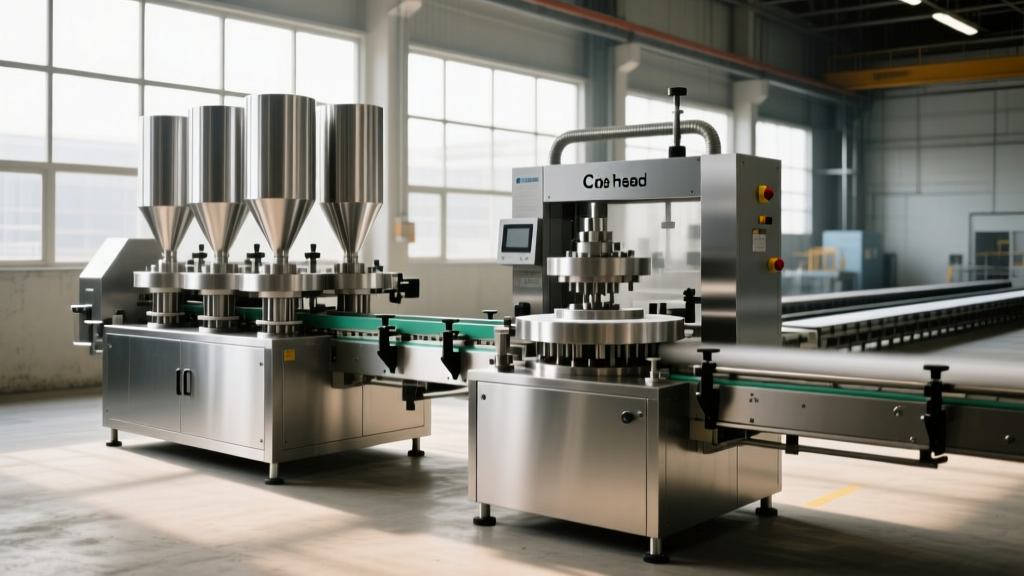
Snack Lines: Multi-Head Weighers & Capping Equipment Manufacturers
Explore how multi-head weigher systems integrate with modern capping equipment manufacturers to optimize premium snack food packaging lines in 2026.
The Convergence of Weighing and Sealing in Premium Snack Lines
The snack food packaging sector is undergoing a structural shift. While flexible vertical form-fill-seal (VFFS) bags remain dominant for mass-market chips, premium snack categories—such as gourmet trail mixes, protein crisps, and roasted nuts—are rapidly migrating to rigid PET tubs and composite cans. This transition fundamentally alters the packaging line architecture. Facilities can no longer rely on standalone gravity drops; they require highly synchronized multi-head weigher systems paired with precision torque-controlled sealing tech. Consequently, leading capping equipment manufacturers are now engineering upstream integration protocols that directly communicate with multi-head weigher discharge cycles to eliminate bottlenecks and product spillage.
Leading Multi-Head Weigher Systems for 2026 Snack Production
When packaging dense, irregular snack foods like almonds or cashews, the weigher must handle high fragmentation risks while maintaining strict accuracy to comply with FDA packaging guidelines regarding net weight declarations. The current market standard relies on 14-head and 20-head multi-layer configurations that utilize advanced load cells and linear motor vibration.
Top Contenders in the Market
- Ishida CCW-RV-214W: A 14-head, 2-layer system featuring Ishida's proprietary 'RV' technology. It achieves speeds up to 140 weighments per minute (wpm) with an accuracy of ±0.3g. The specialized snack bucket design includes a 30-degree dump angle to prevent cashew breakage.
- Yamato Omega Series (ODW-214): Known for its IP69K waterproof rating, making it ideal for facilities requiring rigorous caustic washdowns. It operates at 120 wpm and includes an integrated reject diverter for underweight tubs.
- Heat and Control CC-14: Features auto-centering load cells that eliminate the need for manual calibration, reducing line changeover times by up to 40%.
| Model | Heads / Layers | Max Speed (wpm) | Accuracy (±g) | Approx. Base Price |
|---|---|---|---|---|
| Ishida CCW-RV-214W | 14 / 2 | 140 | 0.3g | $115,000 |
| Yamato ODW-214 | 14 / 2 | 120 | 0.5g | $98,000 |
| Heat & Control CC-14 | 14 / 1 | 90 | 0.8g | $72,000 |
How Capping Equipment Manufacturers Bridge the Integration Gap
Historically, a plant manager would purchase an Ishida weigher and a separate rotary capper, relying on basic dry-contact relays to start and stop the line. In 2026, this approach is obsolete for high-speed tub lines. Top capping equipment manufacturers—such as Enercon and Krones—now build native EtherCAT and PROFINET communication stacks directly into their capping turrets.
Industry Insight: When packaging premium snacks into 32oz PET tubs, the physical distance between the weigher discharge chute and the capping starwheel is often less than 18 inches. If the capper's indexing starwheel is not perfectly phased with the weigher's discharge pulse, the tub will move while product is still falling, resulting in 'tailings' (product caught in the threads). This ruins the cap seal and causes torque failures.Modern capping equipment manufacturers solve this by utilizing 'virtual camshaft' software. The weigher acts as the master encoder. As the multi-head weigher calculates the optimal combination of hoppers and initiates the discharge, it sends a high-speed telegram to the capper's servo drive. The capper dynamically adjusts its starwheel speed in real-time to ensure the empty tub is exactly under the chute at the millisecond the product drops.
PLC Handshake and Latency Requirements
For snack lines running above 100 tubs per minute, network latency is the primary cause of micro-stoppages. The integration architecture must adhere to strict timing protocols:
- Weighment Calculation (0-5ms): The weigher's CPU evaluates 14 load cells and selects the best combination.
- Discharge Signal (5-8ms): A PROFINET I/O signal is transmitted to the master PLC.
- Starwheel Phasing (8-12ms): The PLC commands the capper's servo drive to advance the tub.
- Cap Application (12-15ms+): The capping heads descend, applying the precise torque (typically 12-18 in-lbs for 89mm plastic snap-caps).
If total system latency exceeds 20ms, the mechanical timing drifts. Facilities must ensure their ISO 22000 compliant automation networks are running on dedicated, shielded Cat6A Ethernet cables, isolated from the plant's general IT traffic, to guarantee sub-10ms cycle times.
Sanitation and IP69K Washdown Protocols
Snack foods often contain high lipid (fat) content and fine particulate dust (e.g., seasoning powders). This residue builds up rapidly on weigher buckets and capping chucks. While the multi-head weigher sits upstream, the capping equipment is downstream and equally susceptible to cross-contamination.
Leading capping equipment manufacturers now offer IP69K-rated capping heads that can withstand 1450 PSI steam cleaning at 176°F (80°C). However, a critical failure mode occurs when maintenance teams use aggressive alkaline foaming agents on the weigher, which then splash onto the capper's torque clutches. Modern magnetic hysteresis capping clutches are sealed, but pneumatic slip-clutches will fail if caustic chemicals breach the O-rings. Always specify chemical-resistant Viton seals when ordering downstream capping equipment for heavily seasoned snack lines.
ROI Calculation: Giveaway vs. Cap Torque Failures
Upgrading to a synchronized weigher-capper system requires significant capital, but the return on investment is driven by two specific metrics: product giveaway reduction and reject minimization.
'By syncing our 14-head weigher directly to the Enercon capper via EtherCAT, we reduced our net-weight giveaway from 4.2 grams per tub to 0.8 grams. On a line producing 12 million tubs annually, that saved over $65,000 in raw product costs in the first year alone.' — Plant Engineering Director, Regional Snack Co-processor.
Furthermore, thread-tailings caused by poor synchronization lead to cap torque failures. If a tub with product in the threads reaches the torque tester, it is rejected. At 120 tubs per minute, a single mis-phased discharge event can result in 15-20 consecutive rejected tubs before the line's vision system flags the error and halts the machine. Synchronization eliminates this cascade failure, improving Overall Equipment Effectiveness (OEE) by an average of 6-8% on rigid snack container lines.
Final Procurement Advice
When specifying a new snack packaging line, do not source the weigher and capper in isolation. Mandate that the capping equipment manufacturers provide a documented Factory Acceptance Test (FAT) that includes a simulated PROFINET handshake with your specific multi-head weigher model. Require proof of sub-15ms latency and zero thread-tailings at 110% of your target line speed before the equipment ships to your facility.