Medical Packaging Machinery: Cartoning and Case Packing Specs
Explore the technical specifications, kinematics, and FDA compliance requirements of automated cartoning and case packing in medical packaging machinery.
The Regulatory and Environmental Baseline for Medical Cartoning
Medical packaging machinery operates under constraints that standard FMCG (fast-moving consumer goods) equipment never faces. Automated case packing and cartoning systems in the pharmaceutical and medical device sectors must navigate strict cleanroom classifications, minimize particulate shedding, and integrate seamlessly with track-and-trace serialization mandates. When specifying secondary packaging equipment for sterile kits, glass vials, or pre-filled syringes, engineers must prioritize kinematic precision and material compliance over raw throughput speed.
Compliance Alert: Cleanroom & Data IntegrityEquipment operating in ISO Class 7 or 8 cleanrooms must comply with ISO 14644 standards for particulate control. Furthermore, the Human-Machine Interface (HMI) and SCADA systems on these cartoners must be fully compliant with FDA 21 CFR Part 11, requiring secure, time-stamped electronic audit trails for every recipe change and fault reset.
Core Technical Specifications for Medical-Grade Cartoners
Unlike standard corrugated case packers, medical cartoning machinery handles lightweight, highly sensitive primary packaging (e.g., blister packs, Tyvek pouches, and glass ampoules). The technical architecture reflects this need for gentle, highly controlled handling.
Servo-Driven Kinematics vs. Mechanical Line Shafts
Modern medical packaging machinery has almost entirely abandoned mechanical line shafts and continuous chain drives in favor of independent, multi-axis servo systems (such as Siemens Simotion or Rockwell Kinetix). Independent servos eliminate the need for centralized lubrication points, drastically reducing the risk of airborne particulate contamination and oil drips in cleanroom environments. A typical high-end medical cartoner utilizes between 12 and 18 independent servo axes to control carton erection, product bucket elevators, and leaflet insertion.
Material and Lubrication Standards
- Product Contact Parts: Must be manufactured from 316L stainless steel or FDA-compliant engineering plastics (e.g., PEEK or UHMWPE) to withstand aggressive vaporized hydrogen peroxide (VHP) or peracetic acid washdowns.
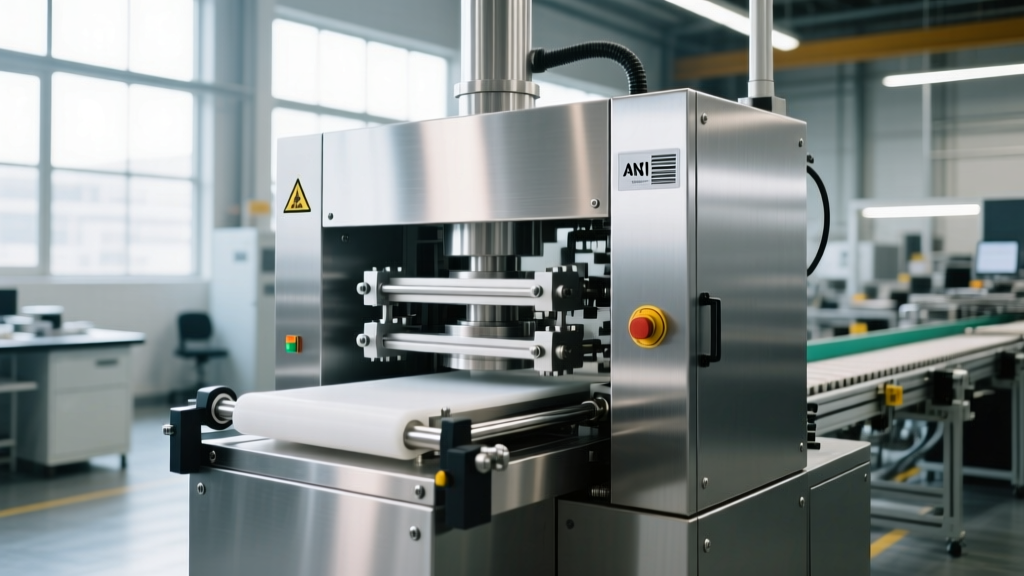
- Frame Construction: 304 stainless steel with a minimum 0.8 µm Ra surface finish to prevent bacterial harborage and allow rapid decontamination.
- Lubrication: Only H1-registered food/pharma-grade synthetic lubricants are permitted in areas where incidental contact with the primary package is possible.
Intermittent vs. Continuous Motion: A Medical Application Matrix
Choosing the right motion profile is critical. While continuous motion offers higher speeds, intermittent motion provides superior control for fragile medical devices.
| Feature | Intermittent Motion Cartoner | Continuous Motion Cartoner |
|---|---|---|
| Max Speed | 80 - 120 cartons/min | 150 - 300+ cartons/min |
| Ideal Product | Fragile glass vials, complex sterile kits, heavy syringe trays | Standard blister packs, lightweight sachets, high-volume OTC pharma |
| Loading Mechanism | Robotic Delta pick-and-place or vertical drop | Continuous bucket conveyor with side-loading plows |
| Changeover Time | 10 - 15 minutes (tool-less) | 25 - 45 minutes (requires gauge adjustments) |
| Particulate Risk | Low (fewer sliding friction points) | Moderate (continuous belt/bucket friction) |
How Automated Medical Case Packing Works: Step-by-Step Kinematics
The sequence of operations in a medical-grade cartoner (such as those engineered by Marchesini or Romaco) is designed to protect both the product and the sterile barrier.
- Magazine Extraction: A rotary or reciprocating suction cup head pulls the flat blank from the magazine. Medical systems use specialized low-vacuum, high-flow venturi generators to prevent the suction cups from tearing the coated carton stock or generating paper dust.
- Carton Erecting and Squaring: The blank is pulled through a forming mandrel. In cleanrooms, hot-melt glue is often avoided during the erecting phase due to off-gassing and stringing; instead, mechanical tuck-in flaps or ultrasonic sealing is utilized.
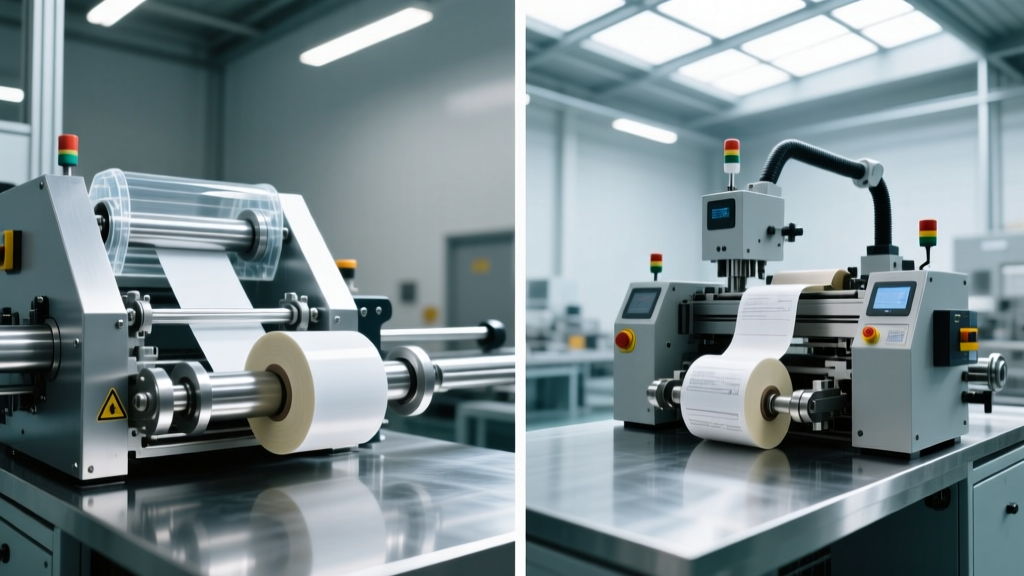
- Leaflet Insertion: An outsert/leaflet feeder folds the multi-page instructional insert (often 16 to 64 pages of thin 40gsm paper) and inserts it into the carton before the product. Optical sensors verify leaflet presence via a printed contrast mark.
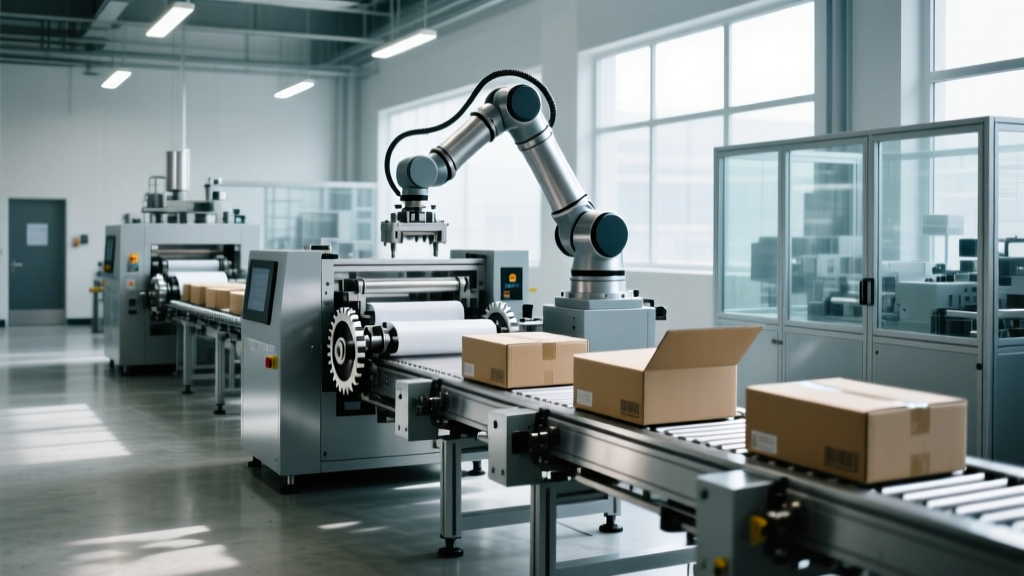
- Product Loading: For fragile glass ampoules, a 3-axis Delta robot equipped with soft-touch silicone end-of-arm tooling (EOAT) gently places the product into the carton. This eliminates the micro-fractures caused by traditional mechanical pushers.
- Closure and Sealing: Flaps are folded via fixed plows. Closure is achieved via tuck-in, cold-glue application (using precise volumetric piston pumps to eliminate stringing), or hot-air/tuck-in combinations.
Integration with Serialization and Track-and-Trace Systems
As the FDA enforces strict interoperability and aggregation mandates under the Drug Supply Chain Security Act (DSCSA) through 2026 compliance deadlines, the cartoner is the critical aggregation node. The machine must link the primary package's serial number to the secondary carton's 2D DataMatrix code.
Vision System SpecificationsMedical cartoners integrate high-speed vision systems (e.g., Cognex In-Sight or Keyence XG-X series) capable of reading 2D DataMatrix codes at speeds exceeding 80 ppm. The system must verify code grade (AIM DPM 1-4), human-readable text (OCR/OCV), and barcode contrast. Any carton failing a 'Grade C' or lower verification is automatically diverted to a locked reject bin via a high-speed pneumatic pusher.
Cost Analysis and Procurement Tiers
Capital expenditure for medical packaging machinery reflects the cost of validation documentation (IQ/OQ/PQ), stainless steel fabrication, and advanced servo controls.
- Entry-Level Intermittent Cartoner (Pharma-grade): $180,000 – $260,000. Suitable for low-volume clinical trial kits or niche medical devices (40-60 cartons/min).
- Mid-Range Continuous Cartoner with Serialization: $350,000 – $550,000. Includes integrated vision systems, reject stations, and 21 CFR Part 11 compliant HMI.
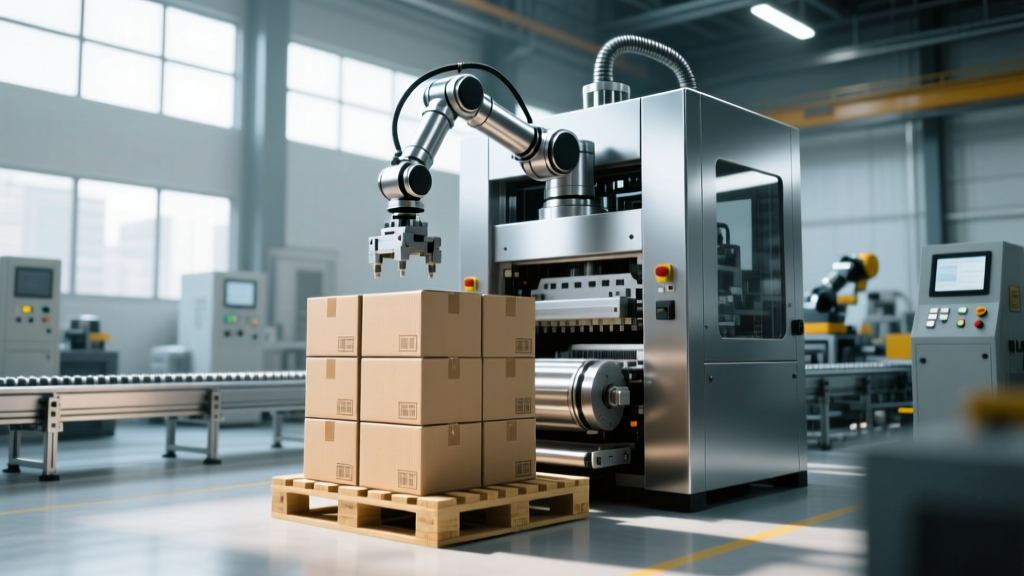
- Fully Integrated End-of-Line Medical Case Packer: $650,000 – $1.2M+. Includes robotic primary cartoning, secondary corrugated case packing, automated case taping, and palletizing aggregation software.
Common Failure Modes and Edge Cases in Medical Cartoning
Even highly engineered medical packaging machinery experiences specific failure modes that operators must proactively manage:
'The most common cause of unplanned downtime in sterile kit cartoning isn't mechanical failure; it's static electricity. In low-humidity cleanrooms, static charges cause Tyvek pouches and paper leaflets to cling to forming mandrels or jam in the magazine. Integrating active ionizing bars at the magazine feed and loading zones is non-negotiable for reliable operation.' — Senior Packaging Validation Engineer, Medical Device OEM
Edge Case: Glue Stringing in Cold Environments
If the cleanroom HVAC drops the ambient temperature below 18°C (64°F), hot-melt adhesives can set too quickly, leading to weak bonds or 'stringing' that contaminates the carton exterior. Facilities must specify closed-loop temperature-controlled glue tanks with heated hoses, or transition entirely to cold PVA glues or mechanical tuck-in closures.
Edge Case: Tool-less Changeover Tolerances
While vendors advertise 'tool-less changeover,' the reality of medical packaging requires strict validation. If an operator changes a format part (e.g., from a 10ml vial tray to a 50ml syringe tray) without a digital position indicator, the risk of misaligned leaflet insertion increases. Always specify cartoners with digital position counters or RFID-tagged format parts that automatically update the HMI recipe and lock out the machine if the wrong tooling is installed.
Validation Requirements: IQ, OQ, and PQ
Purchasing medical packaging machinery is only the first step. The equipment must undergo rigorous validation. Installation Qualification (IQ) verifies that 316L materials and electrical schematics match the design. Operational Qualification (OQ) tests the limits of the servo speeds, vision system reject rates, and HMI security protocols. Finally, Performance Qualification (PQ) runs the machine at production speeds with actual medical products and packaging materials for a statistically significant duration (typically 3 consecutive 8-hour shifts) to prove a Cpk (Process Capability Index) of >1.33 for critical parameters like seal integrity and serialization readability.