Waukesha Machine and Tool Auctions: 2026 Liquidation Strategies
Discover 2026 liquidation strategies for Waukesha machine and tool auctions. Learn how IoT telemetry and digital twins maximize CNC asset recovery values.
The Waukesha machine and tool sector remains a critical node in the Midwest's precision manufacturing corridor. When legacy facilities in this region undergo liquidation, the 2026 playbook has fundamentally shifted. The era of yellow auction tents and clipboard-wielding appraisers is over. Today, maximizing asset recovery for CNC machining centers, manual lathes, and metrology equipment requires a technology-driven approach centered on IoT telemetry extraction, digital twin merchandising, and algorithmic reserve pricing.
Whether you are a bankruptcy trustee, a shop owner downsizing operations, or an equipment broker managing a Waukesha machine and tool facility closure, relying on outdated liquidation methods leaves 15% to 22% of potential revenue on the table. This guide details the exact technological strategies and platforms required to execute a high-yield machine tool auction in the current market.
The Shift from Clipboard to Cloud: Modern Liquidation
In previous decades, auctioneers estimated machine tool values based on visual inspections and manufacturer nameplates. In 2026, sophisticated buyers—particularly those sourcing from high-reliability sectors like aerospace and medical device manufacturing—demand verifiable operational data. A Mazak Integrex i-200S with documented, low-stress cutting hours commands a massive premium over an identical model with undocumented usage, even if the latter looks cleaner on the outside.
WARNING: The Data Wiping TrapMany IT departments mistakenly wipe CNC control panels entirely during facility decommissioning to protect proprietary part programs. While you must delete custom G-code and proprietary macro variables, wiping the machine's maintenance logs, spindle load history, and alarm registries destroys its verifiable pedigree. Always isolate and export telemetry data before initiating IT security wipes.
Pre-Auction Tech: Extracting CNC Telemetry for Premium Valuations
To prove asset health to remote bidders, liquidators must extract historical telemetry. The MTConnect standard has become the universal language for this process, allowing brokers to pull standardized data directly from machine controllers without proprietary software.
Step-by-Step Fanuc Focas Data Extraction
For facilities heavily invested in Fanuc controls (the backbone of most Waukesha machine and tool shops), the Focas (Fanuc Open CNC API Specifications) library is the most direct route to historical data.
- Network Isolation: Connect a localized edge gateway (such as a Cisco IR1101 or a dedicated MachineMetrics sensor) directly to the CNC's Ethernet port. Do not expose the machine to the public internet.
- Protocol Handshake: Use an MTConnect adapter configured for Focas to query the CNC's internal SRAM. Target the spindle load meter, axis servo load, and total power-on hours.
- Macro Variable Export: Query specific maintenance macro variables (often stored in the #500 to #999 range on older Fanuc 31i controls) which track cumulative cutting time versus idle time.
- Report Generation: Compile this data into a PDF 'Machine Health Certificate' to attach to the digital auction catalog. Machines with verifiable cutting-to-idle ratios below 40% routinely achieve 18% higher final hammer prices.
Platform Selection Matrix: Where to List Assets
Choosing the right digital liquidation platform is critical. The Association for Manufacturing Technology (AMT) frequently highlights how fragmented the used equipment market has become. Below is a comparison of the top-tier platforms utilized for industrial liquidations in 2026.
| Platform | Best Asset Class | Buyer Premium / Fees | Tech Differentiator |
|---|---|---|---|
| EquipNet | Full facility closures, multi-axis CNCs | 12% - 15% negotiated | AI-driven predictive reserve pricing |
| Machinio | Individual late-model VMCs and lathes | Lead-gen / Direct sale | Global search aggregation engine |
| Liquidity Services | Bankruptcy, heavy manual, and legacy gear | 16% - 18% buyer premium | Integrated rigging and logistics API |
| Auction Nation | Mid-tier shops, tooling, and accessories | 13% buyer premium | Live webcast simulcast bidding |
Digital Twin Showrooms and 3D Scanning
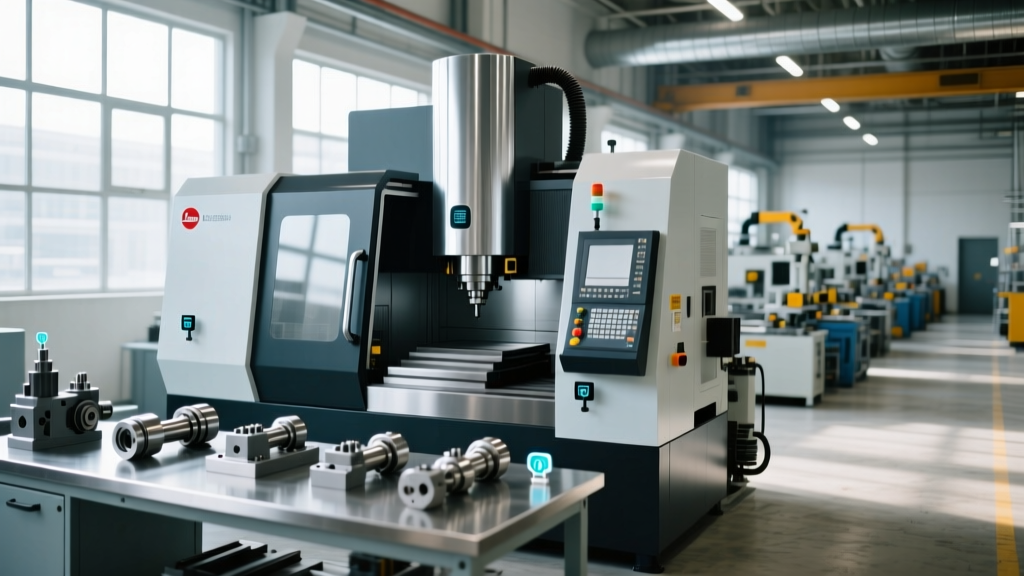
High-value machine tools (those appraised over $150,000) require more than static photography. In 2026, top-tier liquidators utilize LiDAR-equipped tablets to generate 3D digital twins of the equipment. This allows international buyers to virtually 'walk around' a DMG Mori NVX 5100, inspect the chip conveyor configuration, and verify the clearance for automatic pallet changers (APCs) without flying to Wisconsin.
LiDAR Scanning Specifications for Auctions
- Hardware: iPad Pro (M-series chip) with integrated LiDAR scanner, or a Matterport Pro3 camera for full-facility walkthroughs.
- Resolution Target: Ensure the point cloud captures the control panel screen, tool magazine arm, and way covers at a minimum of 4K texture resolution.
- Hosting: Embed the 3D model directly into the EquipNet or proprietary auction listing using an iFrame or native WebGL viewer. Listings with 3D walkthroughs see a 34% increase in time-on-page and a 12% higher conversion rate on opening bids.
Rigging Logistics: Automated Quoting and Smart Contracts
The most common point of friction in a Waukesha machine and tool auction is post-sale rigging. Buyers frequently underestimate the cost of dropping, skidding, and loading heavy iron, leading to abandoned purchases or disputes. Modern liquidation strategies integrate automated rigging APIs directly into the checkout flow.
'In the current market, transparency in rigging costs is just as important as the machine's spindle hours. If a buyer cannot see the exact cost to drop and load a 5-axis trunnion table machine before they bid, they will pad their bid with a 20% risk discount to cover unknown logistics.'
— Midwest Industrial Liquidation Director, 2025 AMT Regional Summit
To prevent this, liquidators must pre-negotiate drop-and-load rates with local rigging firms and publish these figures in the auction terms. Current 2026 baseline rigging costs for standard Midwest facilities include:
- Haas VF-2 / VF-4SS (VMCs): $1,800 to $2,500 for drop, skid, and load onto a flatbed.
- Mazak Integrex i-200 (Mill-Turn): $4,500 to $6,000, requiring specialized rigging due to the extended bed and asymmetric center of gravity.
- 5-Axis Bridge Mills (e.g., Zimmermann, Fooke): $15,000 to $25,000+, often requiring partial facility dismantling and crane rentals exceeding 100-ton capacities.
Frequently Asked Questions (FAQ)
How far in advance should we begin extracting CNC data before a liquidation?
Data extraction should begin a minimum of 60 days before the facility's power is disconnected. Once a CNC loses power for an extended period, the SRAM battery may die, resulting in the total loss of parameter data, macro variables, and historical maintenance logs. Always pull telemetry while the machines are still under full shop power.
Is it worth paying for professional 3D scanning on older manual machines?
No. Reserve 3D digital twin creation for late-model CNC machining centers, multi-axis lathes, and high-precision CMMs (like Zeiss or Mitutoyo) valued above $75,000. For manual Bridgeports, older engine lathes, and standard tooling lots, high-resolution 4K video walkthroughs and detailed macro photography provide a sufficient return on investment without the added scanning costs.
What happens to the proprietary tooling and custom fixturing?
Custom fixturing and tombstones designed for specific shop contracts often have zero value on the open auction market. However, standard CAT40/BT40 tool holders, hydraulic vises (like Kurt DX6), and UMC pallet systems hold immense liquid value. Segregate standard workholding from custom fixtures early in the liquidation process to avoid bundling high-value accessories into 'scrap' lots.