York Portable Machine Tools Lubrication: Alternatives & Schedules Analyzed
Compare York portable machine tools lubrication systems with Mirage and Climax alternatives. Expert schedules, way oil specs, and automated field solutions.
The Tribology of Portable Field Machining
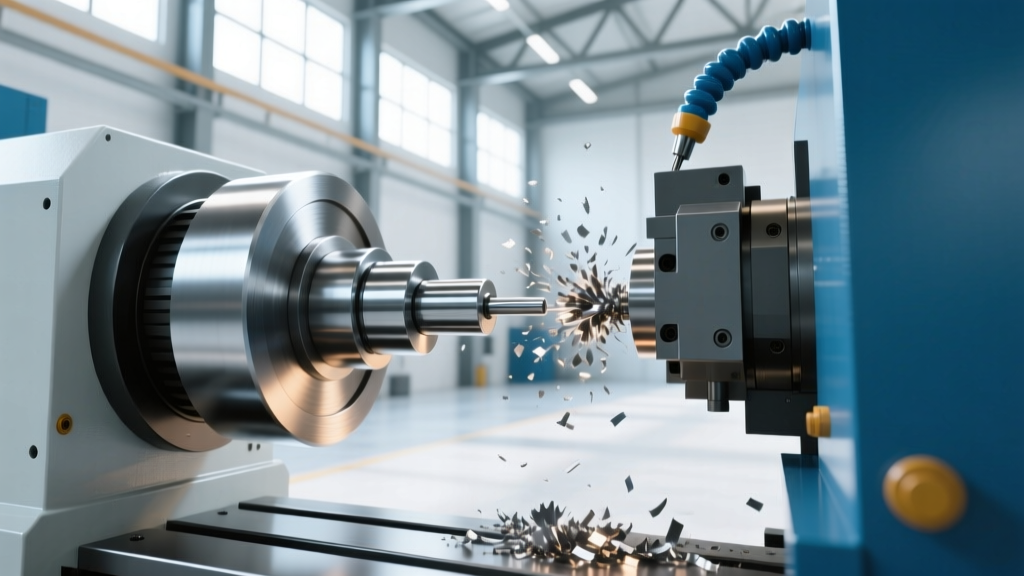
Stationary CNC machines operate in climate-controlled environments with centralized, high-pressure lubrication networks. Portable field machining equipment faces the exact opposite reality. When deploying York portable machine tools for line boring, flange facing, or shaft milling in mining, marine, or heavy construction sites, the lubrication system must combat silica dust, extreme temperature fluctuations, and heavy shock loads. Failure to maintain the microscopic oil film on dovetail ways and linear bearings results in stick-slip phenomenon at low feed rates (typically below 0.5 mm/min), destroying surface finish tolerances and accelerating way wear by up to 300%.
CRITICAL FIELD VARIABLE: Ambient temperature dictates way oil viscosity. Using a standard ISO VG 68 way oil in sub-zero mining environments (below 10°C) will cause the oil to thicken, starving the York machine's manual wipers. Conversely, using it in high-heat turbine repair environments (above 40°C) drops the viscosity below the critical threshold for hydrodynamic separation.York Portable Machine Tools: OEM Lubrication Baseline
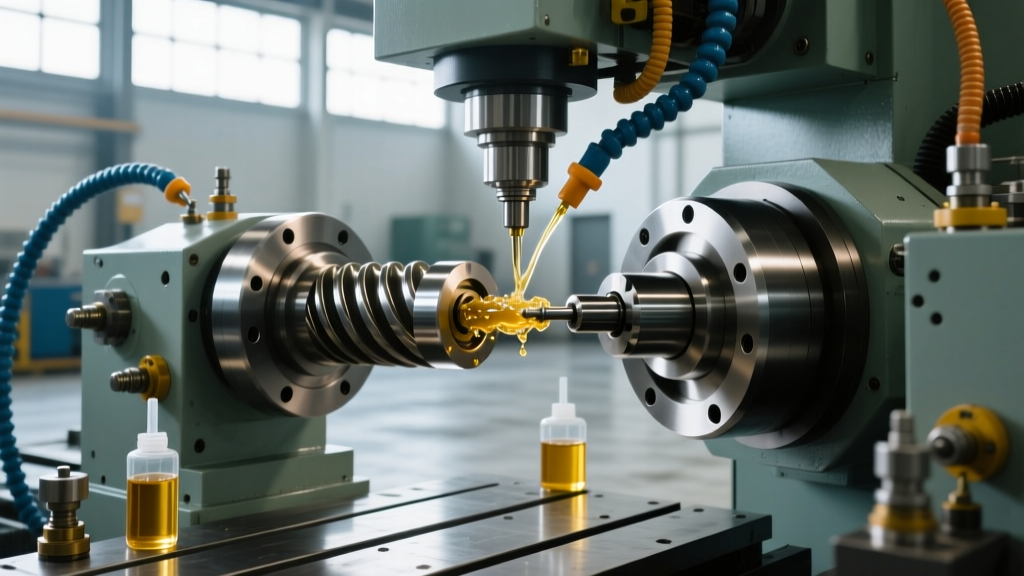
York portable line boring machines and facing tools traditionally rely on manual lubrication architectures. The OEM baseline utilizes standard grease zerks for lead screw bearings and manual way oil application via pump cans or gravity-fed drip systems for the sliding carriages.
The Manual Way Oil Specification
York recommends a tackified way oil to prevent the lubricant from being squeezed out under the heavy cutting forces of interrupted cuts (such as machining keyed shafts or splined bores). The industry standard equivalent is Mobil Vactra No. 2 (ISO VG 68). The tackiness additives (typically polymethacrylates) are non-negotiable; standard hydraulic fluids like AW 46 or AW 68 lack these polymers and will wash out of the way interfaces within minutes of heavy milling operations.
The Lead Screw and Bearing Grease Baseline
For the feed screws and thrust bearings, York's manual schedule requires an NLGI Grade 2 lithium-complex grease with extreme pressure (EP) additives. Manual application requires purging the old grease until fresh grease appears at the seal lip—a process that introduces severe contamination risks if the zerk fitting is not meticulously cleaned beforehand.
Competitor Alternatives: Mirage and Climax Approaches
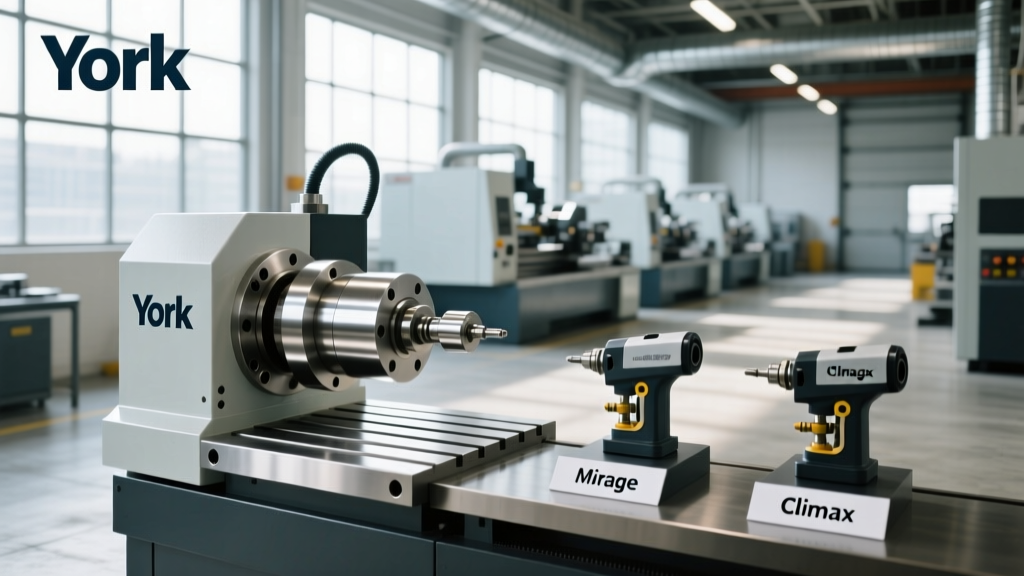
When evaluating alternatives to York's manual architecture, it is essential to analyze how competing brands handle field lubrication. Understanding these alternatives provides a framework for retrofitting or upgrading York equipment.
Mirage Machines: Sealed Linear Rail Architecture
Mirage portable machine tools often utilize sealed, pre-loaded linear guide rails (similar to heavy-duty CNC architectures) rather than traditional open dovetails. This alternative design requires significantly less frequent lubrication. The sealed carriages are packed with NLGI 2 synthetic grease at the factory and only require re-lubrication via integrated grease nipples every 500 hours of operation, compared to the 8-hour manual oiling required on open York ways. However, if the sealed wipers fail in a high-dust environment, the entire linear block must be replaced—a $1,200+ component cost versus a $50 way wiper replacement on a York machine.
Climax Portable Machining: Heavy-Duty Grease Injection
Climax alternatives often favor heavy grease injection systems over way oils for their larger boring bars and facing tools. While grease provides superior sealing against abrasive field contaminants, it introduces higher viscous drag. This drag can cause micro-stuttering during ultra-fine finishing passes, a trade-off that prioritizes machine survival over sub-micron surface finishes.
Retrofitting York Equipment with Automated Lubrication
To bridge the gap between York's manual reliability and the low-maintenance demands of modern field operations, maintenance teams are increasingly retrofitting York portable machine tools with single-point automatic lubricators. According to data on SKF Automatic Lubricators, electromechanical single-point systems can deliver precise micro-doses of lubricant continuously, eliminating the human error inherent in 12-hour field shifts.
| Feature | York OEM Manual | SKF Perma STAR VARIO (Retrofit) | Mirage Sealed Linear (Alternative) |
|---|---|---|---|
| Lubricant Type | ISO VG 68 Tackified Way Oil | ISO VG 68 or NLGI 2 Cartridge | Factory-packed Synthetic Grease |
| Application Method | Manual Pump Can / Grease Gun | Electromechanical Auto-Dispenser | Manual Grease Gun (500hr intervals) |
| Field Contamination Risk | High (Open ways, manual wiping) | Low (Positive pressure purges dirt) | Very Low (Sealed blocks) |
| Stick-Slip Prevention | Excellent (if schedule is strictly followed) | Superior (Continuous micro-dosing) | Moderate (Grease drag at low speeds) |
| Estimated Setup Cost | $0 (Included with machine) | $180 - $250 per axis point | N/A (Machine design dependent) |
Optimized 2026 Maintenance Schedules for Field Operations
Relying on generic 'daily' maintenance checklists leads to catastrophic failures in 24/7 field machining environments. Below is an optimized, hour-based lubrication schedule for York portable machine tools operating in high-contamination environments (e.g., in-situ mining excavator repairs).
Pre-Shift (Hour 0)
- Way Cleaning: Wipe dovetails with a lint-free cloth and a non-chlorinated solvent. Never apply way oil over existing field grit; this creates a lapping compound that destroys the cast iron ways.
- Way Oiling: Apply 15-20ml of ISO VG 68 tackified way oil. Cycle the carriage manually through the full travel length to distribute the film.
- Wiper Inspection: Check the polyurethane way wipers. If they are torn or hardened, replace them immediately. A $15 wiper prevents $5,000 in way scoring.
Mid-Shift (Hour 6)
- Re-oiling: Re-apply 10ml of way oil. Heavy milling operations shear the oil film; mid-shift replenishment is mandatory for tolerances tighter than 0.05mm.
- Lead Screw Purge: If using manual grease, inject exactly two pumps of NLGI 2 EP grease into the lead screw zerk. Rotate the handwheel to distribute.
Post-Shift (Hour 12)
- Corrosion Inhibition: If the machine will sit idle for more than 24 hours, apply a dedicated rust preventive oil (such as Mobil Rust Prevent 62) over the ways and exposed boring bar surfaces. Standard way oils do not contain sufficient vapor-phase corrosion inhibitors for marine or high-humidity environments.
When utilizing flood coolant during portable milling, the coolant will inevitably wash away manual way oil. Ensure your metalworking fluid is compatible with your way oil to prevent the formation of sticky sludge in the machine's oil sump or base frame. Consult the OSHA Metalworking Fluids Guidelines for proper handling and biocide management in field fluid reservoirs.
Cost-Benefit Analysis: Manual vs. Automated Retrofitting
Is the capital expenditure for automated lubrication alternatives justified on portable tooling? Consider a standard York portable line boring machine deployed on a 14-day shutdown in a coal mine.
The Manual Cost: A technician spends 20 minutes per shift cleaning and lubricating the machine. Over a 14-day, 2-shift-per-day operation, that is 9.3 hours of labor. At a burdened field technician rate of $125/hour, manual lubrication costs $1,162 per shutdown. Furthermore, if a technician misses a mid-shift oiling and stick-slip ruins a $40,000 turbine journal, the cost is exponential.
The Automated Alternative Cost: Retrofitting the X and Y axes with two SKF Perma STAR VARIO electromechanical lubricators costs approximately $450 in hardware and 2 hours of installation labor ($250). The system continuously dispenses 0.5 cc/hr of way oil, maintaining a perfect hydrodynamic film while creating positive pressure that expels coal dust. The ROI is achieved in less than half of the first shutdown, while virtually eliminating stick-slip-induced scrap.
Troubleshooting Common Field Lubrication Failures
Even with strict adherence to schedules, field variables cause unique failure modes. Use this diagnostic framework when York portable machine tools exhibit abnormal behavior.
Symptom: Carriage Chatter During Low-Speed Feed
- Root Cause 1: Way oil lacks tackiness additives (using standard hydraulic AW 68 instead of Vactra No. 2). Fix: Flush ways with solvent and apply ISO VG 68 tackified way oil.
- Root Cause 2: Gibs are adjusted too tightly, squeezing out the oil film. Fix: Back off gib adjustment screws by 1/8th of a turn and re-establish the oil wedge.
Symptom: Lead Screw Binding or Overheating
- Root Cause: Over-greasing the thrust bearings. Pumping a manual grease gun until the seal blows out forces excess grease into the screw threads, which then acts as a magnet for abrasive field dust, creating a grinding paste. Fix: Disassemble the thrust housing, clean with mineral spirits, and repack with exactly 30% volumetric fill of NLGI 2 grease.
Symptom: Rapid Rust Formation on Cast Iron Base
- Root Cause: Tramp water from the cutting process has emulsified the way oil, destroying its rust-preventative properties. Field machining often lacks the skimming equipment of stationary CNCs. Fix: Install a portable, magnetic-base tramp oil skimmer on the York machine's base pan, and add a field-safe, non-chlorinated rust inhibitor to the way oil regimen.
For advanced tribology strategies and fluid analysis techniques specific to heavy machinery, maintenance engineers should regularly review case studies published by Machinery Lubrication to stay ahead of evolving synthetic lubricant formulations designed specifically for extreme field environments.