Tools and Machines Definition: Workholding Vises, Chucks & Fixtures
Explore how the modern tools and machines definition relies on advanced workholding. Case studies on CNC vises, hydraulic chucks, and custom fixtures.
Redefining the Tools and Machines Definition in Modern CNC
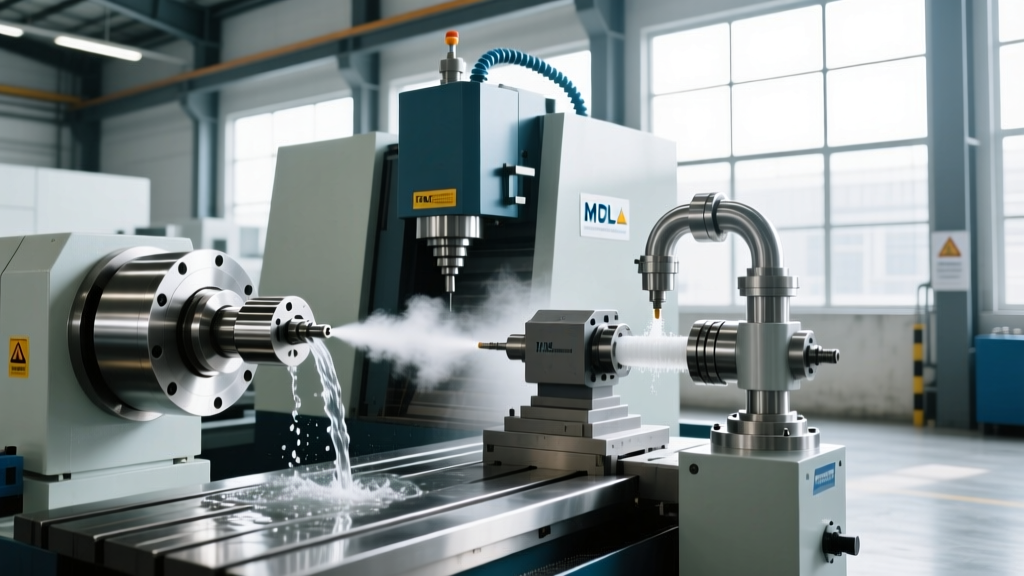
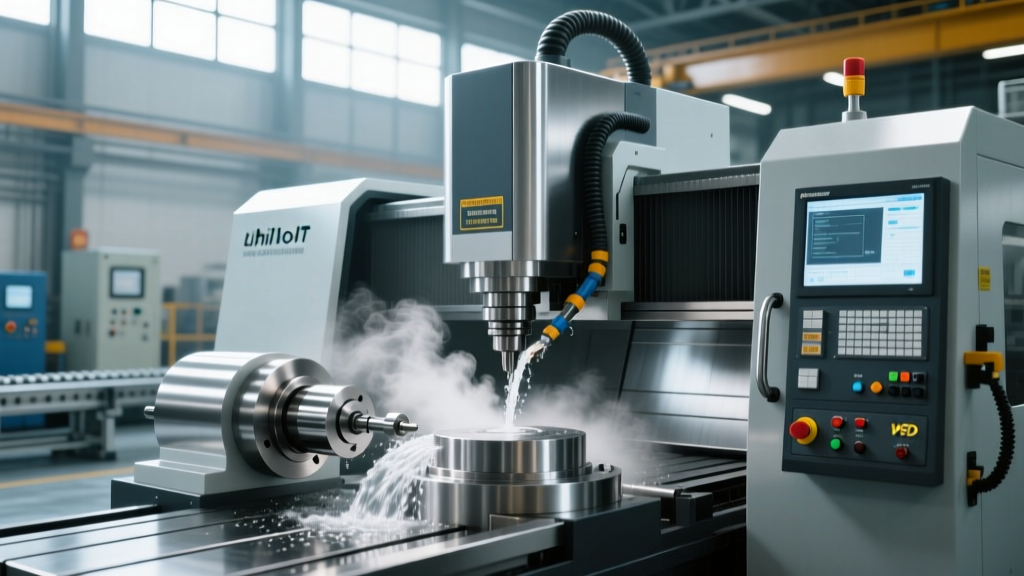
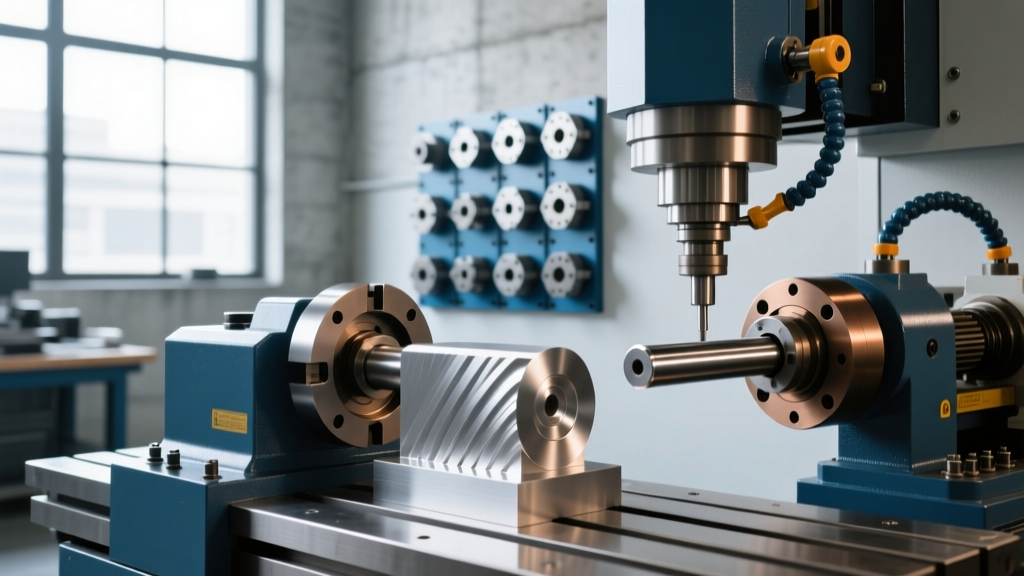
Traditional academic textbooks offer a rigid tools and machines definition: machines are the power-driven platforms (like a 5-axis machining center), and tools are the cutting implements (like a carbide end mill). However, in high-precision manufacturing, this binary definition is functionally obsolete. The true bridge between the machine and the tool is workholding. Without advanced vises, chucks, and fixtures, the most expensive CNC spindle and the sharpest cutting tool will yield nothing but scrap.
As of 2026, the machining industry has shifted from viewing workholding as a passive clamping mechanism to treating it as an active, dynamic component of the machining system. According to the Society of Manufacturing Engineers (SME), improper workholding accounts for nearly 35% of all scrapped parts in high-mix, low-volume aerospace job shops. This article examines the practical application of workholding through three real-world case studies, providing shop managers with exact specifications, pricing, and failure-mode analyses.
Case Study 1: 5-Axis Vises in Aerospace Titanium Milling
Machining Ti-6Al-4V (Grade 5 Titanium) requires immense cutting forces, often exceeding 1,500 N per tooth during heavy roughing. Standard 6-inch CNC vises frequently fail here due to jaw lift and harmonic chatter.
The Application
A Tier-2 aerospace supplier in Ohio struggled with chatter marks on structural titanium bulkheads. Their existing standard vises required multiple step-downs to avoid part ejection, limiting their Material Removal Rate (MRR) to 18 cubic inches per minute.
The Workholding Solution
The shop upgraded to Kurt Manufacturing DX6 5-Axis vises equipped with the DovLock clamping system. Unlike standard flat jaws, the DovLock utilizes a precision-machined dovetail profile on the workpiece (cut with a specialized 60-degree dovetail cutter).
- Clamping Force: 40,000 lbs at 90 ft-lbs of torque.
- Footprint Reduction: The vise base is only 14.5 inches long, allowing two vises to fit side-by-side on a standard 40-taper VMC table (like a Haas VF-2).
- Cost Investment: Approximately $3,450 per vise (2026 pricing).
The Result
By securing the part via the dovetail geometry rather than sheer friction, the shop eliminated jaw lift entirely. They increased their MRR to 32 cubic inches per minute and reduced cycle times by 22%. The initial $6,900 investment for two vises was recouped in under three weeks through saved carbide tooling and increased spindle uptime.
Case Study 2: Hydraulic Chucks for High-Speed Inconel Turning
When expanding the tools and machines definition to include turning centers, the physics of rotational mass become the primary constraint. As spindle speeds increase, centrifugal force acts on the chuck jaws, effectively pulling them outward and drastically reducing clamping force.
The Application
A medical implant manufacturer was turning Inconel 718 spinal rods on a Mazak INTEGREX. At 3,200 RPM, their standard pneumatic wedge-bar chuck was losing up to 45% of its static clamping force due to centrifugal jaw weight, resulting in micro-slip and severe surface finish degradation.
The Workholding Solution
The facility transitioned to an SMW-AUTOBLOK KNCS-N 425 hydraulic chuck with integrated centrifugal force compensation. This chuck utilizes counterweights internally linked to the jaw wedges. As RPM increases and the jaws are pulled outward, the counterweights are pulled inward, mechanically forcing the wedge down and maintaining grip.
Warning: Hydraulic Thermal ExpansionWhile hydraulic chucks offer superior damping and grip, shops must monitor hydraulic fluid temperature. In 24/7 lights-out manufacturing environments, continuous friction can heat the internal fluid, causing thermal expansion that artificially increases clamping pressure and risks crushing thin-walled tubular parts. Always use temperature-compensated hydraulic fluids rated for 60°C continuous operation.
The Result
The KNCS-N maintained 96% of its 14,000 lbs static draw force at 4,500 RPM. This allowed the shop to push spindle speeds higher, reducing the cycle time per spinal rod from 14 minutes to 9.5 minutes. The $19,200 capital expenditure for the chuck and custom soft jaws was justified by a 31% increase in daily part output.
Case Study 3: Custom Tombstone Fixtures for Automotive Production
For high-volume prismatic parts, standard vises waste too much table real estate. Custom fixturing on horizontal machining center (HMC) tombstones is the ultimate evolution of workholding.
The Application
An automotive transmission shop needed to machine 6061-T6 aluminum valve bodies. Using standard vises on their Makino a61nx HMC, they could only fit 4 parts per tombstone face (8 total per load).
The Workholding Solution
They designed a custom grid tombstone utilizing Mitee-Bite Pitbull clamps. The Pitbull clamp uses a single central screw to drive two opposing serrated wedges into the workpiece, pulling it down and inward simultaneously.
- Clamping Mechanism: Low-profile wedge action (requires only 0.250 inches of clearance).
- Clamping Force: 5,400 lbs per clamp at 35 ft-lbs torque.
- Cost: Roughly $195 per clamp, plus custom grid plate machining.
The Result
Because the Pitbull clamps require minimal perimeter clearance compared to vise jaws, the shop increased part density to 12 parts per face (24 total per load). This reduced the number of tombstone swaps required per shift from 14 to 9, drastically reducing operator crane-time and machine idle time.
Workholding Selection Matrix (2026 Data)
Selecting the right interface between the machine table and the workpiece requires matching the physical forces of the operation to the mechanical limits of the workholding. Use this matrix to guide your capital equipment purchasing.
| Workholding Type | Ideal Application | Max Force / RPM Limit | Typical Price Range | Primary Failure Mode |
|---|---|---|---|---|
| Standard CNC Vise (6-inch) | Aluminum/Steel 3-Axis milling | 20,000 lbs clamping | $1,200 - $1,800 | Jaw lift under heavy axial loads |
| 5-Axis Dovetail Vise | Titanium/Inconel 5-Axis profiling | 40,000 lbs + geometric lock | $3,000 - $4,200 | Dovetail cutter breakage in prep |
| Hydraulic Compensating Chuck | High-speed CNC turning (>3000 RPM) | Maintains grip up to 6,000 RPM | $15,000 - $25,000 | Internal fluid thermal expansion |
| Low-Profile Wedge Clamps | HMC Tombstone high-density loads | 5,500 lbs per clamp | $150 - $250 per unit | Chip packing in wedge serrations |
Hidden Costs: The Economics of Workholding Deflection
"Shop managers often spend $50,000 on a high-speed spindle and $500 on a vise, then wonder why they cannot hold a 0.0005-inch true position tolerance. The machine is only as rigid as its weakest mechanical link, and that link is almost always the workholding."
— Lead Manufacturing Engineer, Tier 1 Aerospace Supplier
Deflection in workholding does not just cause scrapped parts; it destroys tool life. When a vise jaw deflects by even 0.002 inches under a 2,000 radial cutting load, the end mill experiences a sudden spike in chip thickness. This micro-shock chips the carbide cutting edge, reducing a $140 roughing end mill's lifespan from 120 minutes to 35 minutes. Over a year of continuous production, the cost of premature tool replacement due to workholding deflection can easily exceed $45,000 in a mid-sized job shop.
Practical Decision Framework for Shop Managers
To ensure your workholding strategy aligns with the modern tools and machines definition, implement this three-step evaluation framework before purchasing new equipment:
- Calculate the Overturning Moment: Do not just look at cutting forces. Multiply the maximum radial cutting force by the distance from the cutting edge to the vise jaw top. If this overturning moment exceeds the vise's rated anti-lift torque, you must switch to a mechanical lock (dovetail) or vacuum fixturing.
- Audit Jaw Serration Wear: Standard hardened steel jaws lose up to 18% of their friction coefficient after 500 load cycles due to micro-welding and chip embedment. Mandate a jaw replacement or re-grinding schedule every 400 cycles for tight-tolerance aerospace work.
- Standardize Quick-Change Systems: In 2026, the labor cost of a CNC setup dictates profitability. Invest in zero-point clamping systems (like System 3R or Schunk Vero-S). While the base plates cost upwards of $8,000 per machine, they reduce setup times from 45 minutes to under 3 minutes, allowing for profitable batches of 5 or fewer parts.
Ultimately, treating workholding as an afterthought violates the fundamental physics of machining. By investing in application-specific vises, dynamically compensated chucks, and high-density fixtures, manufacturers transform the passive machine table into an active, precision-grounded foundation for modern by the tools.