Data Mining Practical Machine Learning Tools for CNC Spindle Selection
Learn how to apply data mining practical machine learning tools to select optimal CNC spindle types and bearing configurations for 2026 smart factories.
The Paradigm Shift: From Catalog Specs to Algorithmic Selection
Specifying a CNC machine tool spindle in 2026 requires moving beyond static catalog torque curves and maximum RPM ratings. With high-precision electro-spindles costing between $18,000 and $65,000, a misjudged bearing configuration leads to catastrophic thermal growth, chatter, or premature fatigue. Historically, process engineers relied on rule-of-thumb heuristics to match spindle types to production needs. Today, advanced machine shops deploy data mining practical machine learning tools to analyze historical cutting forces, vibration signatures, and thermal displacement, algorithmically matching the production profile to the optimal spindle and bearing architecture.
This guide details how to bridge the gap between physical spindle hardware (bearing configurations, lubrication, preload) and modern data science techniques to make bulletproof equipment purchasing decisions.
Core Spindle Types and Bearing Configurations
Before applying predictive algorithms, procurement teams must understand the physical constraints of the hardware. The selection matrix generally falls into three primary spindle drive categories, each demanding specific bearing solutions.
Hardware Callout: Bearing Preload Mechanisms
Bearing preload eliminates internal clearance, increasing rigidity but generating heat. In 2026, high-end spindles utilize piezoelectric variable preload actuators or hydraulic nuts rather than fixed solid spacers. This allows the machine to dynamically shift from high-rigidity (heavy roughing) to low-preload (high-speed finishing) on the fly, a feature that generates massive telemetry data for ML models to optimize.
| Spindle Type | Typical RPM Range | Primary Bearing Configuration | Estimated 2026 Cost | Best Application |
|---|---|---|---|---|
| Belt-Driven | 8,000 - 15,000 | Cylindrical Roller (rear) + ABEC-9 Angular Contact (front) | $4,000 - $12,000 | Heavy roughing, steel/titanium milling |
| Direct-Drive (Built-in Motor) | 15,000 - 30,000 | Hybrid Ceramic (Si3N4) Angular Contact (15° or 25° contact angle) | $12,000 - $28,000 | Mold & die, aerospace aluminum profiling |
| Electro-Spindle (Motorized) | 30,000 - 60,000+ | Hydrostatic Bearings or Ultra-Precision Ceramic (ABEC-P2) | $18,000 - $65,000 | Micro-machining, graphite, high-speed die casting |
Applying Data Mining Practical Machine Learning Tools to Spindle Selection
When process engineers deploy data mining practical machine learning tools, they transition from reactive replacement to predictive specification. By ingesting telemetry from existing shop-floor assets, you can mathematically prove which spindle type will survive your specific production mix.
Step 1: Telemetry Harvesting and Feature Extraction
Equip current machines with piezoelectric accelerometers (e.g., PCB Piezotronics 352C33) and acoustic emission (AE) sensors. Raw time-domain vibration data is useless for selection; it must be mined for specific statistical features:
- Kurtosis & Crest Factor: Identifies impulsive impacts indicative of bearing raceway spalling or inadequate damping.
- Fast Fourier Transform (FFT) Peaks: Isolates specific frequencies. If your data mining reveals dominant chatter frequencies between 800Hz and 1200Hz during roughing, the algorithm will flag standard angular contact bearings as insufficient, recommending hydrostatic or damped cylindrical rollers.
- Thermal Drift Gradients: Measured via embedded RTD sensors. High thermal drift in existing direct-drive spindles indicates the need for oil-air mist lubrication over grease-packed bearings in the next purchase.
Step 2: Algorithmic Matching via Supervised Learning
Using open-source libraries documented in the Scikit-Learn supervised learning modules, engineers can train classifiers to map production signatures to optimal hardware. A Random Forest classifier can be trained on historical spindle failure data, taking inputs like 'average radial cutting force', 'duty cycle percentage', and 'coolant pressure', to output the required bearing precision class (e.g., ABEC-7 vs. ABEC-9/P2) and lubrication type.
Decision Matrix: ML-Derived Spindle Specifications
The following matrix demonstrates how data mining outputs directly dictate physical procurement specifications. This framework aligns with advanced manufacturing principles outlined by NIST's Advanced Manufacturing Portal for smart factory integration.
| ML Data Signature (Input) | Identified Failure Mode | Recommended Bearing Config | Required Lubrication & Preload |
|---|---|---|---|
| High RMS velocity at low frequencies (< 300Hz) | Macro-chatter, shaft deflection under heavy radial loads | Double-row Cylindrical Roller (NN30 series) + Angular Contact thrust | Grease-packed, fixed solid spacer preload |
| High AE counts, rapid thermal spikes (> 5°C/min) | Ball skidding, cage friction, lubrication starvation at high dn-values | Hybrid Ceramic (Si3N4 balls, steel races) 15° contact angle | Oil-air mist (e.g., SKF Vogel), variable hydraulic preload |
| Sub-micron displacement variance in Z-axis finishing | Thermal growth, micro-vibration transfer from rolling elements | Hydrostatic or Active Magnetic Bearings (AMB) | Pressurized hydraulic fluid film (requires dedicated chiller unit) |
Real-World Procurement Scenarios for 2026
Scenario A: Aerospace Titanium 5-Axis Milling
The Data: Data mining reveals 70% of spindle time is spent below 8,000 RPM with extreme radial cutting forces (up to 4,500 N per tooth). Vibration analysis shows severe degradation of standard ceramic bearings within 1,400 hours due to edge chipping.
The Procurement Decision: Reject high-speed electro-spindles. Purchase a heavy-duty, belt-driven or direct-drive spindle featuring a gamfiq-style tapered roller bearing configuration at the front for maximum radial rigidity, paired with ABEC-9 cylindrical rollers at the rear. Budget: $14,000. Expected ROI via extended RUL (Remaining Useful Life): 22 months.
Scenario B: High-Speed Aluminum Die-Cast Trimming
The Data: LSTM neural networks analyzing thermal telemetry show that grease-packed bearings in current 24,000 RPM spindles suffer thermal runaway after 45 minutes of continuous operation, causing Z-axis growth of 18 microns (scraping tight-tolerance bores).
The Procurement Decision: Specify a motorized electro-spindle (e.g., from manufacturers like GMN or Kessler) utilizing hybrid ceramic angular contact bearings with oil-air mist lubrication. Ensure the spindle drive features integrated edge-computing capabilities to monitor bearing temperature in real-time. Budget: $38,000.
Integrating Edge AI and Sensor-Ready Spindles
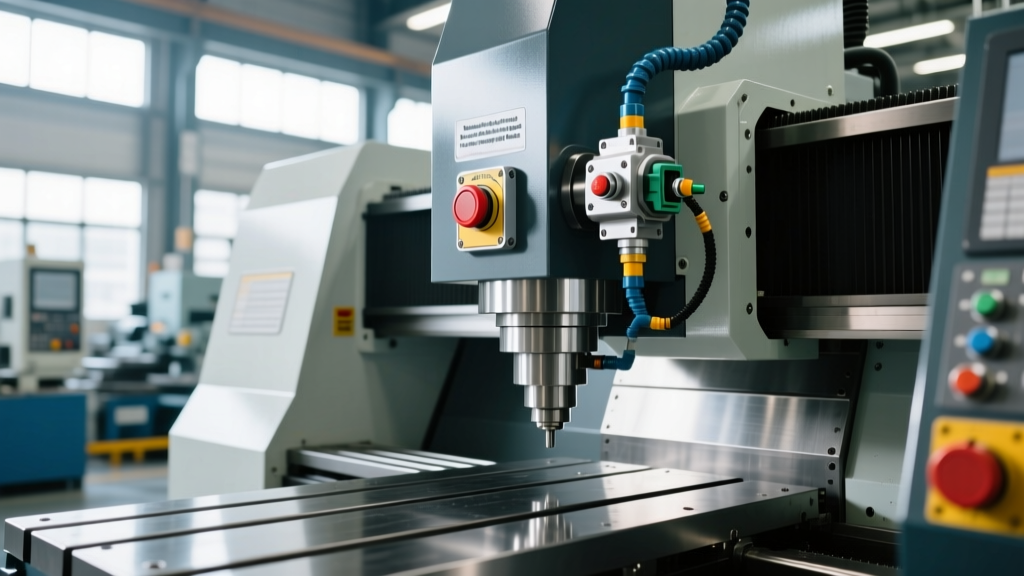
When purchasing new spindle hardware in 2026, the physical bearings are only half the equation. The most critical buying criterion is sensor readiness. Leading manufacturers now embed strain gauges, displacement sensors, and temperature RTDs directly into the spindle housing and bearing outer rings.
According to SKF's Machine Tool Industry guidelines, integrated sensor data allows for real-time condition monitoring. When specifying a spindle, mandate the following data-output protocols from the vendor:
- Open-Protocol Telemetry: Ensure the spindle's internal sensors communicate via IO-Link or OPC-UA, avoiding proprietary black-box software that prevents you from applying your own custom machine learning models.
- High-Frequency Sampling Rates: For bearing fault detection (specifically identifying inner race vs. outer race defects), the embedded accelerometers must support sampling rates of at least 20 kHz to capture high-frequency resonant bands.
- Thermal Mapping Nodes: Require a minimum of three RTD sensors (front bearing, rear bearing, and stator) to allow your ML models to calculate real-time thermal compensation vectors for the CNC controller.
Strategic Sourcing and Vendor Evaluation
Do not rely solely on the machine tool builder's default spindle option. OEMs often standardize on mid-tier spindles to maintain competitive machine pricing. As an equipment buyer, leverage your shop's historical data to negotiate custom spindle upgrades.
Request the spindle vendor's dynamic stiffness curves (measured at the tool tip, not just the shaft) and thermal growth test certificates. Cross-reference these physical test documents with the output of your Random Forest or XGBoost selection models. If your data mining indicates a high susceptibility to chatter at 12,000 RPM, and the vendor's dynamic stiffness curve shows a resonance dip at 11,800 RPM, the algorithm has successfully prevented a $40,000 procurement mistake.
By fusing deep mechanical knowledge of bearing configurations with rigorous data science, manufacturing engineers can eliminate guesswork, drastically reduce unplanned downtime, and maximize the ROI of their machine tool investments.