CNC Retrofit Options for Manual Lapping Machine Tools
Explore CNC retrofit options for manual lapping machine tools. Real-world case studies, cost analysis, and integration frameworks for sub-micron flatness.
The Economics of Legacy Cast-Iron Mass in Precision Surfacing
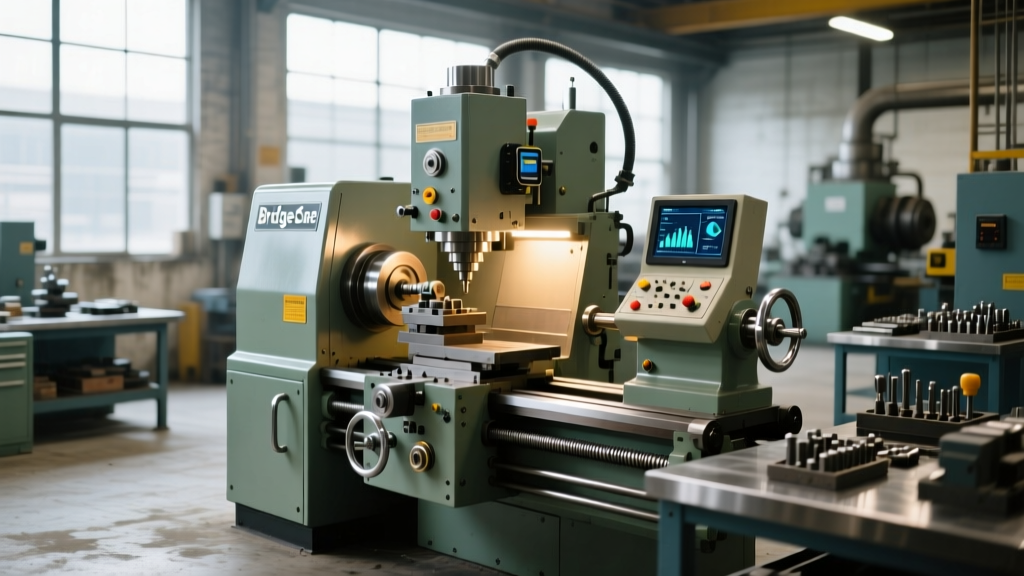
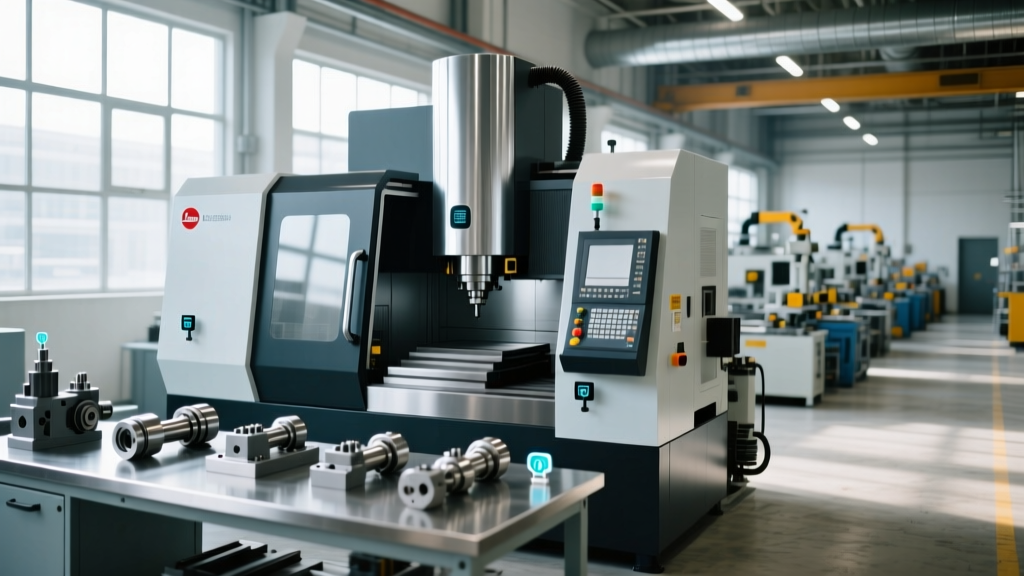
Manual lapping machine tools possess a distinct, irreplaceable advantage in high-precision surfacing: massive, aged cast-iron platens that provide unmatched thermal stability and vibration damping. A 36-inch manual surface lapper typically features over 2,500 lbs of dense cast iron, naturally absorbing the high-frequency harmonics generated during abrasive machining. However, relying on manual handwheels, analog pressure gauges, and operator intuition limits repeatability and caps achievable flatness at roughly 1.5 µm. In 2026, CNC retrofit options for manual lapping machine tools have matured significantly, allowing contract manufacturers and aerospace suppliers to achieve sub-micron flatness (≤0.5 µm) and automated slurry dispensing without the capital expenditure of new equipment.
2026 Capital Expenditure Comparison
- New CNC Double-Disc Lapper (e.g., Stähli, Kemet): $280,000 - $450,000
- Manual Lapper CNC Retrofit (Hardware + Integration): $45,000 - $85,000
- Average ROI Timeline: 6 - 14 months based on scrap reduction and cycle time optimization
Core Retrofit Architecture for Lapping Machine Tools
Retrofitting a manual lapping machine is fundamentally different from retrofitting a manual milling machine or lathe. Lapping does not rely on rigid toolpaths; it relies on controlled pressure, kinematic oscillation, and abrasive slurry management. A successful CNC conversion must address three primary axes of control:
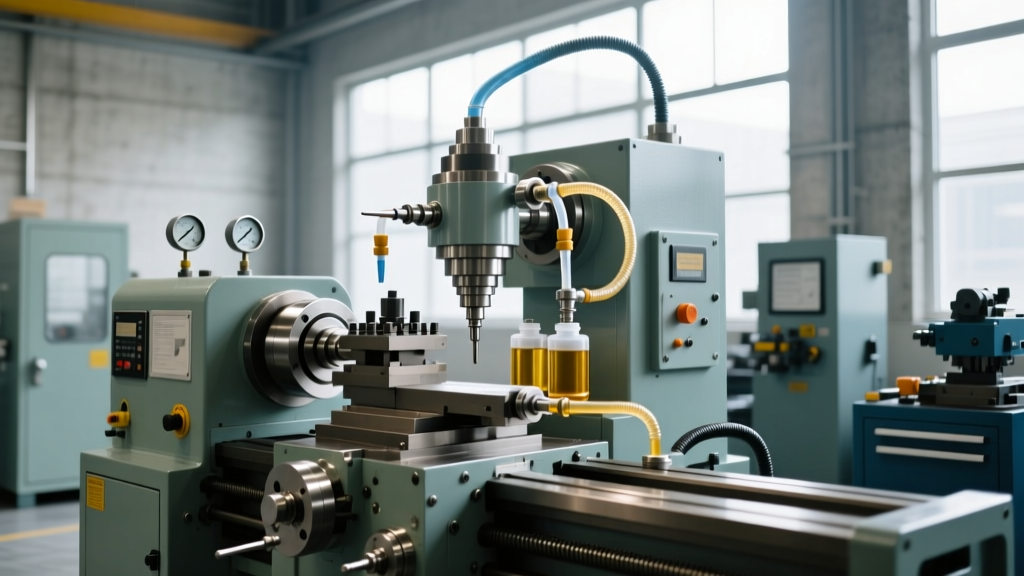
- Upper Platen Pressure (Z-Axis Equivalent): Manual machines use hand-cranked screws or basic pneumatic cylinders to apply downward force. Retrofits replace these with servo-driven ball screws or proportional electro-pneumatic regulators (like SMC ITV series) tied to closed-loop load cells. This allows the CNC to dynamically adjust pressure based on the specific stock removal rate of the workpiece material.
- Platen Rotation and Oscillation (Spindle/Drive): Manual lappers often use single-speed AC induction motors with belt drives. Upgrading to variable frequency drives (VFDs) or direct-drive servo motors enables programmable speed ramps, preventing workpiece edge roll-off during the initial abrasive bite.
- Conditioner Ring Oscillation (X/Y-Axis): The conditioner rings maintain platen flatness. Automating their oscillation with linear actuators ensures even wear distribution across the cast-iron surface, a critical factor when lapping to 1 light band (0.29 µm using a monochromatic helium light source).
Case Study 1: Aerospace Hydraulic Valve Plate Surfacing
A Tier-2 aerospace supplier in Ohio faced a bottleneck lapping CVM (Cresol-Formaldehyde) treated steel valve plates for hydraulic pumps. The required specification was 1 helium light band flatness with a surface finish of 2 Ra µin. Their existing fleet of 2004 Stähli D-800 manual double-disc lappers could not consistently hold this tolerance, resulting in an 8% scrap rate and heavy reliance on senior machinists to manually adjust pressure mid-cycle.
The Retrofit Specification
The facility partnered with a regional integrator to retrofit two Stähli D-800 units. The control architecture was built around a Centroid CNC Acorn controller, chosen for its flexible macro-programming capabilities and cost-effectiveness. The manual upper platen handwheel was removed and replaced with a 2kW Yaskawa Sigma-7 servo motor coupled to a precision-ground ball screw. Crucially, an automated Kemet slurry dosing pump was integrated via M-codes, dispensing exact volumes of 9-micron diamond slurry at programmed intervals.
Outcomes and Data
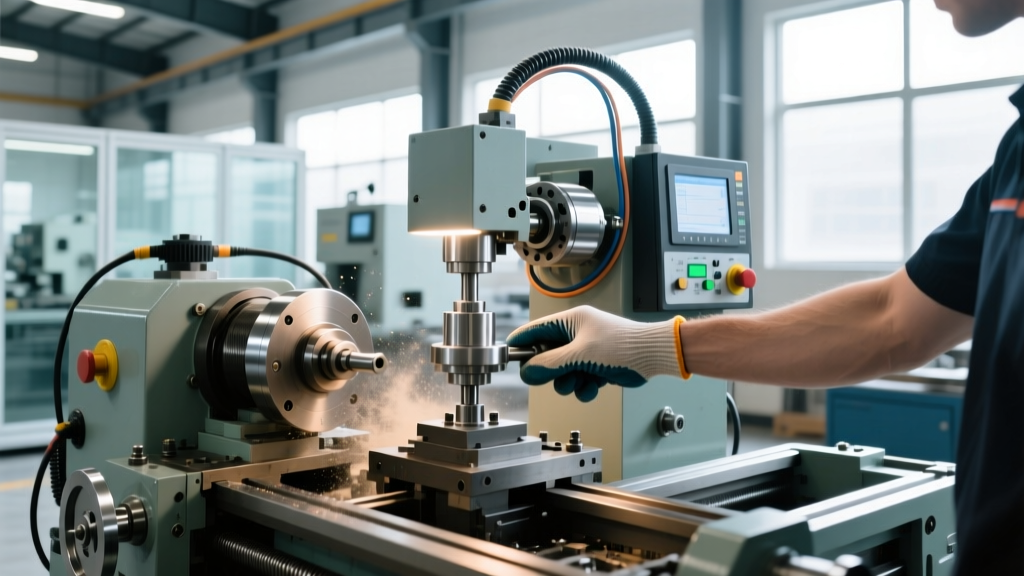
Post-retrofit, the machines operated on a fully automated cycle. The Centroid controller utilized custom G-code macros to ramp the upper platen pressure from 15 lbs (initial breakdown) to 45 lbs (finishing) over a 12-minute cycle. Flatness improved from an average of 1.2 µm to 0.4 µm. The scrap rate plummeted to 0.5%, and the facility reassigned two senior machinists to CNC milling operations, effectively increasing overall shop throughput by 14%.
Case Study 2: Semiconductor Wafer Carrier Conditioning
In the semiconductor sector, conditioning the diamond-impregnated pads on wafer carriers requires extreme precision. A California-based fab utilized an older Lapmaster 36 manual surface lapper for this task. The manual nature of the machine meant that as the slurry viscosity changed due to ambient temperature shifts throughout the day, the operator had to manually tweak the pressure to prevent micro-scratching on the carrier plates.
Integrating Closed-Loop Sensing
The retrofit focused on real-time environmental adaptation. The integrator installed a Siemens SINUMERIK ONE control system, integrating a high-resolution Futek load cell directly into the upper platen assembly. The system was programmed to monitor the spindle motor torque draw. If the torque spiked—indicating the slurry was drying out or becoming too viscous—the CNC automatically triggered a misting cycle to inject deionized water while simultaneously reducing Z-axis pressure by 4% to prevent pad glazing.
"The true value of retrofitting legacy lapping equipment isn't just in removing the operator from the handwheel; it's in giving the machine the sensory feedback required to react to abrasive slurry dynamics in real-time."
This closed-loop retrofit extended the diamond conditioning pad life by 22% and eliminated micro-scratches caused by dry-lapping incidents, saving the fab approximately $45,000 annually in consumable pad costs alone.
Decision Matrix: Is Your Manual Lapper a Retrofit Candidate?
Not every manual lapping machine tool justifies the integration cost. Use the following framework to evaluate your equipment against modern CNC retrofit standards. For broader guidelines on legacy equipment modernization, refer to the NIST Advanced Manufacturing Portal and the Society of Manufacturing Engineers (SME) technical papers on smart manufacturing integration.
| Evaluation Criteria | Ideal Candidate (Proceed) | Poor Candidate (Replace/Rebuild) |
|---|---|---|
| Machine Age & Metallurgy | 1980-2010; heavy cast-iron platens with no visible thermal warping. | Pre-1970s; fabricated steel platens or severe casting porosity. |
| Way and Bearing Wear | Central pivot bearings show < 0.002" runout; ways can be re-scraped. | Severe galling on ways; central spindle runout > 0.010". |
| Drive Train Integrity | Heavy-duty worm gears or direct-drive shafts with minimal backlash. | Worn V-belt systems that slip under variable servo torque loads. |
| Slurry Containment | Integrity of the splash guards and slurry pans is intact. | Rusted pans allowing abrasive ingress into the lower gear housing. |
Critical Edge Cases and Integration Pitfalls
When engineering a CNC retrofit for lapping machine tools, standard machining retrofit practices will fail. Lapping environments are uniquely hostile to precision electronics and motion control components. Engineers must account for the following edge cases:
1. Slurry Ingress and Encoder Destruction
Abrasive slurries—particularly boron carbide (B4C) and synthetic diamond suspensions—are highly destructive. If slurry breaches the Z-axis ball screw or the spindle encoder, it will act as a lapping compound on the internal bearings and optical encoder discs, destroying them within weeks. Solution: Never use standard optical encoders on a lapper retrofit. Specify IP67-rated sealed magnetic resolvers or remote-mount the encoders away from the splash zone, utilizing sealed timing belts or shaft couplings to transmit motion data.
2. Thermal Growth Compensation Macros
Manual machines lack the internal thermal compensation found in $400,000 CNC lappers. As the cast-iron platens absorb friction heat during a 30-minute lapping cycle, they expand, altering the parallelism between the upper and lower platens. Solution: Integrate PT100 thermistors directly into the platens and wire them to analog inputs on the CNC controller. Write custom macro variables (e.g., #100-#150) in the G-code program that read the thermal delta and automatically micro-adjust the Z-axis target position by 0.0001" increments to maintain parallelism as the machine reaches thermal equilibrium.
3. Pneumatic vs. Servo Pressure Control
While servo-driven ball screws offer ultimate precision for Z-axis pressure, they are expensive and complex to seal against slurry. For applications requiring flatness tolerances of 1.0 µm to 2.0 µm, a proportional electro-pneumatic regulator (like the SMC ITV2030) is often a superior, more cost-effective choice. It allows the CNC to output a 4-20mA signal to precisely regulate air pressure to the upper platen cylinder, bypassing the need for complex mechanical screw seals entirely.
Sourcing and Next Steps
Executing a CNC retrofit on manual lapping machine tools requires a partnership between a machine rebuilder (to handle the mechanical way scraping and ball screw integration) and a controls integrator (to map the macro variables and slurry logic). When requesting quotes, mandate that the integrator provides a detailed FMEA (Failure Mode and Effects Analysis) specifically addressing abrasive ingress and thermal drift. By leveraging the massive cast-iron foundations of legacy equipment and pairing them with modern closed-loop CNC architecture, manufacturers can dominate high-precision surfacing markets while maintaining strict capital discipline.