Optimizing Lubrication Systems for Screw Machine Tooling
Master screw machine tooling lubrication systems. Explore technical specs, fluid types, and exact maintenance schedules to maximize uptime and prevent wear.
The Unique Lubrication Challenge in Screw Machine Tooling
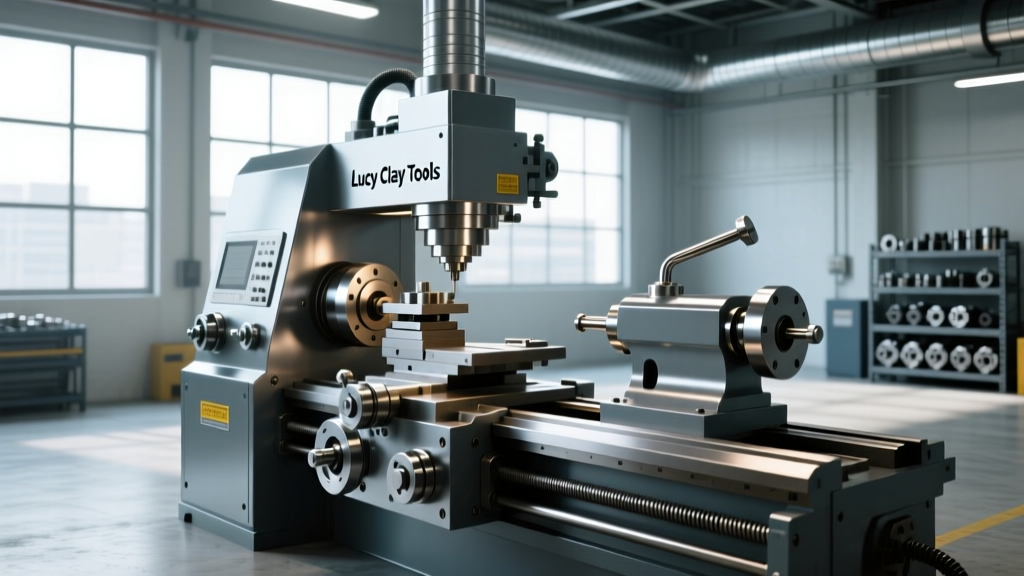
Swiss-type screw machines, such as the Citizen Cincom L12 or Tsugami B0125, operate under extreme kinematic stress. Unlike standard vertical machining centers, screw machine tooling relies on high-pressure coolant systems—often exceeding 1,000 to 2,000 psi—to evacuate chips from deep, micro-diameter drilling operations. While essential for tool life, this aggressive coolant spray creates a severe secondary problem: it violently washes way lubricant off the machine’s linear guideways and ball screws.
If the lubrication system is undersized, improperly timed, or utilizing the wrong fluid chemistry, the Z-axis guideways will experience 'stick-slip' friction. This manifests as lost motion, degraded surface finishes, and ultimately, catastrophic scoring of the linear rails. Understanding the technical specifications of centralized automatic lubrication systems (CALS) is non-negotiable for maintaining the ±0.0002-inch tolerances expected in modern precision turning.
Critical Insight: Never substitute standard hydraulic oil for way lube in a screw machine. Hydraulic oil lacks the polyisobutylene tackifiers required to adhere to the guideways against high-pressure coolant wash-off. Using the wrong fluid will result in axis servo alarms within 48 hours of continuous operation.The Triad of Screw Machine Fluids: Technical Specifications
A properly configured Swiss-type lathe requires three distinct, isolated fluid circuits. Mixing these fluids due to seal degradation or operator error is a primary cause of premature tooling and machine failure.
| Fluid Circuit | ISO VG Grade | Viscosity @ 40°C (cSt) | Key Additives & Function |
|---|---|---|---|
| Way & Gear Lubricant | ISO VG 68 | 61.2 - 74.8 | Tackifiers (prevent wash-off), EP (Extreme Pressure) agents, rust/oxidation inhibitors. |
| Spindle / Headstock Oil | ISO VG 10 or 22 | 9.0 - 24.2 | High oxidative stability, anti-wear (AW), demulsifiers to separate water contamination. |
| Cutting Fluid (Coolant) | N/A (Emulsion/Semi) | Varies (Typically 1.5 - 3.0) | Biostable synthetic esters, high-lubricity boundary additives for micro-drilling. |
According to the OSHA Metalworking Fluids Guidelines, maintaining the separation between the way lube and the cutting fluid sump is also a vital health and safety compliance issue. Tramp oil (leaked way lube) floating on the coolant surface creates an anaerobic environment that breeds bacteria, leading to endotoxin exposure for operators.
Volumetric vs. Resistive Metering: How the Pressure Cycles Work
The heart of the screw machine lubrication system is the metering mechanism. Modern CNC lathes predominantly use positive displacement volumetric systems, though older or budget models may use resistive orifices.
How Volumetric Systems Operate
In a volumetric system, a motorized pump pressurizes the main line to a specific threshold (typically 150 to 250 psi). This pressure forces a piston inside each Metering Unit (MU) to move, injecting a precise volume of oil (ranging from 0.01 cc to 0.30 cc per cycle) to a specific bearing or way block. Once the pump stops, a vent valve depressurizes the line, allowing a spring to reset the MU piston for the next cycle.
- Advantage: Visual or electronic confirmation. Modern MUs feature a pop-up indicator pin or an integrated IoT proximity switch that signals the CNC control (e.g., Fanuc 32i-B or Mitsubishi M80) that the exact volume was delivered.
- Disadvantage: More complex plumbing; susceptible to blockages if varnish builds up in the micro-bore tubing.
How Resistive Systems Operate
Resistive systems rely on a continuous low-pressure pump pushing oil through calibrated orifices (junctions) that restrict flow to create a proportional drip rate.
- Advantage: Simple, inexpensive, and provides a continuous oil film rather than cyclical dosing.
- Disadvantage: No positive confirmation of flow to individual zones. If a Z-axis line clogs, the oil simply diverts to the X-axis, leaving the Z-axis dry while the system pressure gauge reads normal.
'The shift toward IoT-enabled volumetric metering units in 2026 has drastically reduced catastrophic guideway failures. By monitoring the exact cycle time of the pressure build-up, the CNC can detect a micro-leak in the distribution block before the axis runs dry.' — Modern Machine Shop Coolants & Lubricants Analysis
Preventative Maintenance Schedules for Swiss-Type Lathes
Relying solely on the CNC’s 'Lube Level Low' alarm is a reactive strategy that guarantees downtime. Implement the following proactive maintenance schedule to ensure optimal screw machine tooling performance.
Daily Operator Checks (Start of Shift)
- Verify Sight Glasses: Check the main way lube reservoir and the spindle oil reservoir. Top off only with the exact ISO VG grade specified on the machine nameplate.
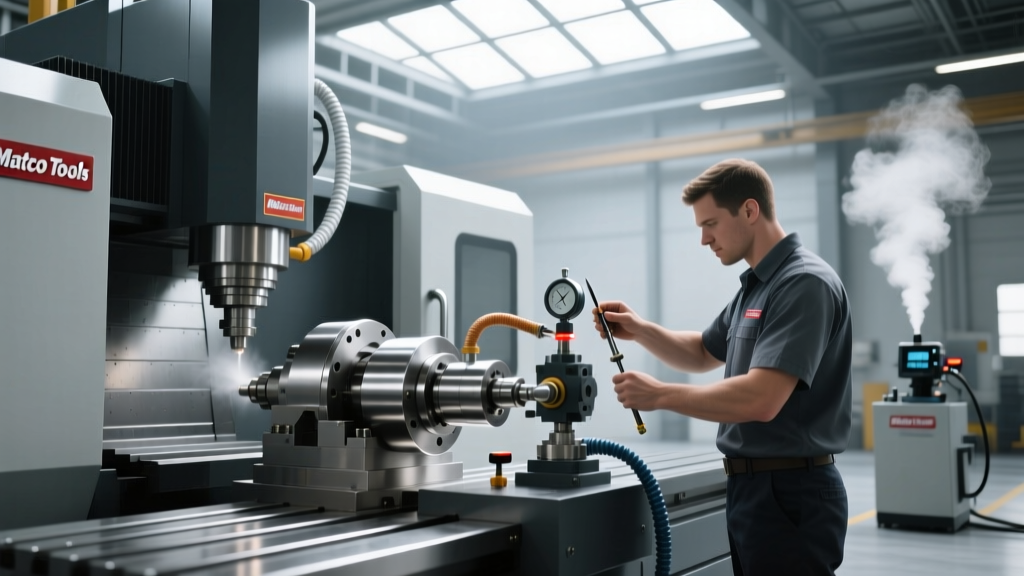
- Inspect Pressure Gauge: Initiate a manual lube cycle from the operator panel. The system pressure must spike to 150–200 psi within 8 seconds and hold for 5 seconds before venting. A slow pressure build indicates a pump wear or a massive line leak.
- Check Way Wipers: Visually inspect the Z-axis way wipers. If they are heavily saturated with chips or damaged, they will scrape the fresh oil film off the rail before the carriage moves.
Monthly Maintenance (Technician Level)
- Tramp Oil Skimming: Remove way lube that has washed into the coolant tank. Use an automated belt skimmer or vacuum system to maintain tramp oil below 2% of total sump volume.
- Filter Inspection: Remove the pump suction filter (usually a 100-mesh brass screen) and clean it with solvent. A clogged screen causes pump cavitation, leading to air pockets in the metering units.
- Verify MU Pins: During a manual cycle, visually confirm that all green indicator pins on the distribution blocks are popping out and retracting fully.
Annual Overhaul
- Flush and Replace: Drain the spindle headstock oil. Sludge accumulation in the 10,000 RPM spindle bearings causes thermal growth, ruining tool offsets. Refill with fresh ISO VG 10 spindle oil.
- Replace Soft Tubing: Polyurethane lube lines degrade from constant exposure to misting cutting fluids. Replace any tubing that feels brittle or shows yellowing to prevent sudden pressure loss.
Troubleshooting 'Lube Pressure Low' Alarms
When the CNC throws a 'Lube Pressure Low' or 'Lube Cycle Timeout' alarm, the machine locks out to prevent guideway damage. Use this diagnostic framework to isolate the fault rapidly:
Symptom: Pump Runs, But Pressure Gauge Reads 0 PSI
- Cause A: Empty reservoir or clogged suction filter. Fix: Refill fluid, clean 100-mesh screen.
- Cause B: Sheared pump coupling. Fix: Remove pump motor cover, inspect plastic drive gear for stripping. Replace with OEM steel-reinforced coupling.
Symptom: Pressure Spikes to 300+ PSI Instantly, Pump Shuts Off
- Cause A: Blocked metering unit or pinched main line. Fix: Isolate distribution blocks one by one until pressure normalizes. Replace the blocked MU.
- Cause B: Varnish buildup in the lines from using incompatible or degraded oil. Fix: Flush the entire system with a dedicated machine-tool flushing oil, replace all MUs.
Symptom: Pressure Builds Slowly (Takes >15 Seconds)
- Cause A: Leak in a secondary branch line. Fix: Trace lines under the machine pan. Look for pooling oil near the rotary union or tool changer cam.
The 2026 Shift: Biostable Fluids and Smart Diagnostics
The intersection of screw machine tooling and tribology is advancing rapidly. The Society of Tribologists and Lubrication Engineers (STLE) notes a significant industry shift toward biostable, ester-based way lubricants that emulsify slightly when they enter the coolant sump, rather than forming a hard tramp oil layer. This chemistry drastically extends coolant life and reduces the biological hazards associated with traditional petroleum-based tackifiers.
Furthermore, the integration of smart flow sensors on individual metering units allows modern CNC controls to track the exact volume of oil consumed per axis over time. By establishing a baseline consumption rate, predictive maintenance algorithms can now alert maintenance teams to degrading way wipers or increasing friction coefficients weeks before a mechanical failure occurs, ensuring that high-value screw machine tooling remains protected and productive.