Upgrading CNC Retrofits Using Machine Learning Pipeline Tools
See how one shop integrated machine learning pipeline tools with Bridgeport CNC retrofits to predict ball-screw wear and optimize servo performance.
Retrofitting manual machine tools with modern CNC controllers transforms aging cast iron into capable production assets. However, a standard retrofit only solves the motion control problem. As shops push these retrofitted machines harder, the mechanical disparities between new precision ball screws and original 1980s dovetail ways create unique wear patterns and vibration signatures. To monitor this degradation, forward-thinking job shops are moving beyond basic PLC alarms and integrating machine learning pipeline tools to process high-frequency telemetry data, enabling predictive maintenance and dynamic feed-rate optimization.
The Hardware Baseline: Upgrading the Iron
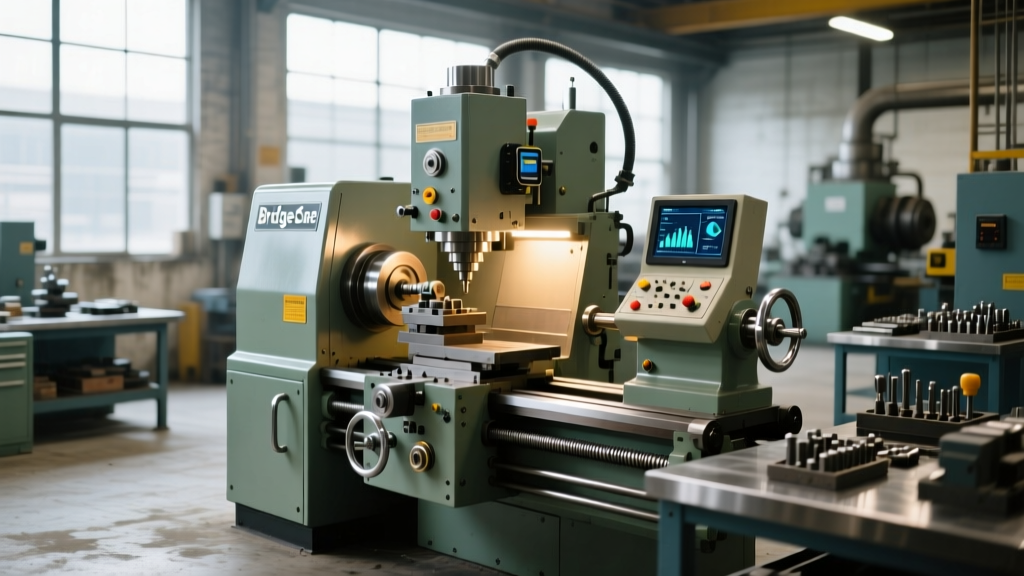
Our case study follows a mid-sized precision machining facility that retrofitted a fleet of 15 Bridgeport Series 1 vertical mills and 5 South Bend 10K heavy lathes. The mechanical upgrades included replacing worn Acme lead screws with precision C3-grade rolled ball screws and installing closed-loop AC servo motors (750W on the X/Y axes, 1kW on the Z-axis).
For the control architecture, the shop split the fleet based on application:
- Bridgeport Mills: Upgraded using the Centroid Acorn CNC board ($395 base) paired with a 4-axis closed-loop servo kit ($1,195 total). The Acorn's Ethernet-based architecture allows for straightforward integration with external data loggers.
- South Bend Lathes: Retrofitted with Mach4 Industrial licenses ($200) and Warp9 Ethernet SmoothStepper motion controllers ($130), chosen for their robust threading and spindle-synchronization capabilities.
The Telemetry Challenge in Retrofitted Machines
Once the machines were cutting metal, the shop installed PCB Piezotronics ICP accelerometers (Model 352C33, ~$350 each) on the X and Y axes, alongside 0-10V analog spindle load monitors tapped directly from the Hitachi WJ200 VFDs. This sensor array generated approximately 4 gigabytes of raw time-series data per machine, per shift, sampled at 400Hz.
Storing this data in flat CSV files or basic SQL databases quickly became unmanageable. More critically, writing static threshold alarms (e.g., 'trigger alert if vibration exceeds 0.5 g-RMS') resulted in a 60% false-positive rate due to the varying harmonics of different endmill geometries and cut depths. The shop needed a way to dynamically baseline each specific cutting operation and detect micro-deviations indicative of ball-screw preload loss or way-gib wear. This is where machine learning pipeline tools became essential.
Deploying Machine Learning Pipeline Tools
Instead of building custom, brittle Python scripts for every new anomaly detection model, the shop's automation engineer deployed MLflow, an open-source platform designed to manage the end-to-end machine learning lifecycle. By utilizing these machine learning pipeline tools, the team could track model parameters, register model versions, and deploy inference endpoints to edge devices without manual code transfers.
Architecture of a Predictive Maintenance Pipeline
The facility engineered a four-stage data pipeline running on local NVIDIA Jetson Orin Nano edge computers ($499 each) mounted inside the machine's electrical enclosure. The pipeline processes data before sending compressed insights to the central server.
- Data Ingestion and Edge Filtering: Raw 400Hz vibration data is ingested via an NI CompactDAQ module. A low-pass Butterworth filter removes electrical noise from the VFDs.
- Feature Engineering (FFT): The edge device performs a Fast Fourier Transform (FFT) on 2-second rolling windows. The system extracts peak amplitude frequencies at 1x, 2x, and 3x the spindle RPM, as well as the broadband RMS energy.
- Model Training via MLflow: Historical data from known 'good' cuts and documented 'failing' states (e.g., a deliberately loosened ball-screw nut) are pushed to the central server. The data science team uses MLflow to track Random Forest and Isolation Forest algorithms, logging the F1-scores and hyperparameters of each training run.
- Edge Inference and G-Code Override: The winning model is packaged as a lightweight ONNX runtime file and pushed back to the Jetson Nano. If the model detects a 15% deviation in the 2x spindle harmonic (a primary indicator of ball-screw recirculation wear), it sends a discrete signal to the CNC controller's feed-hold input and logs a maintenance ticket.
Comparative Analysis: Standard vs. ML-Augmented Retrofits
Integrating advanced analytics adds upfront cost and engineering time. Below is a breakdown comparing a traditional CNC retrofit against an ML-augmented smart retrofit for a single Bridgeport mill.
| Metric | Standard CNC Retrofit | ML-Augmented Smart Retrofit |
|---|---|---|
| Hardware Cost (Controller & Servos) | $1,195 | $1,195 |
| Sensor & Edge Compute Hardware | $0 | $1,348 (Accelerometers, DAQ, Jetson) |
| Software & Pipeline Tooling | $0 | $0 (Open-source MLflow / Python stack) |
| Engineering & Commissioning Time | 16 hours | 45 hours (Includes pipeline setup) |
| Total Capital Cost per Machine | ~$2,795 | ~$5,893 |
| Unplanned Downtime (Annualized) | 38 hours | 6 hours (Predictive alerts only) |
According to frameworks established by NIST Advanced Manufacturing research on smart manufacturing ecosystems, the initial capital expenditure for edge-computing and sensor integration typically yields a positive ROI within 14 to 18 months for high-utilization job shops, primarily through the elimination of catastrophic secondary failures.
Real-World ROI and Edge Case Failures
At the 14-month mark, the shop reported a 78% reduction in unplanned downtime across the retrofitted fleet. The most significant catch occurred on Mill #4, where the ML pipeline detected an anomalous shift in the Z-axis frequency domain during a heavy 2D contouring operation. The model flagged a 12% increase in broadband vibration that fell below the standard PLC alarm threshold. Maintenance inspected the axis and found the Z-axis ball-screw support bearing was micro-fracturing. Catching this early prevented the screw from whipping and destroying the $4,500 spindle head assembly.
Documented Failure Modes and Edge Cases
Implementing machine learning pipeline tools on manual machine retrofits is not without significant hurdles. The engineering team documented several non-obvious failure modes during the first year of deployment:
- Coolant Interference with Optical Encoders: The initial retrofit used glass scale optical encoders for closed-loop feedback. Flood coolant mist caused signal dropout, which the ML model misinterpreted as mechanical binding, triggering false feed-holds. The team had to replace the glass scales with magnetic linear encoders (Balluff BIC series) to ensure signal integrity in wet environments.
- Thermal Drift Masking Wear Signatures: Cast iron expands as it reaches thermal equilibrium. During the first 45 minutes of a cold morning shift, the thermal growth of the machine column altered the preload on the gibs, changing the vibration baseline. The ML pipeline initially flagged this as way-wear. Fix: The team added a thermal compensation feature to the data pipeline, requiring the model to normalize vibration data against the machine's run-time clock before inference.
- Edge Compute Latency During Heavy Toolpath Execution: Running complex 3D surfacing toolpaths with 0.001mm look-ahead maxed out the Centroid Acorn's processing buffer. Simultaneously running the local ONNX inference model on the Jetson Nano introduced a 40ms latency on the Ethernet network, causing micro-stutters in the servo motion. Fix: The shop isolated the CNC motion network onto a dedicated unmanaged Gigabit switch, separating it entirely from the telemetry data network.
Strategic Takeaways for Machine Shops
Upgrading manual machine tools with CNC controllers is a proven method for extending the life of heavy iron. However, treating these retrofitted machines as dumb terminals leaves massive amounts of operational data on the table. By strategically deploying machine learning pipeline tools to ingest, process, and analyze high-frequency telemetry, shops can bridge the gap between legacy mechanical assets and modern Industry 4.0 standards. The key to success lies not in the complexity of the neural networks used, but in the rigorous engineering of the data pipeline, proper sensor placement, and a deep understanding of the mechanical realities of aging cast iron.