Using Top Machine Learning Tools for Bug Triage on CNC Lube Systems
Discover how top machine learning tools for bug triage are adapted to diagnose CNC lubrication faults, preventing spindle failures via predictive telemetry.
Unplanned CNC spindle replacements cost between $15,000 and $45,000 in parts and labor, compounded by an average of 72 hours of machine downtime. Historically, 40% of these catastrophic failures trace back to undetected anomalies in centralized machine tool lubrication systems. In 2026, the manufacturing sector is undergoing a radical paradigm shift by borrowing from software engineering: deploying the top machine learning tools for bug triage to classify, prioritize, and resolve mechanical 'bugs' (faults) in operational technology (OT) environments.
Software bug triage utilizes machine learning to parse server logs, identify anomalies, assign severity levels, and route tickets to the correct engineering team. Today, Industry 4.0 architects are feeding IO-Link sensor telemetry from SKF Lincoln and Bijur Delimon lubrication systems into these exact same ML pipelines. By treating pressure drops, flow restrictions, and pump cavitation as 'log errors,' maintenance teams can triage mechanical faults before a single bearing runs dry.
The Convergence of IT Bug Triage and OT Fault Diagnostics
In software development, platforms like Splunk ITSI, Datadog, and Elasticsearch Machine Learning are the undisputed leaders in log analysis and bug triage. They rely on time-series anomaly detection and natural language processing (NLP) to make sense of unstructured data. Modern CNC machine tools generate highly structured, high-frequency telemetry that maps perfectly to these algorithms.
A standard 5-axis machining center equipped with a positive metering lubrication system generates thousands of data points per cycle. When a metering unit begins to calcify, the pressure curve of the lube pump stroke changes by milliseconds. Traditional PLC alarms only trigger when a hard limit is breached (e.g., pressure < 20 bar), which is often too late to prevent way-cover wear or ball-screw scoring. ML-driven triage identifies the micro-deviations in the pressure curve, classifying the 'bug' as a developing restriction rather than a sudden line rupture.
Translating Mechanical Telemetry into Triage Logs
To utilize software ML tools, mechanical data must be formatted into log streams. This requires edge gateways (such as the Siemens SIMATIC IPC127E or ifm IO-Link masters) to poll sensors at 100Hz and publish the data via MQTT to a central broker. The data payload is structured to mimic software server logs:
- Timestamp: ISO 8601 format (e.g., 2026-04-12T14:32:01Z)
- Asset ID: CNC_Haas_VF4SS_Lube_Pump_01
- Event Type: Pump_Stroke_Complete
- Payload: Peak_Pressure: 34.2 bar, Stroke_Time: 1.42s, Flow_Volume: 12.5 cm³
Once ingested into an ML platform, the system applies the same triage logic used for software bugs: Is this a critical severity issue requiring immediate machine halt, or a low-severity degradation that can be scheduled for the weekend maintenance window?
Algorithmic Triage Matrix for Lubrication Faults
Different mechanical failure modes require distinct machine learning architectures. The table below outlines how the top machine learning models used in IT bug triage are mapped to specific CNC lubrication faults.
| ML Algorithm | IT Bug Triage Origin | CNC Lube System Application | Target Fault Mode |
|---|---|---|---|
| Isolation Forests | Detecting outlier server spikes | Identifying sudden micro-leaks in distribution lines | Line rupture, fitting blowout |
| Long Short-Term Memory (LSTM) | Predicting memory leaks over time | Forecasting grease degradation and viscosity breakdown | Thermal breakdown of NLGI Grade 2 grease |
| XGBoost (Gradient Boosting) | Classifying error codes by severity | Multi-variate fault classification (cavitation vs. blockage) | Pump cavitation, metering unit calcification |
| DBSCAN (Density-Based Clustering) | Grouping related user-reported bugs | Correlating ambient temp shifts with lube pressure alarms | False-positive cold-start pressure alarms |
Hardware Integration: Sensor Specifications for ML Readiness
You cannot triage what you cannot measure. Standard mechanical pressure gauges are useless for ML pipelines. Upgrading to smart, IO-Link v1.1 enabled sensors is mandatory for capturing the granular data required by algorithms like LSTMs and Isolation Forests.
Critical Sensor Upgrades
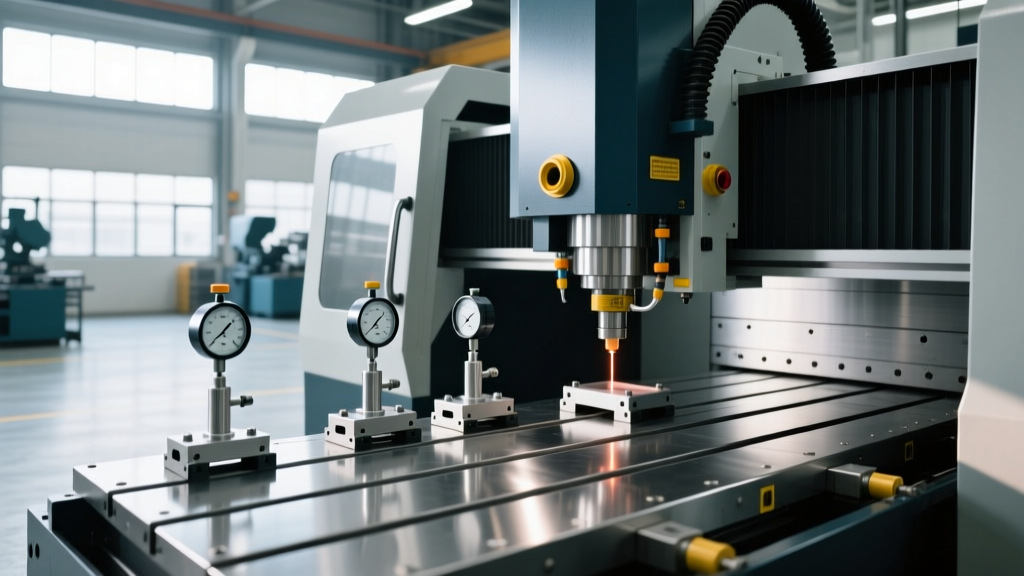
- Piezoelectric Pressure Transducers: Must sample at a minimum of 100Hz to capture the exact inflection point of the pump stroke. Look for sensors with a 0-100 bar range and a 4-20mA or IO-Link output. A 15% deviation in stroke time (e.g., rising from 1.2s to 1.38s) is the primary indicator of a restricted metering unit.
- Ultrasonic Flow Sensors: Installed on the main distribution manifold, these sensors measure volumetric flow down to 0.01 cm³ per stroke. If the pump reaches target pressure but the ultrasonic sensor registers a 5% volume deficit, the ML model instantly triages the 'bug' as an internal pump bypass leak rather than a downstream blockage.
- Ambient & Reservoir Temperature Sensors: Essential for normalizing data. ISO VG 68 way oil changes viscosity significantly between a 55°F shop morning and an 85°F afternoon.
A common failure in early ML deployments is the 'Viscosity Trap.' If your model is not trained to account for ambient temperature variables, it will flag cold-start high-pressure readings as 'downstream blockages' (Severity 1 bugs). Always implement DBSCAN clustering to correlate reservoir temperature with peak pressure, automatically downgrading cold-start pressure spikes to 'Informational' logs rather than critical alarms.
Implementing the Triage Pipeline: Step-by-Step
Transitioning from reactive PLC alarms to predictive ML triage requires a structured data pipeline compliant with industrial standards. According to the ISO 13374-2 standard for condition monitoring and diagnostics of machines, data must flow through distinct processing blocks before a triage decision is made.
Step 1: Edge Data Ingestion and Normalization
Deploy an edge computing node (e.g., Raspberry Pi Compute Module 4 in an industrial DIN-rail enclosure or a Cisco IR1101) running an MQTT broker. The edge node polls the IO-Link master every 10 milliseconds during the 2-second lube pump stroke, extracting the pressure curve. The edge node normalizes this curve against the current reservoir temperature before transmitting it to the cloud or on-premise server.
Step 2: Feature Engineering for Mechanical 'Logs'
Raw pressure data is too noisy for direct ML ingestion. Data scientists must engineer specific features that represent mechanical health. Key features include:
- First Derivative of Pressure (dP/dt): Measures the exact rate of pressure buildup. A sluggish dP/dt indicates pump wear or suction line cavitation.
- Area Under the Curve (AUC): Represents the total mechanical work done by the pump motor during the stroke. An increasing AUC with stable flow volume indicates rising mechanical friction in the distribution lines.
- Decay Rate: How quickly pressure bleeds off after the pump disengages. A rapid decay indicates a failed check valve or a leaking injector seal.
Step 3: Model Execution and Triage Routing
Once the features are extracted, the ML model (hosted on platforms like AWS Lookout for Equipment or Azure Machine Learning) assigns a triage ticket. In a 2026 smart factory setup, this ticket is automatically routed via API to the CMMS (Computerized Maintenance Management System) like Fiix or UpKeep.
- Severity 1 (Critical): Flow volume drops below 80% of baseline. Action: PLC interlock halts the CNC spindle immediately to prevent way-cover scoring. Ticket routed to Millwright on shift.
- Severity 2 (Warning): Stroke time increases by 12% over a 14-day rolling average. Action: Machine continues operation, but CMMS schedules a metering unit cleaning for the next scheduled tool-change downtime.
- Severity 3 (Informational): Reservoir temperature drops below 60°F, causing expected pressure spikes. Action: Log recorded, no maintenance action required.
Capital Expenditure and ROI Analysis
Implementing an ML-driven bug triage system for machine tool lubrication is no longer cost-prohibitive. The hardware required to instrument a single CNC machining center typically includes:
- IO-Link Master (4-port): $250 - $400
- IO-Link Pressure Transducer: $180 - $300
- IO-Link Ultrasonic Flow Sensor: $450 - $800
- Edge Gateway Node: $600 - $1,200
- Total Hardware Cost per Machine: ~$1,480 - $2,700
When paired with enterprise ML licensing (often bundled into existing IT infrastructure agreements for platforms like Splunk or Datadog), the marginal cost of adding OT telemetry is minimal. Considering the NIST Smart Connected Systems Division highlights that predictive maintenance can reduce machine downtime by up to 50%, the ROI on a $2,500 sensor package is realized the moment it prevents a single $20,000 ball-screw replacement or a 48-hour spindle rebuild.
The Future of Autonomous Triage
As we move deeper into 2026, the boundary between IT software management and OT mechanical management continues to dissolve. The top machine learning tools for bug triage are no longer confined to server racks; they are actively listening to the hydraulic heartbeats of the manufacturing floor. By treating mechanical degradation as a data problem, maintenance teams can finally move away from calendar-based lubrication schedules and embrace true, condition-based precision maintenance.