Swarf Management: Ingersoll Machine Tool Chip Conveyor Alternatives
Compare Ingersoll machine tool chip conveyors with top alternatives. Discover swarf management solutions, pricing, and specs for heavy-duty CNC machining.
The Unique Swarf Profile of Ingersoll Gantry Mills
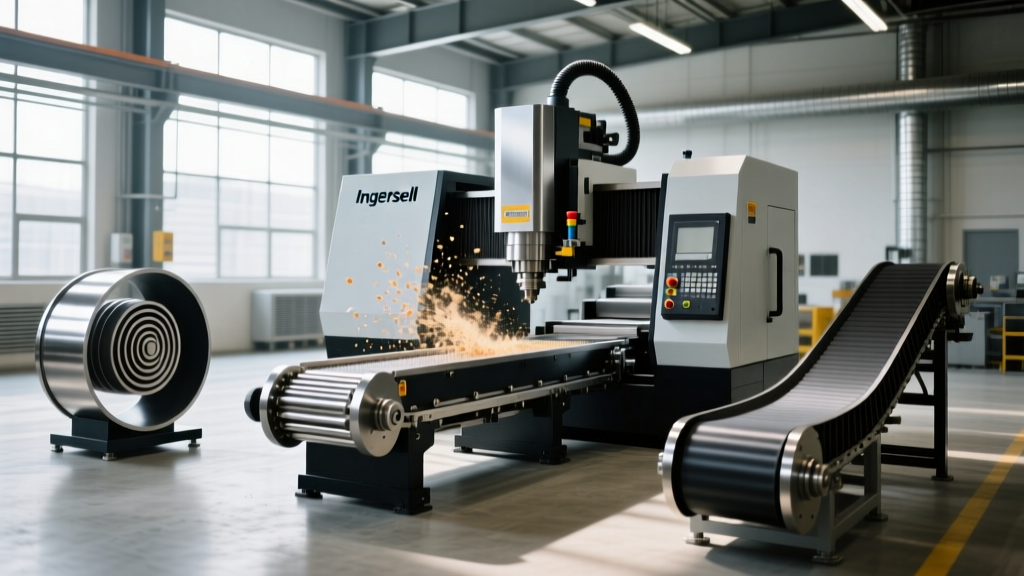
Managing swarf on massive CNC equipment presents engineering challenges that standard machine shop conveyors simply cannot handle. When operating an Ingersoll machine tool—such as the Mastermill gantry series or the ProFiler horizontal profilers—the sheer volume of material removal, combined with extended bed lengths (often exceeding 15 meters), creates a hostile environment for chip evacuation. Aerospace contractors machining Ti-6Al-4V titanium and Inconel 718 generate long, stringy, work-hardened chips that easily wrap around standard conveyor hinges, causing catastrophic motor burnouts. Conversely, die and mold shops using Ingersoll machines for heavy cast iron milling produce highly abrasive, microscopic fines that infiltrate belt gaps and destroy tail pulleys.
Because Ingersoll machines represent a capital investment frequently exceeding $2.5 million, spindle downtime caused by conveyor failure is financially devastating. At typical aerospace machining rates of $350 to $500 per hour, a four-hour conveyor jam results in over $2,000 in lost revenue, excluding maintenance labor and potential part-scrap risks. This reality forces shop managers to evaluate whether to stick with OEM Ingersoll conveyor packages or pivot to specialized aftermarket alternatives.
OEM vs. Aftermarket: Comparing the Heavyweights
Ingersoll typically integrates third-party conveyor systems into their machine designs at the factory, often utilizing customized versions of heavy-duty units from major manufacturers. However, when it comes time for replacement or retrofitting a 20-year-old gantry mill, purchasing an 'OEM-branded' replacement is rarely the most cost-effective or technologically advanced route. Below is a comparison matrix of the primary alternatives for Ingersoll swarf management.
| Provider | Best Application | Est. Cost (15m Bed) | Maintenance Interval | Key Advantage |
|---|---|---|---|---|
| Ingersoll OEM | Warranty compliance, exact fit | $65,000 - $95,000 | 500 hours | Seamless integration with existing machine PLC |
| Mayfran International | High-volume titanium/aluminum | $45,000 - $70,000 | 1,000 hours | Proprietary hinge designs resist chip wrap |
| Hennig Inc. | Cast iron fines, die/mold | $38,000 - $60,000 | 750 hours | Superior wiper seal technology for abrasive dust |
| LNS / Alpine | Standard steel, localized extraction | $25,000 - $40,000 | 500 hours | Cost-effective for lighter duty retrofitting |
Technology Match-Up: Hinge, Scraper, or Auger?
Selecting the right conveyor technology is entirely dependent on the material being milled on the Ingersoll machine. Applying the wrong conveyor type to a specific swarf profile is the leading cause of premature system failure.
Titanium & Inconel (Aerospace Profiling)
For long, stringy, and sharp chips, the heavy-duty hinge belt conveyor is mandatory. However, standard 2.5-inch pitch hinge belts will fail under the tensile load of titanium swarf. For Ingersoll aerospace profilers, you must specify a 4-inch or 6-inch pitch belt with hardened, oversized hinge pins and high-torque cleats. The cleats must be spaced no more than 18 inches apart to physically push the tangled bird-nests of titanium up the incline. Furthermore, the drive motor must be equipped with a variable frequency drive (VFD) and an automated reverse-jog function. When the torque sensor detects a jam, the VFD reverses the belt for two seconds to break the chip bind before attempting forward motion again.
Cast Iron & Hardened Steel (Die and Mold)
Cast iron produces a sludge-like mixture of fine abrasive dust and coolant. Hinge belts are entirely unsuitable here, as the fines will migrate through the hinge gaps, pack into the tail pulley, and eventually snap the belt. For Ingersoll machines used in die sinking, a flight scraper conveyor or a hinge belt with integrated scraper wipers is required. The scraper flights drag the fine sludge along the solid bottom pan of the conveyor, while urethane wiper seals at the tail pulley prevent abrasive ingestion. Expect to pay a 15% to 20% premium for ceramic-coated wiper blades, but this investment easily doubles the lifespan of the tail shaft bearings.
Real-World Troubleshooting: Edge Cases on Long-Bed Machines
Ingersoll machines often feature bed lengths that require multiple conveyor zones or exceptionally long single-run belts. This introduces specific mechanical edge cases that standard conveyor manuals do not address.
- Symptom: Belt tracking drift on conveyors exceeding 10 meters in length.
- Cause: Thermal expansion of the machine bed and conveyor frame during heavy roughing cycles causes misalignment of the head and tail pulleys.
- Fix: Install self-aligning, crowned tail pulleys with integrated tracking guides. Avoid manual tensioning adjustments; instead, utilize pneumatic auto-tensioners that maintain constant belt tension regardless of thermal growth.
- Symptom: Coolant starvation at the Ingersoll spindle due to low pan levels.
- Cause: The conveyor is removing coolant faster than the filtration system can return it, a common issue when upgrading to a high-speed aftermarket conveyor.
- Fix: Integrate a coolant flow-control weir at the conveyor discharge point. This physical dam forces the coolant to pool and drain back into the machine reservoir, while allowing the solid chips to pass over the top.
Cost Analysis and Downtime ROI
When evaluating alternatives, shops must look beyond the initial capital expenditure (CapEx) and calculate the total cost of ownership (TCO). An OEM Ingersoll conveyor replacement might cost $85,000 and take 14 weeks to deliver. An aftermarket Hennig or Mayfran unit might cost $55,000 and deliver in 8 weeks.
However, the true ROI is found in maintenance intervals. If an aftermarket unit utilizes advanced sealed bearings and automated tensioners, extending the preventive maintenance (PM) interval from 500 hours to 1,000 hours saves approximately 12 hours of planned downtime annually. On a three-shift operation running 6,000 hours a year, saving 12 hours of spindle downtime at $400 per hour yields $4,800 in recovered revenue annually. Over a 10-year conveyor lifespan, this secondary ROI nearly covers the cost of the initial aftermarket purchase.
Warning: Never attempt to splice a heavy-duty 6-inch pitch hinge belt in the field on an Ingersoll gantry mill. The tension required to seat the master link properly exceeds manual capabilities and often results in deformed hinge barrels. Always order the belt as a continuous loop and drop the tail pulley assembly for installation.Final Selection Framework
To finalize your swarf management strategy for an Ingersoll machine tool, follow this decision matrix:
- Identify the primary material: If >70% of your work is titanium/aluminum, select a Mayfran-style heavy-duty hinge belt with reverse-jog VFD. If >70% is cast iron/ductile iron, select a Hennig-style scraper or wiper-sealed system.
- Measure the exact chip pan geometry: Do not rely on original machine drawings, as years of thermal cycling and minor repairs can alter the pan dimensions by up to 15mm.
- Upgrade the drive package: Regardless of the brand chosen, mandate a smart-motor drive with torque-monitoring capabilities that interfaces directly with the Ingersoll machine's PLC via standard M-codes, allowing the CNC program to pause automatically if a chip jam is detected.
By moving beyond default OEM replacements and strategically selecting aftermarket alternatives based on specific swarf profiles, manufacturing facilities can drastically reduce unplanned downtime and extend the operational life of their heavy-duty gantry and profiling equipment.