Flood vs Mist Cooling: Adapting Washing Machine Installation Tools
Explore flood vs mist cooling in CNC systems. Learn how smart valves and washing machine installation tools are revolutionizing MQL retrofits.
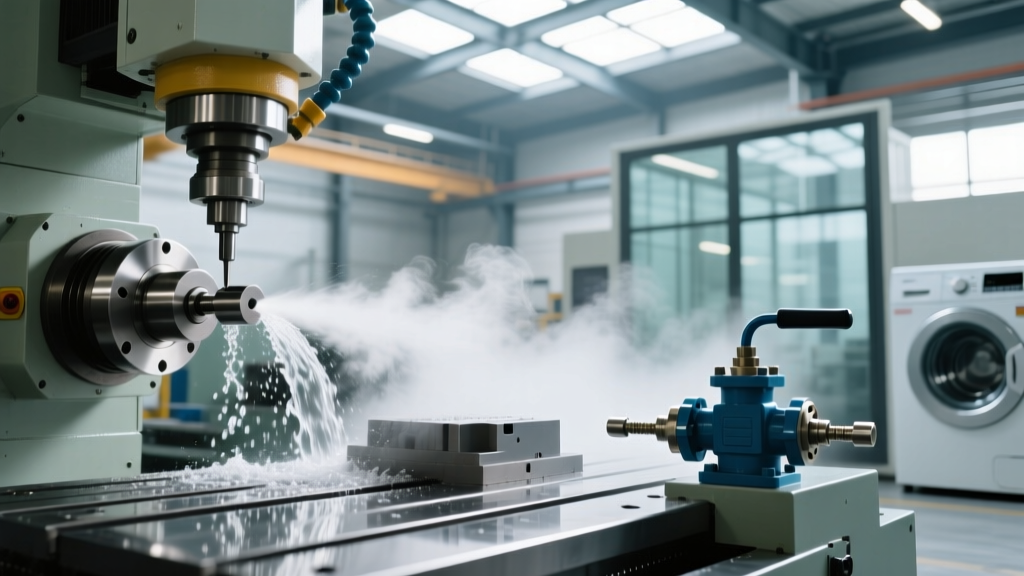
The transition from traditional flood coolant to Minimum Quantity Lubrication (MQL), commonly known as mist cooling, represents one of the most significant shifts in modern CNC machining. While flood cooling relies on high-volume pumps delivering 10 to 20 gallons per minute (GPM) of water-soluble fluid, MQL systems atomize mere milliliters of bio-based oil directly into the cutting zone. As machine shops face stricter environmental regulations and rising fluid disposal costs in 2026, retrofitting older CNCs with MQL has become a priority. However, the plumbing challenges of delivering precise air-oil mixtures without leaks often stall these upgrades. To solve this, innovative maintenance teams are increasingly adapting advanced washing machine installation tools and smart-home fluid management hardware for industrial CNC retrofits.
The Fluid Delivery Paradigm: Flood vs. MQL
Understanding the operational divide between flood and mist cooling is critical before attempting a retrofit. Flood coolant serves two primary purposes: lubrication and thermal management (chip evacuation and heat extraction). MQL, by contrast, abandons thermal management via fluid volume, relying instead on precise boundary lubrication and compressed air for chip evacuation.
| Metric | Traditional Flood Coolant | Modern MQL (Mist Cooling) |
|---|---|---|
| Fluid Consumption | 10 – 20 GPM (recirculated) | 10 – 50 mL/hour |
| Annual Fluid Cost (per machine) | $2,500 – $4,500 | $150 – $300 |
| Disposal / Treatment Cost | $1,500 – $3,000+ / year | $0 (chips are dry/recyclable) |
| Tool Life (Aluminum/Steel) | Baseline (1.0x) | 1.2x – 1.5x (reduced thermal shock) |
| Machine Cleanup Time | 45+ minutes daily | 5 – 10 minutes daily |
According to the U.S. Environmental Protection Agency (EPA), metalworking fluid management is a major source of industrial waste. By switching to MQL, shops eliminate the need for central coolant sumps, centrifuges, and tramp oil skimmers, drastically reducing their environmental footprint.
Cross-Industry Innovation: The Appliance Plumbing Crossover
MQL systems require a highly controlled delivery of compressed air (typically 4 to 6 bar, or 60 to 90 PSI) mixed with micro-doses of ester-based oil. Standard industrial copper or rigid nylon lines are expensive to route, require specialized flaring tools, and are prone to vibration-induced micro-fractures over time. This is where the crossover occurs.
Maintenance engineers are turning to high-end washing machine installation tools and smart appliance plumbing kits to build reliable, leak-proof MQL delivery networks. The hardware designed to prevent catastrophic residential water damage is perfectly rated for the low-pressure, high-reliability demands of CNC mist cooling.
Key Adapted Components for MQL Retrofits
- Push-to-Connect Fittings: Originally popularized for smart-home water lines, polymer push-fittings (e.g., John Guest style) are now used to route 1/4" and 3/8" polyurethane air/oil lines inside CNC enclosures. They tolerate the 90 PSI air pressure required for MQL atomization and can be disconnected instantly for maintenance without tools.
- Braided Steel Polymer-Lined Hoses: Premium washing machine installation kits feature burst-proof braided hoses with auto-shutoff couplings. Machinists use these to bridge the gap from the shop's main air drop to the CNC's MQL generator, eliminating the rigid vibration transfer that cracks standard brass fittings.
- Smart Inline Leak Detectors: Micro-flow sensors designed for appliance lines (detecting flows as low as 0.1 GPM) are being wired into CNC PLCs. If an MQL oil line ruptures, the sensor detects the continuous micro-flow anomaly and triggers an M-code alarm, halting the spindle before a tool crashes due to lack of lubrication.
Maintenance Callout: Pressure Ratings
When utilizing appliance-grade push-fittings for MQL, ensure the working pressure rating exceeds your shop's compressed air supply. Most MQL generators require a steady 6 bar (87 PSI). Standard residential fittings are rated for 150 PSI at 70°F, which provides a safe safety factor. However, if routing lines near high-heat zones (e.g., adjacent to a spindle motor housing), use brass-bodied push-fittings, as polymer collars can soften above 140°F.
Step-by-Step: Retrofitting a Haas VF-2 with Smart MQL
Retrofitting a standard vertical machining center like a Haas VF-2 using these adapted tools reduces installation time from three days to approximately six hours.
- Mount the MQL Generator: Install a positive-displacement MQL unit (e.g., DropsA or HPM Technologies) on the machine's side panel. Connect the main air supply using a braided steel appliance hose equipped with an inline ball valve and micro-filter (5-micron) to prevent moisture ingress.
- Route the Air-Oil Lines: Use 3/8" polyurethane tubing secured with push-to-connect fittings. Route the lines through the machine's existing cable carriers. The push-fittings allow you to easily snake the tubing around the spindle head without needing tube benders or flare wrenches.
- Install Smart Flow Sensors: Cut into the main oil feed line and insert an inline digital micro-flow meter. Wire the sensor's relay output to an unused M-finish or macro input on the Haas control panel.
- Configure the Nozzles: Terminate the lines at the spindle nose using flexible, articulated Loc-Line style nozzles. Ensure the atomization tip is positioned exactly 20mm to 40mm from the cutting edge, angled 15 degrees into the rake face of the tool.
- Program the PLC Logic: Write a custom M-code (e.g., M55 for MQL On, M56 for MQL Off) that simultaneously opens the solenoid air valve, activates the oil micro-pump, and monitors the smart flow sensor. If flow drops below 2 mL/min, the macro triggers a feed-hold and alarm.
Fluid Selection: Bio-Based Esters vs. Petroleum
The success of a mist cooling system hinges on the lubricant. Unlike flood coolants that rely on water for heat transfer, MQL fluids must possess extreme pressure (EP) additives and high flash points to survive the cutting zone. In 2026, vegetable-based synthetic esters have largely replaced petroleum oils.
Products like Castrol Iloquench 7 or Accu-Lube LB-2000 offer flash points exceeding 500°F (260°C). These fluids are applied at a rate of 5 to 15 mL per hour. Because the fluid vaporizes cleanly at the cutting edge, the resulting chips are entirely dry. This allows shops to sell aluminum and steel scrap at premium recycling rates, as scrap yards no longer penalize them for high moisture and tramp oil content.
"The integration of smart-home fluid management hardware into the machine shop is a prime example of agile manufacturing. By leveraging the mass-produced reliability of advanced washing machine installation tools, we cut our MQL retrofit plumbing costs by 60% and eliminated 90% of pneumatic line leaks." — Lead Maintenance Engineer, Tier-1 Aerospace Supplier
Addressing the Thermal Management Gap
The primary criticism of mist cooling is its inability to manage the bulk heat generated in heavy roughing operations. While MQL excels in finishing, aluminum milling, and drilling, it struggles with deep-hole drilling in titanium or heavy interrupted cuts in Inconel.
To bridge this gap, modern CNCs are adopting through-spindle coolant (TSC) at high pressures (1,000+ PSI) combined with external MQL. For shops that cannot afford 1,000 PSI TSC upgrades, the solution is air-blast chillers. By integrating a vortex tube chiller into the MQL air supply line, the compressed air is dropped to 40°F (4°C) before atomizing the oil. This sub-ambient mist provides localized thermal shock reduction, extending tool life in difficult materials without reverting to a flood system.
Frequently Asked Questions
Can I use standard pneumatic push-fittings for MQL oil lines?
Standard pneumatic fittings are designed for dry air. MQL ester oils can degrade the internal O-rings of cheap pneumatic fittings over time. Use push-fittings specifically rated for potable water or appliance use (like those found in premium washing machine installation kits), as their EPDM or Viton seals are highly resistant to bio-based oils and synthetic esters.
Does mist cooling cause respiratory issues for operators?
When properly tuned, MQL systems produce virtually zero airborne mist outside the cutting zone. The oil is consumed via vaporization at the tool tip. However, OSHA mandates proper enclosure and mist collection. Ensure your CNC is equipped with a high-efficiency particulate air (HEPA) mist collector rated for sub-micron aerosol capture to maintain compliance with OSHA's metalworking fluid guidelines.
What is the ROI timeline for an MQL retrofit?
For a mid-size machine shop running two shifts, the return on investment for a $3,500 MQL retrofit (including generator, smart valves, and adapted plumbing hardware) is typically 6 to 9 months. Savings are realized through the elimination of coolant disposal fees, reduced tooling costs, and premium scrap recycling rates.