Definition of Machine Tools: Spindle & Bearing Cost Guide
Explore the true definition of machine tools through a cost analysis of spindle types, bearing configurations, and rebuild budgets for your shop.
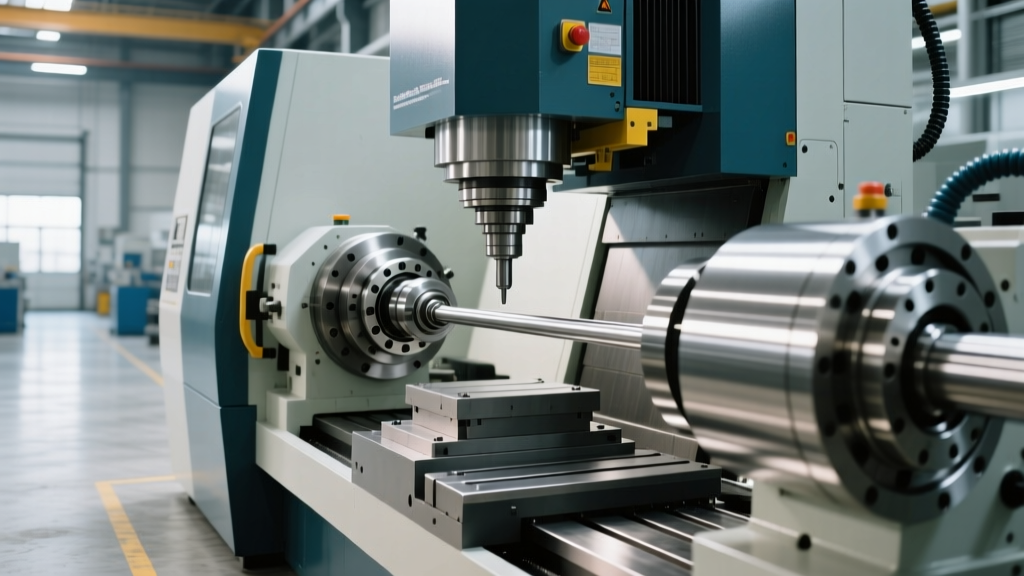
While the academic definition of machine tools categorizes them as stationary, power-driven devices used to cut, shape, or form metal, the financial reality on the shop floor is vastly different. From a capital expenditure (CapEx) and operational expenditure (OpEx) perspective, a machine tool is essentially a precision spindle delivery system. The structural castings, axes drives, and CNC controllers exist primarily to position and support the spindle. When budgeting for new equipment or planning maintenance reserves, understanding the cost architecture of spindle types and bearing configurations is the most critical factor in protecting your profit margins.
The Financial Definition of Machine Tools: Spindle ROI
When evaluating the true definition of machine tools in a production environment, the spindle represents the highest concentration of both value and vulnerability. A crash that destroys a $45,000 motorized spindle instantly erases the profit from hundreds of machined parts. Therefore, budget planning must shift from viewing the spindle as a static component to treating it as a consumable asset with a predictable lifecycle, degradation curve, and replacement cost.
Spindle Drive Configurations: CapEx Matrix
The drive mechanism dictates the initial capital outlay, the maximum RPM envelope, and the long-term maintenance liabilities. Below is a 2026 cost matrix for standard CAT40/BT40 and HSK-A63 spindle configurations.
| Drive Type | Typical RPM Range | Initial CapEx (USD) | Expected Lifespan | Primary Failure Mode |
|---|---|---|---|---|
| Belt-Driven | 6,000 - 10,000 | $4,500 - $8,500 | 12,000 - 18,000 hrs | Belt wear, pulley misalignment, bearing contamination |
| Direct-Coupled | 12,000 - 16,000 | $12,000 - $19,000 | 15,000 - 22,000 hrs | Coupling degradation, motor heat transfer to bearings |
| Motorized (Built-in) | 20,000 - 42,000+ | $32,000 - $65,000+ | 8,000 - 15,000 hrs | Rotor/stator burnout, cooling jacket failure, drawbar fatigue |
Bearing Configurations: The Ceramic Hybrid Premium
The bearing configuration is the hidden OpEx driver within the spindle assembly. Modern high-speed spindles rely on precision angular contact ball bearings. The decision between standard high-carbon chromium steel bearings and ceramic hybrid bearings (silicon nitride Si3N4 balls with steel races) dramatically alters both the upfront budget and the spindle's thermal stability.
Cost vs. Performance: Silicon Nitride (Si3N4) Bearings
- Steel Bearings: A matched set of ABEC-7 (ISO P4) steel angular contact bearings for a standard 40-taper spindle typically costs between $800 and $1,400. They are highly susceptible to thermal expansion at RPMs above 12,000, leading to increased preload and premature failure.
- Ceramic Hybrid Bearings: The equivalent Si3N4 ceramic hybrid set costs between $2,800 and $4,500. Ceramic balls are 40% lighter and 50% harder than steel, generating significantly less centrifugal force and friction heat. This allows for higher RPMs and extends the grease-packed lifespan by up to 300%.
For shops running 24/7 lights-out production on aluminum aerospace components, the 300% premium on SKF or NSK super precision ceramic bearings is justified by the reduction in unplanned downtime and thermal growth compensation errors.
Preload and Tolerance: ABEC-7 vs. ABEC-9
Budget planners must also specify the tolerance class. ABEC-7 (ISO P4) is the industry standard for general CNC milling, offering runout tolerances of roughly 3 to 5 microns. Upgrading to ABEC-9 (ISO P2) reduces runout to under 2 microns, which is mandatory for micro-machining, jig boring, and high-precision die mold work. However, ABEC-9 bearings command a 2.5x to 3x price multiplier over ABEC-7 and require immaculate cleanroom assembly environments during installation, adding $1,500 to $2,500 in specialized labor costs to the rebuild invoice.
The 2026 Rebuild vs. Replace Decision Tree
When a spindle fails, the immediate financial question is whether to send it to a specialized repair facility or purchase a new OEM unit. Supply chain realities in 2026 dictate that lead times for new European-manufactured motorized spindles can stretch from 16 to 28 weeks. Follow this decision framework to protect your production schedule and budget:
- Evaluate Shaft and Housing Damage: If the spindle crashed and the tooling interface (e.g., HSK taper) is scored, or the bearing journal is galled, the shaft must be re-ground or hard-chrome plated and re-machined. If the housing bore is out of round by more than 4 microns, a simple bearing swap will fail within 500 hours.
- Calculate the 60% Threshold: Obtain a teardown quote from an authorized repair center (e.g., Setco or an OEM-certified depot). If the rebuild cost exceeds 60% of the price of a brand-new spindle, and the new unit is in stock, replace it. If the new unit has a 20-week lead time, rebuild it immediately to maintain cash flow, and order a spare new unit for inventory.
- Verify the Balance Grade: Ensure the rebuild contract guarantees a dynamic balance grade of G1.0 or better at maximum RPM. A cheaper $2,500 "bearing swap" repair that leaves the spindle at G2.5 will cause chatter, ruin tool life, and degrade part surface finishes, costing far more in secondary OpEx than a proper $6,000 full-spectrum rebuild.
Hidden OpEx: Lubrication and Thermal Management
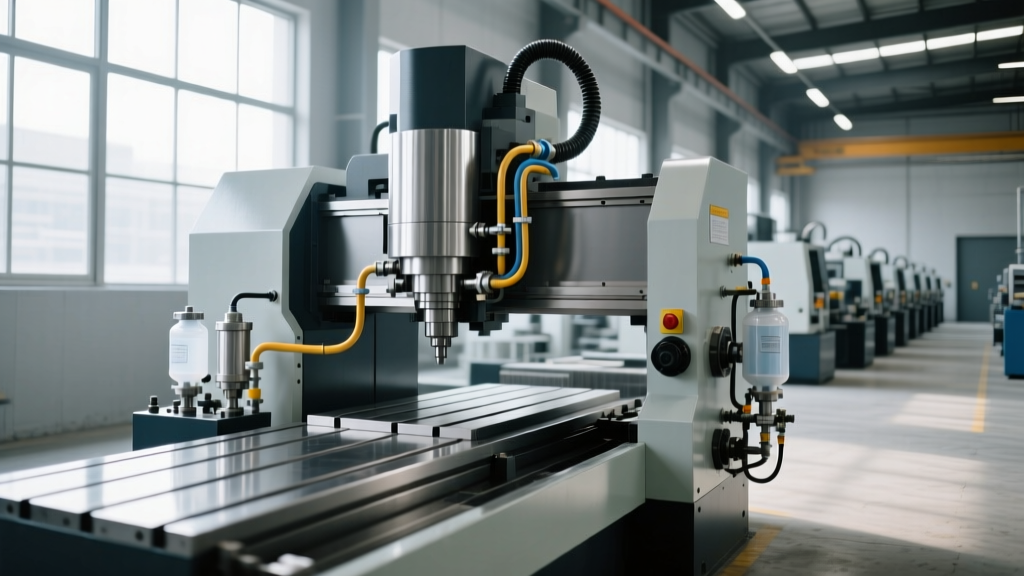
The most frequently overlooked line item in the machine tool budget is the spindle lubrication and thermal management infrastructure. High-speed spindles cannot rely on standard grease packing; they require oil-air or oil-jet lubrication systems.
"A $50,000 motorized spindle will destroy its $4,000 ceramic bearing set in under 400 hours if the oil-air mixer is clogged or the external chiller unit fails to maintain the cooling jacket at a strict 20°C (± 0.5°C). The maintenance budget must include quarterly replacement of metering units and annual chiller descaling."
When defining your annual maintenance budget, allocate approximately $1,200 per high-speed spindle for oil-air filtration replacements, chiller coolant flushes, and drawbar force testing. According to industry data tracked by Modern Machine Shop, over 45% of premature spindle failures are traced directly to contaminated air lines pushing moisture into the oil-air mixer, rather than bearing fatigue. Installing a $600 coalescing air filter on the spindle's dedicated air supply line yields an immediate, measurable ROI by extending bearing life by thousands of hours.
Ultimately, mastering the financial definition of machine tools requires looking past the sticker price of the CNC enclosure. By strategically selecting the correct drive type, investing in ceramic hybrid bearings where thermal stability dictates, and strictly funding the peripheral lubrication infrastructure, manufacturing leaders can transform the spindle from a catastrophic liability into a predictable, manageable asset.