Optimizing CNC Coolant Flow: Flood vs Mist Simulation with a Machine Tools Blender Addon
Compare flood vs MQL mist cooling for CNC machining. Learn how a machine tools Blender addon simulates fluid dynamics to optimize nozzle placement and ROI.
Digital Twins Meet Fluid Dynamics in Modern Machining
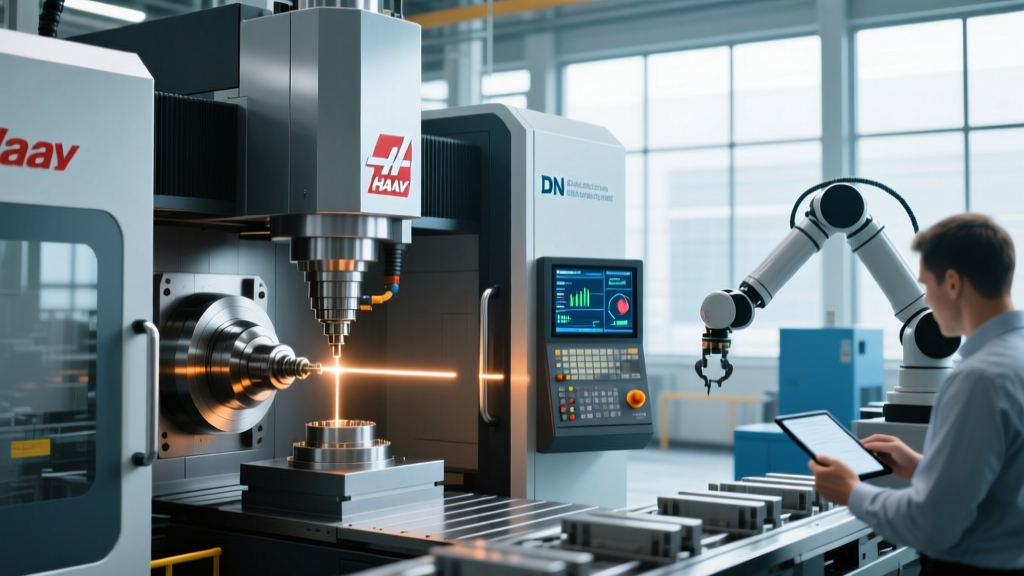
In the landscape of 2026 precision manufacturing, guessing coolant nozzle placement is a liability. When machining aerospace-grade alloys like Ti-6Al-4V or Inconel 718, thermal management dictates tool life and surface finish integrity. While CAM software excels at toolpath generation, it traditionally lacks robust fluid dynamic visualization. This gap has driven advanced manufacturing engineers to adopt a unique workflow: utilizing a specialized machine tools blender addon to bridge the gap between G-code toolpaths and 3D physics simulation.
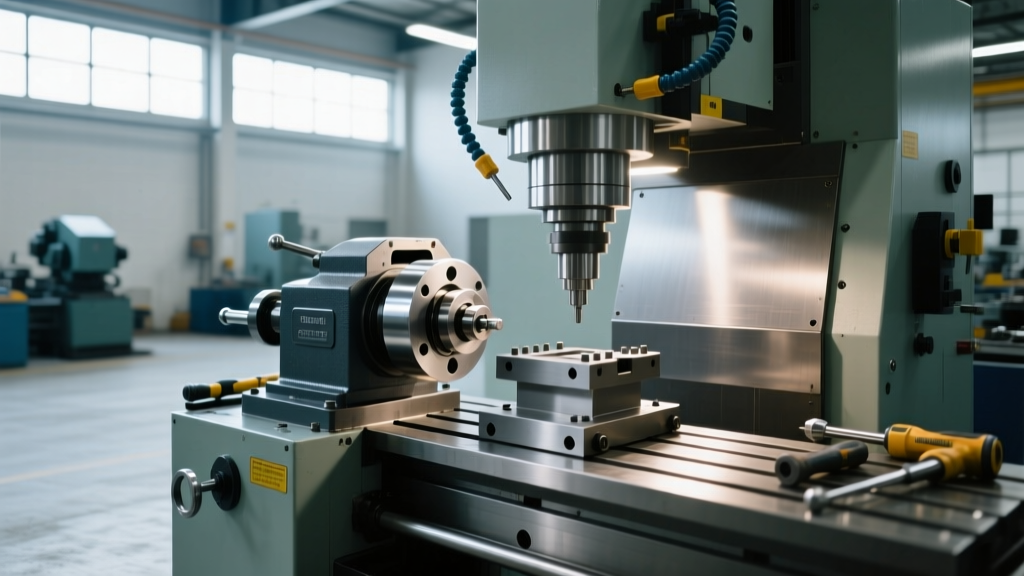
By importing machine kinematics, tool holder geometries (such as Haimer SHRINKFIT or hydraulic chucks), and workpiece CAD models into Blender, engineers can simulate coolant delivery before a single chip is cut. This digital twin approach is particularly critical when deciding between traditional high-pressure flood coolant and Minimum Quantity Lubrication (MQL) mist systems, as each requires vastly different nozzle trajectories and line-of-sight clearances.
Flood Coolant vs. MQL: The 2026 Performance Matrix
Choosing between flood and MQL is no longer just about fluid cost; it is about thermal shock mitigation, chip evacuation, and environmental compliance. Below is a technical comparison of the two primary delivery methods based on current industry benchmarks.
| Parameter | High-Pressure Flood (e.g., ChipBLASTER) | MQL / Mist (e.g., Unist Quantum) |
|---|---|---|
| Delivery Pressure | 1,000 - 3,000 PSI | 20 - 60 PSI (Atomizing Air) |
| Flow Rate | 15 - 50 GPM | 10 - 30 mL/hr |
| Fluid Cost (2026) | $45 - $65 / gallon (Synthetic) | $90 - $120 / gallon (Ester-based) |
| Heat Extraction | Exceptional (Massive thermal carry-away) | Poor (Relies on boundary lubricity) |
| Chip Evacuation | Superior for deep pockets & stringy chips | Excellent for short, brittle chips (Aluminum) |
| Disposal Costs | High ($3 - $5/gal for tramp oil removal) | Zero (Fluid is consumed/evaporated) |
According to Sandvik Coromant's cutting fluid guidelines, high-pressure flood coolant is mandatory for materials that work-harden rapidly or produce long, ductile chips. Conversely, MQL excels in high-speed milling of non-ferrous materials where thermal shock to the carbide substrate is a greater risk than heat accumulation in the cut zone.
Mapping Nozzle Trajectories with a Machine Tools Blender Addon
The primary failure mode of MQL systems is "shadowing"—when the spindle housing, tool holder, or workpiece geometry blocks the aerosol mist from reaching the cutting edge. Because MQL relies on precise, targeted delivery rather than the brute-force volume of flood coolant, a blocked nozzle results in immediate tool failure.
This is where a machine tools blender addon proves invaluable. The workflow operates as follows:
- G-Code Parsing: The addon reads the RS274 G-code and maps the tool center point (TCP) trajectories into Blender as 3D curve objects.
- Kinematic Assembly: The exact 3D models of the 5-axis trunnion table, spindle nose, and specific tool assemblies are loaded into the scene.
- MantaFlow Physics Integration: Engineers assign emission vertices to the virtual MQL nozzles. Blender’s MantaFlow physics engine is then used to simulate particle dispersion, calculating the aerosol cone angle (typically 15° to 25°) against the moving toolpath.
- Raycast Line-of-Sight Analysis: The addon runs a raycasting script from the nozzle tip to the cutting insert at 100-millisecond intervals along the toolpath, highlighting "shadow zones" in red where the mist is obstructed.
When simulating deep pocket milling (depth-to-width ratio > 3:1) in titanium, the Blender physics simulation will reveal that low-pressure MQL aerosol cannot penetrate the vortex of air created by the spindle RPM. For these specific toolpaths, the digital twin will flag the operation, prompting the programmer to switch to through-spindle coolant (TSC) at 1,000+ PSI to prevent chip re-welding.
Hardware Economics: Sizing the Right Delivery System
Simulating the flow is only half the battle; selecting the physical hardware requires strict ROI analysis. Let us compare two industry-standard systems currently dominating the 2026 market.
1. High-Pressure Flood: ChipBLASTER CV-20 Series
The ChipBLASTER CV-20 is a 20-horsepower, 1,000 PSI system designed for chip-breaking in tough alloys. Priced at approximately $38,000 (installed), it requires a 230V 3-phase power drop and significant floor space. However, for shops running Inconel turbine blisks, the ability to fracture chips at the shear zone reduces cycle times by up to 22%, justifying the capital expenditure within 14 months.
2. Precision MQL: Unist Quantum System
The Unist Quantum MQL system represents the pinnacle of aerosol delivery. Costing around $9,500, it uses a positive-displacement pump to deliver exact micro-doses of ester-based lubricant directly into the air stream. Because the parts exit the machine virtually dry, secondary washing operations are eliminated, saving an average of $4.50 per part in post-processing labor and chemical wash costs.
"The transition to MQL isn't just about saving coolant; it's about eliminating the hidden costs of fluid management. When a part comes off the pallet dry, you instantly reclaim 15% of your total manufacturing floor space previously dedicated to washing and drying stations."
— Advanced Manufacturing Engineering Journal, 2025 Fluid Dynamics Report
Step-by-Step: Simulating Your Coolant Strategy
To implement this digital twin workflow in your shop, follow this structured approach to validate your coolant strategy before the first prove-out:
- Step 1: Export Clean Geometry. Export your workpiece and fixture assembly as STEP files. Avoid STL meshes, as the Blender addon requires NURBS-derived meshes for accurate collision and raycast calculations.
- Step 2: Define Nozzle Parameters. In the addon interface, input the physical specs of your nozzles. For MQL, use a 0.020" orifice with a 20° spray angle. For flood, use a 0.040" flat-fan nozzle profile.
- Step 3: Run the Shadow Analysis. Execute the raycast simulation. If the toolpath shows >5% shadowing, you must redesign the fixture or add secondary programmable coolant nozzles (e.g., Haas programmable coolant nozzles controlled via M-codes).
- Step 4: Validate TSC Requirements. For tools utilizing through-spindle coolant, simulate the internal fluid exit angle. Ensure the 15° offset of the coolant holes in your carbide end mills aligns with the flank face of the tool, not the leading edge.
Material-Specific Decision Framework
Use this rapid-reference framework to dictate which system to simulate and deploy for your upcoming production runs:
- 7075-T6 Aluminum (Aerospace Structurals): MQL Mist. High RPMs (15,000+) combined with MQL prevent the chip from adhering to the flute. Flood coolant at these speeds vaporizes, creating a dangerous oil mist and failing to reach the cutting edge.
- 17-4 PH Stainless Steel: High-Pressure Flood. The material's tendency to work-harden requires massive thermal extraction and mechanical chip-breaking force that only 1,000+ PSI flood systems can provide.
- Gray Cast Iron (Engine Blocks): Dry Machining or Air Blast. Coolant creates a sludge with cast iron dust that clogs filters and destroys way covers. Use the Blender addon to simulate high-volume air blast nozzles for chip clearing instead.
- Ti-6Al-4V (Titanium Aerospace): Flood (External) + TSC (Internal). External flood cools the workpiece to prevent thermal expansion, while internal TSC at 700 PSI lubricates the shear zone.
The Future of Fluid Optimization
The integration of open-source 3D physics engines into manufacturing workflows represents a massive leap in process reliability. By leveraging a machine tools blender addon to visualize the invisible dynamics of flood and MQL systems, shops eliminate the costly trial-and-error of physical prove-outs. As environmental regulations surrounding synthetic fluid disposal tighten in 2026, the ability to mathematically prove MQL viability via digital simulation is no longer a luxury—it is a fundamental requirement for competitive, high-margin CNC machining.