Small-Scale Manufacturing for Tunneling Equipment Manufacturers
Discover how startups use small-scale manufacturing equipment to supply niche components and prototypes to top tunneling equipment manufacturers in 2026.
The Micro-Tunneling Supply Chain Opportunity for Startups
When entrepreneurs think of heavy civil engineering, they rarely envision a 2,000-square-foot machine shop. Yet, a highly lucrative niche exists in supplying specialized, low-volume components to tier-one tunneling equipment manufacturers. While massive Tunnel Boring Machines (TBMs) are assembled in sprawling facilities, the industry relies heavily on agile startups for micro-tunneling prototypes, custom sensor housings, and specialized wear-part testing models.
In 2026, the push for urban subsurface infrastructure has accelerated the adoption of micro-tunneling systems. According to industry data from the Herrenknecht micro-tunneling division, machines with diameters under 1.5 meters require highly customized guidance sensors, slurry valve housings, and scaled cutter-ring prototypes. These parts are high-mix, low-volume, and demand tight tolerances—making them perfect for small-scale manufacturing startups equipped with advanced desktop and mid-sized CNC machinery.
Market Insight: Tier-one tunneling equipment manufacturers outsource up to 35% of their non-structural, high-precision sensor and prototyping components. Startups that can deliver 5-axis machined parts in under 14 days capture premium margins, often exceeding 45% gross profit on short-run contracts.Case Study: Prototyping Cutter Head Assemblies and Sensor Housings
To win contracts with major tunneling equipment manufacturers, a startup must prove it can handle complex geometries and abrasive materials. A common entry point is manufacturing housings for TBM laser-guidance systems and prototyping new cutter ring profiles before they are sent for full-scale investment casting.
The Hardware Stack for Sub-Surface Component Startups
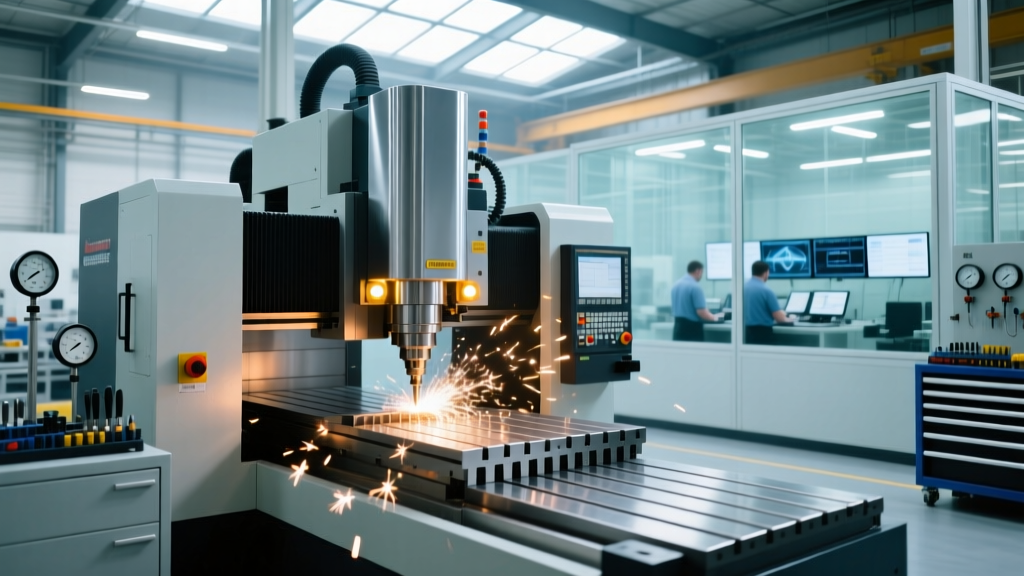
Outfitting a small-scale facility to handle these contracts requires a strategic balance of capability and capital expenditure. Below is the optimal 2026 hardware stack for a startup targeting the tunneling sector, keeping initial CapEx under $350,000.
| Equipment Model | Approx. Cost (2026) | Primary Application | Tolerance Capability |
|---|---|---|---|
| Haas UMC-500SS (5-Axis CNC) | $185,000 | Complex guidance sensor housings, slurry valve bodies | ±0.0005' |
| Formlabs Fuse 2 (SLS 3D Printer) | $38,500 | Sacrificial patterns for cutter ring investment casting | ±0.003' (Pre-cast) |
| Faro Quantum Max ScanArm | $85,000 | First Article Inspection (FAI) of large asymmetric parts | ±0.0002' (Point) |
| Sodick ALN400G Wire EDM | $110,000 | Hardened carbide insert pockets and wear-plate profiling | ±0.0001' |
Material Science: Machining Hardox and Carbide on a Budget
Tunneling environments are relentlessly abrasive. Components like wear plates, slurry seals, and cutter mounts are frequently fabricated from Hardox 450 or feature tungsten carbide inserts. Small-scale startups often lack the massive rigid tapping machines or heavy-duty horizontal mills traditionally used for these materials. However, modern tooling has bridged this gap.
"Startups machining Hardox 450 on mid-sized 5-axis mills must prioritize high-pressure coolant and specialized toolpaths. Using a standard 4-flute carbide end mill with flood coolant will result in catastrophic tool failure within minutes due to work hardening."
According to SSAB's official Hardox machining guidelines, the material's high yield strength requires specific cutting parameters. For a startup using a Haas UMC-500SS equipped with a 300 PSI through-spindle coolant system (an absolute minimum requirement for this niche), the following parameters apply when roughing Hardox 450:
- Tooling: Ceramic end mills (e.g., Harvey Tool or Kennametal) with AlTiN coatings.
- Surface Speed (SFM): 400-600 SFM for ceramics; drop to 150-200 SFM if using solid carbide.
- Feed per Tooth (IPT): 0.003' to 0.005' to ensure the cutting edge stays beneath the work-hardened layer.
- Radial Engagement: Keep radial depth of cut (RDOC) below 10% of the tool diameter to manage heat dissipation.
Quality Control and Metrology for Sub-Surface Components
Tunneling equipment manufacturers operate in environments where a failed sensor housing can halt a multi-million-dollar bore, costing tens of thousands of dollars per hour in downtime. Consequently, their supplier quality assurance (SQA) requirements are draconian. Startups cannot rely on basic calipers and height gauges.
Step-by-Step: First Article Inspection (FAI) for TBM Sensor Housings
When delivering the first batch of custom Inconel 718 sensor housings for a TBM's automated guidance system, startups must execute a rigorous FAI. Here is the exact workflow expected by tier-one OEMs:
- Thermal Stabilization: Allow the machined parts and the Faro Quantum Max ScanArm to acclimate in a climate-controlled metrology lab (68°F ± 2°F) for a minimum of 12 hours.
- Datum Establishment: Probe the primary datum plane (usually the mounting flange) using the ruby ball stylus to establish the Z-axis zero. Take a minimum of 12 points across the surface to calculate the best-fit plane.
- Bore Circularity Check: Scan the internal O-ring grooves. TBM slurry pressures can exceed 4 bar; any deviation in groove circularity greater than 0.001' will cause seal extrusion and catastrophic flooding.
- True Position Verification: Verify the true position of the optical window mounting holes relative to the datum axis. This ensures the laser guidance system aligns perfectly with the TBM's central thrust axis.
- AS9102 Documentation: Generate a ballooned drawing and a comprehensive FAI report (Form 1, 2, and 3) using metrology software like SpatialAnalyzer, exporting directly to the OEM's portal.
Scaling from Prototype to Short-Run Production
The ultimate goal for a small-scale manufacturer in this space is to transition from one-off prototyping to recurring short-run production contracts. Tunneling equipment manufacturers frequently update their micro-TBM designs to adapt to varying geologies—from soft alluvial soils to hard, abrasive granite.
Startups that implement automated tool changers, robotic part loaders (like the Haas APL), and integrated probing routines can run unattended overnight shifts. This effectively doubles the output of a 2,000-square-foot facility without increasing the payroll burden. By focusing strictly on the high-complexity, low-volume components that massive machine shops find too tedious to set up, startups carve out an indispensable role in the global tunneling supply chain.
Frequently Asked Questions
What certifications do tunneling equipment manufacturers require from small suppliers?
Most tier-one OEMs require ISO 9001:2015 as a baseline. However, because many tunneling guidance systems overlap with aerospace-grade precision, holding an AS9100 Rev D certification will immediately place a startup in the top 5% of approved vendors, bypassing lengthy initial audit phases.
Can desktop 3D printers be used for end-use tunneling parts?
No. While desktop FDM or SLA printers are excellent for assembly jigs and ergonomic handles for shop-floor technicians, end-use subsurface components require the structural integrity of CNC-machined metals or high-temperature SLS nylon (like Glass-Filled PA12) for non-load-bearing protective covers.
How do startups handle the logistics of shipping heavy prototype cutter rings?
Prototype cutter rings can weigh upwards of 150 lbs each. Startups should invest in a small internal gantry crane (1-ton capacity, approx. $12,000 installed) and partner with specialized freight forwarders who understand the handling requirements for precision-machined, rust-inhibited heavy steel components.