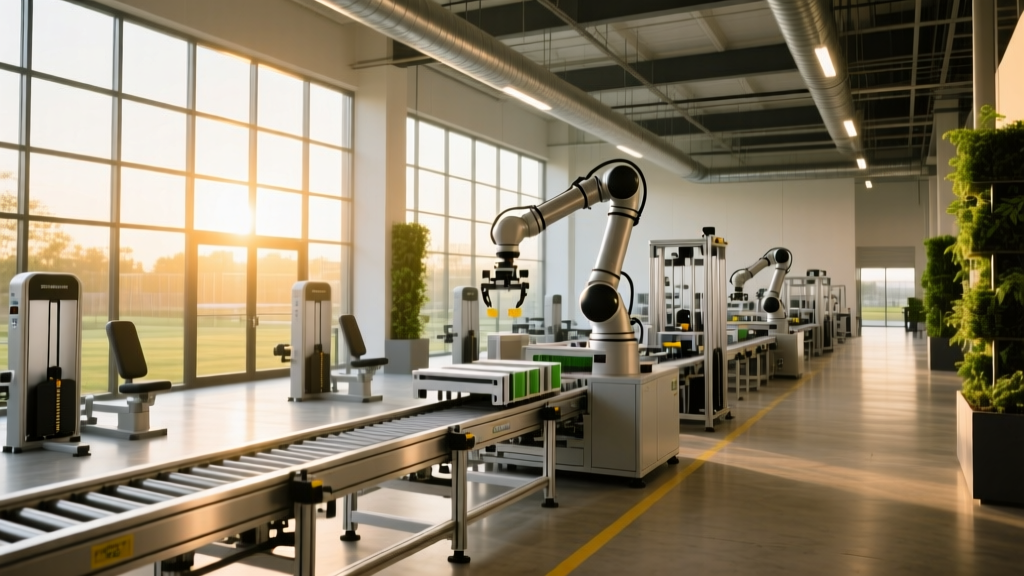
Sustainable Line Upgrades for a Park Fitness Equipment Manufacturer
Compare green manufacturing tech for park fitness equipment producers. Analyze electric benders, eco-coatings, and low-heat welding for 2026 upgrades.
The Shift Toward Sustainable Outdoor Fitness Production
Manufacturing outdoor park fitness equipment—such as pull-up rigs, elliptical stations, and resistance lever machines—requires heavy steel fabrication, extensive welding, and rigorous surface finishing. Historically, these processes have been energy-intensive and reliant on high-VOC (volatile organic compound) coatings. For a park fitness equipment manufacturer aiming to align with 2026 municipal procurement standards and corporate ESG goals, upgrading the production line with green technology is no longer optional. Municipalities now frequently mandate ISO 14001 certification and low-carbon footprint documentation for public park installations.
This analysis compares traditional manufacturing setups against sustainable alternatives across three critical production stages: tube bending, surface finishing, and structural welding. The objective is to provide factory managers with concrete data on capital expenditure (CapEx), operational savings, and technical trade-offs.
Tube Bending and Forming: Hydraulic vs. All-Electric Servo Systems
The structural integrity of outdoor gym equipment relies heavily on bent heavy-gauge tubing, typically 11-gauge (3mm) to 14-gauge (1.9mm) DOM (Drawn Over Mandrel) or HSLA (High-Strength Low-Alloy) steel. Traditional hydraulic CNC benders have dominated this space, but all-electric servo-driven systems represent a massive leap in energy efficiency and material conservation.
Energy & Scrap Comparison: 50,000 Bends/Month
- Traditional Hydraulic Bender (e.g., 50-ton): Draws ~22 kW continuously (pump runs idle). Yields ~4% scrap rate due to hydraulic pressure lag during start/stop sequences.
- All-Electric Servo Bender (e.g., BLM ELECT series): Draws ~6 kW average (servos only engage during movement). Yields <0.5% scrap rate due to precise digital axis control.
- Annual Energy Savings: ~48,000 kWh, equating to roughly $6,720 annually at $0.14/kWh.
The Recycled Steel Factor
As manufacturers shift toward post-consumer recycled (PCR) steel to lower Scope 3 emissions, material consistency becomes a challenge. Recycled HSLA steel often exhibits slight variations in yield strength and work-hardening rates. All-electric benders utilize adaptive tooling and real-time torque monitoring to adjust bending pressure on the fly, preventing micro-fractures that frequently occur when hydraulic systems apply static pressure to variable recycled alloys.
Surface Finishing: Eco-Coatings for Extreme Weather Resistance
Park fitness equipment faces relentless UV exposure, rain, and temperature fluctuations. Coatings must meet ISO 12944 C4 or C5 corrosion resistance standards. Traditional liquid zinc-rich primers paired with TGIC (triglycidyl isocyanurate) powder topcoats provide durability but carry environmental and energy penalties.
| Coating System | VOC Emissions | Curing Requirement | UV & Corrosion Performance | CapEx / Retrofit Cost |
|---|---|---|---|---|
| Liquid Zinc Primer + TGIC Powder | High (Liquid phase) | 400°F for 20 mins | Excellent (10+ years) | Baseline (Existing) |
| Super-Durable Polyester Powder (Single Coat) | Zero | 375°F for 15 mins | Superior UV, Good Corrosion | Low (Media blast upgrade) |
| UV-Curable Powder (for HDPE/Plastic parts) | Zero | Instant UV / 250°F flash | Moderate (Interior/Moving parts) | High ($150k+ UV cell) |
Optimizing the Curing Oven
For manufacturers retaining thermal cure powders, the natural gas consumption of convection ovens is a primary emission source. Integrating Catalytic Infrared (IR) emitters at the oven entrance can reduce dwell time by up to 40%. According to the U.S. EPA's industrial energy efficiency guidelines, targeted IR heating reduces overall oven footprint and cuts natural gas usage significantly, directly lowering the carbon intensity per coated part. Furthermore, switching to TGIC-free or bio-based crosslinkers eliminates hazardous air pollutants (HAPs) from the facility's exhaust stack, simplifying regulatory compliance.
Welding Assembly: Managing Heat Input on Sustainable Alloys
Welding the joints of a park fitness station—where a pull-up bar meets the main upright—requires deep penetration without burning through thinner gauge sustainable alloys. Standard Gas Metal Arc Welding (GMAW/MIG) is the industry default, but it is highly inefficient for the thinner, recycled HSLA tubes now favored for weight reduction and material sustainability.
Warning: Recycled Steel Porosity RisksPost-consumer recycled steel often contains trace sulfur, phosphorus, and microscopic slag inclusions. When subjected to the high heat input of standard MIG welding, these impurities vaporize, causing severe weld porosity and compromising the structural load-bearing capacity of fitness equipment. This is a critical safety failure point for dynamic-load machines like chest presses or rowers.
The Alternative: Cold Metal Transfer (CMT) and Laser-Hybrid
Cold Metal Transfer (CMT) technology, pioneered by companies like Fronius, fundamentally alters the short-circuit transfer process. The wire electrode mechanically retracts the moment a short circuit occurs, dropping the heat input by up to 30% compared to standard MIG.
- Spatter Reduction: CMT operates nearly spatter-free, eliminating the need for post-weld grinding and anti-spatter chemical sprays (which are often petroleum-based and environmentally toxic).
- Shielding Gas Optimization: By utilizing a 90% Argon / 10% CO2 mix instead of the standard 75/25 C25 mix, manufacturers can further stabilize the arc on recycled steel while reducing the carbon footprint associated with CO2 gas production and transport.
- Throughput: Despite lower heat, CMT's precise droplet detachment allows for travel speeds up to 20% faster on 14-gauge lap joints, increasing robotic cell throughput.
Material Sourcing: Integrating Recycled HDPE and Biocomposites
Beyond the steel frame, park fitness equipment utilizes plastics for seat pads, bearing housings, and grip covers. Traditional injection molding relies on virgin ABS or polycarbonate. Sustainable alternatives include Recycled High-Density Polyethylene (rHDPE) sourced from post-consumer milk jugs and municipal containers, or biocomposites infused with wood flour or hemp fibers.
Processing rHDPE requires specific equipment adjustments. Because recycled polymers have a wider melt flow index (MFI) variance, standard hydraulic injection molding machines struggle with shot-to-shot weight consistency. Upgrading to all-electric injection molding machines provides the precise screw velocity and holding pressure control necessary to process rHDPE without inducing sink marks or voids in thick-walled fitness seat components. The Department of Energy's Better Plants initiative highlights all-electric injection molding as a premier technology for reducing specific energy consumption (SEC) in plastics manufacturing by up to 50% compared to hydraulic equivalents.
Strategic Implementation Roadmap for Factory Upgrades
Transitioning a legacy park fitness equipment factory to a sustainable model requires phased capital allocation. Below is a decision framework based on facility scale and immediate environmental impact.
Phase 1: Low-CapEx / High-Impact (Months 1-6)
- Coating Chemistry Swap: Transition from liquid primers to a single-coat super-durable TGIC-free polyester powder. Requires only minor media-blasting upgrades to ensure surface profile (1.5 - 2.0 mils) without purchasing new ovens.
- Welding Gas & Consumables: Audit and switch to 90/10 shielding gas and copper-coated wires designed specifically for high-silicon recycled steels to reduce spatter and post-weld cleanup.
Phase 2: Mid-CapEx / Operational Efficiency (Months 6-18)
- Robotic CMT Integration: Retrofit existing robotic welding arms with CMT torches and digital power sources. Expect a CapEx of $45,000 - $65,000 per cell, with ROI achieved in 14 months via reduced rework and eliminated anti-spatter chemicals.
- Infrared Oven Boosters: Install catalytic IR panels at the entrance of the powder coat curing oven to cut natural gas consumption by 30%.
Phase 3: High-CapEx / Transformational Green Tech (Months 18-36)
- All-Electric Tube Bending: Replace end-of-life hydraulic benders with servo-electric models. Budget $250,000+ per machine. The ROI is heavily dependent on the volume of complex, multi-radius bends required for ergonomic fitness handles.
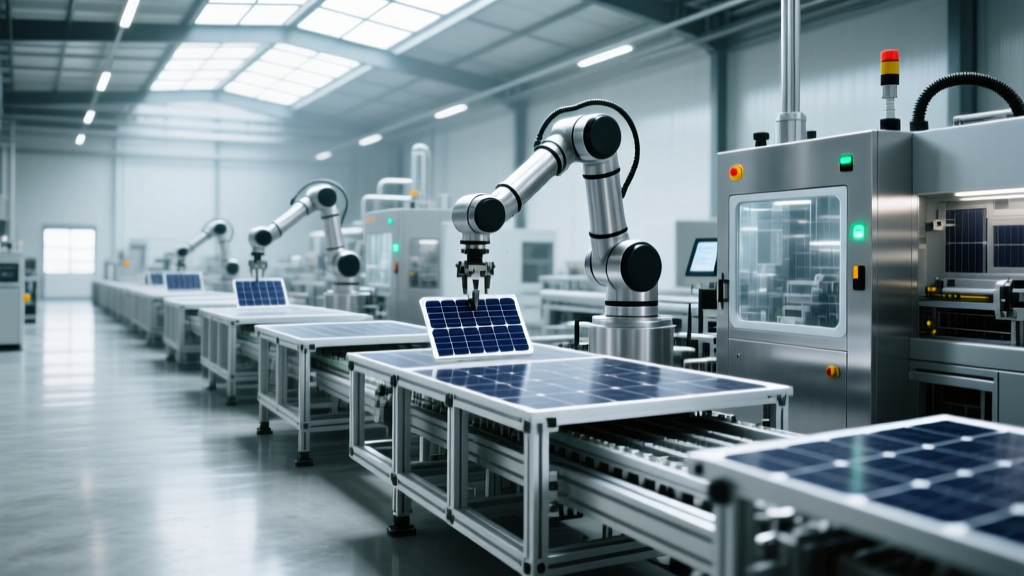
- Solar Microgrid & Battery Storage: Install rooftop PV arrays paired with industrial battery storage to offset the high peak-demand charges incurred during the simultaneous startup of heavy electric benders and air compressors.
Final Technical Considerations
For a park fitness equipment manufacturer, sustainability is inextricably linked to product lifecycle and safety. A machine that degrades or suffers weld failure due to improper processing of recycled materials is inherently unsustainable, regardless of the factory's carbon footprint. By adopting adaptive electric bending, low-heat CMT welding, and advanced single-coat powder systems, manufacturers can produce outdoor fitness stations that are both ecologically responsible and structurally uncompromising. Factory managers should initiate a comprehensive energy and material audit, utilizing resources like the EPA's Pollution Prevention (P2) program, to identify the exact bottlenecks in their current production lines before committing to major capital expenditures.