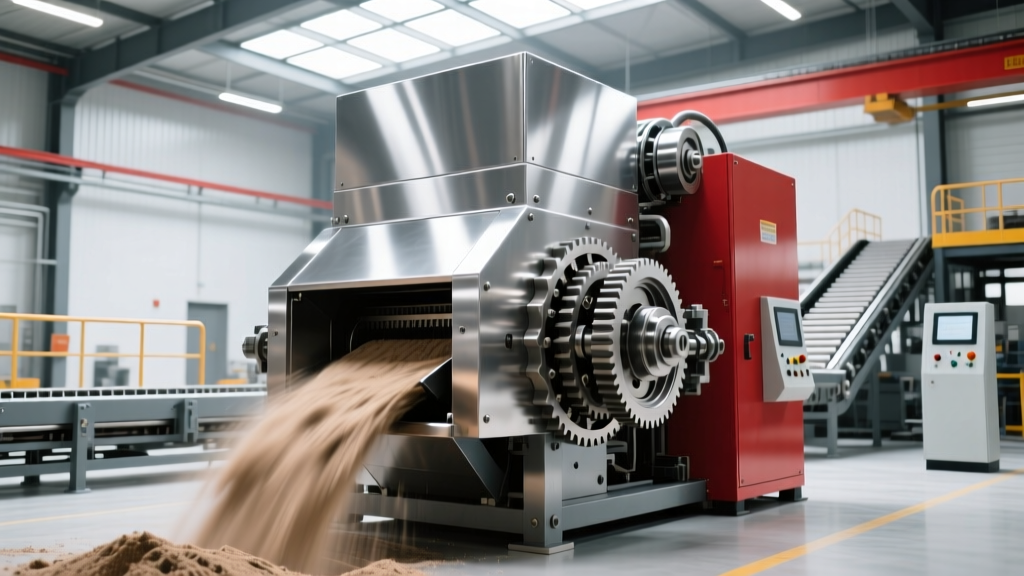
Optometry Equipment Manufacturers: Maintenance & Contract Selection
Evaluate optometry equipment manufacturers using contract manufacturing selection criteria focused on long-term maintenance, SLAs, and calibration schedules.
When medical device firms and high-volume optical labs engage optometry equipment manufacturers for contract manufacturing, the initial capital expenditure for the machinery is only a fraction of the total lifecycle cost. Whether you are contracting the build of automated 5-axis CNC lens surfacing machines, precision autorefractors, or high-throughput edging lines, the true cost of ownership is dictated by maintenance schedules, calibration drift, and Service Level Agreements (SLAs). As of 2026, with the integration of IoT predictive sensors in optical manufacturing, selecting a contract partner requires evaluating their equipment through the lens of a 10-year service lifecycle rather than just day-one throughput metrics.
Data Highlight: The True Cost of Optical DowntimeIn a high-volume centralized surfacing lab operating on a 24/5 schedule, an unplanned failure on a primary CNC generator or automated blocker costs an average of $4,200 per hour in delayed Rx fulfillment, idle labor, and expedited shipping penalties. Equipment selection criteria must prioritize Mean Time Between Failures (MTBF) over maximum theoretical cycle speed.
Core Selection Criteria for Contract-Built Optical Machinery
Evaluating FDA guidance on medical device servicing reveals that contract manufacturers must design optical equipment with end-user maintainability in mind. When issuing an RFP to optometry equipment manufacturers, mandate the following engineering criteria:
1. Mean Time Between Calibrations (MTBC)
Diagnostic and measurement equipment, such as automated lensmeters and corneal topographers, rely on nanometer-level optical alignment. Contract manufacturers must design optical benches that resist thermal expansion and vibration. Demand an MTBC of at least 6 months under standard laboratory conditions, verified against ISO 10342 standards for ophthalmic instruments. If a contract-built lensmeter requires recalibration every 30 days due to cheap linear encoder choices, reject the design.
2. Modular Sub-Assembly Architecture
If a 5-axis CNC optical surfacing machine requires a full spindle teardown and factory return to replace a single $40 proximity sensor, the contract manufacturer has failed the maintainability test. Contracts must stipulate modular sub-assemblies (e.g., quick-swap tool changer units, plug-and-play coolant distribution blocks) that allow tier-1 on-site technicians to perform swaps in under 45 minutes without specialized cleanroom environments.
3. Software Escrow and Diagnostic Unlock
A growing anti-competitive trend among some manufacturers is locking basic maintenance menus behind proprietary USB dongles or cloud-authenticated licenses. Your contract must include a software escrow clause and guarantee permanent, localized access to tier-2 diagnostic fault codes, ensuring you are not held hostage by remote OEM tech support for basic sensor resets.
SLA Tier Comparison: Evaluating Maintenance Contracts
When negotiating the post-build service agreement with your contract manufacturing partner, use this matrix to benchmark SLA offerings. Do not accept vague "best effort" response times.
| SLA Tier | Response Time | Calibration Coverage | Loaner Equipment Clause | Est. Annual Cost (per machine) |
|---|---|---|---|---|
| Bronze | 48-Hour Remote / 5-Day On-Site | Annual basic verification | None | $4,500 - $6,000 |
| Silver | 24-Hour Remote / 48-Hour On-Site | Bi-annual full calibration | Sub-assemblies only | $12,000 - $16,500 |
| Gold | 4-Hour Remote / Next-Day On-Site | Quarterly + NIST-traceable certs | Full machine swap within 72 hrs | $22,000 - $28,000 |
Mandatory Maintenance Schedules for Contracted Assets
To maintain warranty validity and ensure optical precision, the contract manufacturer must provide a detailed, machine-specific preventive maintenance (PM) schedule. Below is the benchmark schedule for automated CNC lens generation and edging lines.
Daily Operator-Level Maintenance
- Coolant Refractometry: Check synthetic semi-transparent coolant concentration (e.g., TRIM E709 or equivalent). Must maintain an 8-10% concentration to prevent optical glass micro-chipping and bacterial growth. Top up with DI water, not tap water.
- Pneumatic Pressure Verification: Automated lens blockers require a strict 5.5 to 6.0 bar operating pressure. Drops below 5.0 bar result in axis slippage during surfacing, causing prism errors exceeding the 0.33D ANSI Z80.1 tolerance.
- Spindle Air-Purge: Activate the 30-second air purge cycle to clear glass swarf from the spindle labyrinth seals before shutdown.
Monthly Technician-Level Maintenance
- Linear Guide Way Lubrication: Manually inject ISO VG 68 way oil into the Z-axis carriage grease zerks if the automated central lube system reservoir drops below 20%.
- Optical Sensor Cleaning: Wite non-contact laser measurement sensors using only ISO-certified, lint-free optical wipes and 99% isopropyl alcohol. Never use compressed air, which drives moisture into the sensor housing.
Annual OEM-Certified Maintenance
- Ballbar Testing: Perform Renishaw QC20-W or equivalent ballbar testing on all CNC rotational axes to map circular interpolation errors and backlash.
- NIST-Traceable Calibration: Verify measurement accuracy using master reference lenses. Ensure calibration certificates comply with NIST traceability guidelines for metrology.
Some optometry equipment manufacturers design contract-built edgers and surfacers with RFID-chipped coolant filters and alloy blocks. This forces the lab to purchase $85 OEM filters that cost $12 to produce. During contract negotiations, explicitly ban RFID-locked consumables or demand a clause allowing third-party aftermarket equivalents without voiding the primary spindle warranty.
Real-World Cost Analysis: Year 1 Through Year 5
Financial planning for contract-manufactured optical lines requires anticipating the end of the initial warranty period. Here is a realistic 5-year maintenance budget for a single, high-end 5-axis optical surfacing center:
- Year 1 (Warranty Period): $0 for labor and parts. Budget $3,500 for OEM-mandated consumables (filters, specialized way oil, diamond tooling inserts).
- Year 2 & 3 (Post-Warranty SLA): Transition to a Silver SLA. Budget $14,500 annually. This covers two on-site PM visits, bi-annual calibration, and priority remote support.
- Year 4 (Major Component Lifecycle): Budget $16,000 for SLA plus an $8,500 reserve for proactive spindle bearing replacement and servo motor brush inspection. Ignoring Year 4 spindle wear leads to catastrophic failure and $35,000 replacement costs in Year 5.
- Year 5 (System Overhaul): Budget $22,000 for Gold SLA coverage as machine MTBF decreases, plus $12,000 for control board capacitor replacements and software license renewals.
Frequently Asked Questions
Can we use third-party technicians for ISO 10342 calibrations?
Yes, but the third-party firm must possess ISO/IEC 17025 accreditation. If your contract manufacturer attempts to legally bind you to OEM-only calibrations in the SLA, push back. Independent metrology labs often perform identical NIST-traceable calibrations for 40% less cost than the OEM's field service engineers.
How does IoT predictive maintenance change the SLA?
In 2026, top-tier optometry equipment manufacturers embed vibration and thermal sensors directly into the spindle housing. This data is streamed to the OEM. Negotiate an SLA where predictive alerts (e.g., "Spindle bearing temperature anomaly detected") trigger proactive, no-charge part shipments before the machine actually faults, effectively shifting from reactive SLAs to guaranteed uptime contracts.
What happens if the contract manufacturer goes out of business?
This is why the Software Escrow and CAD/Schematic handover clauses are vital. Your contract must stipulate that upon bankruptcy or cessation of support, all machine schematics, PLC source code, and diagnostic software are automatically released to your firm, allowing third-party automation integrators to maintain the equipment indefinitely.
Related reading
Cost Analysis: Manufacturer of Quality Air and Water-Wastewater Pollution Control Equipment Integration
Evaluating Lean Manufacturing Equipment via Top-Rated US Business Liquidation Auction Services