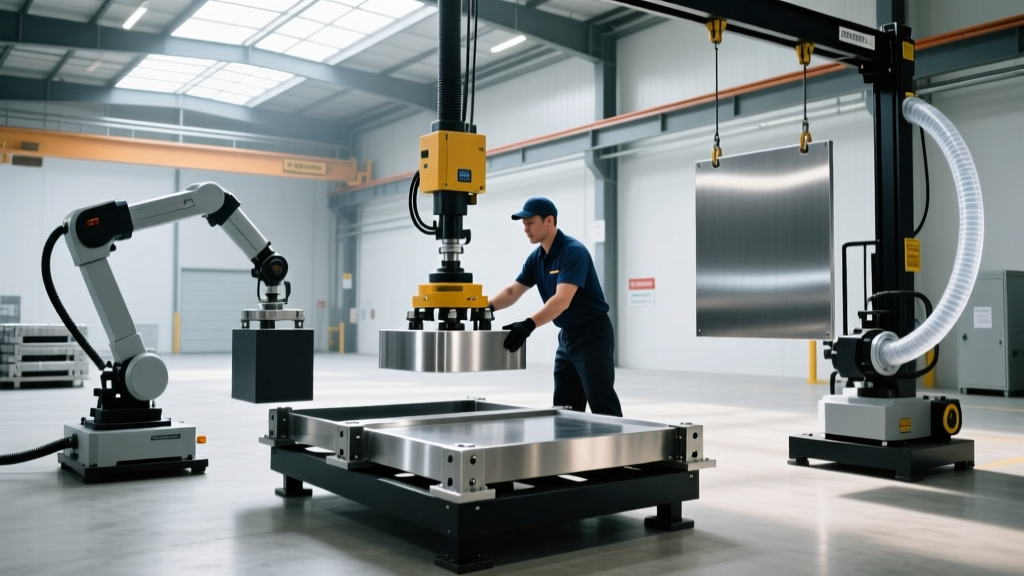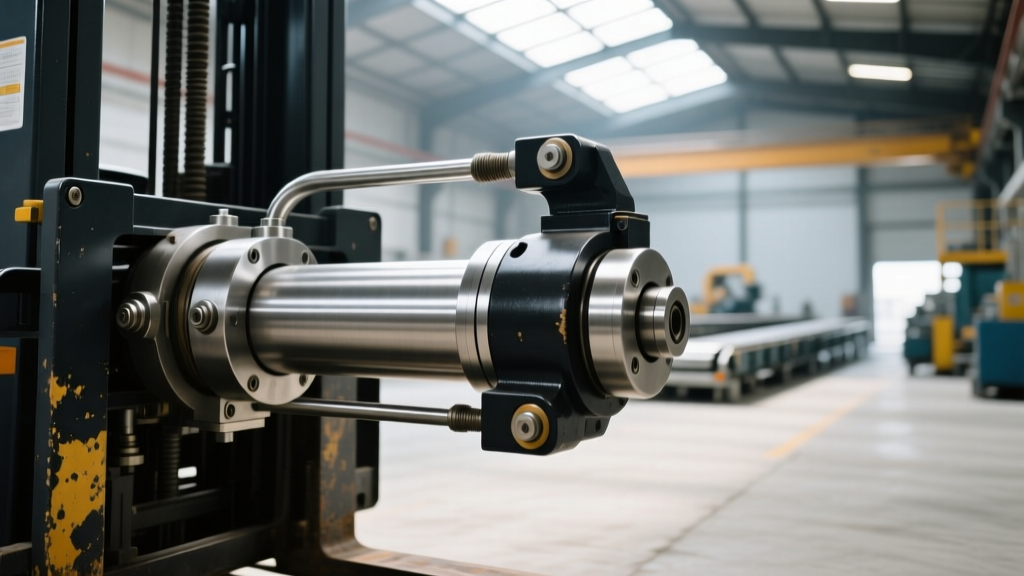
Troubleshooting Material Handling Equipment Forklift Attachments
Diagnose and repair hydraulic and mechanical failures in specialized material handling equipment forklift attachments like paper roll and bale clamps.
Specialized forklift attachments transform standard lift trucks into highly efficient machines, but they introduce complex hydraulic and mechanical failure points. Misdiagnosing a clamp slip as a pump failure or a push-pull binding issue as a valve fault wastes hours of downtime. According to the Occupational Safety and Health Administration (OSHA), improper maintenance and faulty modifications on powered industrial trucks are leading causes of warehouse accidents and equipment degradation. This guide isolates specific faults in material handling equipment attachments, providing exact diagnostic steps, pressure specifications, and repair protocols.
⚠️ Safety Warning: Never crack a hydraulic fitting to check for pressure. Specialized clamp circuits operate between 2,000 and 3,000 PSI. Use an inline pressure gauge and flow meter for all diagnostics. Injected hydraulic fluid can cause severe tissue necrosis.Hydraulic System Baseline Diagnostics
Before tearing down a Cascade 35F paper roll clamp or a Bolzoni Aura bale clamp, you must verify the host forklift's baseline output. Approximately 40% of attachment 'failures' are actually forklift hydraulic deficiencies. Connect a digital flow meter and pressure gauge to the truck's auxiliary valve outlets.
- Standard Clamp Circuits: Require 2,000 to 2,500 PSI and 10 to 15 GPM.
- Rotating Attachments: Require continuous flow up to 20 GPM; verify the truck's priority valve isn't starving the attachment circuit during simultaneous lift/tilt operations.
If the truck's output drops below 90% of the attachment's rated specification under load, the fault lies in the forklift's main hydraulic pump, gear pump, or primary relief valve, not the attachment itself. As noted by industry experts at Hydraulics & Pneumatics, internal gear pump wear often manifests first in auxiliary circuits because they demand higher sustained pressures than standard lift/tilt functions.
Paper Roll Clamp (Cascade 35F / Bolzoni) Troubleshooting
Paper roll clamps rely on precise hydraulic pressure and high-friction contact pads. When rolls slip during transit or crush under clamping force, the issue is usually localized to the pressure relief valve (PRV) or the pad compound.
Symptom: Roll Slippage During Transit
If a 2,000 lb newsprint roll slips when the truck brakes, check the pad material first. Standard rubber pads degrade and harden after 1,500 to 2,000 operating hours, losing their coefficient of friction. Upgrade to heavy-duty polyurethane or UHMW (Ultra-High-Molecular-Weight) polyethylene pads, which cost between $180 and $250 each but offer 3x the lifespan. If pads are in good condition, test the PRV. Connect a gauge to the clamp circuit, stall the arms against a solid object, and read the peak pressure. If it reads below 2,200 PSI, adjust the PRV screw clockwise in 50 PSI increments until the factory spec (usually 2,500 PSI) is reached.
Symptom: Crushed Roll Cores
This indicates a malfunctioning pressure-reducing valve or a bypassed check valve that fails to hold the clamping pressure steady, causing the operator to over-clamp manually. Inspect the pilot-operated check valves on the clamp cylinders for metal shavings or scored poppets.
| Symptom | Probable Root Cause | Diagnostic Action | Est. Repair Cost |
|---|---|---|---|
| Arms drift open slowly | Worn pilot check valve seats | Swap hoses; if drift direction changes, replace valve body. | $120 - $180 |
| Arms chatter/jerk during closing | Air entrapment or low flow | Cycle arms 10x fully; check truck pump output. | $0 (Bleeding) |
| Uneven arm extension speed | Flow divider malfunction | Remove and inspect flow divider spool for scoring. | $350 - $500 |
Bale and Appliance Clamp Synchronization Failures
Bale clamps (used for recycling, cotton, and corrugated waste) feature long arms that generate massive torsional stress. The most common mechanical failure is uneven arm travel, where one arm extends 4 to 6 inches faster than the other.
Diagnosing the Flow Divider vs. Cylinder Bypass
Most modern bale clamps use a mechanical flow divider (a spool-type valve) to synchronize the cylinders. To isolate the fault:
- Disconnect the hydraulic hoses at the clamp valve body and swap the left and right arm hoses.
- Operate the clamp. If the same physical arm remains slow, the fault is internal to that specific cylinder (bypassing piston seals).
- If the opposite arm is now slow, the fault is in the flow divider spool or the forklift's directional valve.
Cylinder bypassing requires a complete seal kit rebuild. For a standard 4-inch bore bale clamp cylinder, expect to pay $280 to $400 for a high-quality Nitrile or Polyurethane seal kit. Always hone the cylinder barrel before installing new seals; a scored barrel will destroy new U-cup seals within 50 hours.
💡 Expert Tip: When reinstalling bale clamp arms, torque the pivot shaft mounting bolts to the manufacturer's exact specification (typically 350-450 lb-ft for Class III carriages). Use a calibrated torque multiplier. Under-torqued pivot bolts will elongate the carriage mounting holes, leading to catastrophic arm detachment.Push-Pull Attachment (Cascade 18F) Mechanical Binding
Push-pull attachments eliminate the need for pallets by using a hydraulic faceplate and a chain-driven lip assembly to grab slip sheets. Binding, chattering, and uneven retraction are almost exclusively mechanical issues related to the chain drive and wear pads.
Chain Tension and Track Alignment Protocol
The faceplate is driven by heavy-duty roller chains running in UHMW tracks. Over time, the chains stretch, causing them to skip teeth on the drive sprockets during high-load retraction.
- Measure Deflection: Apply 15 lbs of downward force to the midpoint of the upper chain span. Proper deflection is exactly 1/4 inch to 3/8 inch.
- Adjust Tensioners: Loosen the lock nuts on the rear idler sprocket tensioning bolts. Adjust both sides equally, turning the bolts exactly one full rotation at a time to prevent track misalignment.
- Inspect Wear Pads: The faceplate rides on nylon or UHMW wear shoes. If the steel backing plate is scoring the main frame, the shoes are worn past the 0.25-inch minimum thickness. Replace them immediately (approx. $90 per pad).
Lip Assembly Tearing
The lip assembly grabs the slip sheet. If the lip tears the sheet or fails to engage, check the lip cylinder pressure. The lip cylinder operates on a lower pressure circuit (usually 1,200 to 1,500 PSI) to prevent tearing the cardboard. If the lip slams down with full truck pressure, the internal pressure-reducing valve in the lip circuit has failed open.
Quick-Coupler and Valve Body Maintenance
The connection point between the forklift and the attachment is a frequent source of hydraulic leaks and flow restrictions. Modern material handling equipment relies on flat-face quick couplers to minimize air inclusion and dirt ingress.
- Cross-Threading and Galling: Operators often force couplers together at an angle. Inspect the male and female threads for galling. Apply a high-pressure anti-seize compound (like Never-Seez) to the threads during reassembly.
- O-Ring Extrusion: If you find black rubber debris in the attachment's inline filter screen, the quick-coupler O-rings are extruding due to pressure spikes. Upgrade to O-rings with PTFE (Teflon) backup rings, which withstand spikes up to 4,000 PSI without extruding.
For comprehensive attachment mounting standards and carriage classifications, always refer to the Cascade Corporation technical library or the ITA (Industrial Truck Association) Class II, III, and IV carriage dimension charts to ensure the attachment's hook thickness matches the forklift's fork bar dimensions perfectly.
Preventative Maintenance Intervals
Reactive repair costs 3 to 5 times more than scheduled maintenance. Implement this strict interval schedule for all specialized attachments:
- Every 250 Hours: Grease all arm pivot points, cylinder eyes, and chain idlers with Molybdenum Disulfide (Moly) EP2 grease. Standard lithium grease washes out under high-pressure washdown conditions.
- Every 500 Hours: Inspect hydraulic hoses for twisting. A hose twisted just 7 degrees can reduce its service life by 90%. Ensure hose clamps are securing the lines away from the mast rollers.
- Every 1,000 Hours: Replace the inline hydraulic filter screens (usually 10-micron or 25-micron mesh) located at the attachment valve body inlet. Do not rely solely on the forklift's main return filter.