Ergonomic Warehouse Materials Handling Equipment: Lift Assists Compared
Compare vacuum lifters, intelligent assist devices, and pneumatic balancers to find the best ergonomic warehouse materials handling equipment for your load.
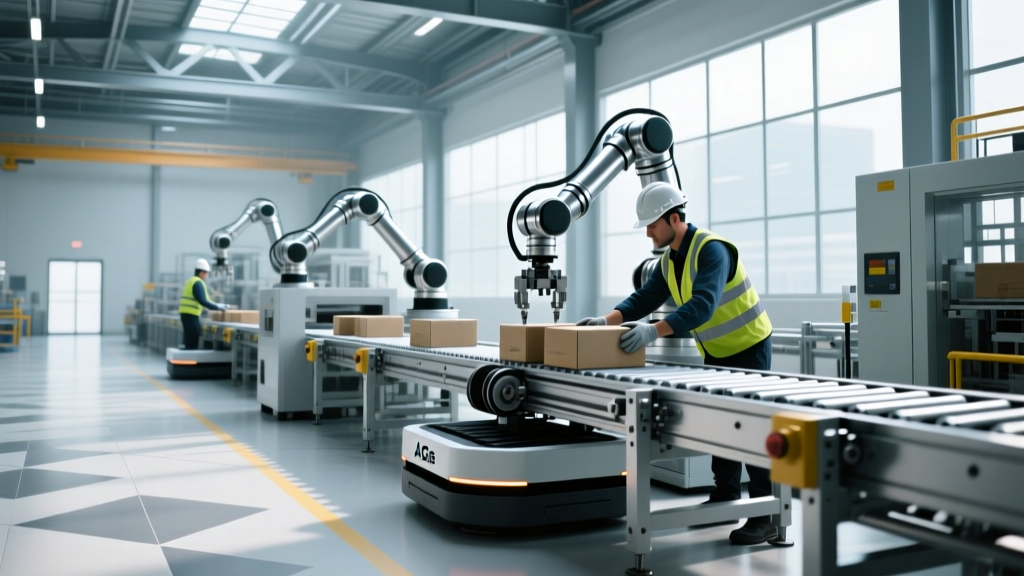
For Maintenance, Repair, and Operations (MRO) storeroom managers and Environmental Health and Safety (EHS) professionals, the core answer to optimizing safety is deploying semi-automated lift assists. Storeroom semi-automated material handling equipment ergonomic solutions primarily consist of pneumatic balancers, vacuum tube lifters, and articulated arms. These devices bridge the gap between manual lifting and full robotics, neutralizing load weights and reducing musculoskeletal disorder (MSD) risks in confined MRO spaces.
- Semi-automated lift assists eliminate biomechanical strain while preserving human precision in tight storeroom aisles.
- Pneumatic balancers and vacuum lifters are the top warehouse ergonomic lift assists for sub-50 kilogram loads.
- Implementing these solutions reduces shoulder strain by up to 35% and accelerates pick-and-place cycle times.
Defining Semi-Automated Storeroom Equipment
Semi-automated material handling refers to systems where human operators guide the load, while powered mechanisms bear the physical weight. This hybrid approach maintains human decision-making for precise part placement while eliminating biomechanical strain.
Unlike fully automated robotic retrieval systems, semi-automated storeroom equipment requires an operator to initiate and direct the movement. This makes it highly adaptable for MRO environments where part sizes, weights, and retrieval frequencies vary drastically from shift to shift.
Top Ergonomic Lift Assists for MRO Spaces
Selecting the right device depends on the physical dimensions of the storeroom and the specific geometry of the parts being handled. Below are the primary solutions utilized in 2026 warehouse environments.
Pneumatic Balancers and Articulated Arms
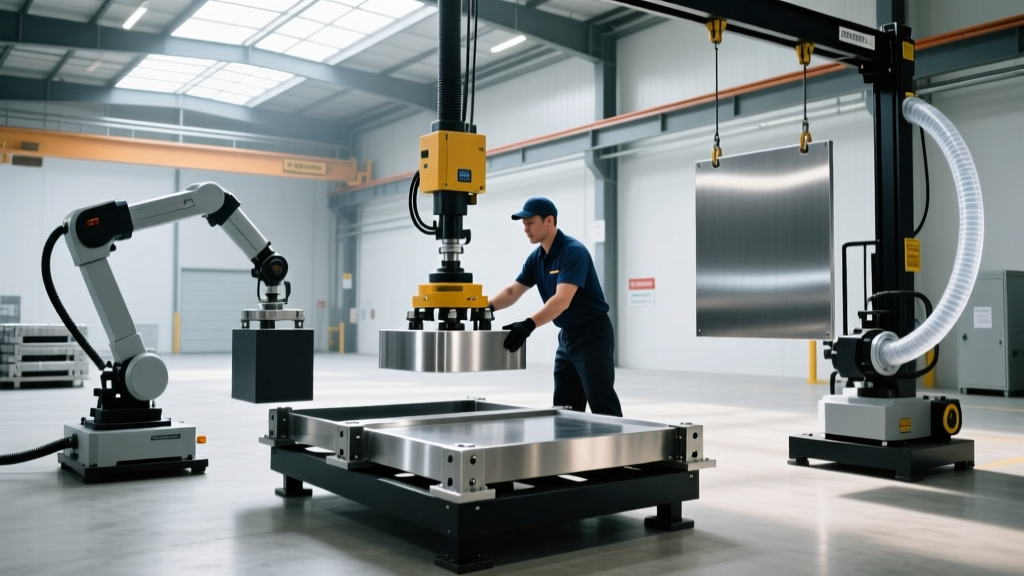
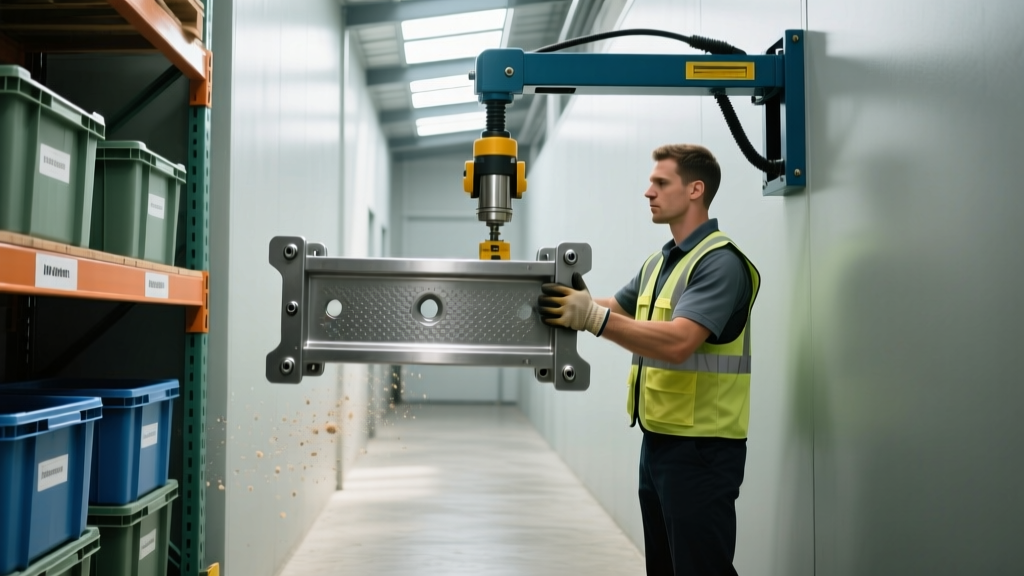
Pneumatic balancers use compressed air to achieve neutral weight float, allowing operators to move heavy industrial loads with minimal physical force. They provide precise speed control and are ideal for repetitive, high-cycle assembly or confined storeroom picking tasks.
When mounted on an articulated arm, these balancers can cover a 14-foot maximum radial reach. This allows a single workstation to service multiple shelving bays without requiring the operator to walk while carrying a suspended load.
Vacuum Tube Lifters
Vacuum tube lifters utilize an electric vacuum pump to attach to non-porous surfaces like metal motors, glass, or sealed chemical drums. The operator guides the tube, which simultaneously lifts and transports the load.
These systems excel at handling awkward, unbalanced items that are difficult to grip manually. They achieve an average pick-and-place cycle time of 2.4 seconds, drastically outperforming manual handling while keeping the operator's spine in a neutral posture.
The Financial and Ergonomic Impact
The Occupational Safety and Health Administration (OSHA) identifies overexertion and bodily reaction as leading causes of warehouse injuries. The National Institute for Occupational Safety and Health (NIOSH) recommends a maximum manual lift limit of 23 kilograms under ideal conditions, a threshold frequently exceeded in MRO storerooms.
Deploying warehouse ergonomic lift assists directly mitigates these risks. Ergonomic studies demonstrate a 35% reduction in shoulder and lower back strain when operators transition from manual lifting to pneumatic balancers.
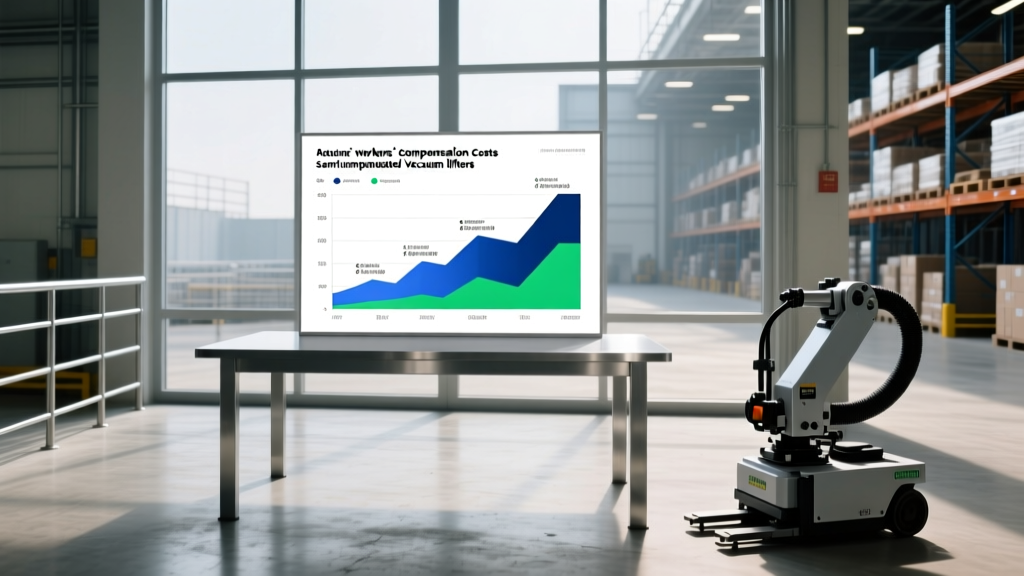
The financial justification is equally compelling. According to the Liberty Mutual Workplace Safety Index, the average direct cost of a severe MSD workers' compensation claim exceeds $38,000. By eliminating the physical toll of heavy lifting, facilities recover equipment costs through avoided insurance premiums and reduced absenteeism within 14 months.
Equipment Selection Decision Matrix
Use this framework to match your storeroom's specific operational requirements with the correct semi-automated technology.
| Load Characteristic | Recommended Equipment | Key Advantage |
|---|---|---|
| High-cycle, uniform boxes (10-40 kg) | Vacuum Tube Lifter | Fastest cycle time; no gripping required |
| Awkward, unbalanced mechanical parts | Pneumatic Balancer with Articulated Arm | Neutral weight float; precise maneuverability |
| Heavy pallets or bulk drums (>100 kg) | Semi-Automated Pallet Tug / Walkie Stacker | Eliminates pushing/pulling force on floors |
| Fragile or highly polished surfaces | Electric Cable Lifter with Custom Grips | Prevents surface marring from vacuum pads |
Frequently Asked Questions
What are the best warehouse ergonomic lift assists for tight aisles?
For narrow MRO aisles, ceiling-mounted bridge cranes paired with pneumatic balancers are optimal. They utilize overhead space, keeping the floor clear for pedestrian traffic while providing lateral coverage across multiple shelving units without requiring wide turning radiuses.
How does semi-automated storeroom equipment compare to full robotics?
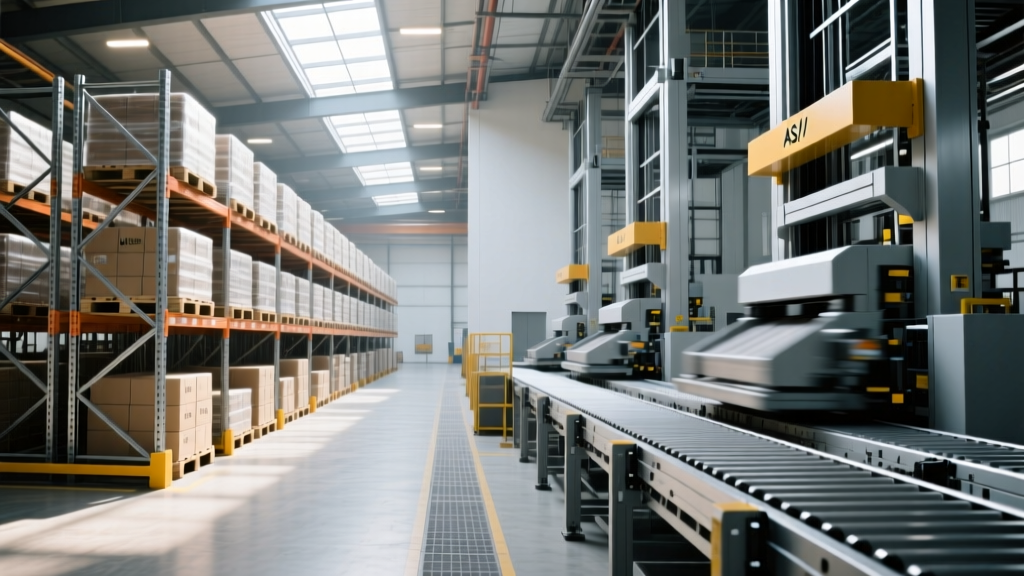
Full robotics, such as Automated Storage and Retrieval Systems (AS/RS), require massive capital expenditure and rigid inventory standardization. Semi-automated equipment offers a fraction of the cost, requires minimal infrastructure changes, and adapts instantly to unpredictable, mixed-SKU MRO inventories.
What is the ROI for reducing manual handling injuries in MRO storerooms?
Reducing manual handling injuries in MRO storerooms yields a dual ROI. Facilities see immediate soft savings through a 20% increase in parts-picking speed, alongside hard savings from eliminated workers' compensation claims and reduced turnover among experienced technicians.
Next Steps for Implementation
Transitioning to a safer storeroom requires data-driven action. Your immediate next step is to conduct a 30-day task-weight audit. Log every manual lift exceeding 15 kilograms, noting the part geometry and aisle width. Use this dataset to specify the exact lift assist requirements and request vendor demonstrations tailored to your physical space.