Bulk Material Handling Equipment Cost Comparison: Racking vs AS/RS
A 2026 cost analysis comparing pallet racking and AS/RS. Explore CapEx, OpEx, and ROI metrics for unit-load bulk material handling equipment budgets.
The Terminology Trap: Unit Load vs. True Bulk Handling
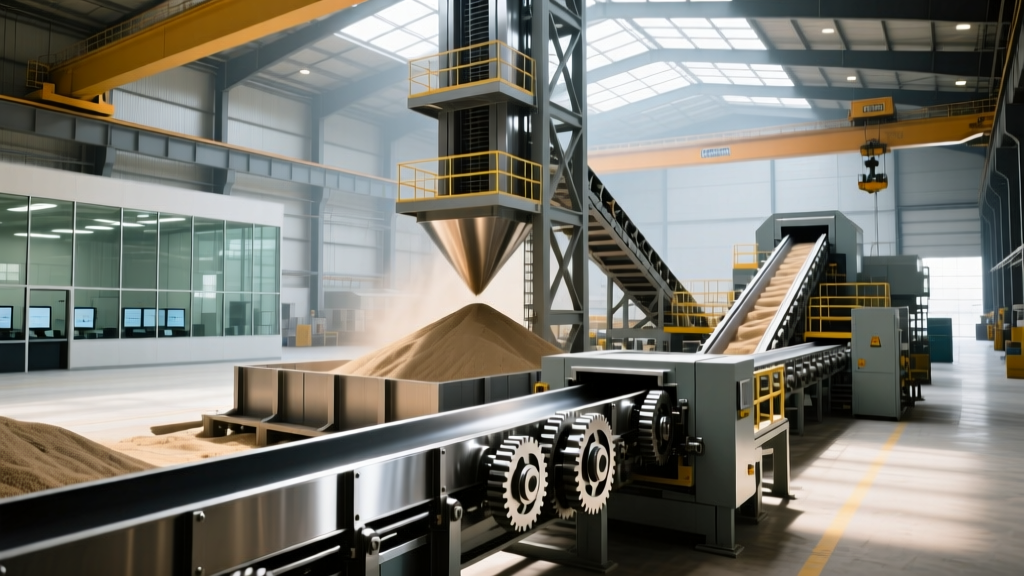
When procurement teams initiate a bulk material handling equipment cost comparison, they frequently encounter a terminology collision. In strict engineering terms, 'bulk handling' refers to loose, unpackaged materials like grain, coal, or aggregates moved via pneumatic conveyors and hopper silos. However, in modern industrial logistics and 3PL warehousing, 'bulk' is routinely used to describe high-volume, unitized pallet loads. This guide bridges that operational gap, focusing strictly on the high-volume unit-load spectrum: heavy-duty pallet racking versus Automated Storage and Retrieval Systems (AS/RS).
⚠️ Procurement Warning: Do not apply bulk-flow metrics (like tons-per-hour) to unit-load systems. Budgeting for palletized AS/RS requires calculating pallets-per-hour and storage density per cubic foot, factoring in 2026 warehouse labor rates and automated software licensing.Capital Expenditure (CapEx) Breakdown: Racking vs. AS/RS
The initial capital outlay is the most immediate hurdle in warehouse budget planning. The cost disparity between static steel and automated robotics is vast, driven by the integration of extruded aluminum masts, laser-guided positioning, and Warehouse Control Systems (WCS). Below is the 2026 baseline cost matrix for high-volume storage systems.
| System Type | CapEx per Pallet Position | Footprint Density | Installation Timeline |
|---|---|---|---|
| Selective Pallet Racking | $65 - $95 | Low (40-45%) | 2 - 4 Weeks |
| Drive-In / Push-Back Racking | $140 - $195 | Medium (60-75%) | 3 - 6 Weeks |
| Radio Shuttle (Semi-Auto) | $280 - $450 | High (80-85%) | 4 - 8 Weeks |
| Unit-Load AS/RS (Aisle-Captive) | $1,800 - $3,200+ | Maximum (90%+) | 6 - 12 Months |
Static Racking: Steel Gauges and Seismic Variables
When sourcing static racking from manufacturers like Interlake Mecalux or Ridg-U-Rak, the base price per pallet position is only the beginning. Budget planners must account for structural steel requirements. Standard roll-formed 14-gauge steel is sufficient for low-seismic zones and standard 3,000 lb pallet loads. However, if your facility is located in Seismic Zone 4 (e.g., coastal California or the Pacific Northwest), building codes mandate 12-gauge or heavier structural steel, larger base plates, and specialized anchor bolts. This seismic compliance alone increases racking CapEx by 18% to 25%.
Furthermore, static racking requires wide aisles for counterbalance forklifts (typically 11 to 13 feet). This severely limits the cubic volume utilization of the building, meaning you are paying to heat, cool, and lease air that forklifts drive through.
AS/RS: The Robotics and Software Premium
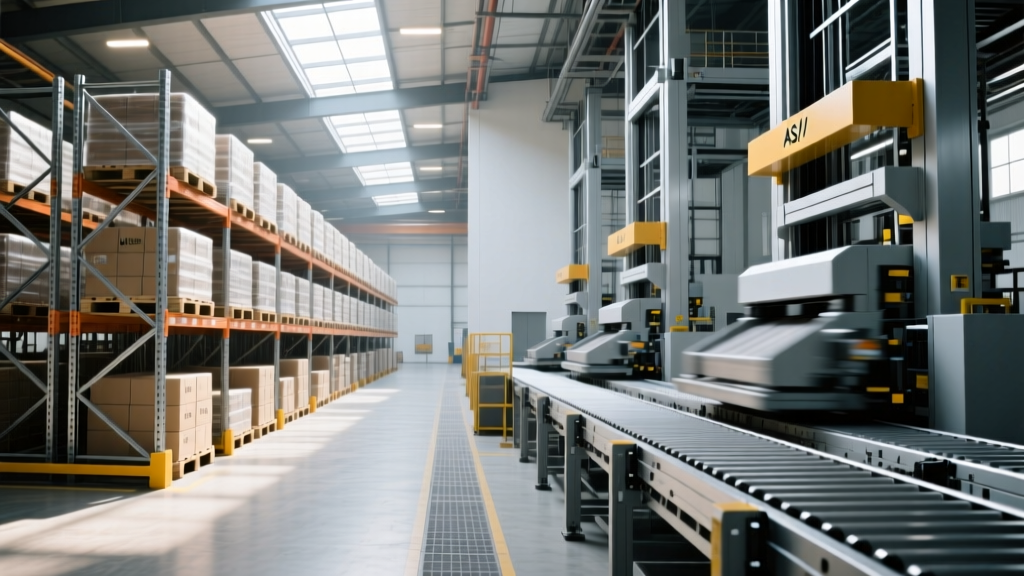
Unit-load AS/RS, provided by integrators like Dematic or SSI Schaefer, eliminates the need for wide forklift aisles. Aisle-captive cranes operate in aisles as narrow as 4.5 feet and can reach ceiling heights of 100 feet. The cranes themselves, featuring horizontal travel speeds up to 180 meters per minute and vertical lift speeds of 60 meters per minute, represent a massive mechanical investment.
However, the hidden CapEx killer in AS/RS budgeting is the software stack. A modern Warehouse Control System (WCS) that orchestrates the crane movements, conveyor hand-offs, and inventory logic typically costs between $85,000 and $250,000 upfront. This does not include the enterprise Warehouse Management System (WMS) integration, which can add another $100,000 in API development and testing.
Operational Expenditure (OpEx) and Hidden Cost Variables
CapEx gets the system installed; OpEx determines its long-term viability. According to the Material Handling Industry (MHI), the shift toward automation is largely driven by the compounding costs of manual labor and facility footprint.
💡 2026 Labor Market Insight: With average warehouse forklift operator wages exceeding $24/hour (plus 30% burden for benefits and insurance), a three-shift manual racking operation requires 12-15 operators. An AS/RS requires only 2-3 system monitors and maintenance technicians per shift, yielding an annual labor savings of $450,000 to $650,000.Maintenance and Energy Consumption
Static racking has near-zero mechanical maintenance costs, but it carries high repair costs. Forklift impacts on upright frames are inevitable. Facilities must budget $5,000 to $15,000 annually for rack repair kits, column guards, and third-party inspections to maintain compliance with OSHA material handling standards.
Conversely, AS/RS requires rigorous preventative maintenance. You must budget 3% to 5% of the total mechanical CapEx annually for specialized robotics technicians, replacement polyurethane wheels, and sensor calibration. On the energy side, modern AS/RS cranes utilize regenerative braking systems that feed power back into the facility grid during the lowering cycle, reducing net energy consumption by up to 25% compared to legacy automated systems.
Software Licensing and SLAs
Unlike steel racks, software requires ongoing investment. WCS and WMS vendors charge annual Software Level Agreements (SLAs) and cloud hosting fees, typically calculated at 15% to 20% of the original software license cost. For a $150,000 WCS implementation, expect to pay $22,500 to $30,000 annually just to keep the system patched, supported, and compliant with cybersecurity protocols.
The 2026 ROI Decision Matrix: When to Automate
Determining whether to deploy high-density racking or full AS/RS requires a strict quantitative framework. Do not automate simply for the sake of modernization; automate when the math dictates a sub-four-year payback period.
- Choose Selective/Drive-In Racking If: Your facility has a ceiling height under 30 feet, land costs in your region are below $10/sq ft, your SKU count is incredibly high but throughput per SKU is low, and your capital budget is strictly capped below $1 million.
- Choose Radio Shuttle Systems If: You operate a high-density, low-SKU environment (like beverage or cold storage), want to eliminate forklifts from inside the rack structure to reduce product damage, but lack the $5M+ budget for full crane-based AS/RS.
- Choose Unit-Load AS/RS If: You are building a new facility with 60+ foot clear heights, land costs exceed $40/sq ft, you run a multi-shift operation with high throughput, and you are facing severe local labor shortages that threaten fulfillment SLAs.
"The break-even point for unit-load AS/RS has shifted dramatically. Five years ago, you needed 10,000 pallet positions to justify the crane infrastructure. With 2026 labor burdens and advanced modular WCS architectures, facilities with as few as 4,000 pallet positions are seeing a 3.5-year ROI, provided the throughput velocity demands automation." — Director of Intralogistics Engineering, Tier 1 3PL Provider
Budgeting for Compliance and Safety Upgrades
Regardless of the system chosen, safety compliance is a non-negotiable budget line item. For static racking, the Rack Manufacturers Institute (RMI) and OSHA mandate that all load application and configuration plaques be visibly displayed. Furthermore, facilities must budget for annual third-party rack inspections, which typically cost $1,500 to $3,000 per facility depending on square footage.
For AS/RS, the safety budget shifts toward machine guarding and light curtains. Because aisle-captive cranes operate at lethal speeds in confined spaces, OSHA requires strict perimeter fencing, interlocked access gates, and redundant safety PLCs (Programmable Logic Controllers). Budget an additional $40,000 to $75,000 for comprehensive ANSI/RIA R15.08 compliant safety fencing and sensor arrays around the AS/RS pick-up and deposit (P/D) stations.
Final Procurement Directives
Executing a successful bulk unit-load storage project requires looking past the initial quote. When evaluating bids, force vendors to provide a 10-year Total Cost of Ownership (TCO) model that includes steel depreciation, software SLAs, energy consumption, and estimated labor. By anchoring your procurement strategy in hard TCO data rather than superficial CapEx metrics, you will secure a material handling infrastructure that scales with your operational demands through the end of the decade.