Technical Service for Material Handling Equipment: AGV vs AMR Costs
Compare technical service for material handling equipment between AGVs and AMRs. Discover maintenance costs, downtime realities, and vendor support models.
The Hidden Economics of Warehouse Automation
When facility managers evaluate automated guided vehicles (AGVs) versus autonomous mobile robots (AMRs), the initial capital expenditure (CapEx) usually dominates the conversation. However, the true total cost of ownership is dictated by the ongoing technical service for material handling equipment. As warehouse operations scale in 2026, the divergence in maintenance requirements, infrastructure upkeep, and software support between fixed-path AGVs and dynamic AMRs has become the primary driver of long-term operational profitability.
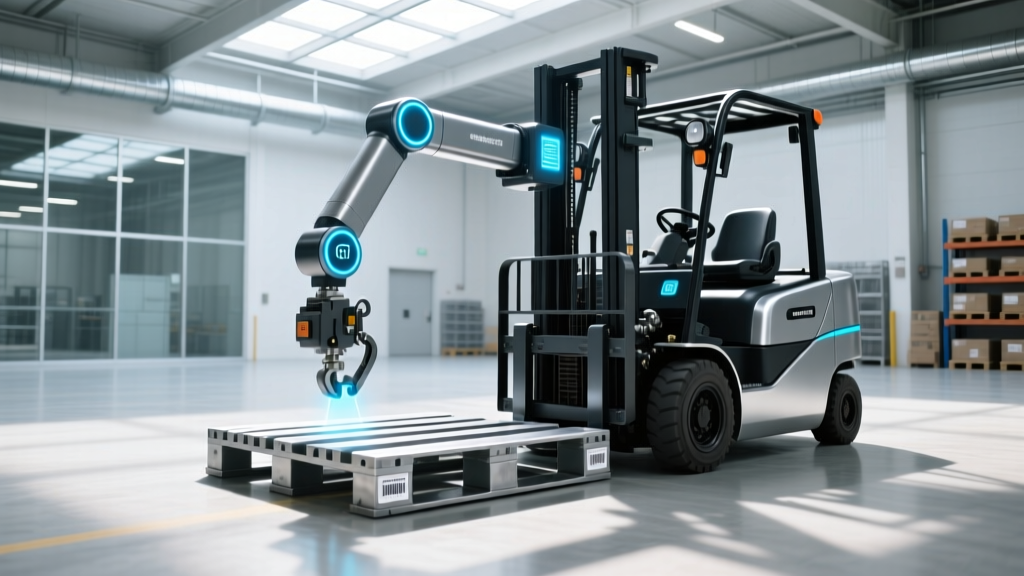
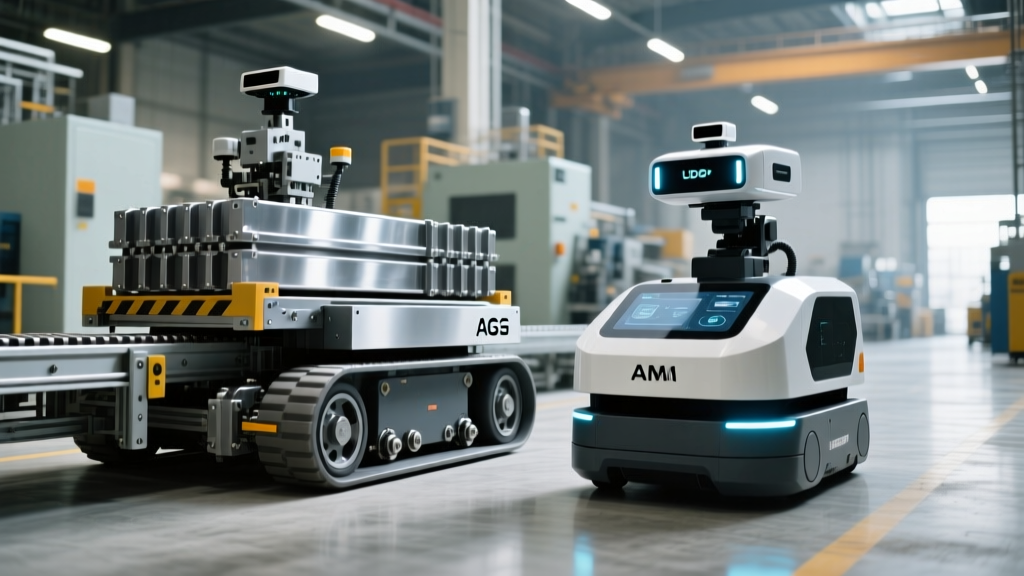
Traditional AGVs, such as the KUKA KMP 1500 or Toyota automated forklifts, rely on rigid physical infrastructure. AMRs, like the MiR250 or Locus Origin, rely on edge computing and sensor fusion. This fundamental difference dictates entirely distinct service lifecycles, failure modes, and vendor support models. Understanding these nuances is critical for avoiding catastrophic downtime and ballooning maintenance budgets.
Data Highlight: The Cost of DowntimeAccording to the Material Handling Institute (MHI), unplanned downtime in automated warehouse environments costs an average of $4,500 to $8,000 per hour in lost throughput. AGVs experience 22% more infrastructure-related stoppages than AMRs, primarily due to physical path obstructions and guidance tape degradation.
Infrastructure Deployment and Upkeep
The most immediate technical service divergence occurs during deployment and the subsequent maintenance of the facility floor.
AGV: Physical Guidance Systems
Legacy and modern AGVs typically navigate using magnetic tape, inductive wire, or painted QR codes. Inductive wire installation requires saw-cutting the concrete floor, embedding the wire, and sealing it with epoxy—a process costing between $15 and $25 per linear foot. More commonly, facilities use magnetic tape ($2 to $4 per linear foot). However, in high-traffic zones where manual forklifts cross AGV paths, magnetic tape degrades rapidly. Technical service teams must schedule floor tape replacement every 6 to 9 months, requiring partial facility shutdowns to ensure proper adhesion and degaussing of the old magnetic signature.
AMR: SLAM and Digital Mapping
AMRs utilize Simultaneous Localization and Mapping (SLAM) via 2D/3D LiDAR (such as SICK TIM781 sensors) and visual odometry. Deployment requires a technician to manually drive the AMR through the facility to build a digital map. For a 100,000-square-foot warehouse, this mapping process takes 8 to 12 hours. While the initial mapping requires specialized technical service, the ongoing upkeep is virtually zero. If a facility alters its racking layout, the AMR fleet can be remapped remotely via the fleet management software in under two hours, eliminating physical infrastructure repair costs entirely.
Component Lifecycles and Routine Maintenance
The mechanical and electrical components of AGVs and AMRs experience vastly different wear patterns. Below is a comparative matrix of routine technical service intervals and associated replacement costs for a standard 1,000 kg payload vehicle operating on a two-shift schedule.
| Component | AGV (Fixed Path) | AMR (Dynamic Navigation) | Service Impact & Cost |
|---|---|---|---|
| Drive Motors | 15,000 hours (Brushless DC) | 20,000 hours (Servo-driven) | AMRs use regenerative braking and smoother acceleration algorithms, extending motor life. Replacement: $1,200 (AGV) vs $1,800 (AMR). |
| Navigation Sensors | Optical/Magnetic readers (Low wear) | 3D LiDAR & Depth Cameras | AGV readers require weekly lens cleaning. AMR LiDAR units have a 30,000-hour lifespan but cost $3,500+ to replace if damaged by impact. |
| Battery Systems | Lead-Acid or early Li-ion | LiFePO4 with advanced BMS | AGV lead-acid requires weekly watering and equalization. AMR LiFePO4 batteries offer 3,000+ cycles with zero maintenance, managed via API telemetry. |
| Software Updates | On-site PLC flashing | Over-The-Air (OTA) Cloud | AGV updates require a technician on-site ($150/hr). AMR OTA updates are deployed fleet-wide during off-hours at zero marginal labor cost. |
Troubleshooting and Downtime Realities
When evaluating technical service for material handling equipment, facility managers must analyze how each system handles edge cases and environmental anomalies. The Association for Advancing Automation (A3) notes that sensor fusion and edge-computing have fundamentally altered robotic fault tolerance.
The Obstruction Problem
If a manual pallet jack is left in the designated path of an AGV, the AGV's safety LiDAR will trigger an immediate e-stop. The vehicle will not move until the physical obstruction is removed and the fault code is manually cleared by an operator or technician. In a busy warehouse, a single blocked intersection can paralyze an entire fleet of AGVs, creating a cascading bottleneck.
Conversely, an AMR encountering the same obstruction will utilize its dynamic path-planning algorithms to calculate an alternative route. If the aisle is entirely blocked, the AMR will safely reroute through a secondary cross-aisle without requiring human intervention. Technical service for AMRs is therefore heavily skewed toward remote software monitoring rather than physical floor intervention.
Warning: Proprietary Diagnostics Lock-InMany legacy AGV manufacturers encrypt their Programmable Logic Controller (PLC) logic and fault codes. If an AGV throws a proprietary drive-fault error, the facility is often forced to wait for an OEM-certified technician to arrive on-site with a proprietary diagnostic laptop, incurring travel fees and $165+ hourly emergency service rates. Modern AMR platforms typically offer open API access and detailed, plain-English error logs via their web dashboards, empowering in-house maintenance teams to resolve 80% of software faults remotely.
Vendor Support Models: Break-Fix vs. RaaS
The financial structure of technical service has evolved dramatically. Traditional AGV procurement operates on a CapEx model. The facility purchases the hardware outright and negotiates an annual preventative maintenance (PM) contract. These contracts typically range from $8,000 to $15,000 per vehicle annually, covering scheduled belt tensioning, gear oil changes, and sensor calibration. Unplanned break-fix service is billed additionally.
The AMR sector has largely standardized on Robotics-as-a-Service (RaaS). Companies like Locus Robotics and 6 River Systems bundle the hardware, software, and all technical service into a single hourly or monthly operational expenditure (OpEx) fee. Under a RaaS model, if an AMR's drive unit fails or a LiDAR sensor degrades, the vendor's technical service team swaps the unit or the component at no additional labor cost. This transfers the risk of component failure and technical service inflation entirely to the vendor, providing predictable warehouse operating budgets.
Decision Matrix: Matching Technical Service Capacity to Technology
Choosing between AGVs and AMRs should not be based solely on navigation technology, but on your facility's internal technical service capabilities and operational environment. Use the following framework to guide your procurement strategy:
- Choose Fixed-Path AGVs if: Your environment is highly structured, unchanging, and involves extremely heavy payloads (e.g., 5,000+ lb steel coils) where AMR payload limits are insufficient. You must also possess a robust, in-house maintenance team capable of managing physical floor infrastructure and PLC troubleshooting, or have the budget for premium OEM service contracts.
- Choose Dynamic AMRs if: Your facility experiences frequent layout changes, shares aisles with manual forklift traffic, and lacks a dedicated robotics engineering team. The RaaS support model and OTA diagnostic capabilities will drastically reduce your reliance on external technical service for material handling equipment.
Ultimately, the OSHA guidelines on warehouse automation emphasize that regardless of the platform chosen, routine maintenance and clear operational protocols are mandatory for safety. By aligning your automation choice with your technical service reality, you ensure that your material handling fleet remains a driver of throughput, rather than a sinkhole for maintenance capital.