Storeroom Material Handling Equipment Installations San Jose: Bridge Crane Training
Operator training guide for bridge cranes during storeroom material handling equipment installations in San Jose. Master rigging, safety, and load limits.
Navigating Overhead Crane Operations in Silicon Valley Storerooms
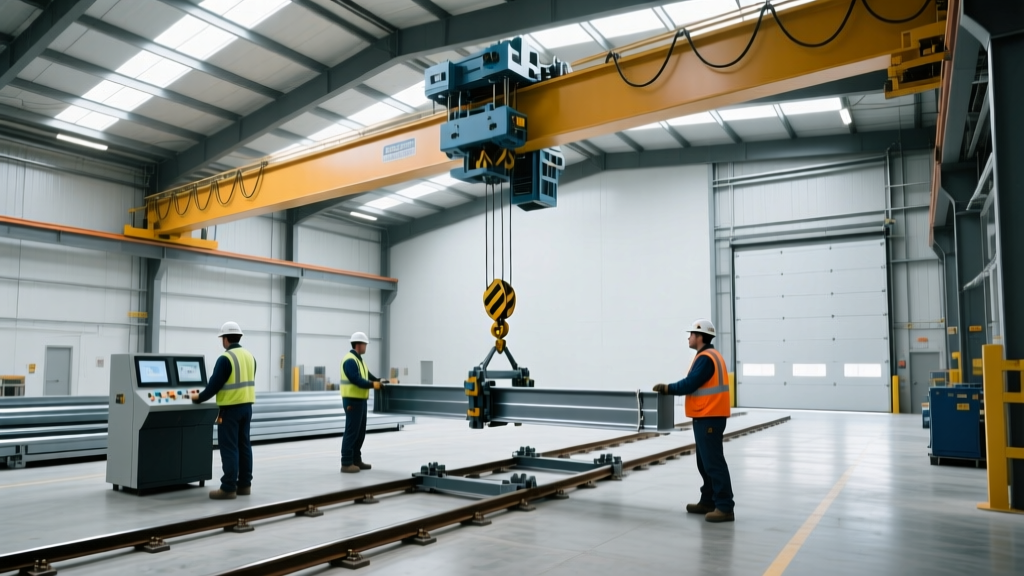
When executing storeroom material handling equipment installations in San Jose, facility managers face a unique intersection of high-value inventory, strict seismic building codes, and spatial constraints. Whether outfitting a semiconductor fab cleanroom in North San Jose or an aerospace parts storeroom near Berryessa, overhead bridge cranes are the backbone of heavy load manipulation. However, the mechanical installation is only half the battle; operator training dictates the long-term safety and efficiency of the system.
Bridge crane operations in high-tech storerooms require precision. Loads often include fragile vacuum chambers, sensitive silicon wafer carriers, or expensive CNC spindle assemblies. This guide details the technical configurations, rigging mathematics, and operator training protocols required to maintain compliance and operational safety in these specialized environments.
Selecting the Right Bridge Crane Configuration
Before operators can be trained, they must understand the mechanical limits of the specific crane configuration installed in their facility. Storeroom installations typically utilize one of three bridge crane setups, governed by the Crane Manufacturers Association of America (CMAA) specifications.
| Configuration | Typical Span | Capacity Range | Headroom Impact | Best Storeroom Application |
|---|---|---|---|---|
| Single Girder Top-Running | 10 ft – 60 ft | 1 – 15 Tons | Moderate (Hoist sits on top flange) | General manufacturing parts, standard palletized raw materials. |
| Double Girder Top-Running | 30 ft – 100+ ft | 10 – 50+ Tons | High (Hoist sits between girders) | Heavy aerospace assemblies, large die-cast molds. |
| Underhung (Under-running) | 10 ft – 40 ft | 1 – 10 Tons | Maximized (Hangs from bottom flange) | Cleanrooms, low-clearance tech storerooms, workstations. |
For San Jose tech storerooms, underhung cranes are frequently specified to maximize vertical clearance, allowing the runway beams to hang directly from the facility's roof truss structure. Operators must be trained to recognize the lateral sway limits of underhung systems, which are more susceptible to load swing than top-running configurations due to the pendulum effect originating from the bottom flange.
Seismic Compliance Alert: San Jose falls under Seismic Design Category D or E depending on the exact soil classification. Runway beams for top-running cranes must utilize moment connections or specialized knee bracing to withstand lateral seismic forces as mandated by the California Building Code (CBC). Operators should never use the crane structure as a temporary anchor point for facility maintenance, as this can compromise the engineered seismic bracing.Core Operator Training Modules
According to OSHA 1910.179, only designated and trained personnel are permitted to operate overhead and gantry cranes. Training for storeroom environments must go beyond basic joystick operation and focus on load dynamics and micro-positioning.
Module 1: Pre-Shift Inspection Protocols
Operators must complete a documented daily inspection before the first lift. In high-tech storerooms, this includes verifying the functionality of Variable Frequency Drives (VFDs) used for micro-speed hoist control. The checklist must include:
- Limit Switches: Test the upper limit switch by inching the block up without a load. Never use the limit switch as a routine operating stop; it is an emergency backup.
- Wire Rope Integrity: Inspect for kinking, crushing, or birdcaging. Discard rope if there are more than six randomly distributed broken wires in one rope lay.
- Hook Latches: Ensure the safety latch on the clevis hook closes completely and springs back without binding.
- Brake Slippage: Raise a test load slightly and hold. If the load drifts downward, the mechanical hoist brake requires immediate adjustment by a qualified technician.
Module 2: Load Path and Swing Control
Load swing is the primary cause of storeroom inventory damage. Operators must be trained in 'anti-sway' techniques, which involve timing the bridge and trolley movements to keep the crane's hook block directly over the load's center of gravity (CG). When moving sensitive equipment, operators should utilize the VFD micro-speed setting, limiting travel speeds to under 15 feet per minute during the final 10 feet of the load path.
Rigging Best Practices and Sling Angle Calculations
Rigging is where theoretical training meets physical reality. The most common failure point in storeroom lifting operations is the miscalculation of sling tension based on the angle of the legs. As the angle from the horizontal decreases, the tension on each sling leg increases exponentially.
Operators must use the following formula to calculate actual leg tension:
Tension = (Load Weight / Number of Legs) × (Sling Length / Vertical Height)
Sling Angle Tension Multiplier Matrix
| Angle from Horizontal | Tension Multiplier (L/H) | Impact on a 4,000 lb Load (2-Leg Sling) | Rigging Recommendation |
|---|---|---|---|
| 90° (Vertical) | 1.00 | 2,000 lbs per leg | Ideal for precise vertical lifts; requires spreader bar. |
| 60° | 1.15 | 2,300 lbs per leg | Standard configuration for most storeroom pallet lifts. |
| 45° | 1.41 | 2,820 lbs per leg | Acceptable, but requires higher-rated synthetic or wire slings. |
| 30° | 2.00 | 4,000 lbs per leg | DANGER: Avoid. High horizontal crushing forces on the load. |
For fragile aerospace components stored in San Jose facilities, operators must use softeners or corner protectors when utilizing wire rope slings to prevent cutting the sling and marring the load. Synthetic slings (nylon or polyester) are preferred for polished surfaces, but operators must be trained to inspect them for UV degradation and chemical burns from storeroom cleaning solvents.
Identifying and Preventing Critical Failure Modes
Even with advanced CMAA Class C or D duty cycle cranes, operator error can lead to catastrophic mechanical failures. Training must specifically address the following edge cases:
1. Side-Pulling and Rope Derailment
Side-pulling occurs when the operator attempts to drag a load horizontally before the hook is directly centered over the load's CG. This forces the wire rope against the edge of the hoist drum or sheave, causing severe abrasion and potential derailment. Modern installations in San Jose often include load-sensing anti-side-pull devices that cut power to the trolley motor if lateral force exceeds 5% of the rated capacity. Operators must never attempt to bypass these limiters.
2. Two-Blocking
Two-blocking happens when the hook block is raised until it physically contacts the upper hoist housing or boom tip sheave. This places the entire weight of the crane's lifting capacity on the wire rope, potentially snapping it. While anti-two-block switches are mandatory on telescopic cranes, they are sometimes optional on standard bridge hoists. Operators must rely on visual awareness and the tested upper limit switch to prevent this.
Pro-Tip for Cleanroom Storerooms: When operating cranes in ISO Class 6 or 7 cleanrooms, standard wire rope hoists are prohibited due to lubricant off-gassing and particulate shedding. Operators must be trained on cleanroom-rated belt hoists or stainless-steel chain hoists, which have different acceleration profiles and require smoother, more gradual joystick inputs to prevent load shock.Continuous Education and Certification
Initial certification is not the end of the training lifecycle. Facility managers overseeing storeroom material handling equipment installations in San Jose must implement annual refresher courses and practical evaluations. Referencing the CCOHS Overhead Crane Safety guidelines, practical evaluations should include blind-spot lifting, multi-crane tandem lifts (if applicable), and emergency load-lowering procedures using manual brake release mechanisms.
By combining rigorous mechanical understanding with disciplined daily practices, operators can ensure that overhead bridge cranes remain a safe, efficient asset in Silicon Valley's demanding industrial landscape. For comprehensive standards on rigging hardware and inspection intervals, facility safety officers should also consult the ASME B30 series safety standards to ensure all below-the-hook lifting devices meet current engineering tolerances.