Sanitary Material Handling Equipment for Food & Pharma (2026)
Expert 2026 buyer guide for sanitary material handling equipment in food and pharma. Compare IP69K conveyors, stainless hoists, and H1 lubricants.
Designing a material flow for food processing or pharmaceutical manufacturing requires navigating a minefield of regulatory compliance, microbial risks, and aggressive sanitation protocols. Standard industrial equipment fails rapidly in these environments, leading to catastrophic product recalls or cleanroom contamination. Selecting the correct sanitary material handling equipment is not merely about moving goods; it is about integrating machinery that survives 1,500-PSI, 180°F chemical washdowns while preventing harborage points for Listeria and Salmonella.
WARNING: The True Cost of Non-ComplianceA single bearing failure on a non-sanitary conveyor over an open food line can introduce rust and unapproved grease into the product stream. Under the FDA's FSMA regulations, this triggers a mandatory recall. The average direct cost of a food recall in 2026 exceeds $10 million, excluding brand damage and litigation.
Regulatory Baselines: 3-A, EHEDG, and NSF
Before evaluating specific models, procurement teams must filter vendors through three primary sanitary design frameworks:
- 3-A Sanitary Standards: The benchmark for dairy and food equipment in North America. Look for the 3-A Symbol on conveyor belting and structural tubing.
- EHEDG (European Hygienic Engineering & Design Group): Critical for pharmaceutical and global food brands. EHEDG guidelines mandate specific surface roughness (Ra ≤ 0.8 μm) and self-draining angles (minimum 3° slope) to prevent liquid pooling.
- NSF Nonfood Compounds: Every lubricant used on the equipment must be registered. H1 lubricants are permitted for incidental food contact; H2 are strictly for non-contact areas.
Conveyor Selection: Belt vs. Modular vs. ThermoDrive
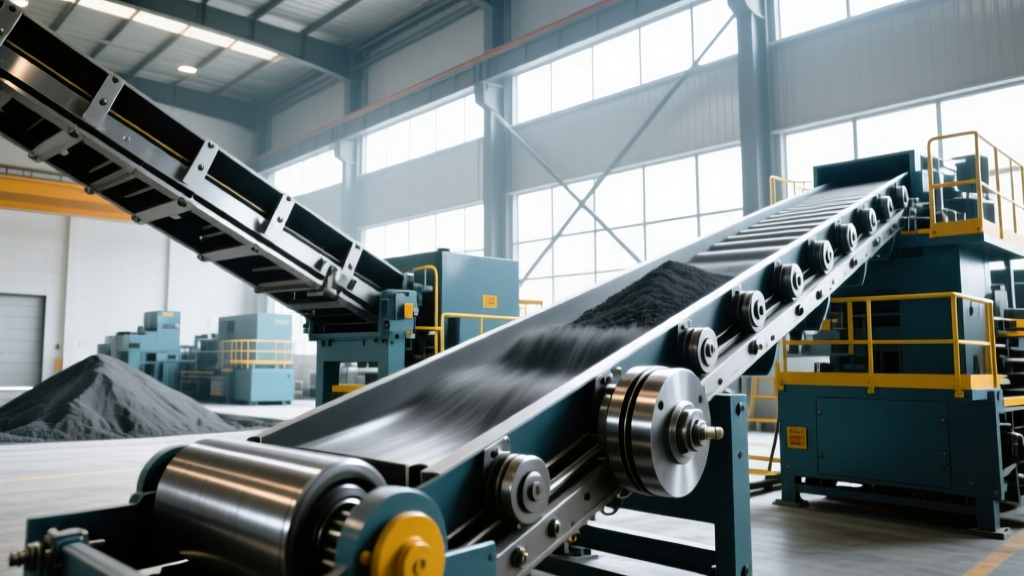
Conveyors represent the largest footprint in sanitary material handling. The choice of belting material dictates sanitation time and microbial risk.
| Belting Type | Best Application | Sanitation Profile | 2026 Est. Cost (20ft Section) |
|---|---|---|---|
| Urethane Flat Belt | Pharma packaging, dry snack foods | Excellent. Seamless, no hinges for bacteria to hide. | $18,000 - $24,000 |
| Modular Plastic | Raw meat, poultry, heavy washing | Poor to Fair. Hinge pins and rod holes are major harborage points. | $15,000 - $20,000 |
| ThermoDrive | Ready-to-eat (RTE) meals, cheese | Superior. Homogeneous thermoplastic with positive sprocket drive; no tensioning required. | $28,000 - $36,000 |
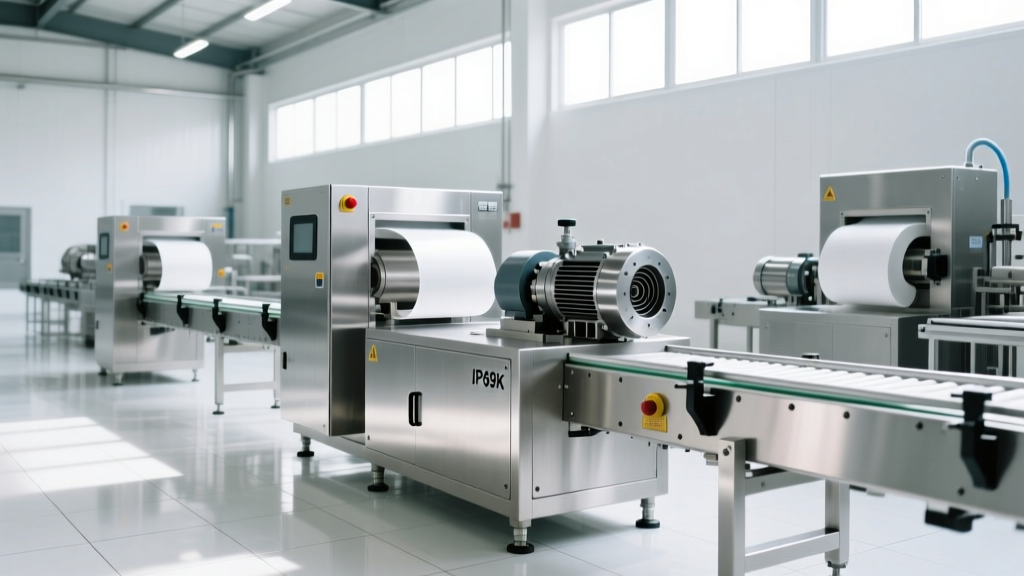
Expert Recommendation: For ready-to-eat (RTE) food environments, specify the Dorner 7400 Series with ThermoDrive or Intralox® S700. These systems feature IP69K-rated gearmotors and tool-less belt removal, cutting daily sanitation labor by up to 40%.
The IP69K Motor Fallacy: Thermal Shock Failures
A common and costly mistake in 2026 facility upgrades is assuming that an IP65 or IP66 rated motor can survive a high-pressure washdown. It cannot.
"When a hot motor (140°F+) is suddenly hit with 55°F washdown water, the rapid cooling causes the air inside the motor housing to contract. This creates a vacuum that actively sucks moisture and chemical detergents past the shaft seals into the windings, leading to catastrophic short circuits within weeks."
The Fix: Specify motors with IP69K ratings (e.g., Bauer Aseptic series or SEW Eurodrive). IP69K certifies the motor can withstand 1,450 PSI at 180°F. Furthermore, ensure the motor housing features a Gore-Tex pressure equalization valve to allow the motor to breathe without drawing in liquid water.
Lifting and Pallet Handling in Cold Storage & Cleanrooms
Moving raw ingredients or finished pharmaceutical pallets requires equipment that will not shed particulate matter or degrade in sub-zero or highly corrosive environments.
Stainless Steel Pallet Jacks
Standard painted carbon-steel pallet jacks will flake paint and rust within 90 days in a meat processing cold room. You must specify 304 or 316L stainless steel chassis with sealed polyurethane wheels.
- Toyota / BT Lifter Stainless Models: Expect to pay $3,800 to $4,500 per unit (compared to $400 for standard steel).
- Lubrication Requirement: The hydraulic pump and pivot points must be pre-packed with an NSF H1-registered grease, such as Klüberfood NH1 11-222.
Sanitary Hoists for Pharma Cleanrooms
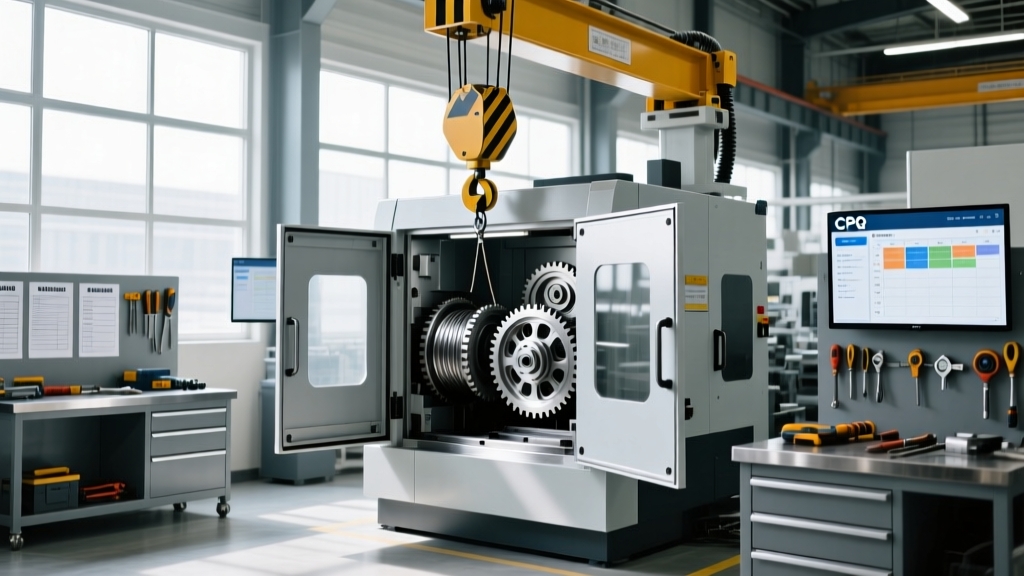
In ISO 7 or ISO 8 cleanrooms, overhead lifting equipment must not generate metallic dust. Standard chain hoists shed microscopic metal flakes as the chain articulates over the load sheave.
Specify: Columbus McKinnon (CM) Stainless Steel Lodestar or cleanroom-specific belt hoists (like the Konecranes CXT). Belt hoists use Kevlar-reinforced polyurethane straps instead of chains, eliminating metal-on-metal friction and the need for chain lubrication entirely. Pricing for a 1-ton cleanroom belt hoist ranges from $8,500 to $12,000.
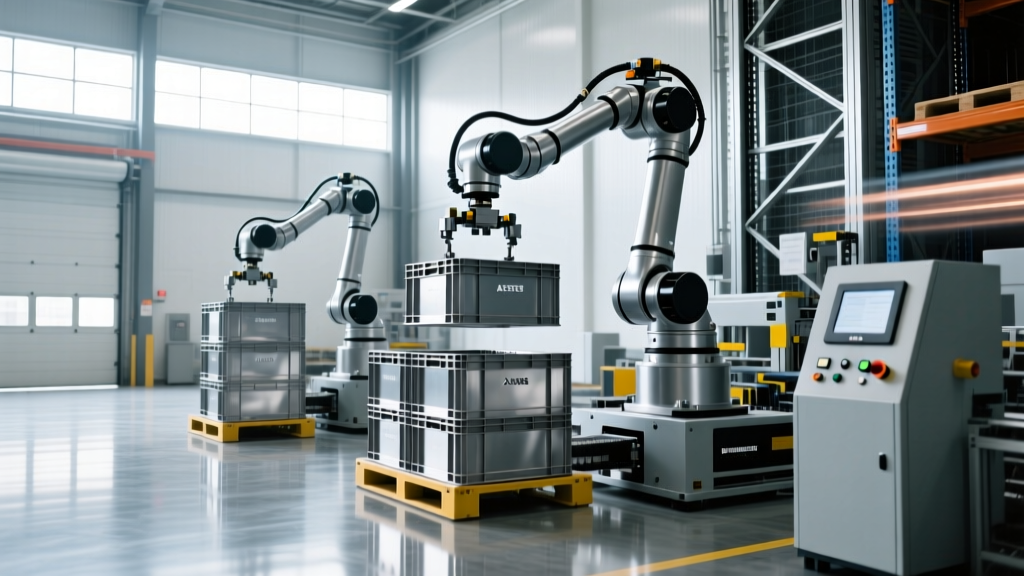
Procurement Tip: Automated Guided Vehicles (AGVs)True IP69K Autonomous Mobile Robots (AMRs) are exceptionally rare and cost upwards of $150,000. The current industry workaround for washdown zones is to use standard IP54-rated AMRs (like the MiR250) to tow specialized stainless-steel, washdown-rated carts, keeping the robot's electronics out of the direct spray zone during sanitation shifts.
Total Cost of Ownership (TCO) & Maintenance Realities
Sanitary material handling equipment carries a 30% to 50% premium over standard industrial equivalents. However, the TCO justifies the capital expenditure when factoring in sanitation labor and downtime.
- Sanitation Labor Reduction: Conveyors with tool-less, quick-release belts and open-frame stainless steel designs (no hollow tubes) reduce daily washdown time by 45 minutes per line. At $25/hour burdened labor, this saves ~$18,000 annually per line.
- Hollow Tube vs. Solid Frame: Never buy sanitary conveyors with hollow structural tubing. If a weld micro-fractures, water and bacteria enter the tube, creating an internal biofilm that cannot be cleaned. Specify solid machined blocks or sealed, continuously welded rectangular tubing.
- Bearing Washouts: Standard sealed bearings fail in washdown environments. Specify mounted bearings with stainless steel housings and triple-lip seals (e.g., Dodge Silver-X or SKF Food Line). These cost 3x more ($150 vs $50) but extend replacement intervals from 3 months to 3+ years.
Buyer's Decision Matrix: Specifying Your System
Use this checklist when reviewing vendor proposals for food and pharma applications:
- [ ] Are all product contact surfaces 316L stainless steel (or 304 for dry non-corrosive)?
- [ ] Are all drive motors and enclosures rated IP69K with pressure equalization?
- [ ] Is the belting FDA/USDA approved and spliced without metal fasteners?
- [ ] Are all lubricants pre-applied at the factory documented as NSF H1?
- [ ] Does the frame feature a minimum 3-degree slope on all horizontal surfaces?
- [ ] Are electrical control panels rated NEMA 4X with stainless steel stands?
Investing in properly engineered sanitary material handling equipment prevents the devastating operational and financial impacts of contamination. By enforcing strict adherence to 3-A and EHEDG principles during the procurement phase, facility managers secure both regulatory compliance and long-term equipment reliability.