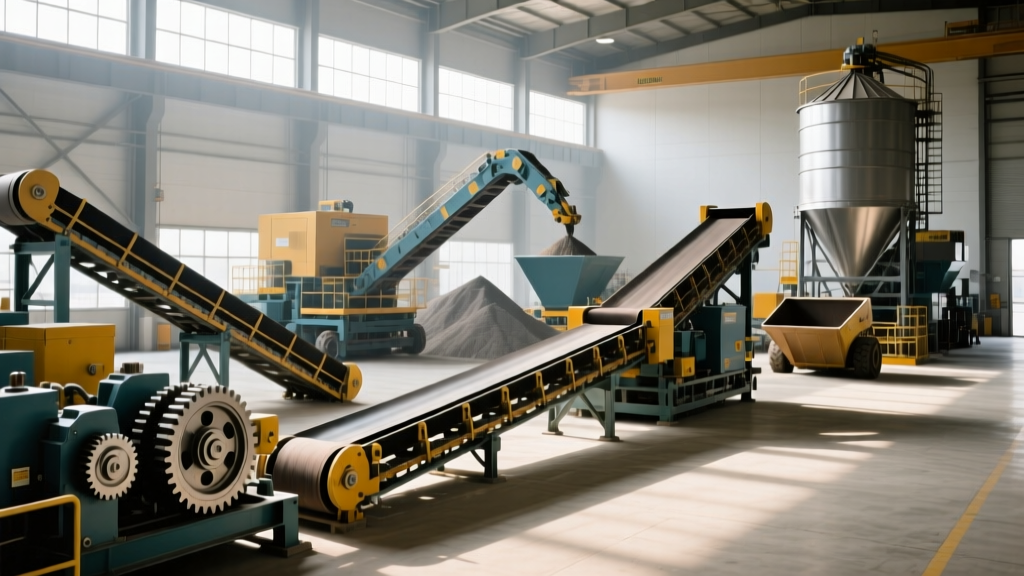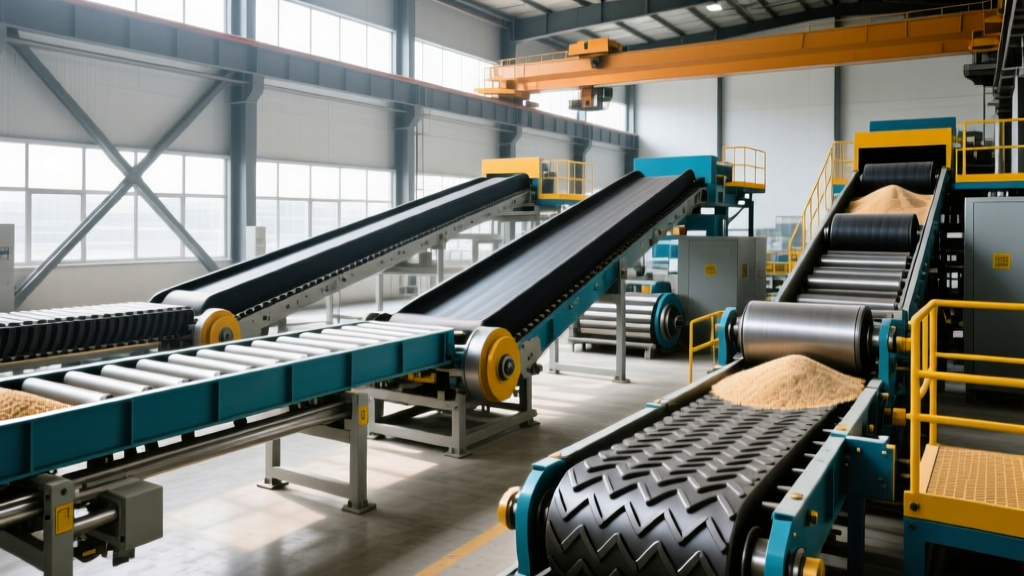
Conveyor Belt Types for Material Handling Solutions Lifting Equipment
Guide to selecting conveyor belt types by material property for OSHA and CEMA safety compliance in bulk handling and lifting equipment systems.
Selecting the correct conveyor belt carcass and cover grade is not merely an operational efficiency decision; it is a critical safety and regulatory compliance requirement. Mismatching a belt type to the material it conveys introduces severe hazards, ranging from catastrophic belt rips and combustible dust ignition to toxic off-gassing and bacterial contamination. For facility managers and safety engineers, understanding the intersection of material properties, belt construction, and regulatory standards is mandatory for passing audits and preventing workplace fatalities.
⚠️ Compliance Warning: The Hidden Cost of Belt MismatchingUnder OSHA's General Duty Clause, utilizing a standard fabric-ply belt for heavy, sharp aggregate without rip-detection or adequate impact idlers can result in citations if a belt failure causes a spillage-related slip or strike hazard. In 2026, automated compliance tracking has made it easier for inspectors to flag carcass ratings that fall below the CEMA (Conveyor Equipment Manufacturers Association) safety factor recommendations for specific load classes.
Material Property to Belt Type: Safety & Compliance Matrix
The following matrix maps common industrial material properties to their required belt specifications, the primary safety hazard introduced by non-compliance, and the governing regulatory standard.
| Material Property | Required Belt Type | Tensile / Rating | Primary Safety Hazard if Mismatched | Governing Standard |
|---|---|---|---|---|
| Sharp / Heavy Ore | Steel Cord w/ Rip Detection | 800-1200 PIW | Longitudinal rip causing catastrophic rollback | MSHA 30 CFR § 56.14105 |
| Hot Aggregates (400°F+) | PTFE-Coated Fiberglass | Low Tension | Carcass ignition / toxic off-gassing | NFPA 652 / OSHA 1910.106 |
| Oily Scrap Metal | Nitrile (NBR) Rubber | 220-440 PIW | Drive pulley slip causing friction fires | CEMA No. 502 |
| Raw Meat / Poultry | Polyurethane (PU) FDA | 150-250 PIW | Bacterial harboring in fabric weaves | FDA 21 CFR 177.2600 |
Heavy and Sharp Materials: Steel Cord and Rip Detection Protocols
When conveying heavy, sharp materials like iron ore, blasted rock, or scrap steel, standard multi-ply fabric belts (even those with high-abrasion RMA Grade 1 covers) are highly susceptible to longitudinal tearing. A sharp rock wedged in a chute can slice a fabric belt down its entire length, releasing tons of material onto the return run or floor, creating severe strike and trip hazards.
For these applications, Steel Cord (ST) conveyor belts are mandatory. ST belts utilize high-tensile steel cables as the load-bearing carcass, offering a safety factor of 5:1 to 7:1 (compared to the 10:1 required for fabric belts). However, steel cords are vulnerable to transverse punctures that can lead to moisture ingress and internal rust-jacking, which weakens the belt invisibly until it snaps under tension.
MSHA Compliance for Belt Conveyors
In mining and heavy aggregate sectors, the Mine Safety and Health Administration (MSHA) strictly regulates belt maintenance. According to MSHA regulatory guidelines, belt conveyors must be equipped with functional safety devices, including slip switches, sequence switches, and belt alignment switches. Furthermore, modern compliance requires the integration of electromagnetic rip detection loops embedded in the belt cover. If a tear exceeds a predefined threshold (typically 15-20 feet), the system automatically triggers an emergency stop (E-stop), preventing the tear from propagating and causing a massive spillage event.
Oily and Greasy Materials: Preventing Drive Pulley Slip Fires
Conveying materials saturated with cutting fluids, motor oils, or greases (such as CNC metal shavings or stamped automotive parts) degrades standard natural rubber (SBR) belts. Oil causes the rubber to swell, soften, and delaminate from the fabric carcass. More critically, oil transfer to the drive pulley lagging destroys the coefficient of friction.
When the drive pulley slips against a moving belt, the resulting friction rapidly generates heat. In environments with combustible metal dust or oil mist, this is a primary ignition source. To maintain compliance with CEMA safety standards and general fire codes, facilities must specify Nitrile (NBR) or Neoprene belts. These synthetic elastomers are chemically resistant to petroleum-based oils and maintain their structural integrity and friction profile even when coated in a thin layer of machining coolant.
💡 Engineering Insight: Pulley Lagging in Oily EnvironmentsSpecifying an oil-resistant belt is only half the solution. Safety engineers must also specify ceramic-embedded diamond lagging on the drive pulleys. Standard rubber lagging will absorb oil and fail. Ceramic lagging maintains a coefficient of friction above 0.7 even in wet, oily conditions, eliminating slip-induced fire hazards and ensuring the conveyor stops within the required CEMA braking distance parameters during an E-stop event.
Integrating Conveyors with Material Handling Solutions and Lifting Equipment
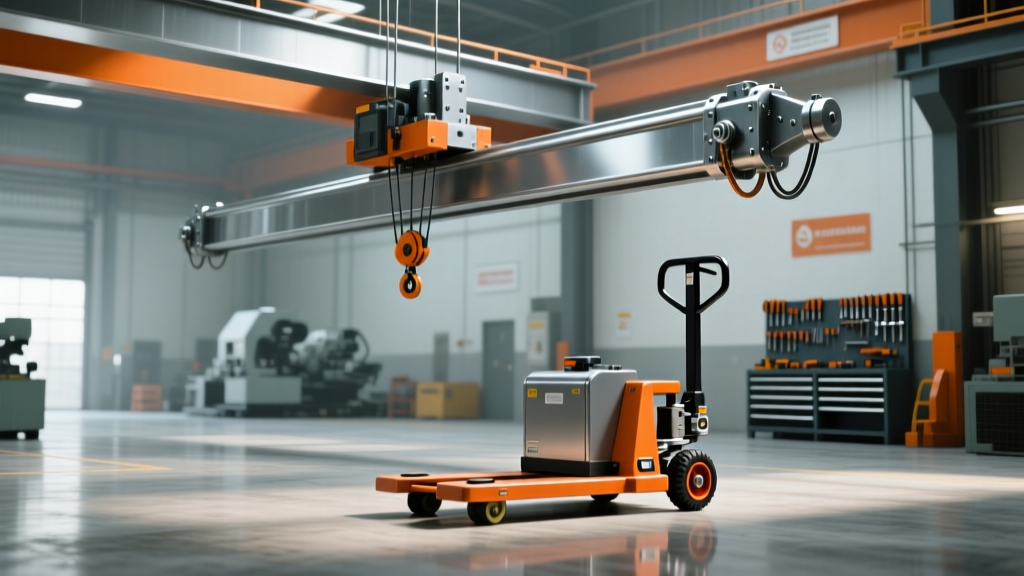
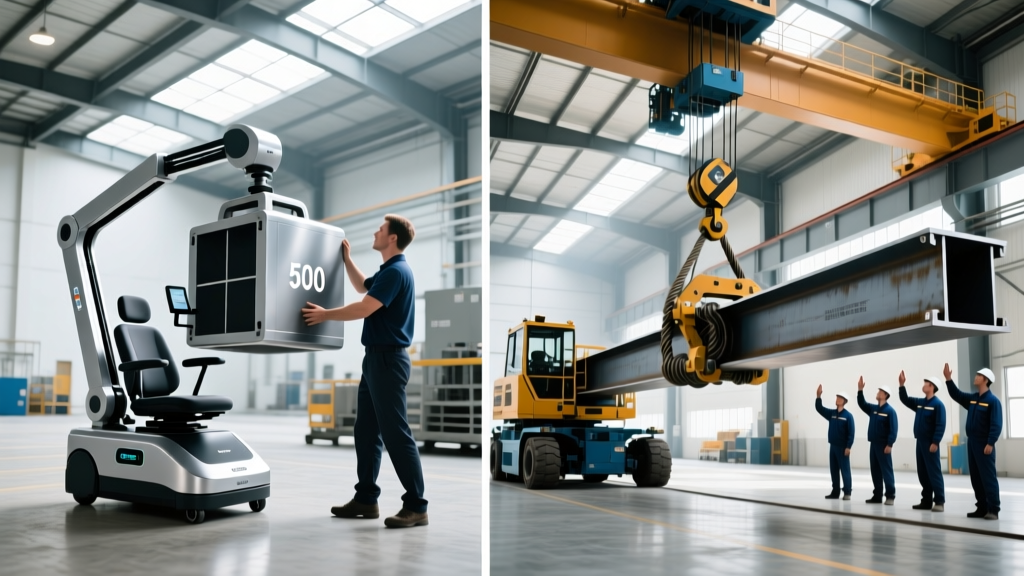
Conveyors rarely operate in isolation. When designing comprehensive material handling solutions, lifting equipment and conveyor networks must share unified safety protocols, particularly at transfer zones. Overhead bridge cranes, jib hoists, and automated guided vehicles (AGVs) frequently deposit heavy pallets, dies, or bulk bins directly onto conveyor lines.
The safety hazard here is twofold: impact damage to the belt and crushing hazards for personnel. If a 2,000 lb. die is dropped from a hoist onto a standard conveyor, the impact force can shatter the idler frames and snap the belt carcass. To mitigate this, load zones beneath lifting equipment must be reinforced with impact idlers (featuring heavy rubber discs to absorb shock) and reinforced belt breaker fabrics (such as aramid weaves) directly under the top cover.
"The intersection of lifting equipment and conveyors is where 40% of material handling pinch-point injuries occur. Guarding must not only protect the conveyor nip points but also account for the swing radius and load-path of the overhead hoist, ensuring operators cannot stand in the drop zone while the belt is in motion."
— Industrial Safety Engineering Best Practices, 2025
OSHA's mechanical power transmission apparatus standards require strict guarding around these integration points. When a hoist feeds a conveyor, the guarding must feature interlocked access gates. If the gate is opened to clear a jammed pallet, both the conveyor drive and the overhead lifting equipment's lower-limit hoist function must be simultaneously locked out via a hardwired safety relay, not just software-controlled PLC logic.
High-Temperature Applications: Avoiding Carcass Ignition
Handling hot clinker, sinter, or freshly cast metal parts requires belts that can withstand extreme thermal loads without compromising their tensile strength or emitting toxic fumes. Standard PVC and PU belts will melt, while standard rubber belts will char, harden, and eventually catch fire when exposed to materials exceeding 250°F (121°C).
For materials up to 400°F (204°C), PTFE (Teflon) coated fiberglass belts or specialized high-temperature silicone belts are required. These materials are inherently non-combustible and do not off-gas hazardous volatile organic compounds (VOCs) when heated. From a compliance standpoint, using combustible belts in high-heat zones violates both OSHA air quality standards (due to off-gassing) and NFPA fire codes. Inspectors will specifically check the belt manufacturer's thermal degradation spec sheet against the maximum operating temperature of the conveyed material.
Splicing Safety: Vulcanized vs. Mechanical Fasteners
The belt splice is the weakest link in any conveyor system and a major focal point for safety audits. The choice between vulcanized splices and mechanical fasteners (like alligator lacing or plate fasteners) dictates the belt's safety factor and maintenance protocol.
- Vulcanized Splices (Hot or Cold): Achieve 85% to 100% of the belt's original tensile strength. They provide a smooth surface that prevents material hang-up and allows for safe, continuous operation with standard belt cleaners. Required for high-tension steel cord belts and high-speed systems.
- Mechanical Fasteners: Achieve only 40% to 60% of the belt's tensile strength. While faster to install, the exposed metal hinges create severe laceration hazards if a worker accidentally brushes against a return-run belt. Furthermore, mechanical fasteners frequently tear through the belt carcass under high tension, leading to sudden, unannounced belt snaps.
For compliance with OSHA material handling guidelines, mechanical fasteners should only be used on low-tension, low-speed emergency repair splices, and must be replaced with a permanent vulcanized splice during the next scheduled downtime. Exposed fastener hinges on the carry side of the belt are an immediate citation risk during safety walk-throughs due to the snag and laceration hazards they present to personnel working near the conveyor line.
Summary of Actionable Specifications
To ensure your facility remains compliant and safe in 2026 and beyond, audit your current conveyor lines against these non-negotiable specifications:
- Verify that all belts conveying sharp, heavy materials possess embedded rip-detection loops wired to the main E-stop circuit.
- Confirm that belts in oily environments are NBR-compound and paired with ceramic drive pulley lagging.
- Ensure transfer zones beneath overhead lifting equipment are reinforced with impact idlers and interlocked guarding.
- Eliminate exposed mechanical fastener splices on high-tension or high-speed conveyors, replacing them with vulcanized joints.