Types of Bulk Material Handling Equipment: Mining & Ag Cost Analysis
Analyze capital and operational costs for types of bulk material handling equipment in mining and agriculture. Optimize your budget planning.
Capital allocation for bulk material transport dictates the profitability of high-volume extraction and harvesting operations. When evaluating the various types of bulk material handling equipment for mining and agriculture, facility managers frequently make the error of optimizing solely for initial CAPEX. This approach guarantees long-term OPEX overruns due to accelerated wear, material degradation, and regulatory compliance failures.
This cost analysis breaks down the lifecycle economics of primary bulk handling systems—specifically overland conveyors, bucket elevators, and en-masse drag conveyors—providing exact budget parameters for 2026 facility expansions and retrofits.
The CAPEX vs. OPEX Matrix for Bulk Handling Systems
Not all bulk materials behave identically. Taconite ore will destroy standard conveyor belting in months, while high-moisture agricultural grains will rot inside enclosed pneumatic systems. Below is a baseline cost matrix comparing the primary types of bulk material handling equipment used in these two heavy-duty sectors.
| Equipment Type | Primary Application | Est. CAPEX Baseline | 10-Year OPEX Driver | Expected Lifespan |
|---|---|---|---|---|
| Overland Belt Conveyor | Mining (Ore, Coal, Aggregate) | $1,800 - $2,600 / meter | Belt splicing, idler replacement, drive motor rebuilds | 25-30 years (structural) |
| Centrifugal Bucket Elevator | Agriculture (Grain, Seed) | $95,000 - $125,000 / unit | Bucket bolt fatigue, belt/chain tensioning, boot wear | 20-25 years |
| En-Masse Drag Conveyor | Agriculture (Silo Reclaim) | $65,000 - $85,000 / unit | UHMW liner replacement, chain elongation | 15-20 years |
| Pneumatic Conveying | Both (Dust, Powder, Cement) | $150,000+ / system | Blower energy costs, rotary airlock valve wear | 15-20 years |
Mining Sector: Heavy-Duty Conveyor & Hopper Budgeting
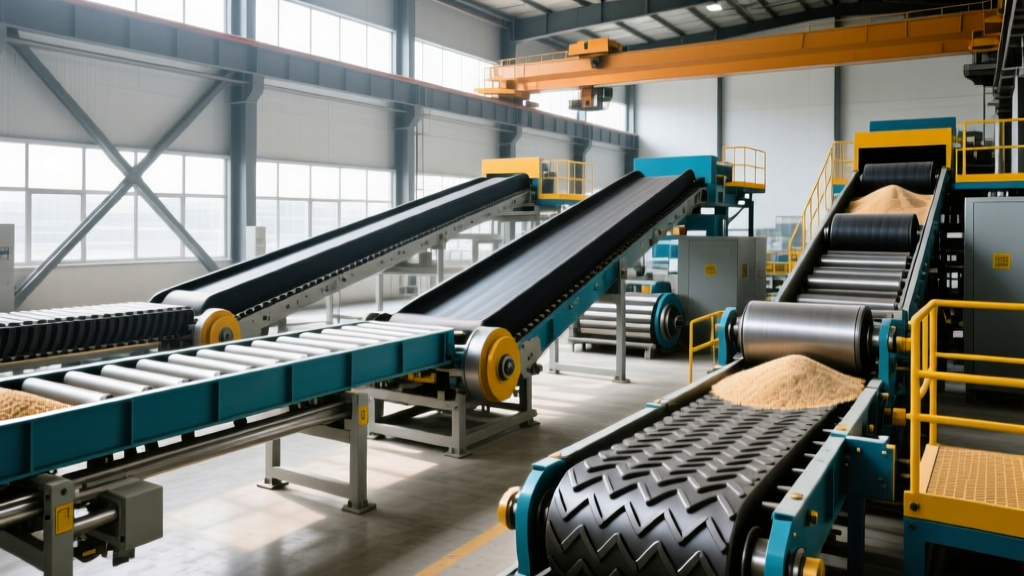
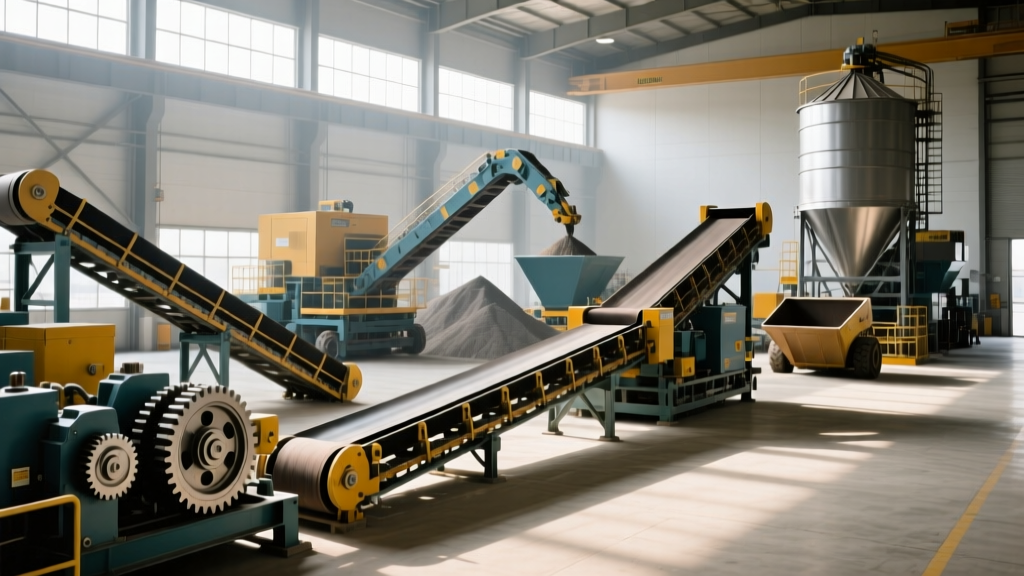
Mining operations rely heavily on overland and in-plant belt conveyors to move abrasive, high-density materials like copper ore, coal, and iron taconite. According to engineering standards maintained by the Conveyor Equipment Manufacturers Association (CEMA), selecting the correct CEMA class (e.g., Class E or F for heavy mining) is non-negotiable for structural integrity and load-bearing capacity.
Overland Conveyor Capital Costs
A standard 1500mm (60-inch) wide overland conveyor system designed for 3,000 TPH (tons per hour) of crushed aggregate costs between $1,800 and $2,600 per installed meter. For a 5-kilometer transport route, budget $9M to $13M for the mechanical and electrical installation, excluding civil earthworks and structural supports. Specifying a steel cord belt (ST2000 to ST4000 rating) instead of a standard fabric ply belt will add roughly 18% to the belting budget but is mandatory for high-tension, long-distance mining applications to prevent catastrophic longitudinal ripping.
The Hidden Cost of Chute and Hopper Wear
Transfer points are where mining budgets bleed. The impact of 300mm rocks dropping 2 meters onto a steel chute causes rapid abrasion. Standard A36 carbon steel chutes require replacement every 8 to 14 months in high-tonnage iron ore applications. Upgrading to AR400 (Abrasion Resistant) steel or installing 92% alumina ceramic tiles increases upfront chute costs by 220% (from $15,000 to $48,000 per transfer point) but extends service life to 4–6 years. This yields a positive ROI by year two when factoring in the $25,000 per hour cost of unplanned conveyor downtime.
Agriculture Sector: Grain & Fertilizer Handling Economics
Agricultural bulk handling focuses on preserving product integrity (preventing grain cracking) and managing highly corrosive environments (fertilizer storage). The types of bulk material handling equipment chosen here must balance gentle handling with extreme environmental resistance.
Bucket Elevators vs. En-Masse Conveyors
For vertical grain transport, centrifugal bucket elevators remain the industry standard. A 10,000 bushel/hour elevator with 14x8-inch steel buckets and a 150-foot discharge height carries a bare equipment cost of $95,000 to $125,000. Installation, including concrete pit pouring, structural tower supports, and VFD (Variable Frequency Drive) electrical panels, adds $60,000 to $85,000.
However, when handling UAN (Urea Ammonium Nitrate) liquid fertilizer or highly corrosive dry potash, standard painted carbon steel fails rapidly. Specifying 304L stainless steel for the elevator boot, head, and casing increases the equipment CAPEX by 65%. While painful upfront, it prevents the $40,000+ cost of emergency casing replacements and catastrophic structural collapses caused by rust-through in high-humidity fertilizer sheds.
En-Masse Drag Conveyors for Horizontal Movement
For moving grain horizontally across a silo floor or tunnel, en-masse (drag chain) conveyors are preferred over screw conveyors because they operate at lower RPMs, reducing grain damage (cracking) by up to 4%. A 24-inch wide, 100-foot en-masse conveyor rated for 15,000 BPH costs approximately $72,000. Budget an additional $12,000 annually for UHMW (Ultra-High Molecular Weight) polyethylene liner replacements. Steel-on-steel chain friction will rapidly degrade standard carbon steel bottoms, and UHMW liners reduce chain drag friction by 40%, directly lowering motor amperage draw and energy costs.
Regulatory Compliance: Budgeting for Dust and Spillage
Fugitive dust is not just an environmental nuisance; it is a severe financial and safety liability. In mining, respirable crystalline silica dust poses massive health risks, heavily regulated by agencies tracked via resources like the CDC NIOSH silica guidelines. In agriculture, grain dust is highly combustible, governed by strict OSHA combustible dust standards.
Budget Warning: Dust Collection SystemsDo not treat dust collection as an optional accessory. For a 5,000 TPH grain receiving pit, a properly sized pulse-jet baghouse dust collector (e.g., Donaldson Torit or Coperion) with explosion venting and ATEX-certified rotary valves will cost between $110,000 and $160,000 installed. Skimping on CFM (Cubic Feet per Minute) calculations to save $30,000 upfront will result in OSHA fines exceeding $150,000 per violation and potential facility shutdowns.
2026 Decision Framework: Automating Bulk Stockyards
When planning bulk storage yards (coal stockpiles in mining, grain silos in agriculture), the decision between manual wheel loaders and automated stacker/reclaimers hinges on labor costs and material segregation requirements.
- Manual Loading (Wheel Loaders/Excavators): Lower CAPEX ($350,000 for a Cat 980M wheel loader). High OPEX (3 operators per shift, $450,000+ annual labor, high diesel consumption, severe material degradation from bucket digging and dropping).
- Automated Stacker/Reclaimer: High CAPEX ($2.5M to $4.5M for a mid-sized cantilever slewing stacker/reclaimer). Near-zero manual labor, precise blending capabilities, and 30% reduction in material degradation. ROI typically achieved in 4.5 to 6 years for operations running 24/7.
For facilities operating less than 10 hours a day, automated stackers rarely justify their capital cost. For continuous mining operations or high-throughput export grain terminals, the automated system is the only financially viable long-term option.
Lifecycle Maintenance Budgeting Rules
When finalizing your capital expenditure requests, apply these strict maintenance multipliers to your base equipment costs to forecast 10-year OPEX accurately:
- Belt Conveyors (Mining): Allocate 4% to 6% of the initial mechanical CAPEX annually for idler replacements, belt splicing, and scraper blade maintenance. Failure to budget for primary and secondary belt cleaners (e.g., Martin Engineering systems) will result in carryback material destroying return idlers prematurely.
- Bucket Elevators (Agriculture): Allocate 2% to 3% of CAPEX annually. Focus heavily on belt/chain tensioning and bucket bolt inspections to prevent catastrophic internal jams, which can tear the elevator casing apart from the inside out.
- Pneumatic Systems (Both): Allocate 8% to 10% of CAPEX annually. The energy cost to run high-pressure blowers and the wear on rotary airlock valves make pneumatics the most expensive bulk handling method per ton-mile. Reserve this equipment type strictly for short-distance, high-routing-complexity transfers where mechanical conveyors cannot fit.