Material Handling Equipment Safety Budgeting for Bulk Mining
Analyze the true costs of material handling equipment safety in bulk mining and agriculture. Budget for sensors, guarding, and compliance in 2026.
The Financial Reality of Bulk Material Handling Safety
When managing high-throughput bulk operations—whether moving 10,000 tons per hour (TPH) of iron ore via overland conveyors or processing 50,000 bushels of grain through agricultural bucket elevators—safety is rarely just a regulatory checkbox. It is a massive capital and operational expenditure. In 2026, the shift toward autonomous and semi-autonomous bulk handling has transformed material handling equipment safety from a reactive compliance cost into a proactive CapEx strategy. Facility managers and mine operators must now budget for millimeter-wave radar arrays, continuous thermal monitoring nodes, and advanced belt rip detection systems to prevent catastrophic downtime and regulatory shutdowns.
This guide provides a granular cost analysis and budget planning framework for upgrading safety systems in heavy bulk material handling environments, specifically targeting surface mining and large-scale agricultural processing.
'The cost of a single MSHA violation for inadequate conveyor guarding or a combustible dust incident in a grain elevator routinely exceeds the upfront CapEx of an automated, facility-wide safety sensor network. Proactive integration is no longer optional; it is a baseline operational requirement.' — 2025 Bulk Handling Industry Risk Report
Mobile Fleet Collision Avoidance: Line-Item Budgeting
Surface mining relies heavily on ultra-class haul trucks (e.g., Caterpillar 777G, Komatsu 830E) and articulated dump trucks operating in high-dust, high-vibration environments. Blind spots on a 400-ton haul truck can span over 50 feet. Implementing proximity detection and collision avoidance systems (CAS) is a primary pillar of modern material handling equipment safety.
Technology Cost Comparison Matrix
Selecting the right sensor suite requires balancing upfront hardware costs against the environmental degradation typical of bulk mining and agricultural dust. Below is the 2026 pricing breakdown for retrofitting a single ultra-class haul truck or heavy wheel loader.
| Sensor Technology | Hardware Cost (Per Unit) | Installation & Calibration | Annual OpEx (Maintenance) | Best Application |
|---|---|---|---|---|
| 77GHz Millimeter-Wave Radar | $14,500 - $18,000 | $3,200 | $1,500 (Fascia replacement) | High-dust mining pits, foggy conditions |
| Solid-State LiDAR | $22,000 - $28,500 | $4,500 | $4,000 (Lens cleaning/wiper) | Clear-weather agricultural bulk yards |
| RFID/Active Tag-Based | $6,500 - $9,000 | $2,000 | $800 (Tag battery replacement) | Personnel tracking, light vehicle avoidance |
Do not budget for LiDAR systems on primary mining haul routes without allocating funds for automated lens-cleaning mechanisms or frequent manual maintenance. In high-silica dust environments, LiDAR lenses degrade in optical clarity within 400 to 600 operating hours, leading to false positives that operators will ultimately disable. 77GHz Radar penetrates dust and mud, making it the superior ROI for mining, despite the lower spatial resolution compared to LiDAR.
Conveyor Guarding and Rip Detection in Bulk Transport
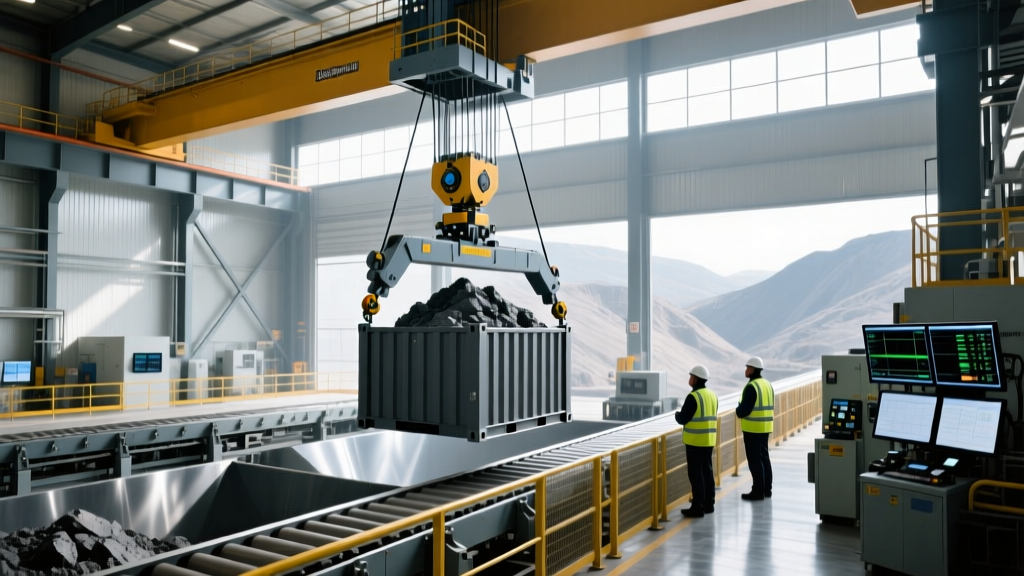
Overland conveyors are the arteries of bulk mining and large-scale grain transport. A single longitudinal belt rip on a Steel Cord ST1000 conveyor moving copper ore can result in a catastrophic belt failure, spilling thousands of tons of material and requiring a vulcanized splice repair that costs upwards of $85,000 and halts production for 12 to 18 hours.
Budgeting for conveyor safety involves two distinct categories: physical guarding compliance and automated anomaly detection.
Physical Guarding and Pull-Cord Systems
Under MSHA 30 CFR Part 56/57 and general OSHA standards, all moving parts, including tail pulleys, return rollers, and drive shafts, must be guarded. For a standard 5-kilometer overland conveyor, budget approximately $45,000 to $65,000 for custom-fabricated steel mesh guarding and heavy-duty emergency stop (E-stop) pull-cord systems. Utilizing modular, quick-release guarding systems (such as those from Argonics or Flexco) reduces maintenance downtime by 40% when technicians need access for roller replacements.
Automated Belt Rip and Slag Detection
To protect the asset, operators are integrating electromagnetic rip detection systems (e.g., Conveyor Components Company or Beltware). These systems embed induction loops into the belt cover. CapEx Requirement: Expect to pay $12,000 to $15,000 per sensor loop, with a minimum of three loops required for a standard bulk conveyor setup to triangulate tear origins. Integration Cost: Add $8,500 for PLC integration into the main SCADA system to enable automatic sub-second braking when a tear is detected.
Agricultural Bulk Handling: Mitigating Combustible Dust Risks
In agricultural bulk handling—specifically grain elevators, silos, and pneumatic conveyors—the primary safety threat is not just mechanical failure, but combustible dust explosions. The OSHA Grain Handling Facilities standard and NFPA 61 dictate strict parameters for ignition source prevention.
The most common ignition source in bucket elevators is bearing failure due to misalignment or lack of lubrication, which generates intense friction heat. Replacing standard bearings with continuously monitored smart bearings is a critical budgetary allocation for 2026.
Thermal Monitoring Node Allocation
Facility managers must budget for continuous thermal and vibration monitoring systems (such as the SKF Multilog IMx or Dodge Quantum).
- Hardware Cost: $1,200 to $1,600 per wireless monitoring node.
- Deployment Scale: A standard 150-foot bucket elevator requires a minimum of 6 nodes (head pulley, boot pulley, and intermediate bearings).
- Software Licensing: Cloud-based predictive maintenance dashboards typically cost $3,500 annually per facility.
ROI Matrix: Safety Tech vs. Downtime Costs
When presenting safety budgets to stakeholders, framing the expenditure against the cost of unplanned downtime and regulatory fines is the most effective strategy. The MSHA Safety and Health division has aggressively increased penalties for repeat violations in bulk material transport, making the ROI of automated safety systems undeniable.
| Incident Type | Average Direct Repair Cost | Downtime Cost (Per Hour) | Preventative Tech CapEx | Payback Period |
|---|---|---|---|---|
| Haul Truck Collision (Cat 777G) | $450,000 - $1.2M | $12,500 (Fleet bottleneck) | $22,000 (Radar CAS) | Immediate (Prevention of 1 event) |
| Overland Conveyor Belt Rip | $85,000 (Splice & Labor) | $65,000 (Lost Tonnage) | $45,000 (Rip Detection) | < 1 Hour of prevented downtime |
| Grain Elevator Bearing Fire | $150,000 (Equipment) | $18,000 (Harvest delay) | $12,000 (Thermal Nodes) | Immediate (Prevention of 1 event) |
Structuring the 2026 Safety & Maintenance Budget
To ensure your material handling equipment safety protocols are fully funded without disrupting core operational cash flow, adopt the following budget allocation framework for the upcoming fiscal year. Data synthesized from NIOSH Mining Safety research indicates that facilities integrating safety tech into routine maintenance budgets see 30% higher adoption rates than those treating it as a separate CapEx silo.
- Allocate 12-15% of Mobile Fleet Maintenance to Sensor Upkeep: Radar fascias, LiDAR wipers, and RFID tag batteries degrade rapidly in bulk environments. Ring-fence this percentage specifically for CAS hardware replacement.
- Ring-Fence $50,000 Annually for Guarding Retrofits: As conveyor routes shift and expand in mining pits, physical guarding must be extended. Use modular, quick-release guarding to minimize the labor cost of installation.
- Integrate Safety PLC Upgrades with SCADA Overhauls: Never budget for safety sensors without budgeting for the programmable logic controller (PLC) capacity to process the data. Add a 15% buffer to any SCADA upgrade budget specifically for safety-loop integration.
- Fund Combustible Dust Audits in Agriculture: Allocate $8,000 to $12,000 annually for third-party NFPA 61 compliance audits and thermal camera inspections of enclosed bucket elevators and pneumatic transfer lines.
Final Budgeting Directive
Effective budget planning for bulk material handling requires acknowledging that harsh environments destroy delicate technology. Do not simply purchase the most advanced safety sensors on the market; purchase the most ruggedized systems and fund the operational expenditure required to keep them clean, calibrated, and integrated into your central control room. By treating material handling equipment safety as a core production asset rather than a regulatory burden, operators in 2026 can secure both their workforce and their bottom line.