Checklist Before Using Material Handling Equipment: Battery vs Propane
Master the critical safety checks before using material handling equipment. Compare battery vs. propane forklift pre-shift inspection protocols for 2026.
The Divergence in Daily Pre-Shift Inspections
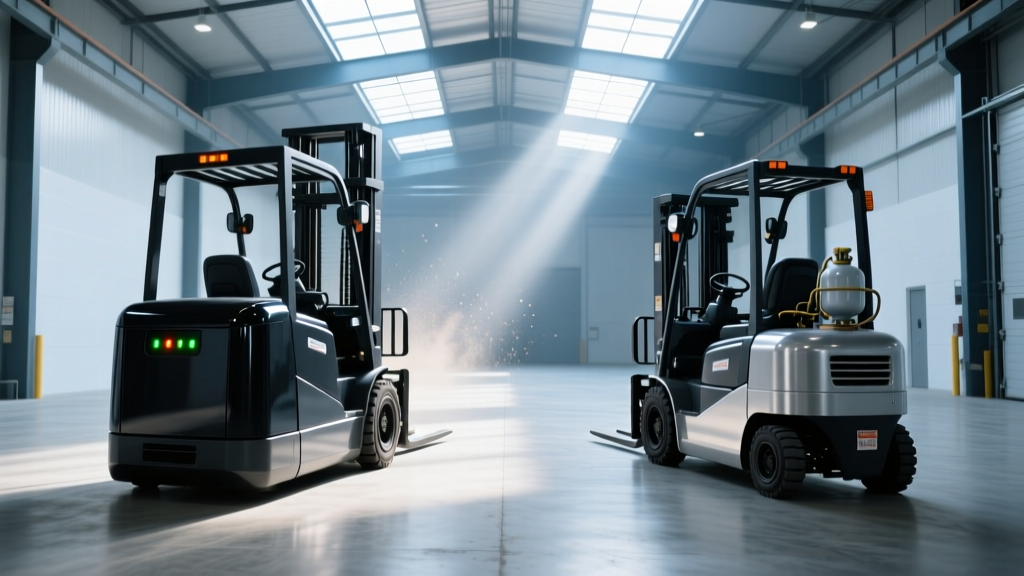
Completing a rigorous inspection before using material handling equipment is not merely an OSHA mandate; it is the primary defense against catastrophic downtime and workplace injuries. As warehouse fleets modernize in 2026, the transition from internal combustion engine (ICE) forklifts to electric alternatives has created a bifurcated training environment. Operators can no longer rely on a universal pre-shift checklist. The mechanical realities of a propane-powered Toyota 8FGU25 differ fundamentally from the electrochemical management required for a lithium-ion Crown FC 5200.
This guide provides facility managers and operators with highly specific, actionable pre-operation protocols tailored to the distinct power sources dominating the material handling sector today.
Propane (LPG) Forklifts: Combustion & Containment Checks
Despite the rapid adoption of electric fleets, propane remains the workhorse for high-throughput, multi-shift outdoor and heavy-lift applications. A 5,000-lb capacity LPG forklift generates immense thermal and mechanical stress. The pre-shift inspection must focus on fuel containment, vaporization, and emission integrity.
Critical LPG Component Inspection
- OPD Valve & Cylinder Date Code: Verify the Overfilling Prevention Device (OPD) valve is intact. Check the cylinder collar for the hydrostatic test date. In 2026, any cylinder exceeding 5 years without a requalification stamp must be immediately rejected and swapped, regardless of fuel level.
- Hose & Fitting Degradation: Inspect the primary LPG hose for micro-cracking. Run a gloved hand along the hose; if you feel cracking deeper than 1mm, or if the hose manufacturing date exceeds 5 years, tag the unit out of service. Micro-leaks in the high-pressure line (up to 200 PSI) can pool liquid propane in the chassis, creating a severe flash hazard.
- Vaporizer-Regulator Thermal Check: Start the engine and let it idle for 60 seconds. Inspect the vaporizer-regulator unit. If you observe frost buildup on the exterior casing during ambient temperatures above 40°F (4°C), the internal diaphragm is failing or the engine coolant loop feeding the vaporizer is restricted. A failing vaporizer will cause the engine to stall under heavy load.
- Carbon Monoxide (CO) Sniffer Test: For any propane forklift operating in semi-enclosed spaces, use a handheld CO meter at the exhaust tailpipe. Readings exceeding 1.5% CO at idle indicate a rich fuel mixture or failing catalytic converter, requiring immediate carburetor adjustment.
The most common cause of post-refueling propane leaks in 2026 fleet models is a degraded brass fitting O-ring. Operators must visually inspect the quick-disconnect coupling before twisting the cylinder valve open. If the O-ring is flattened or brittle, do not attempt to connect the tank.
Battery-Powered Forklifts: Thermal & Chemical Protocols
Electric material handling equipment requires a shift from mechanical inspection to electrochemical and thermal management. The checklist before using material handling equipment powered by electricity depends entirely on whether the facility utilizes traditional lead-acid or modern lithium-ion (Li-ion) architecture.
Lithium-Ion (Li-ion) Pre-Flight Protocol
Li-ion batteries, such as those integrated into the Toyota 8FBE18U series, are virtually maintenance-free regarding fluid levels, but they demand strict electronic oversight.
- BMS Error Code Verification: Turn the key to the "ON" position without engaging the drive motor. Read the Battery Management System (BMS) dashboard. Any active fault code related to cell imbalance or thermal runaway history requires immediate quarantine of the battery pack.
- Connector Thermal Scanning: Inspect the SB175 or SB350 Anderson connectors. Look for melted plastic housings or blackened copper contacts, which indicate high-resistance arcing during opportunity charging sessions.
- Coolant Loop Check (Heavy Duty): For high-capacity Li-ion packs (80V and above) used in loaded container handlers, verify the dielectric coolant reservoir level. A low coolant level will trigger a BMS power-derating event mid-shift.
Lead-Acid Pre-Flight Protocol
Facilities still running 36V or 48V flooded lead-acid batteries face rigorous chemical maintenance requirements.
- Electrolyte Level Verification: Check fluid levels only after the battery is fully charged. Checking before charging risks overflow during the gassing phase, which spills sulfuric acid onto the battery box and forklift chassis, accelerating corrosion.
- Cable Corrosion & Torque: Inspect the intercell connectors for blue/green copper sulfate buildup. This crystalline structure increases electrical resistance, reducing runtime by up to 15% and generating excess heat.
"The transition to opportunity charging with Li-ion batteries has eliminated the need for dedicated battery swap rooms, but it has shifted the pre-shift inspection focus entirely to connector integrity and BMS telemetry." — 2026 Material Handling Institute Fleet Report
2026 Operational Cost & Pre-Check Time Matrix
Understanding the time and financial implications of these pre-shift checks is vital for facility managers calculating true total cost of ownership (TCO). The data below reflects 2026 industry averages for 5,000-lb class forklifts operating on a standard 2-shift schedule.
| Metric | Propane (LPG) ICE | Lead-Acid Electric | Lithium-Ion Electric |
|---|---|---|---|
| Average Pre-Shift Check Time | 8 - 12 minutes | 12 - 15 minutes | 3 - 5 minutes |
| Energy/Fuel Cost (per 8-hr shift) | $38.00 - $45.00 | $12.00 - $16.00 | $11.00 - $14.00 |
| Critical Failure Mode Missed in Check | Vaporizer freeze / CO leak | Sulfation / Acid spill | Connector arcing / BMS fault |
| Annual Preventative Maint. Cost | $3,200 - $4,500 | $2,100 - $2,800 | $800 - $1,200 |
Facility Application Case Studies
The decision of which equipment to deploy—and consequently, which checklist to enforce—depends heavily on the operational environment.
Case 1: Cold Storage Logistics (-20°F)
In deep-freeze environments, propane equipment dominates. While Li-ion technology has advanced, extreme cold increases internal battery resistance, causing voltage sag and triggering premature BMS shutdowns. Lead-acid batteries suffer from electrolyte freezing if the state of charge drops below 70%. Therefore, the pre-shift checklist for cold storage propane forklifts must include a specific verification of synthetic low-temperature hydraulic fluids and cold-weather engine block heaters. Operators must also check that the LPG tank is stored in a heated staging area prior to shift-start to ensure adequate vaporization pressure.
Case 2: Food Grade & Pharmaceutical Manufacturing
For indoor food processing, Lithium-Ion electric forklifts are mandatory. Propane forklifts emit trace amounts of carbon monoxide and unburned hydrocarbons, which can taint sensitive products and violate FDA sanitary design guidelines. The pre-shift checklist here focuses heavily on the forklift's physical hygiene: inspecting non-marking polyurethane tires for embedded debris, verifying that the Li-ion battery casing is sealed against high-pressure washdowns (IP67 rating verification), and ensuring no lubricants are leaking from the mast chains onto the production floor.
Regulatory Compliance & Operator Training
Failing to document the specific pre-shift checks required for your fleet's power source is a direct violation of federal safety standards. Under OSHA Standard 1910.178 (Powered Industrial Trucks), employers are required to ensure that forklifts are examined at least daily before being placed in service. Crucially, OSHA mandates that the inspection must be tailored to the specific type of truck and its power source.
Furthermore, the National Institute for Occupational Safety and Health (NIOSH) emphasizes that operator training must include the specific hazard recognition associated with the fuel type. A worker trained solely on the hazards of swapping a 2,000-lb lead-acid battery is unqualified to inspect the high-pressure LPG fittings on a combustion forklift. Facility managers must maintain separate, power-source-specific digital checklists on their fleet management tablets, ensuring operators cannot bypass the unique safety gates required for their specific machine.
📋 Actionable Takeaway:Audit your current fleet management software today. If your pre-shift inspection template is a generic "check tires, check horn, check brakes" list, you are non-compliant. Update your digital checklists to include the specific OPD, vaporizer, BMS, and electrolyte protocols outlined above to protect your workforce and your bottom line in 2026.