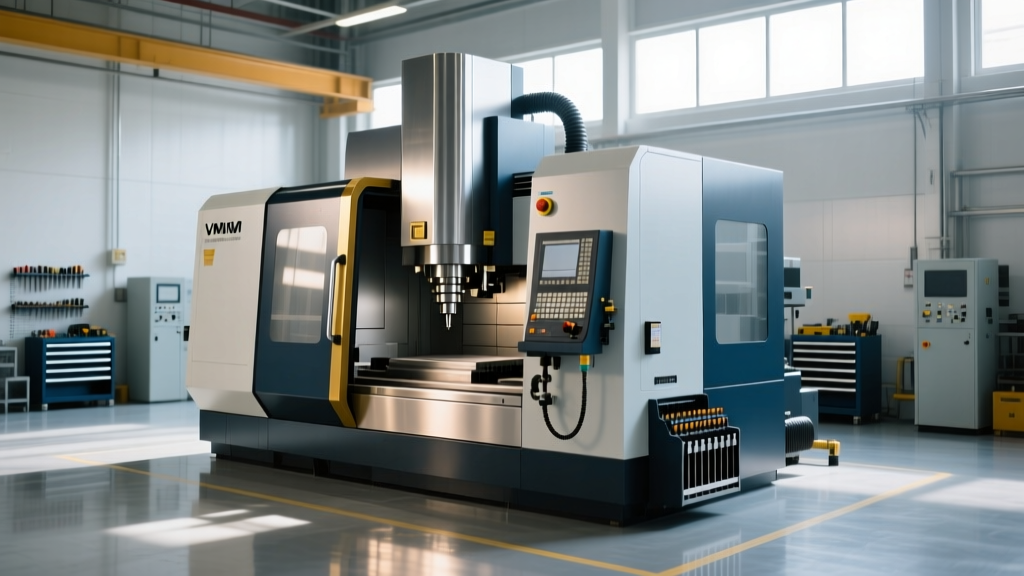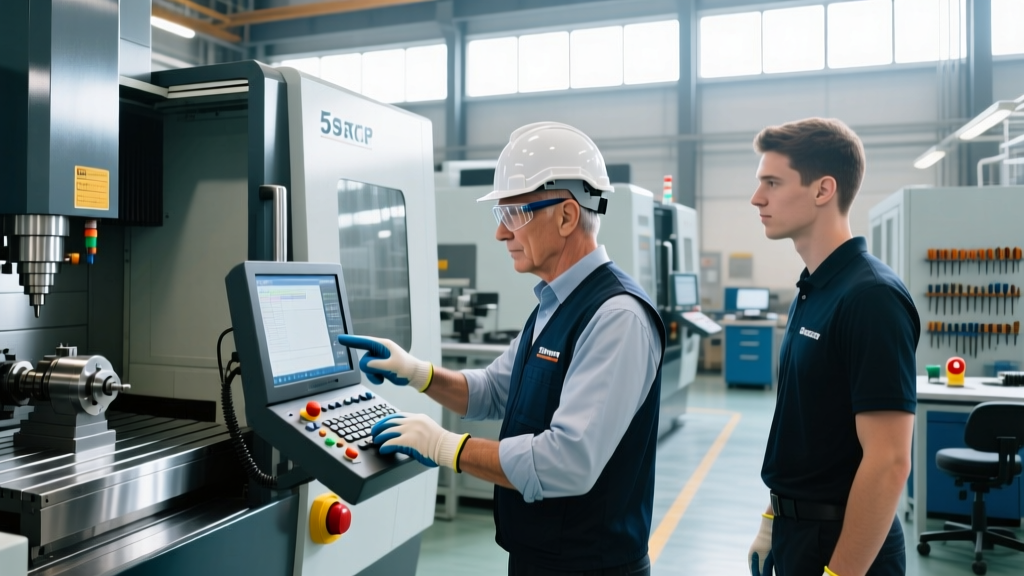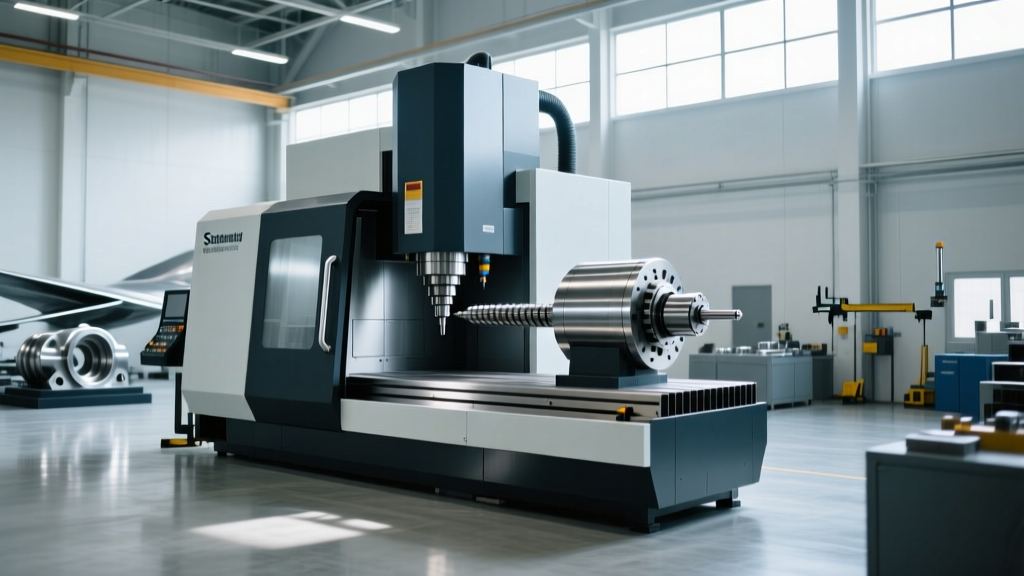
CNC Vertical Machining Center Technical Specifications in Aerospace
Discover how aligning CNC vertical machining center technical specifications with aerospace production demands optimizes cycle time and part accuracy.
The Hidden Cost of Surface-Level Machine Sourcing
When aerospace manufacturers evaluate new equipment, the initial filter is often overly simplistic. Buyers look at X-Y-Z travel envelopes, maximum spindle RPM, and base price. However, the true profitability and capability of a machine are buried in the granular details. As the 2026 aerospace supply chain demands tighter tolerances for next-generation airframes and higher throughput for legacy replacement parts, understanding the nuance of cnc vertical machining center technical specifications is no longer optional—it is a competitive necessity.
This case study examines how a Tier 2 aerospace supplier in the Pacific Northwest overhauled their wing rib production cell. By moving beyond brochure marketing and deeply analyzing machine tool metrology, thermal stability curves, and non-cutting time metrics, they reduced cycle times by 22% and completely eliminated thermal-induced scrap on critical bearing bores.
Case Study Context: Machining 7075-T6 Aluminum Wing Ribs
The supplier produces complex 7075-T6 aluminum wing ribs featuring deep, thin-walled pockets and tight-tolerance (+/- 0.0002") bearing bores. Their existing fleet of standard 40-taper VMCs (8,000 RPM spindles, 400 ipm rapids, and standard cast-iron columns) was bottlenecking the entire facility. The primary issues were excessive non-cutting time during 500+ tool changes and Z-axis thermal growth that pushed bore tolerances out of spec after four hours of continuous cutting.
To solve this, the engineering team evaluated three distinct platforms, each representing a different philosophy in VMC design. Below is a comparison of the critical cnc vertical machining center technical specifications that dictated their final cell layout.
| Specification | Haas VF-4SS | Okuma GENOS M460VE | Makino F5 |
|---|---|---|---|
| Travels (X-Y-Z) | 40" x 20" x 25" | 40.1" x 18.1" x 23.6" | 35.4" x 20" x 19.7" |
| Spindle Interface | CAT 40 | CAT 40 (Big-Plus) | HSK-A63 |
| Max Spindle Speed | 12,000 RPM | 12,000 RPM | 20,000 RPM |
| Rapid Traverse Rates | 710 ipm | 1,378 ipm | 787 ipm |
| Chip-to-Chip Time | ~2.8 seconds | ~1.5 seconds | ~2.0 seconds |
| Thermal Stability Tech | Standard Compensation | Thermo-Friendly Concept | Core-Cooled Spindle |
| Approx. 2026 Base Price | $115,000 | $165,000 | $285,000 |
Decoding the Critical Specifications
Rather than buying three identical machines, the supplier analyzed the technical specifications to assign specific machines to specific operations within the production cell. Here is how they interpreted the data.
1. Spindle Interface and Retention Force (CAT40 vs. HSK-A63)
For the roughing operations, where material removal rates (MRR) in 7075-T6 aluminum exceed 400 cubic inches per minute, tool pullout is a constant risk. According to Sandvik Coromant's aerospace milling guidelines, high radial engagement requires immense retention force. The team noted that while the Okuma and Haas utilize CAT40, the Okuma's Big-Plus dual-contact interface provides superior rigidity compared to standard V-flange tooling. However, for the finishing cell where spindle speeds reach 18,000 RPM to achieve mirror finishes on thin walls, the Makino’s HSK-A63 interface was mandatory. HSK provides simultaneous face-and-taper contact, ensuring zero Z-axis tool growth at high RPMs—a critical specification that standard CAT40 cannot match.
2. Rapid Traverse and the Math of Non-Cutting Time
Aerospace wing ribs require hundreds of localized features, meaning the machine spends a massive percentage of its cycle positioning rather than cutting. The Okuma GENOS M460VE boasts a blistering 1,378 ipm (35 m/min) rapid traverse rate and a 1.5-second chip-to-chip tool change time.
"If a part requires 300 tool changes, a 1.5-second chip-to-chip time versus a 2.8-second time saves over six minutes of pure idle time per part. Over a 5,000-part annual run, that specification alone reclaims 500 hours of spindle utilization."
— Lead Manufacturing Engineer, Tier 2 Aerospace Supplier
By placing the Okuma in the roughing and semi-finishing cell, the supplier capitalized on its linear motion capabilities to drastically reduce air-cutting time.
3. Volumetric Accuracy and Thermal Growth
Perhaps the most overlooked of all cnc vertical machining center technical specifications is thermal displacement. Standard VMCs experience Z-axis spindle growth as the bearings heat up, often shifting 50 to 100 microns during the first three hours of operation. For the final boring operations on the wing rib landing gear mounts, a 50-micron shift guarantees a scrapped $14,000 forging.
Research from NIST's Advanced Manufacturing programs highlights that machine tool thermal errors account for up to 50% of dimensional inaccuracies in precision machining. The Makino F5 solves this via a core-cooled spindle and ball screw cooling system, maintaining thermal growth to less than 10 microns regardless of ambient shop temperature or duty cycle. Furthermore, Georgia Tech Research Institute's manufacturing division emphasizes that structural loop rigidity and real-time thermal compensation algorithms are what separate prototype machines from production-grade aerospace assets. The Makino was exclusively assigned to the final finishing and boring cell to guarantee +/- 0.0002" bore tolerances.
4. Through-Spindle Coolant (TSC) Pressure
Deep cavity milling in aerospace structures requires aggressive chip evacuation to prevent recutting, which destroys tool life and ruins surface finishes. The supplier mandated a minimum of 300 PSI TSC across all new VMCs, with the Makino upgraded to 1,000 PSI. This specific technical specification allowed them to utilize specialized coolant-through carbide endmills, increasing tool life by 40% and eliminating manual cycle pauses for operator chip clearing.
The Implementation and ROI Results
By treating the production cell as an ecosystem and matching the exact technical specifications of each VMC to its designated operational role, the supplier transformed their floor space. The total capital expenditure for the three-machine cell, including high-pressure coolant chillers and automated tool presetters, was approximately $610,000.
📊 First-Year Performance Metrics
- Cycle Time Reduction: 22% faster overall part completion due to optimized rapid traverses and reduced non-cutting time.
- Scrap Rate Reduction: Dropped from 4.2% to 0.1%. The elimination of thermal Z-axis growth saved an estimated $180,000 in scrapped 7075-T6 forgings.
- Tooling Costs: Decreased by 28% due to 1,000 PSI TSC integration and HSK-A63 high-speed stability, reducing chatter-induced insert chipping.
- First-Article Approval: Reduced from 3 days to 4 hours, as the thermal stability of the finishing VMC eliminated the need for warm-up cycles and mid-run CMM re-checks.
Final Takeaways for Machine Tool Buyers
When evaluating cnc vertical machining center technical specifications, buyers must look past the marketing highlights. Peak horsepower means nothing without the torque curve to back it up. Fast rapids are useless if the tool changer is sluggish. And high RPM capabilities will ruin your parts if the spindle lacks the thermal management to stay true to center. By auditing the granular specifications—HSK retention, chip-to-chip timing, thermal displacement data, and coolant pressure—aerospace manufacturers can engineer production cells that don't just cut metal, but generate predictable, high-margin returns in a demanding 2026 market.