2026 Buyer's Guide: Selecting the Right CNC VMC Machine
Compare top CNC VMC machine models, spindle specs, and pricing. Use our technical buyer's framework to select the right vertical machining center.
The Core Procurement Challenge for Vertical Machining Centers
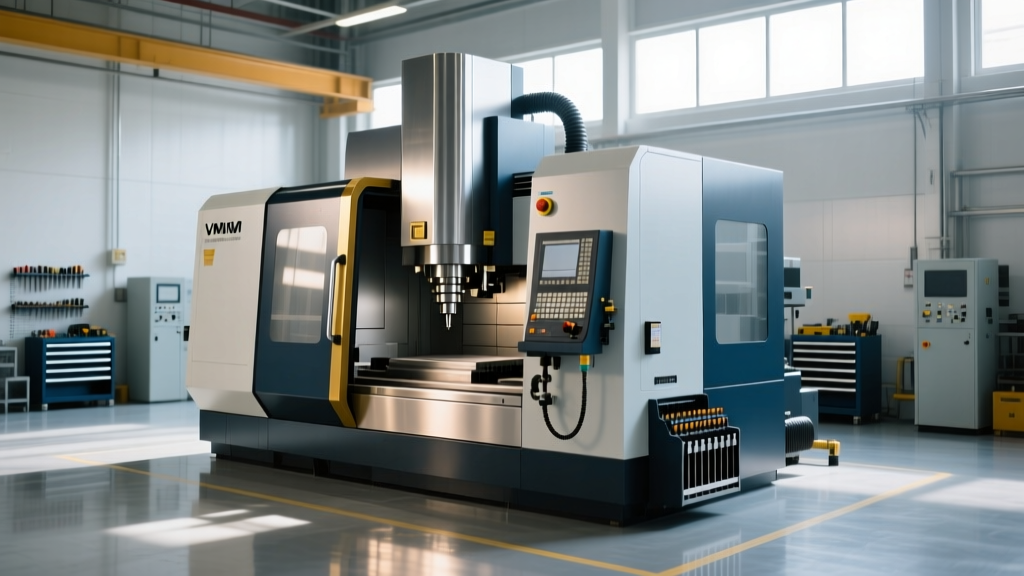
Procuring a CNC VMC machine requires balancing initial capital expenditure against long-term spindle uptime, thermal stability, and control integration. As supply chain lead times stabilize in 2026, standard vertical machining centers (VMCs) are shipping within 16 to 24 weeks, but inflation and advanced Industry 4.0 sensor packages have shifted baseline pricing. Buyers must look beyond basic XYZ travel dimensions and evaluate torque curves, rapid traverse acceleration, and coolant-through-spindle (CTS) pressures to match the machine to specific material removal rates (MRR).
Hidden Cost Alert: A base-model VMC often excludes critical production options. Budget an additional 15% to 22% over the advertised base price for essential upgrades like 1000 PSI CTS, a chip conveyor, and a 4th-axis pre-wire package. Skipping these at the time of purchase usually costs 3x more to retrofit on the shop floor.The Sizing Framework: Travel, Fixturing, and Z-Axis Clearance
Selecting the correct table size and axis travel is the first critical step. The most common error in VMC procurement is sizing the machine strictly to the part footprint, ignoring the tooling and fixturing envelope.
The 10-Inch Envelope Rule
For standard 3-axis VMCs, your maximum part dimension on any axis should not exceed the machine travel minus 10 inches. This buffer accounts for the spindle nose clearance, tool length, and the physical footprint of standard milling vises or tombstone fixtures. If you are machining a 24-inch aluminum aerospace structural component, a machine with 30 inches of X-axis travel will result in limit-switch crashes. You need a minimum of 34 to 40 inches of X-axis travel to safely accommodate the part, the vise, and the tool changer arm swing.
Z-axis clearance is equally critical. When utilizing 90-degree angle plates for multi-sided machining, the effective Z-axis travel is drastically reduced. Always calculate the distance from the spindle nose to the table, subtracting the height of your tallest fixture and the maximum tool stick-out required for deep cavity milling.
2026 VMC Market Pricing and Tier Breakdown
The market for CNC VMC machines is distinctly segmented into three tiers. Pricing below reflects fully equipped models including chip conveyors, standard tool magazines (20-30 tools), and basic probing packages.
| Tier | Representative Models | Price Range (USD) | Spindle & Rapid Specs | Ideal Application |
|---|---|---|---|---|
| Entry / Job Shop | Haas VF-2SS, Doosan DNM 4500 | $75,000 - $105,000 | 12,000 RPM / 1000 ipm | General machining, low-volume prototypes, soft materials |
| Mid-Tier / Production | Mazak VCN-530C, Brother Speedio S1000X2 | $130,000 - $185,000 | 15,000 RPM DD / 1400 ipm | High-volume aluminum cycling, tight-tolerance production runs |
| High-End / Aerospace | DMG MORI CMX 600V, Makino PS65 | $210,000 - $280,000+ | 20,000+ RPM HSK / Linear Motors | Hard metals (Titanium, Inconel), complex 3D contouring, mold & die |
Spindle Architecture: Matching Torque Curves to Materials
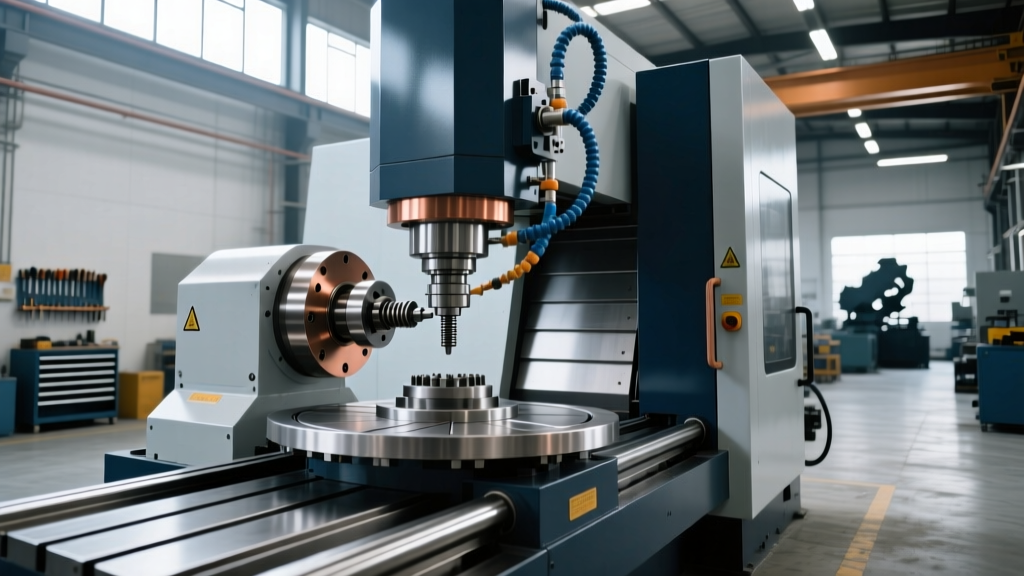
The spindle is the heart of any CNC VMC machine. According to Sandvik Coromant machining fundamentals, selecting the correct tooling interface and spindle bearing configuration dictates your achievable surface finish and tool life.
CAT40 vs. BT40 vs. HSK-A63
- CAT40 (V-Flange): The North American standard. Excellent for heavy roughing in steel due to its robust pull-stud retention and thick flange. However, at RPMs exceeding 12,000, the taper can expand slightly, causing micro-vibrations.
- BT40: The metric equivalent common in Asian and European markets. It offers slightly better balance at high speeds than CAT40 due to its symmetrical flange design, but lacks the drive dogs of CAT, relying entirely on friction for torque transmission.
- HSK-A63: A dual-contact interface (face and taper). As the spindle reaches high RPMs, the centrifugal force expands the spindle nose, pulling the HSK shank tighter into the taper. This provides superior rigidity for high-speed finishing and is mandatory for 5-axis simultaneous machining or RPMs above 15,000.
Belt-Driven vs. Direct-Drive (DD)
For shops primarily machining P20 tool steel or 4140 alloy, a belt-driven 10,000 RPM spindle provides massive low-end torque (often 150+ ft-lbs) necessary for large-diameter face milling. Conversely, if your primary material is 6061-T6 or 7075 aluminum, a 15,000 RPM direct-drive spindle is mandatory. Direct-drive eliminates belt slip and harmonic vibration, allowing small-diameter end mills to run at their required surface speeds (SFM) without burning up the cutting edges.
Coolant Pressure and Chip Evacuation Strategies
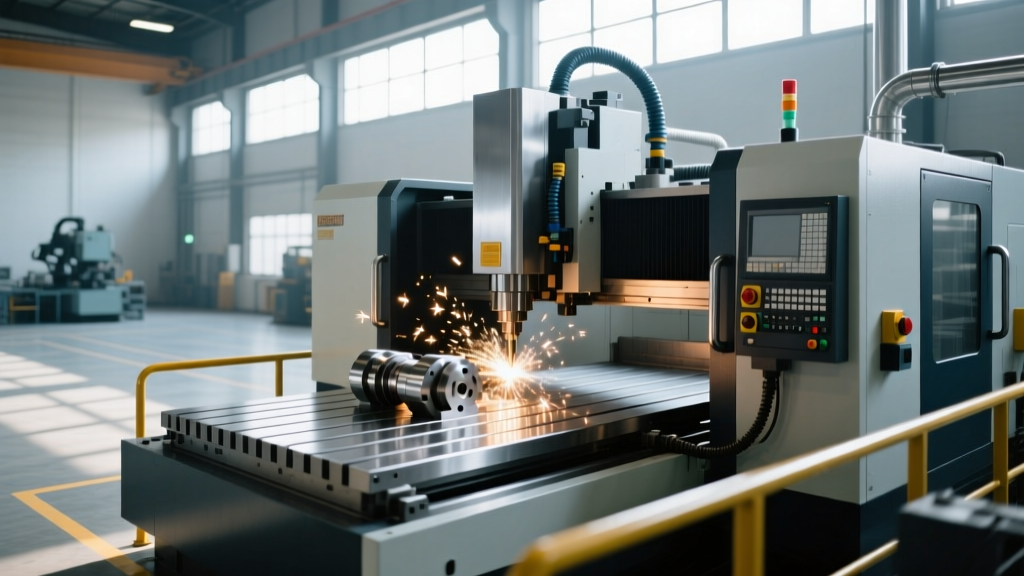
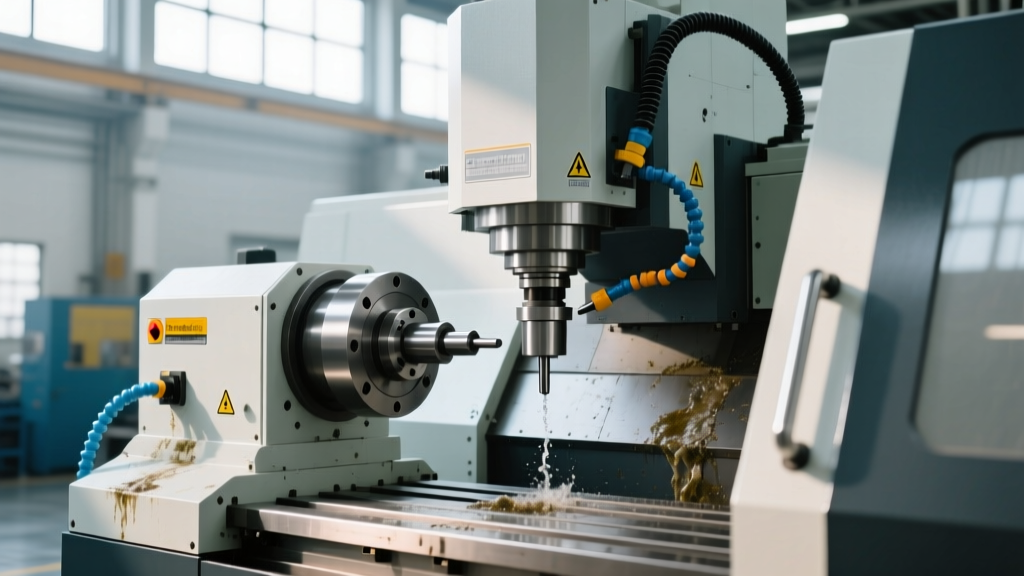
In 2026, standard flood coolant is insufficient for deep-cavity milling or drilling deep holes in stringy materials. High-pressure Coolant-Through-Spindle (CTS) is a critical option.
Expert Specification: Specify a minimum of 1000 PSI (69 bar) CTS when machining titanium or stainless steel. This pressure is required to break the chip at the cutting zone and prevent work-hardening. For standard aluminum and mild steel, 300 PSI is generally adequate.Chip evacuation must also be matched to the material. If you are machining cast iron or producing brittle, fragmented chips, a scraper or auger-type conveyor is required to prevent fine swarf from jamming a hinge-belt system. If you are running high-volume aluminum or stringy stainless steel, a heavy-duty hinge-belt conveyor with a cleated surface is necessary to carry the tangled bird-nests out of the enclosure.
Control Systems and MTConnect Integration
The control panel dictates operator efficiency and shop-floor data visibility. The Haas Next Generation Control (NGC) remains dominant in North American job shops due to its conversational programming and low learning curve, making it ideal for high-mix, low-volume environments where operators frequently switch between manual code edits and CAM-generated programs.
For high-volume production cells and automated pallet systems, the Fanuc 0i-F Plus or Siemens Sinumerik 840D sl are the industry standards. These controls offer advanced look-ahead processing (reading hundreds of blocks ahead to smooth out acceleration/deceleration in complex 3D contours), which is vital for mold and die machining.
Furthermore, any new CNC VMC machine purchased today should be MTConnect compliant out of the box. MTConnect is an open-source, royalty-free standard that allows the machine control to broadcast real-time data (spindle load, cycle time, alarm states) to shop floor ERP and monitoring software. Retrofitting MTConnect adapters to older machines costs upwards of $3,500 per node; ensuring native compatibility during procurement is a non-negotiable step for modern digital manufacturing.
Final Procurement Checklist
- Verify Z-Axis Clearance: Calculate spindle-nose-to-table distance minus your tallest vise and longest tool.
- Audit Rapid Traverse Rates: Ensure X/Y/Z rapids exceed 1000 ipm if cycle time reduction in aluminum is a priority.
- Confirm CTS Pressure: Match 300 PSI for standard work, 1000 PSI for aerospace alloys and deep-hole drilling.
- Specify Chip Conveyor Type: Auger for cast iron/brittle chips; hinge-belt for stringy aluminum/steel.
- Demand MTConnect Native Support: Require the OEM to provide the MTConnect adapter software pre-installed.
- Evaluate Tool Magazine Capacity: Upgrade to a 30+ tool side-mount magazine if running multi-operation family fixtures to avoid tool-change bottlenecks.
For a comprehensive look at mid-tier production options, reviewing the Mazak vertical machining center lineup provides excellent benchmarks for direct-drive spindle performance and ergonomic enclosure designs that minimize operator fatigue during long production shifts.