5 Axis CNC Machine Selection: 2026 Buyer's Guide & Cost Analysis
Navigate 2026 5 axis CNC machine investments with our buyer's guide. Compare trunnion vs. swivel heads, analyze ROI, and evaluate top-tier pricing.
The Capital Reality of 5-Axis Machining
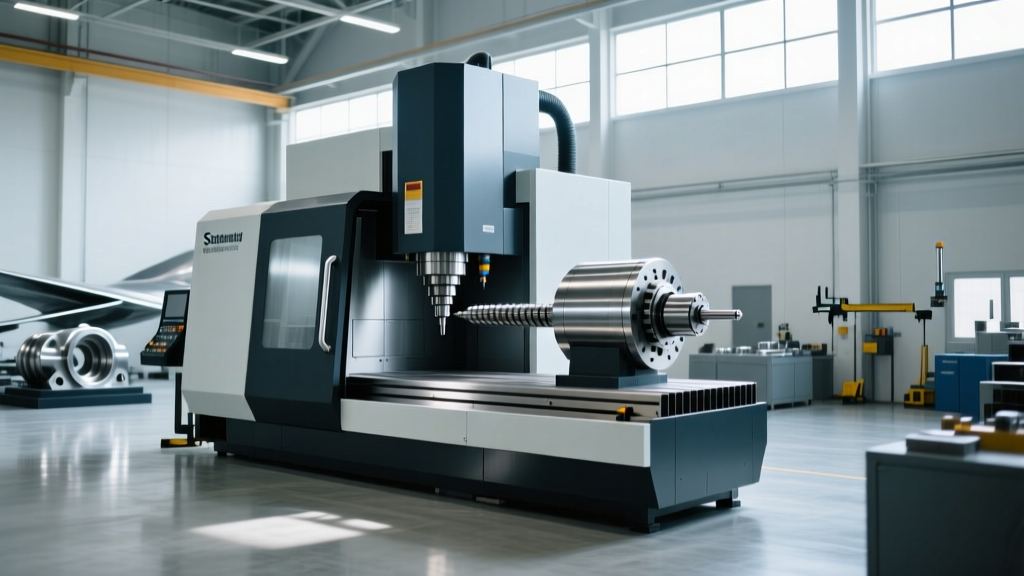
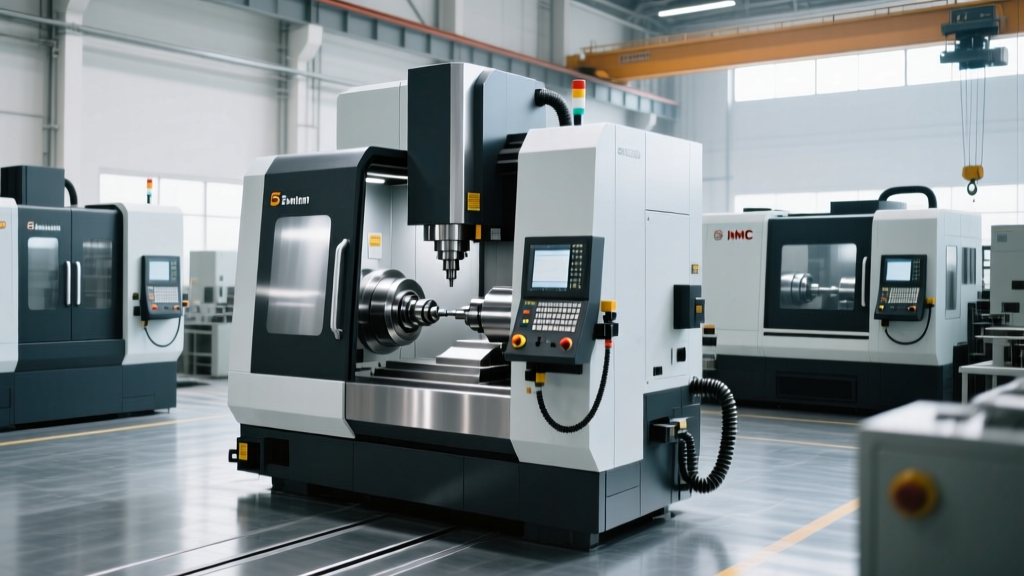
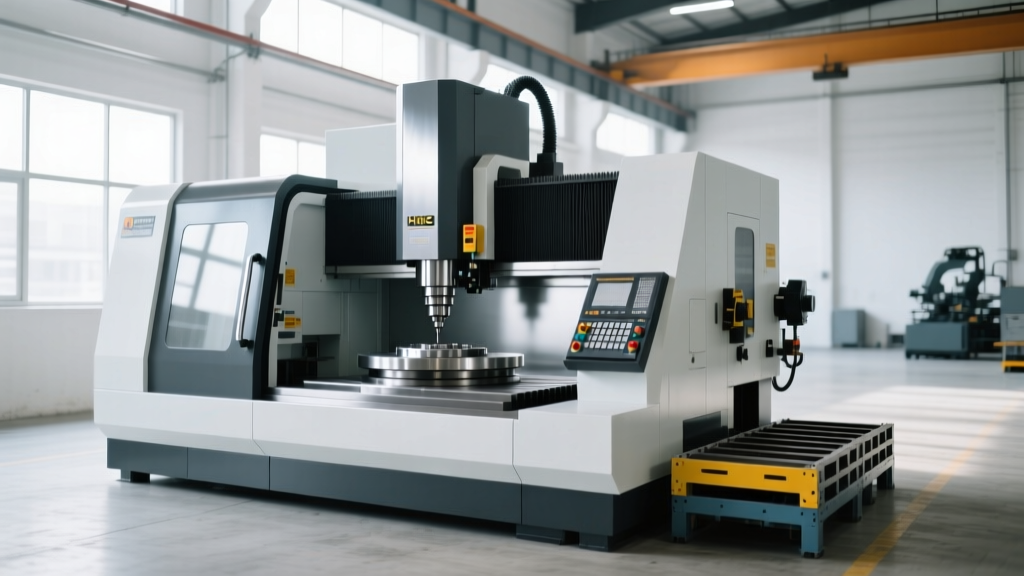
Procuring a 5 axis CNC machine in 2026 requires moving beyond basic XYZ travel specifications. The premium for full 5-axis simultaneous interpolation—typically 40% to 60% higher than a comparable 3-axis vertical machining center (VMC)—must be justified by reduced setup times, improved tool life via tilted cutting vectors, and single-clamping accuracy. For job shops and aerospace tier-suppliers, the decision is no longer about whether 5-axis technology is necessary, but rather which kinematic configuration, spindle interface, and control ecosystem will yield the fastest return on investment for specific part geometries.
Kinematics Decision Matrix: Trunnion vs. Swivel Head
The fundamental architectural split in 5-axis machining centers lies in how the rotary axes are distributed. Selecting the wrong kinematic layout for your part envelope will result in severe Z-axis clearance issues, compromised rigidity, or payload failures.
| Feature | Trunnion Table (A/C Axis) | Swivel Head (B/C Axis) |
|---|---|---|
| Axis Distribution | Both rotary axes on the table | Both rotary axes on the spindle head |
| Undercutting Capability | Excellent (full 360° rotation on A-axis) | Limited (typically ±110° B-axis tilt) |
| Payload Capacity | Decreases significantly at 90° tilt | Consistent (table remains horizontal) |
| Chip Evacuation | Poor (chips fall onto table/bearings) | Excellent (chips fall straight down) |
| Industry Benchmark | Haas UMC-750, Makino D500 | DMG MORI DMU 50 3rd Gen, Hermle C250 |
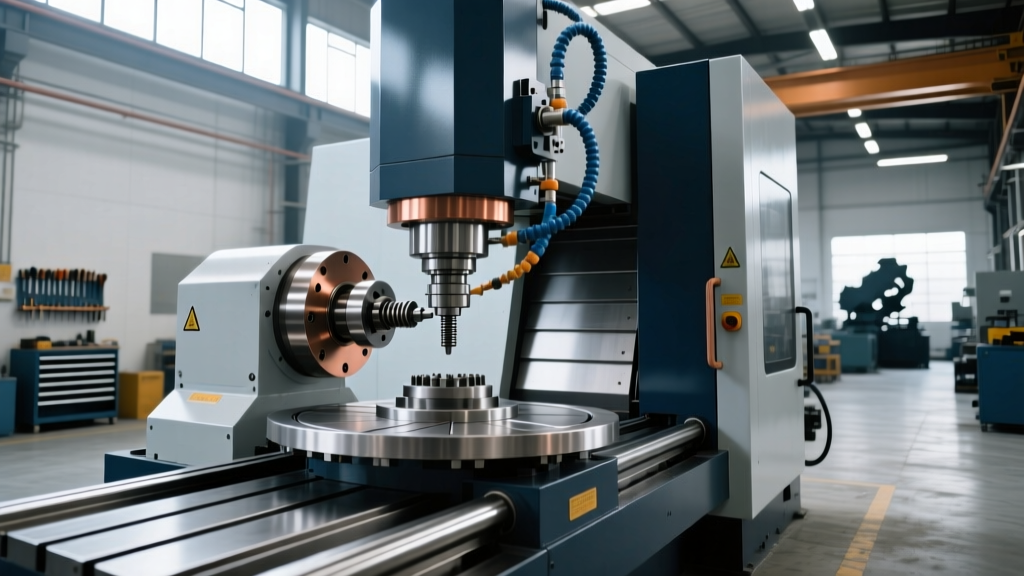
Trunnion-style machines excel in medical and aerospace applications requiring deep undercuts, such as impellers and blisks. However, shop managers must calculate the effective payload at a 90-degree tilt. A table rated for 1,300 lbs horizontally may only support 400 lbs when vertical due to the gravity vector shifting entirely onto the A-axis trunnion bearings. Conversely, swivel-head configurations are mandatory for heavy, bulky parts like titanium structural airframe components, where the horizontal pallet must bear the full weight without tilting.
Facility and Infrastructure Prerequisites
Before finalizing a purchase order, verify your facility's infrastructure. Modern 5-axis centers demand robust utilities to maintain thermal stability and precision.
Critical Facility Upgrades for 2026 Installations
- Electrical Service: Minimum 460V, 3-phase, 60-100 amp dedicated drop. Voltage fluctuations exceeding ±5% will trigger spindle drive faults and ruin surface finishes.
- High-Pressure Coolant (HPC): 1,000 PSI (70 bar) through-spindle coolant is non-negotiable for machining Ti-6Al-4V or Inconel 718 to prevent built-up edge (BUE) and evacuate deep-cavity chips.
- Thermal Management: Ambient shop temperature must be controlled to 68°F ± 2°F (20°C ± 1°C). Machines equipped with chilled ball screw cores and spindle jackets require external glycol chiller units.
- Floor Foundation: A 6-inch reinforced concrete pad, isolated from forklift traffic, is required to maintain volumetric accuracy within 0.0005 inches over 40 inches of travel.
True Cost of Ownership: Beyond the Base Price
A common procurement error is budgeting solely for the machine base price. The operational reality of a 5 axis CNC machine involves substantial peripheral investments that frequently add 25% to 35% to the initial capital expenditure.
Tooling and Workholding Premiums
Standard CAT40 or BT40 taper toolholders are inadequate for 5-axis simultaneous machining due to radial runout and imbalance at high RPMs. You must transition to HSK-A63 interfaces, which provide dual-contact (face and taper) clamping for superior rigidity. Expect to pay $350 to $850 per HSK shrink-fit or hydraulic holder. Furthermore, 5-axis workholding requires low-profile, dovetail-style vises (such as the Kurt DX6 or Schunk Tandem clamps) to prevent spindle head collisions during extreme B/C-axis articulations.
Metrology and Probing
Single-setup machining is impossible without in-machine part verification. A high-accuracy optical or touch probe system, such as the Renishaw OMP600 or Blum MicroSpeed, is mandatory. These systems cost between $12,000 and $18,000 but eliminate the need to move the part to a CMM (Coordinate Measuring Machine) mid-operation, preserving the critical work coordinate system (WCS).
Spindle Torque and RPM: Matching the Material
Selecting the correct spindle requires analyzing your primary material mix. According to Sandvik Coromant's metal cutting knowledge base, cutting speed and torque requirements vary drastically between aerospace superalloys and non-ferrous metals.
- Aluminum 7075-T6 & Composites: Require high-speed spindles (15,000 to 24,000 RPM) with lower torque (40-60 Nm). Direct-drive spindles are preferred here for rapid acceleration and deceleration, minimizing cycle times.
- Titanium & Inconel: Require high-torque, gear-driven or heavy-duty direct-drive spindles. You need a minimum of 120 Nm to 300 Nm of torque at low RPMs (1,500 to 3,000 RPM) to maintain chip load and prevent spindle stalling during heavy roughing passes.
If your shop runs a high-mix environment, consider a two-speed gearbox spindle that provides high torque for roughing titanium and high RPM for finishing aluminum, though this adds approximately $25,000 to the machine cost.
Control System Ecosystem: The Brain of the Operation
The CNC control dictates the machine's ability to execute complex 5-axis toolpaths smoothly. In 2026, three primary ecosystems dominate the high-end machining center market:
- Heidenhain TNC 7: The undisputed leader in 5-axis aerospace and mold-making. Features like Dynamic Precision (kinematic compensation) and collision monitoring via the digital twin environment make it ideal for shops running complex, simultaneous contours. It excels in handling massive NC programs directly from CAM without data starvation.
- Siemens Sinumerik ONE: Built around a native digital twin architecture. This control is highly favored in automated, lights-out manufacturing cells due to its seamless integration with PLC systems and advanced safety integrated functions. Its 5-axis transformation cycles (TRAORI) are exceptionally robust.
- FANUC 31i-B5: The workhorse of high-volume production. While historically considered less intuitive for 5-axis programming than Heidenhain, recent updates to Tool Center Point Control (TCPC) and AI-based thermal displacement compensation make it a highly reliable, cost-effective choice for dedicated production lines.
ROI Framework: Justifying the 5-Axis Premium
To justify the investment to stakeholders, shops must calculate ROI based on setup reduction and scrap mitigation, not just spindle-on time. The NIST Manufacturing Extension Partnership frequently highlights that advanced manufacturing adoption yields the highest returns through workflow consolidation rather than raw cutting speed.
The Setup Reduction Multiplier: Machining a complex aerospace valve housing on a 3-axis VMC requires five separate setups. At 45 minutes per setup (including indicating, clamping, and touching off), total non-cut time is 225 minutes. A 5-axis machine completes the part in a single setup (45 minutes). You save 3 hours of labor per part. At a fully burdened shop rate of $150/hour, that is $450 saved per part. Running a batch of 500 parts yields $225,000 in recovered margin—effectively paying off the 5-axis machine premium in a single production run.
Additionally, 5-axis machining allows the use of shorter, more rigid cutting tools by tilting the spindle head away from the part geometry. This reduces tool deflection, extends carbide end mill life by up to 30%, and significantly lowers the scrap rate associated out-of-tolerance surface finishes. When evaluating quotes from OEMs, demand a comprehensive turnkey package that includes the machine, HSK tooling package, high-pressure coolant unit, and on-site 5-axis CAM post-processor verification to ensure immediate profitability upon installation.