Troubleshooting 5 Axis Stone CNC Machine Spindle and Axis Drift
Diagnose and fix spindle runout, A/C axis drift, and coolant blockages on your 5 axis stone CNC machine with this expert repair guide.
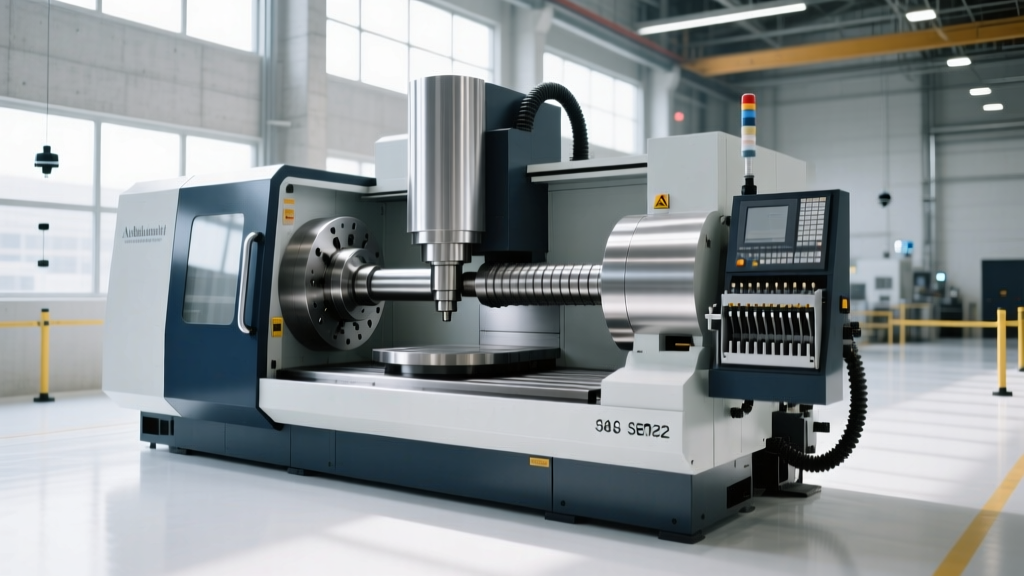
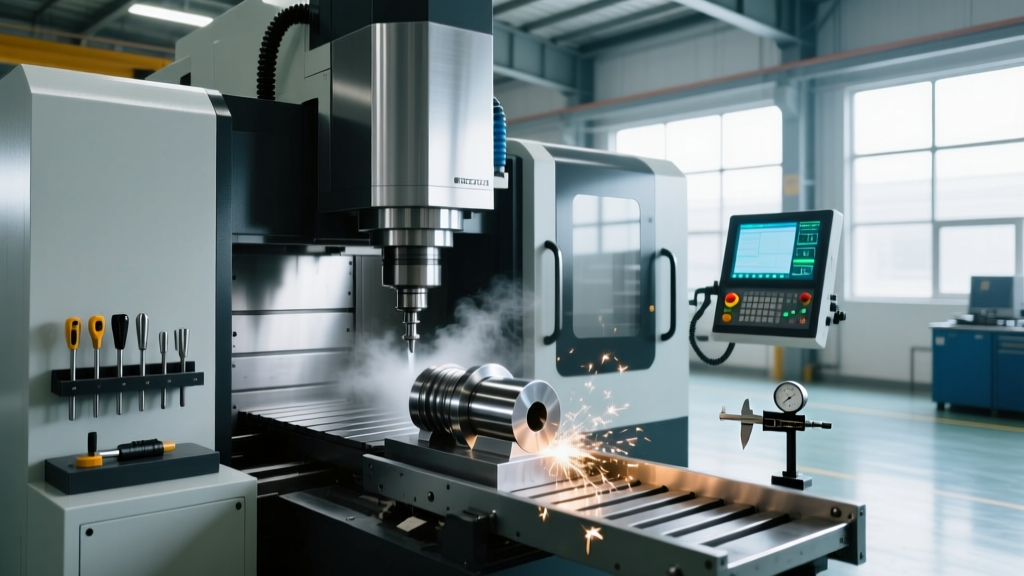
Operating a 5 axis stone cnc machine in a modern fabrication shop presents unique mechanical challenges. Unlike metal cutting environments where chips are relatively dry, stone machining submerges the gantry, rotary axes, and spindle in a continuous deluge of abrasive silica slurry. When profiling hard materials like quartzite, granite, or sintered ceramics (e.g., Dekton or Neolith), the combination of high-pressure coolant and microscopic abrasive dust rapidly degrades seals, bearings, and rotary drives. Tolerances that hold at 0.02mm during commissioning can drift to 0.5mm within months if slurry ingress and kinematic shifts are not aggressively managed.
Silica Hazard Warning: Before opening any way-cover or spindle housing, ensure the machine is fully washed down and dried. Disturbing dried silica slurry without proper PPE and localized exhaust ventilation violates OSHA's Respirable Crystalline Silica standard and poses severe health risks. Always use wet-method cleanup or HEPA-filtered vacuums.Symptom-to-Cause Diagnostic Matrix
Before tearing down components, use this matrix to isolate the root cause of poor edge quality, miter gaps, or thermal faults.
| Symptom | Probable Root Cause | Diagnostic Test |
|---|---|---|
| Chatter marks on mitered edges; premature diamond tool wear. | Spindle bearing wear, tool holder runout, or purge air failure. | Mount dial indicator on HSK taper; check purge air pressure at the spindle union. |
| Miter joints failing to close (gaps > 1mm on 45-degree cuts). | A/C axis kinematic drift or harmonic drive backlash. | Execute 5-axis kinematic probing cycle (e.g., Heidenhain Cycle 451). |
| Spindle overheating (>70°C) or VFD tripping during heavy cuts. | Slurry ingress in cooling jacket, chiller failure, or clogged rotary union. | Measure chiller flow rate and delta-T; inspect coolant return lines for blockages. |
| Loss of surface finish quality on 3D relief carvings. | Way-wiper degradation leading to linear guide binding. | Check servo motor load percentages during rapid traverses on X/Y axes. |
Spindle Runout and Labyrinth Seal Failure
The spindle is the most expensive component on a 5 axis stone cnc machine, with heavy-duty HSK-B80 or ISO50 replacements costing between $14,000 and $22,000. Stone routing requires high torque at lower RPMs (typically 3,000 to 10,000 RPM) compared to metal machining, placing immense radial loads on the ceramic bearings.
Testing Purge Air Pressure
To prevent slurry from entering the spindle nose, manufacturers use a labyrinth seal pressurized by shop air. This is not an optional accessory; it is a critical sealing mechanism. The air pressure at the spindle union must maintain a constant 6.5 to 8 bar (95 to 116 PSI) while the spindle is rotating. If your shop's central compressor dips to 5 bar during simultaneous multi-machine cycles, the seal collapses, and silica-laden water breaches the bearing housing.
- The Fix: Install a dedicated, localized air receiver tank (minimum 50 liters) with a precision regulator and a low-pressure alarm switch wired directly to the CNC's PLC. If pressure drops below 6 bar, the machine must execute an immediate feed-hold and spindle stop.
- Verification: Disconnect the air line at the spindle union and measure with a calibrated gauge. Do not rely on the compressor's main panel gauge, as pressure drop across 50 feet of hose can exceed 1.5 bar.
Measuring HSK-B80 Runout
Mount a high-precision dial indicator (0.001mm resolution) to the machine table. Insert a certified test mandrel into the HSK-B80 tool holder. Measure the runout at the tool nose. Acceptable runout for stone profiling is < 0.015mm. If runout exceeds 0.03mm, the tool holder taper is likely scored by grit, or the spindle drawbar Belleville washers have fatigued, reducing clamping force below the required 18 kN.
A and C Axis Kinematic Drift
Five-axis stone machines utilize either harmonic strain wave drives or heavy-duty worm gears for the A (tilt) and C (rotate) axes. While worm gears are robust against the shock loads of diamond-wheel profiling, harmonic drives offer zero-backlash precision that is essential for seamless 3D contouring and tight miter joints.
Probing Cycle Best Practice: Relying on manual calibration is obsolete. Use a machine-mounted touch probe (such as a Renishaw OMP60 or Heidenhain TS 460) to run automated kinematic cycles. According to guidelines supported by the Society of Manufacturing Engineers, automated probing eliminates operator error and maps the exact center of rotation for the rotary table or spindle head.Recalibrating the Kinematic Center
Over time, the physical center of rotation shifts due to thermal expansion, minor crashes, or gear wear. If the A/C axis spatial error exceeds 0.05mm, your 45-degree miter cuts will result in a 91-degree or 89-degree joint, leaving visible seams on high-end countertops.
- Clean the calibration sphere and the probe stylus with isopropyl alcohol.
- Execute the machine's native kinematic cycle (e.g., Cycle 451 on Heidenhain TNC 640 or G-code macro G68.2 on Fanuc/Siemens controllers).
- Review the generated diagnostic log. If the spatial deviation vector is > 0.1mm, the harmonic drive's flexspline may be deformed, requiring a $4,500 to $7,000 drive replacement.
- If the deviation is within 0.02mm to 0.05mm, accept the new kinematic parameters to update the controller's compensation table.
Coolant Delivery and Thermal Shock
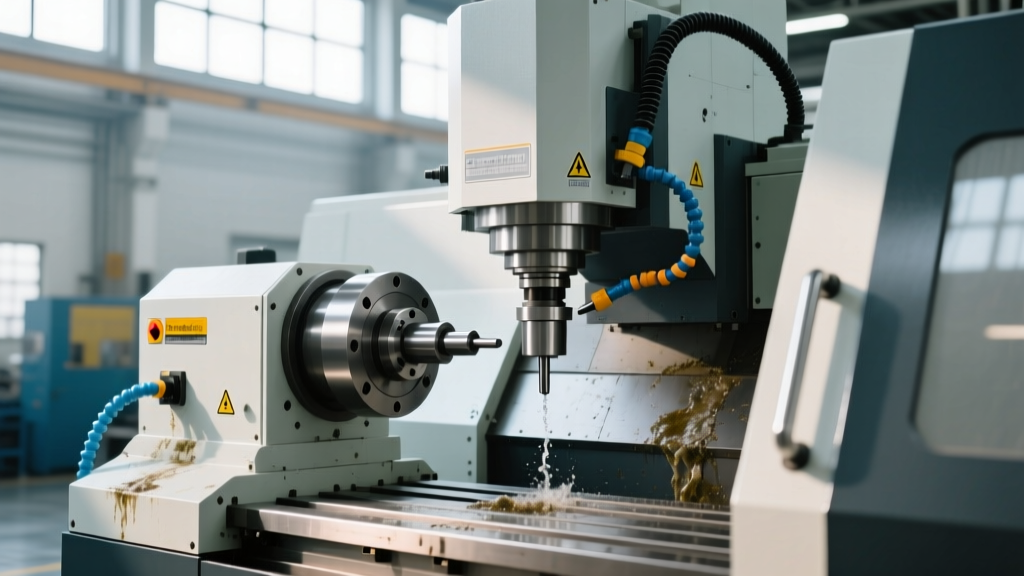
Effective slurry evacuation is paramount. As noted in the NIOSH Hazard Alert on silica exposure, proper water suppression not only protects worker health but is mechanically vital for tool life and spindle integrity. In 5-axis undercutting, standard flood coolant often misses the cutting zone due to the tilted spindle head.
Articulated Nozzle Alignment
If the coolant stream fails to hit the diamond segment exactly at the point of contact, the tool matrix overheats and glazes. This causes the spindle to stall or trip the VFD. Furthermore, if the coolant flow is interrupted while the spindle runs at high RPM, the sudden temperature spike causes thermal shock to the spindle nose, warping the HSK taper interface.
- Solution: Retrofit programmable, servo-driven coolant nozzles that track the A-axis tilt angle. Ensure the chiller maintains a strict 20°C (±1°C) fluid temperature to prevent thermal growth in the spindle housing.
- Slurry Management: Inspect the machine's internal coolant channels monthly. Quartzite dust combines with water to form a cement-like sludge that blocks rotary union passages. Flush the system with a mild acidic descaler every 500 operating hours.
Preventative Maintenance Intervals
Adhering to a rigid maintenance schedule prevents catastrophic failures. Use the following intervals as a baseline for heavy-use fabrication shops operating 10+ hours daily.
| Interval | Component | Action Required |
|---|---|---|
| Daily | Spindle Purge Air | Verify pressure at union is > 6.5 bar before spindle start. |
| Daily | Tool Magazine | Wipe down HSK tool holders and magazine pockets to prevent grit transfer. |
| Weekly | Kinematics | Run automated 5-axis probing cycle and log spatial deviation data. |
| Weekly | Way Wipers | Inspect linear guide wipers for tears; replace if silica grit is visible on rails. |
| Monthly | Rotary Drives | Grease A/C axis harmonic drives with NLGI 2 lithium complex (do not over-grease). |
| Quarterly | Chiller System | Check glycol concentration, clean condenser fins, and verify flow rate. |
When to Call the OEM
While shop technicians can handle way-wiper replacements, purge-air plumbing, and kinematic probing, certain faults require OEM intervention. If the spindle runout exceeds 0.05mm despite using certified tool holders, the internal ceramic bearings are scored and require a clean-room rebuild. Similarly, if the A-axis exhibits positional hunting (oscillating around the target angle) during rapid tilts, the servo drive parameters or the harmonic drive's internal wave generator must be diagnosed with the manufacturer's proprietary software. Attempting to disassemble a pre-loaded harmonic drive without specialized tensioning fixtures will permanently destroy the flexspline, turning a repairable fault into a total replacement scenario.