Safety Compliance Standards for Multi-Axis CNC Machining Centers
Master safety compliance for multi-axis CNC machining. Explore ISO 16090, ANSI B11 guarding standards, interlock requirements, and CE marking protocols.
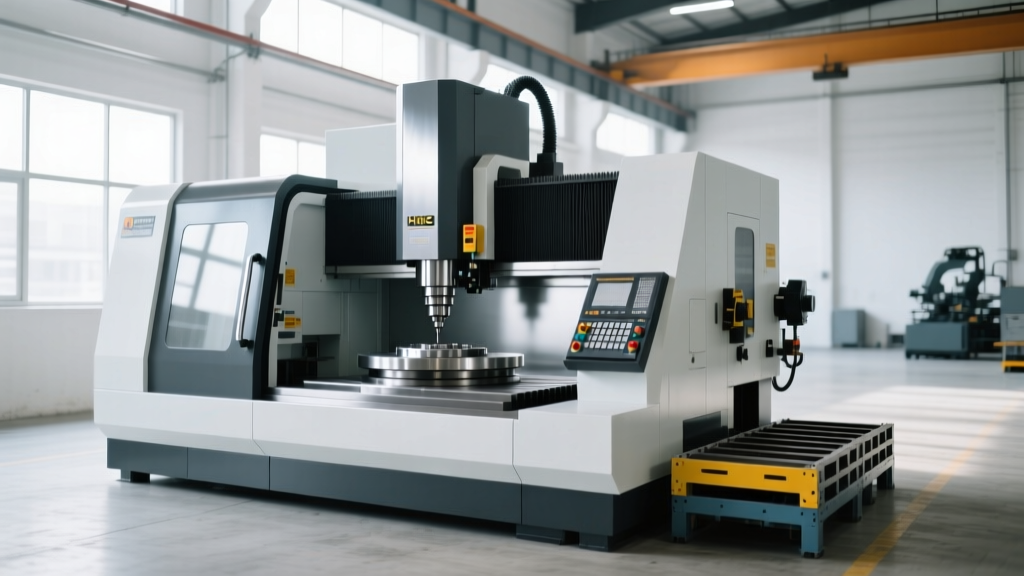
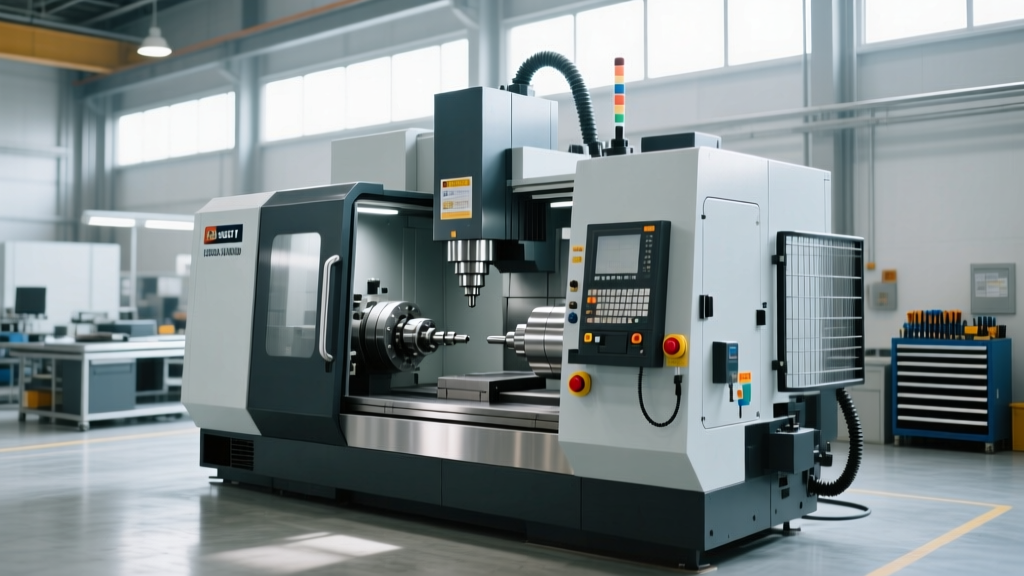
The physics of 5-axis and multi-axis CNC machining introduce unique kinetic hazards that standard 3-axis vertical machining centers (VMCs) do not present. When a trunnion table tilts a 500 kg aerospace structural component at 45 degrees while a 15,000 RPM HSK-A63 spindle engages the cut, chip ejection vectors become unpredictable, and pinch points multiply exponentially. Ensuring operator safety and regulatory compliance in these environments requires moving beyond basic OSHA general machine guarding into the highly specific requirements of ISO 16090 and ANSI B11.8.
Global Compliance Frameworks: ISO vs. ANSI vs. CE
Facility managers operating multi-axis CNC machining centers must navigate a matrix of regional and international standards. While local occupational health and safety administrations enforce baseline rules, machine builders and end-users rely on specific technical standards to design and validate safety circuits.
| Standard / Directive | Scope & Application | Key Multi-Axis Requirement | Primary Market |
|---|---|---|---|
| ISO 16090-1:2017 | Machining centres (Design & Construction) | Mandates specific guarding for simultaneous multi-axis movement and automated pallet changers (APCs). | Global / International |
| ANSI B11.8 | Milling, Boring, and Drilling Machines | Focuses on hazard control for manual loading/unloading near rotary tables and tilt mechanisms. | North America |
| EU Machinery Directive 2006/42/EC | Essential Health and Safety Requirements (EHSR) | Requires CE marking, comprehensive risk assessment, and Performance Level (PL) validated safety PLCs. | European Union |
For shops in North America, OSHA 1910.212 provides the legal baseline for general machine guarding, but it lacks the technical granularity for 5-axis kinematics. Therefore, compliance officers must reference ISO 16090-1 for modern machining center safety architecture, or the EU Machinery Directive if the facility imports European-built equipment like Hermle or GROB 5-axis systems.
Kinematic Guarding: Polycarbonate Specs and Coolant Degradation
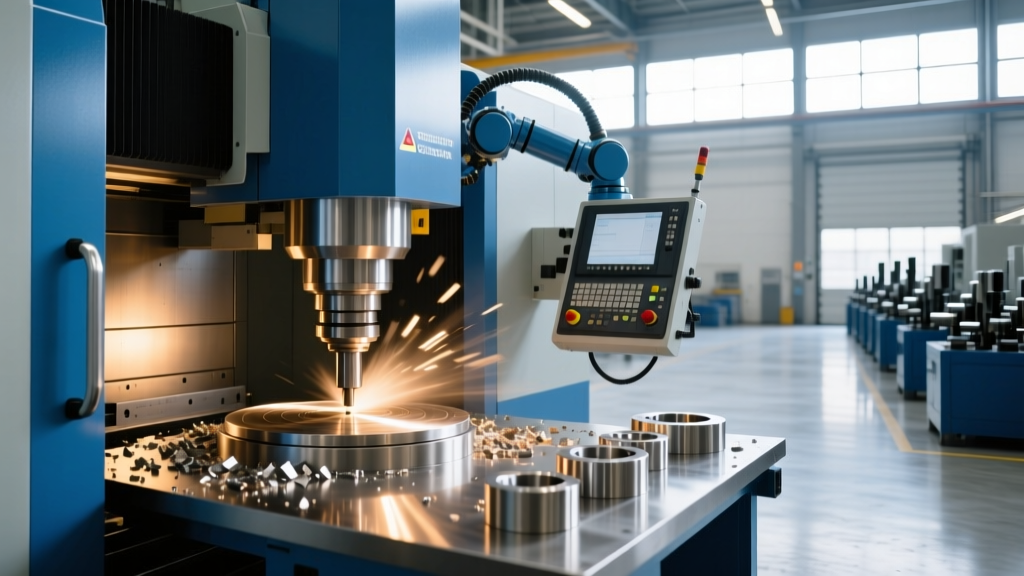
The most frequent point of catastrophic safety failure in multi-axis CNC machining is the degradation of viewing windows. Standard 3-axis VMCs often use 6mm to 8mm acrylic or standard polycarbonate. In a 5-axis environment, this is a critical liability.
⚠️ CRITICAL WARNING: Coolant-Induced Micro-CrazingStandard polycarbonate degrades rapidly when exposed to synthetic or semi-synthetic water-soluble coolants. Over 18 to 24 months, the chemical interaction causes micro-crazing (internal fracturing). A window that appears intact can shatter into shrapnel if struck by a broken carbide end mill ejected at 12,000 RPM. Always specify coolant-resistant coated polycarbonate (e.g., Makrofol® or Makrolon® AR) and enforce a strict 3-year replacement cycle regardless of visual condition.
For heavy-duty 5-axis horizontal machining centers (HMCs) machining titanium or Inconel, specify 12mm to 15mm thick Makrolon® AR (abrasion-resistant) polycarbonate for the primary operator doors. The inner splash guards, which take the direct brunt of chip impact, should be constructed from 3mm to 5mm stainless steel or specialized UHMW polyethylene to absorb kinetic energy before it reaches the transparent viewing areas.
Safety PLCs and PROFIsafe Integration in 5-Axis Controllers
Multi-axis CNC machining requires Safety Integrity Level (SIL) 2 or 3, and Performance Level (PL) d or e, Category 3 or 4 safety circuits. Hardwiring safety limits for five simultaneous axes, two rotary tables, and an automatic tool changer (ATC) using traditional safety relays creates a maintenance nightmare and increases the risk of wiring faults.
Modern Safety Controller Architectures
- Siemens SINUMERIK ONE with Safety Integrated: Utilizes PROFIsafe over PROFINET to transmit safety data between the CNC controller and the SIMATIC S7-1500F safety PLC. This allows for 'Safe Cam' and 'Safe Operating Area' functions, where the machine dynamically limits axis travel based on the door interlock state without needing physical limit switches on every axis.
- Heidenhain TNC7: Features integrated safety functions that monitor the speed and position of the rotary axes (B and C). If the trunnion table exceeds a predefined safe velocity during manual jogging (a common cause of operator crush injuries), the drive safely torques off (STO - Safe Torque Off) in under 50 milliseconds.
- Fanuc 31i-B5 with Dual Check Safety: Employs a redundant CPU architecture specifically for 5-axis machines, continuously cross-checking the absolute position of the rotary axes against the safety zone parameters defined in the ladder logic.
When retrofitting older multi-axis machines, upgrading to a localized safety PLC like the Allen-Bradley GuardLogix 5580 is often more cost-effective than replacing the entire CNC controller, allowing you to achieve Category 4 PLe compliance for door interlocks and E-stops while retaining the legacy motion control system.
Mitigating Trunnion and Rotary Table Pinch Points
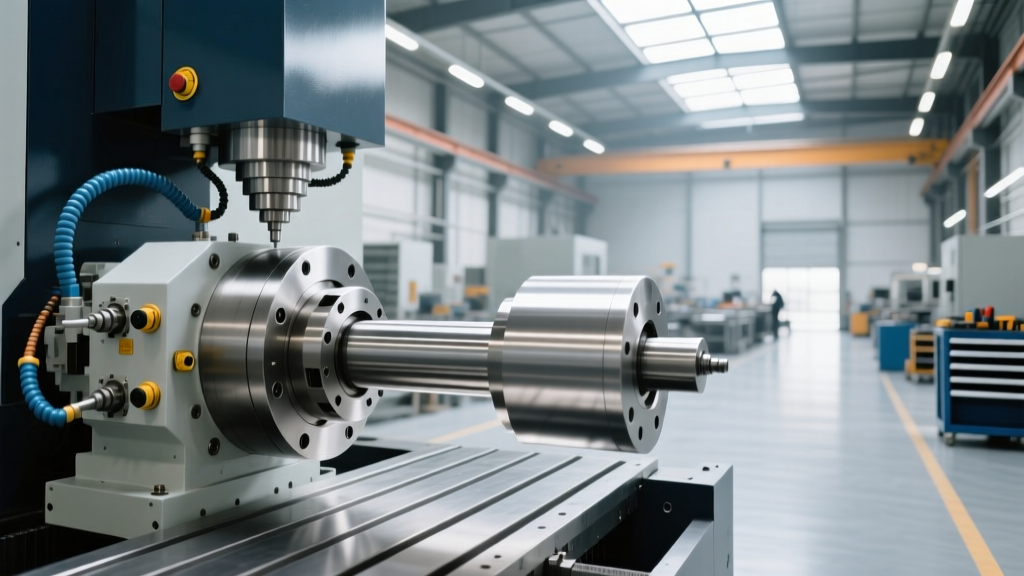
The integration of A-axis (tilt) and C-axis (rotate) trunnion tables creates severe shear and pinch points, particularly during automated loading or when operators are manually indicating a part. ISO 16090 strictly mandates that the distance between the moving trunnion and the fixed machine column must either exceed 500mm (preventing reach) or be reduced to less than 8mm (preventing finger insertion).
'In 5-axis machining, the operator is often leaning into the work envelope to verify clearance on complex aerospace blisks. If the machine lacks Safe Operating Area monitoring, a single accidental button press on the pendant can initiate a rotary table sweep that cannot be stopped by a standard E-stop in time to prevent severe injury.' — Lead Manufacturing Engineer, Tier 1 Aerospace Supplier
To mitigate this, facilities must implement Type 4 safety light curtains (e.g., SICK deTec4 Core or Keyence GL-R series) positioned at the load station. These must be configured with 'muting' capabilities that allow the automated pallet changer (APC) to pass through the beam while instantly halting rotary axis movement if a human operator breaks the plane. Furthermore, physical bellows or telescopic steel covers must be installed over the trunnion base to prevent operators from resting hands on the machine bed near the pivot point.
Facility Audit Matrix for Multi-Axis Compliance
Use the following actionable matrix to audit your 5-axis and multi-axis CNC machining centers. This checklist bridges the gap between theoretical standards and shop-floor reality.
| Audit Category | Inspection Point | Acceptance Criteria / Action Required |
|---|---|---|
| Enclosure Integrity | Viewing window thickness and material | Must be minimum 12mm coolant-resistant polycarbonate. Replace if micro-crazing is visible under UV light. |
| Interlock Logic | Door switch bypass testing | Attempt to initiate an MDI rotary axis move with the door interlock defeated (using approved maintenance override). Machine must default to Safe Speed (<2m/min) or halt. |
| Pinch Point Guarding | Trunnion table base clearance | Clearance must be <8mm or >500mm. Install telescopic way covers if gaps allow finger insertion. |
| E-Stop Response | Spindle and axis stopping time | Measure time from E-stop press to zero RPM. Must comply with ISO 16090 Category 0 or 1 stop requirements (typically <500ms for drives). |
| Chip Management | High-pressure coolant splash containment | Verify that 70-bar (1000+ PSI) through-spindle coolant does not atomize and escape through door seals, creating inhalation hazards. |
Achieving true safety compliance in multi-axis CNC machining is not a one-time installation event; it is an ongoing discipline of material verification, software logic validation, and operator training. By specifying the correct polycarbonate grades, leveraging modern PROFIsafe controller architectures, and strictly auditing trunnion pinch points, facilities can protect their workforce while maintaining the high throughput required in modern complex part production.