The True Cost of 5 Axis CNC Machine Repairs and Troubleshooting
Discover the true cost of 5 axis CNC machine ownership. Expert troubleshooting for trunnion, spindle, and servo failures with real 2026 repair pricing.
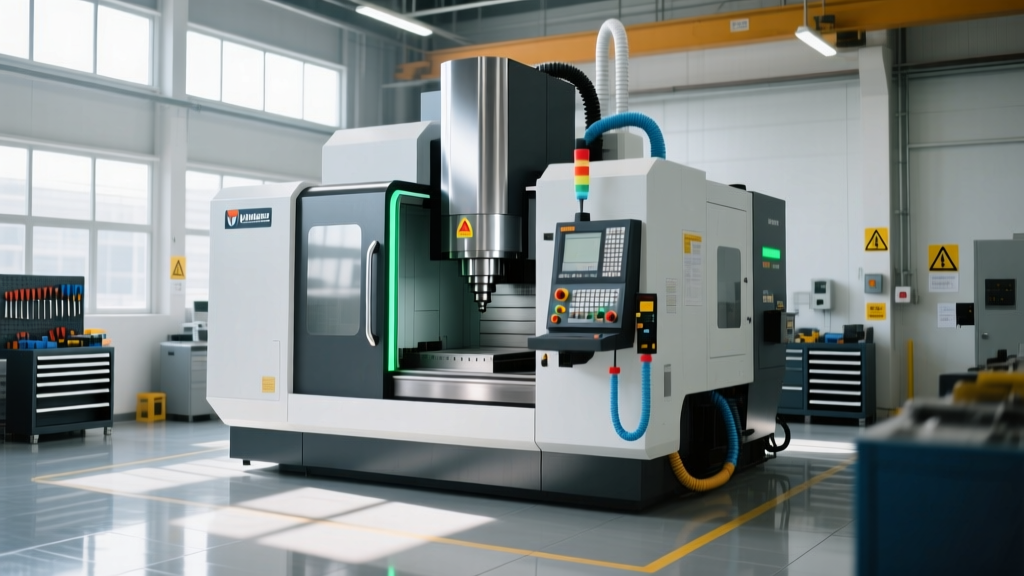
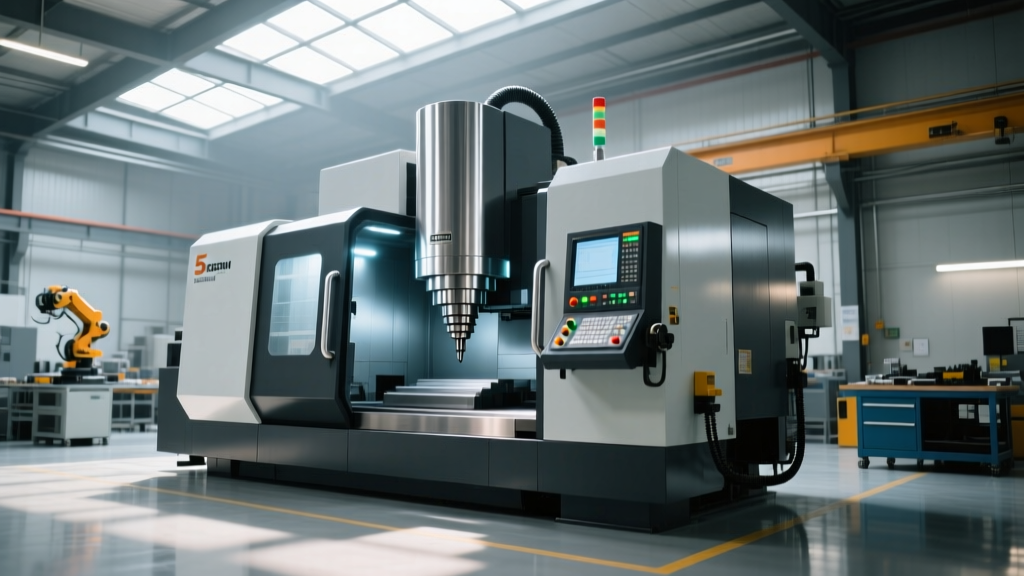
While the upfront cost of 5 axis CNC machine hardware ranges from $180,000 for a baseline Haas UMC-500 to over $450,000 for a DMG MORI DMU 50 3rd Gen, the long-term repair expenses dictate actual profitability. Multi-axis machining centers subject rotary tables, spindle cartridges, and high-flex cables to extreme mechanical and thermal stresses. When a 5-axis machine goes down, the cost is not just the replacement part; it is the specialized diagnostic labor, kinematic recalibration, and lost spindle hours.
2026 Lifecycle Data Highlight:According to lifecycle analyses referenced by the NIST Advanced Manufacturing Portal, reactive maintenance on 5-axis trunnion tables costs an average of 3.4 times more than scheduled preventative kinematic calibration, primarily due to secondary damage to the direct-drive torque motors when bearings seize.
Trunnion Table Bearing Degradation and Backlash
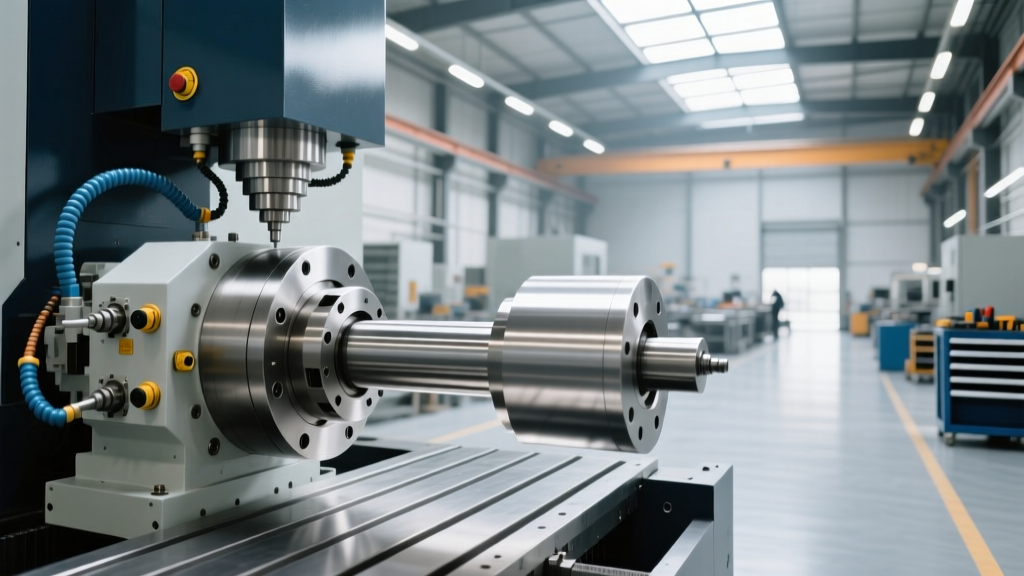
The A and C axes on a trunnion-style 5-axis VMC carry immense cutting loads while maintaining tight positional tolerances. The most common and expensive failure mode is the degradation of the precision angular contact bearings supporting the rotary table. When these bearings wear, the table exhibits micro-backlash, resulting in visible dwell marks on contoured aerospace structural parts.
Diagnostic Protocol: Isolating Mechanical vs. Servo Errors
Do not immediately adjust servo gains when you detect surface finish anomalies. Follow this ISO 230-4 compliant diagnostic sequence using a wireless ballbar system (e.g., Renishaw QC20-W):
- Run a 300mm radius circular test in the XY plane to establish baseline machine geometry.
- Execute a tilted plane test engaging the A-axis at 45 degrees.
- If the error spike occurs exactly at the 0/360-degree crossover point: You have mechanical backlash in the rotary axis gearing or bearings.
- If the error shows as a consistent oval distortion: You have a kinematic center misalignment (requires parameter adjustment, not hardware repair).
- Check the clamping mechanism. Hydraulic or pneumatic clamps that fail to fully release during contouring will cause severe bearing drag and premature motor burnout.
Repair Cost Breakdown: Rebuilding a trunnion requires dropping the table, pressing out the old SKF or NTN bearing sets, and realigning the kinematic center. Expect to pay $14,000 to $22,000 for OEM bearing kits and specialized labor, plus 16 to 24 hours of machine downtime.
Spindle Thermal Displacement and Vibration
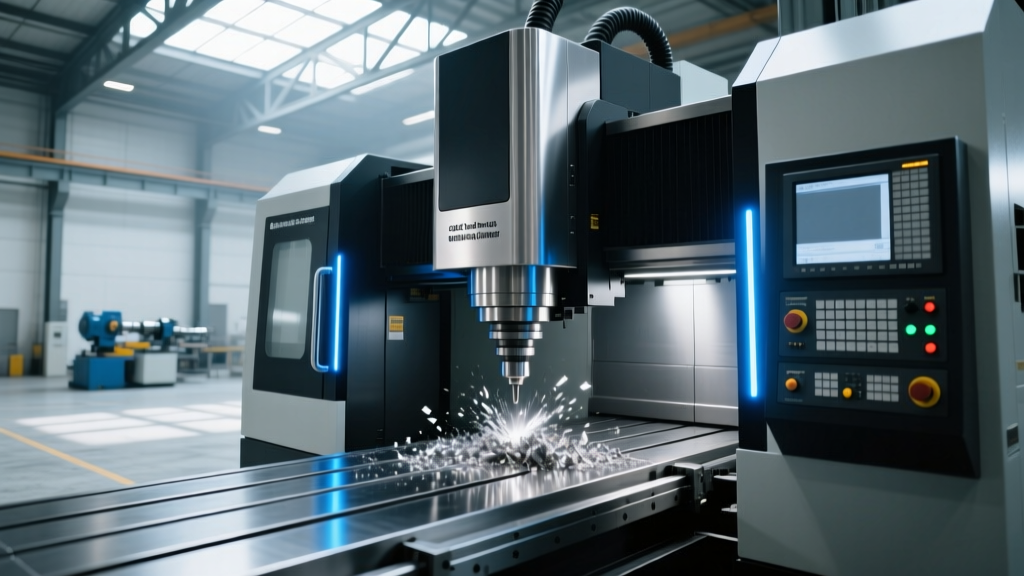
High-speed 5-axis spindles (typically 15,000 to 24,000 RPM) generate massive thermal loads. If the spindle chiller unit fails or the oil-air lubrication mix ratio drifts, thermal growth pushes the tool tip off-center. In 5-axis simultaneous machining, a 15-micron Z-axis thermal shift will scrap a $10,000 titanium impeller.
"Most shops mistake thermal displacement for tool deflection. If your Z-axis probe measurements drift consistently upward after a 90-minute heavy roughing cycle, your spindle cooling jacket is likely clogged with degraded coolant residue, not your toolholder pulling out." — Lead Applications Engineer, Major Spindle Rebuilder
Troubleshooting Thermal Growth
- Verify Chiller Flow: Use an inline flow meter on the spindle return line. A 20,000 RPM spindle requires a minimum of 4 to 6 liters per minute of chilled oil/water mixture.
- Inspect the Oil-Air Mixer: If the spindle sounds "dry" or emits a high-pitched whine, the metering units in the oil-air lubrication panel are likely blocked. This causes rapid bearing degradation.
- Run a Warm-Up Macro: Program a 20-minute spindle warm-up routine that ramps from 2,000 to 12,000 RPM in 2,000 RPM increments. Probe a fixed master ball before and after. If displacement exceeds 20 microns, the spindle bearings are wearing unevenly due to thermal stress.
Repair Cost Breakdown: Replacing a high-speed spindle cartridge (e.g., IBAG or Weiss) costs between $16,000 and $28,000. On-site dynamic balancing and run-in procedures add another $3,500 to $5,000.
Rotary Axis Servo Drive and High-Flex Cable Faults
Continuous 5-axis contouring requires the A and C axes to constantly reverse direction, which destroys standard power and feedback cables. Intermittent cable failures are notoriously difficult to diagnose because they only manifest under specific table orientations.
Common Alarm Codes:
On Fanuc controls, an SV0411 (Motion Error During Movement) or SV0387 (Abnormal Current) on the rotary axes often points to cable degradation causing intermittent feedback loss, rather than a failed servo motor. On Siemens SINAMICS S120 drives, look for F31150 (Encoder evaluation error).
The Fix: Trace the cables through the trunnion housing. Look for micro-fractures in the shielding or flattened sections where the cable track has pinched the conduit. Replace all rotary axis cables with high-flex, million-cycle rated igus chainflex cables. Cost: $4,500 to $7,500 for cable sets and labor. Replacing the actual Fanuc alpha-i servo amplifier will add $3,000 to $4,500 if the cable short damaged the drive's IGBTs.
Preventative vs. Reactive Cost Matrix
Understanding the true cost of 5 axis CNC machine ownership requires shifting from reactive part-swapping to predictive maintenance. The following matrix illustrates the financial impact of ignoring 5-axis specific maintenance intervals.
| Component | Preventative Action | PM Cost (Annual) | Reactive Repair Cost | Downtime Penalty |
|---|---|---|---|---|
| Trunnion Bearings | Ballbar testing & preload check | $1,200 | $18,000 - $24,000 | 3-5 Days |
| Spindle Cartridge | Vibration analysis & drawbar force | $850 | $16,000 - $28,000 | 2-4 Weeks |
| Rotary Cables | Visual inspection & track lube | $300 | $4,500 - $7,500 | 1-2 Days |
| Kinematic Center | Auto-calibration cycle (monthly) | $0 (In-house) | $2,500 (Service call) | 4-8 Hours |
Sourcing Parts: OEM vs. Independent Rebuilders
When a major component fails, the source of your replacement dictates your recovery time and budget. For proprietary direct-drive torque motors and integrated spindle cartridges, OEM support is often mandatory due to software locks and matched stator/rotor pairs. However, for mechanical components like trunnion bearing housings, way covers, and hydraulic clamping cylinders, independent machine tool rebuilders offer a massive advantage.
Independent rebuilders typically charge 30% to 40% less than OEM factory service rates and can often source equivalent precision bearings (e.g., substituting a specialized OEM-branded bearing with the exact same SKF super-precision equivalent) in a fraction of the lead time. According to industry data tracked by the U.S. Department of Energy Advanced Manufacturing Office, optimizing maintenance supply chains and utilizing third-party rebuilds for non-proprietary mechanical failures can reduce overall equipment lifecycle costs by up to 18% over a ten-year period.
Before authorizing any 5-axis repair, demand a detailed teardown report from the technician. Verify whether the failure was caused by normal wear, operator crash damage, or a systemic lubrication failure. Fixing the root cause—such as upgrading the oil-air metering units or installing a high-flex cable carrier—is the only way to protect your initial capital investment and keep the spindle cutting.