Case Study: 5 Axis CNC Machine Germany Aerospace Leaders
Explore how a 5 axis CNC machine Germany engineered transforms aerospace and medical manufacturing. Real case studies on Hermle, DMG MORI, and GROB.
The German Engineering Advantage in Multi-Axis Milling
When Tier 1 aerospace suppliers and medical device manufacturers require sub-micron tolerances on complex, free-form geometries, a 5-axis CNC machine from Germany is frequently the default capital equipment specification. German machine tool builders dominate the high-end multi-axis segment by prioritizing thermal stability, advanced kinematics, and rigid structural dampening. According to industry data tracked by the VDW (Verein Deutscher Werkzeugmaschinenfabriken), German-manufactured machining centers consistently capture over 20% of the global high-precision export market, driven heavily by demand in the aerospace and medical sectors.
2026 Market Snapshot: German 5-axis machining centers command a 35% premium over comparable Asian models, but deliver a 40% longer mean-time-between-failures (MTBF) in continuous titanium milling operations.This article dissects two real-world applications of German-engineered 5-axis platforms, detailing the exact cutting parameters, ROI frameworks, and integration realities for modern manufacturing facilities.
Case Study 1: Hermle C 42 U in Titanium Airframe Milling
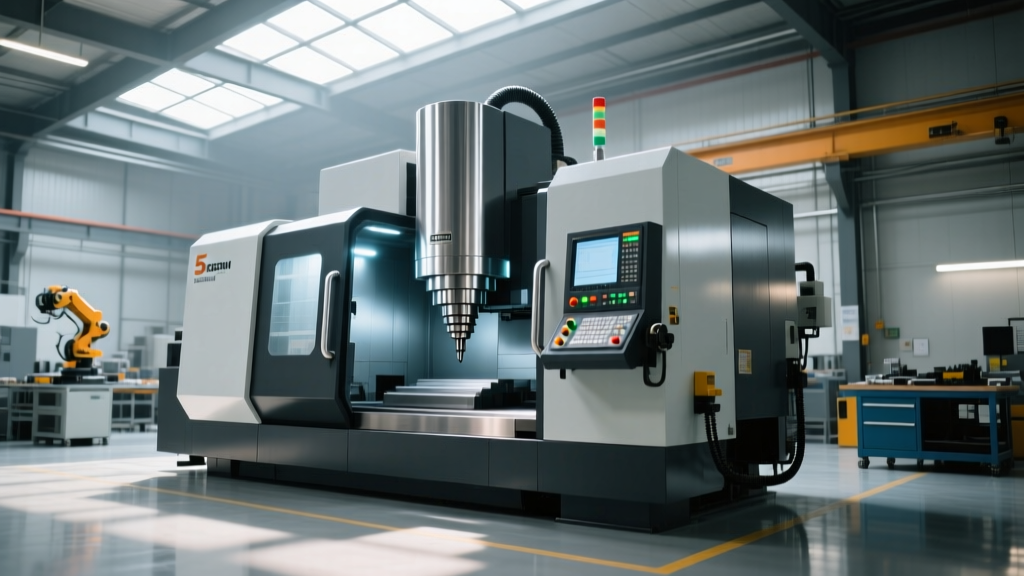
A mid-sized aerospace subcontractor in the Pacific Northwest faced severe bottlenecks machining Ti-6Al-4V structural bulkheads. Their legacy vertical machining centers (VMCs) suffered from rapid tool deflection, excessive chatter, and a 14% scrap rate due to thermal growth during 18-hour cycle times. The facility upgraded to a Hermle C 42 U 5-axis machining center to resolve these kinematic and thermal limitations.
The Setup: Kinematics and Spindle Specs
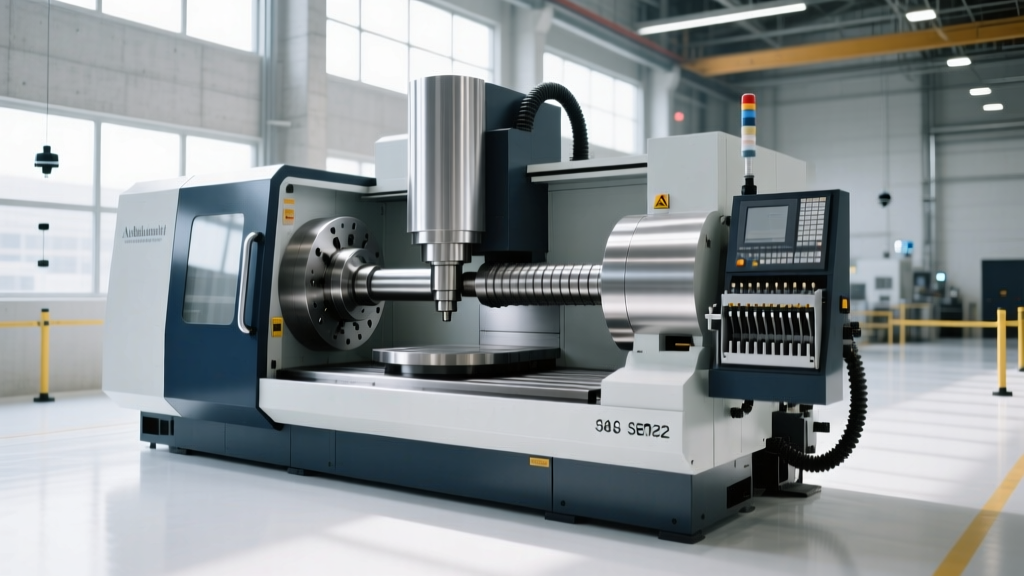
The Hermle C 42 U utilizes a modified gantry design where the machine bed remains stationary, and the cross-slide moves in the X and Y axes. This configuration ensures that the workpiece weight does not negatively impact the machine's dynamic response. The unit was specified with the high-torque HSK-A63 spindle option, delivering up to 300 Nm of torque at lower RPMs for aggressive roughing, while maintaining 15,000 rpm capability for finishing passes.
Cutting Parameters: Legacy VMC vs. Hermle C 42 U
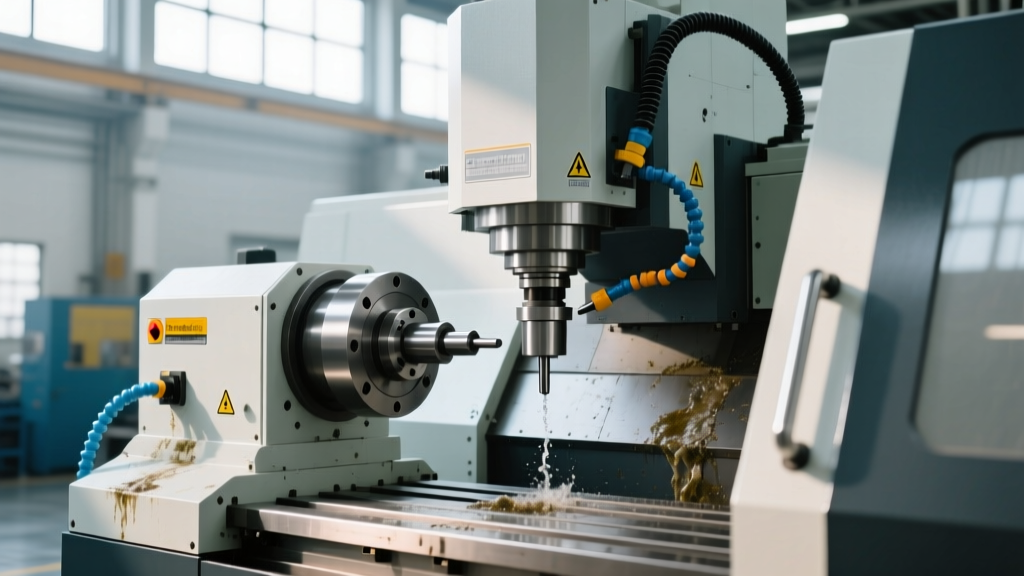
The integration of 150-bar high-pressure coolant through the spindle, combined with the C 42 U's superior vibration dampening, allowed for dramatically altered cutting parameters. Below is the operational comparison for roughing a 20mm deep pocket using a 20mm solid carbide AlTiN-coated end mill.
| Parameter | Legacy 4-Axis VMC | Hermle C 42 U (5-Axis) |
|---|---|---|
| Cutting Speed (Vc) | 45 m/min | 85 m/min |
| Feed per Tooth (fz) | 0.12 mm | 0.18 mm (Adaptive Toolpath) |
| Axial Depth of Cut (ap) | 10 mm | 20 mm (Full Flute) |
| Tool Life | 4.5 hours | 14 hours |
| Surface Finish (Ra) | 1.6 µm (requires secondary pass) | 0.6 µm (Finished in single setup) |
"The ability to tilt the B-axis by just 3 degrees during deep pocket milling eliminated the harmonic chatter we fought for years. We reduced the cycle time for the main landing gear bulkhead from 22 hours down to 8.5 hours."
— Lead Manufacturing Engineer, Tier 1 Aerospace Supplier
Case Study 2: GROB G550 for Inconel Turbine Components
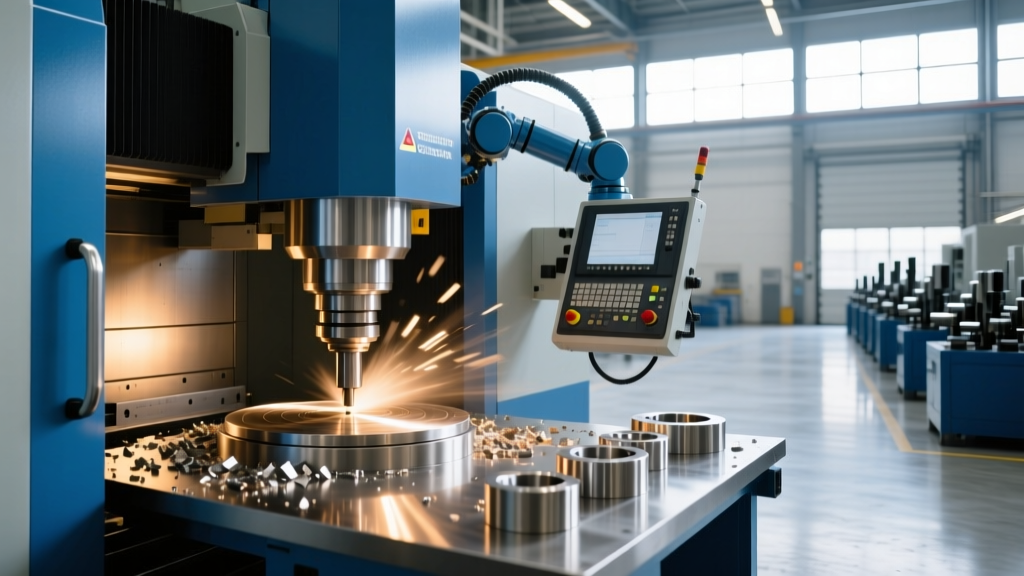
While vertical 5-axis machines excel at many tasks, horizontal 5-axis configurations offer distinct advantages for deep-cavity milling in exotic superalloys. A turbine manufacturer producing Inconel 718 stator vanes transitioned to the GROB G550 to solve a persistent chip evacuation problem.
The Chip Evacuation Advantage
Inconel 718 work-hardens rapidly if chips are recut. On vertical machines, chips fall back into the deep cavities of the stator vanes, leading to catastrophic tool breakage and scrapped €12,000 forgings. The GROB G550 features a horizontal spindle orientation where the tool retracts into the machine bed. Gravity naturally pulls the stringy, work-hardened Inconel chips away from the cutting zone and into the chip conveyor.
Thermal Management in Continuous Operations
The G550 is equipped with a comprehensive cooling system that circulates temperature-controlled coolant through the machine bed, linear guides, and ball screws. During a 72-hour continuous lights-out machining weekend, thermal displacement at the tool center point (TCP) was measured at less than 8 microns, eliminating the need for mid-cycle probe compensation adjustments. For deeper insights into multi-axis thermal stability, publications like Modern Machine Shop frequently document the superiority of horizontally oriented, thermally compensated spindles in aerospace applications.
ROI Framework: Justifying the Capital Expenditure
German 5-axis machining centers represent a significant capital outlay. A fully equipped Hermle C 42 U or GROB G550, complete with pallet automation and high-pressure coolant systems, typically ranges between €380,000 and €480,000 ($410,000 to $520,000 USD). Justifying this requires a rigorous ROI calculation based on value-added metrics rather than simple cycle time reduction.
18-Month Payback Calculation (Based on 2-Shift Operation)
- Scrap Reduction: Lowering the scrap rate on €8,500 titanium forgings from 12% to 1.5% saves approximately $145,000 annually in raw material costs alone.
- Tooling Consumption: Extended tool life via high-pressure coolant and rigid kinematics reduces annual carbide tooling spend by $62,000.
- Secondary Operations Eliminated: 5-axis simultaneous milling achieves Ra 0.6 µm finishes, eliminating $85,000 in annual manual polishing and secondary grinding costs.
- Total Annual Hard Savings: ~$292,000. Payback period on a $450,000 investment is achieved in 18.5 months, not accounting for the revenue gained from increased spindle availability.
Sourcing and Integration: What to Expect in 2026
Procuring and integrating a high-end German machining center requires meticulous planning. The days of 24-month lead times have subsided, but supply chain realities for specialized components remain strict.
Integration Warning: Foundation and CE/UL ComplianceDo not underestimate the foundation requirements. Machines like the Hermle C 42 U require a specialized, vibration-isolated concrete foundation (minimum 800mm depth, isolated with cork or specialized elastomer pads) to achieve their stated volumetric accuracy. Furthermore, North American buyers must explicitly specify UL-compliant electrical cabinets and NFPA 79 wiring standards during the initial order, as retrofitting a CE-marked European cabinet post-delivery can add $25,000 and 6 weeks to the commissioning timeline.
Automation Readiness
In 2026, standalone machines are rarely the optimal investment. German builders have heavily integrated their native automation solutions. When specifying the machine, buyers should evaluate the Hermle PW 1000 or GROB PS 3-600 pallet storage systems. These native systems communicate directly with the machine's Siemens Sinumerik ONE or Heidenhain TNC7 control via proprietary APIs, reducing integration debugging time from weeks to mere days compared to third-party robotic tending solutions.
Final Verdict on German Multi-Axis Platforms
For job shops running generic aluminum brackets, a 5-axis CNC machine from Germany is an unjustifiable luxury. However, for manufacturers deeply embedded in the aerospace, medical, and defense supply chains—where part geometries are complex, materials are unforgiving, and the cost of failure is astronomical—the kinematic superiority, thermal stability, and longevity of German-engineered platforms provide a distinct, measurable competitive advantage. By focusing on total cost of ownership and scrap reduction rather than initial purchase price, manufacturers can leverage these platforms to secure and retain high-margin, multi-year contracts.