Telematics in Heavy Equipment Market: Remote & Modular Maintenance
Discover how telematics in heavy equipment market applications optimize maintenance schedules for modular and remote-controlled demolition and loading fleets.
The Sensory Blind Spot in Remote-Controlled Heavy Machinery
Operating heavy equipment remotely removes the most sophisticated diagnostic tool on the job site: the human operator. In a traditional cab, an experienced operator feels the subtle vibration of a failing idler pulley, hears the high-pitched whine of hydraulic cavitation, and notices the smell of overheating gear oil. When managing remote-controlled demolition robots like the Brokk 500 or tele-operated wheel loaders like the Caterpillar 994K via Cat Command, this sensory feedback loop is entirely severed.
Without physical presence, maintenance schedules can no longer rely on operator daily walk-around reports or subjective 'feel.' A remote-controlled machine running continuously in a hazardous zone (such as a slag handling facility or underground mine) will experience accelerated thermal and mechanical fatigue, yet appear completely normal on a standard 250-hour preventative maintenance (PM) checklist. This operational reality demands a radical shift in how fleet managers approach service intervals.
⚠️ CRITICAL FAILURE MODE: Silent Hydraulic CavitationRemote-controlled machines lack an operator to hear pump cavitation. If a suction filter restricts flow on a tele-operated loader running 24/7, the hydraulic fluid (e.g., Mobil DTE 10 Excel 46) will vaporize in the pump inlet. This causes micro-pitting on the valve plates. Without acoustic sensors or pressure transducer telemetry, the main hydraulic pump will suffer catastrophic failure—costing upwards of $14,500 in parts and downtime—before the next scheduled 500-hour fluid analysis.
How Telematics in Heavy Equipment Market Solutions Bridge the Gap
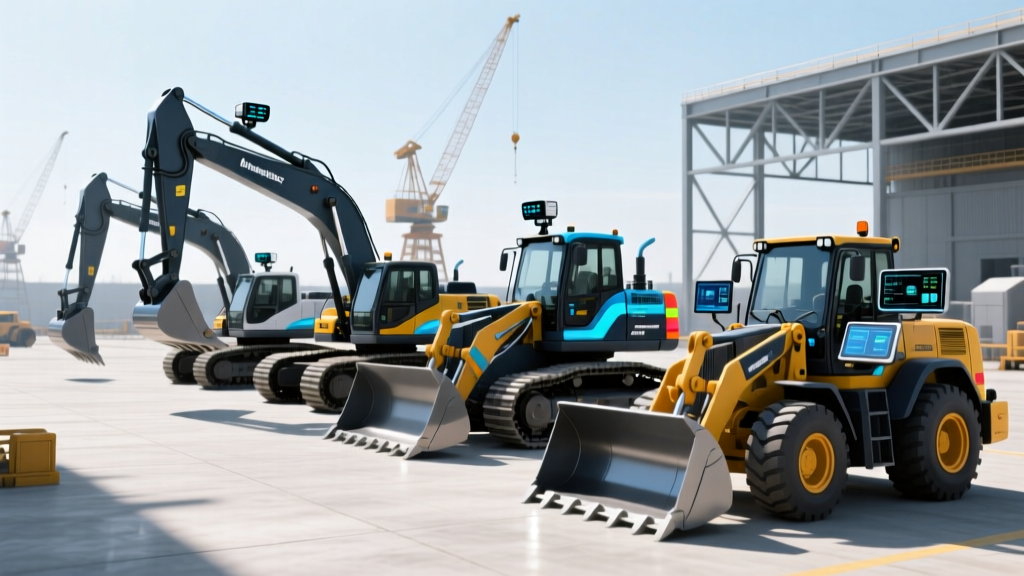
When evaluating telematics in heavy equipment market growth, the most aggressive adoption curves are found in remote and modular fleet segments. Modern telematics platforms do not just track GPS location and fuel burn; they ingest high-frequency sensor data to create a digital twin of the machine's mechanical health.
For modular equipment, where the base carrier frequently swaps attachments (such as switching a Steelwrist X18 tiltrotator for a hydraulic breaker via an OilQuick OQ70 automatic coupler), telematics systems now track attachment-specific wear. By reading the RFID tags on modular attachments and correlating them with hydraulic pressure spikes and gyroscope data, the telematics platform calculates exact stress loads on the quick-coupler locking pins.
Sensor-to-Action Matrix for Modular Attachments
| Telemetric Data Point | Modular Component | Automated Maintenance Trigger |
|---|---|---|
| Hydraulic Pressure Spikes (>350 bar) | Breaker Moil Point & Bushings | Schedule bushing inspection; order replacement moil point. |
| Coupler Locking Cylinder Pressure Drops | Automatic Quick Coupler (e.g., Lehnhoff) | Alert operator to clean coupler mating surfaces; check O-rings. |
| Tiltrotator Rotation Degrees & Torque | Tiltrotator Planetary Gearbox | Trigger oil sampling at 800 hours instead of standard 1,000. |
Rewriting the PM Schedule: Time-Based vs. Condition-Based
Traditional maintenance relies on engine hours. However, an hour of idling in a remote-controlled demolition robot does not equate to an hour of heavy trenching. Caterpillar's Cat Connect ecosystem utilizes 'Work Hours' versus 'Engine Hours' to dictate service intervals. If a remote loader spends 40% of its time idling while waiting for blast clearance, the telematics system will automatically extend the engine oil change interval from 500 hours to 750 hours, provided the oil quality sensor confirms optimal viscosity and low soot levels.
'The shift from calendar-based to condition-based maintenance via telematics is no longer optional for remote fleets; it is the only way to prevent silent, catastrophic failures in modular attachments and tele-operated drivetrains.' — 2026 Association of Equipment Manufacturers (AEM) Fleet Technology Report
Implementing a Telematics-Driven Maintenance Protocol
Transitioning a modular or remote fleet to a telemetry-based maintenance schedule requires specific operational adjustments. Fleet managers should follow this four-step implementation framework:
- Establish Baseline Sensor Thresholds: Do not rely on OEM default alarms. Calibrate hydraulic temperature alarms based on your specific ambient conditions. For example, if operating a Brokk demolition robot in a steel mill with 110°F (43°C) ambient heat, lower the hydraulic fluid warning threshold from 180°F to 165°F to account for reduced cooling efficiency.
- Integrate RFID on All Modular Assets: Tag every attachment. The telematics platform must know exactly which tool is connected to the carrier at any given millisecond to accurately attribute wear and tear to the correct asset ledger.
- Automate API Work Order Generation: Connect your telematics dashboard (via API) directly to your CMMS (Computerized Maintenance Management System). When a tele-operated loader's transmission output shaft speed sensor detects a 4% slip ratio, the system should automatically generate a work order for a transmission clutch pack inspection.
- Deploy 5G Edge Computing for Low-Latency Diagnostics: Remote-controlled machines require ultra-low latency (<10ms) for safe operation. Utilize 5G edge nodes on-site to process high-frequency vibration data locally, sending only the aggregated diagnostic alerts to the cloud to prevent bandwidth bottlenecks.
The Economics: ROI and Cost Analysis for Fleet Managers
The financial argument for integrating advanced telematics into remote and modular fleets is highly compelling when analyzing total cost of ownership (TCO). Enterprise telematics subscriptions typically range from $40 to $65 per month, per machine. For a fleet of 15 remote-controlled demolition robots, this equates to roughly $10,800 annually in software costs.
💡 COST SAVINGS BREAKDOWN (ANNUALIZED FOR 15-MACHINE FLEET)- Prevented Catastrophic Failures: Avoiding just two main hydraulic pump failures saves $29,000 in parts and labor.
- Optimized Fluid Intervals: Extending hydraulic and engine oil changes by 30% via condition-monitoring saves $8,500 in fluids, filters, and technician hours.
- Reduced Downtime: Predictive alerts allow parts to be staged before failure, reducing average machine downtime from 4 days to 1.5 days, recovering an estimated $45,000 in lost production value.
Net ROI: The $10,800 telematics investment yields over $71,700 in direct and recovered savings in year one.
Future-Proofing Your Modular Fleet
As the industry moves deeper into 2026, the distinction between the base carrier and the modular attachment is blurring in the eyes of the telematics platform. Leading manufacturers are now embedding independent telemetry nodes directly into high-value attachments like tiltrotators and heavy-duty grapples. These nodes communicate via Bluetooth Low Energy (BLE) to the carrier's main gateway, ensuring that even when an attachment is swapped to a different machine, its maintenance history, stress logs, and service schedules travel with it.
Fleet managers who continue to treat remote-controlled and modular equipment with traditional, time-based maintenance schedules are effectively flying blind. By leveraging high-resolution sensor data, automated CMMS integration, and attachment-specific tracking, operators can eliminate the sensory blind spot, ensuring maximum uptime in the most unforgiving environments.
For further reading on industry standards for remote equipment operation and data security protocols, refer to the latest guidelines published by the Association of Equipment Manufacturers (AEM) and ongoing field analyses featured in ForConstructionPros.