Where to Sell Heavy Equipment for Renewable Energy Projects
Discover where to sell heavy equipment used in solar and wind construction. Learn valuation strategies, tech trends, and liquidation frameworks for 2026.
The Green Infrastructure Boom and Fleet Turnover
The global transition to renewable energy has fundamentally altered heavy equipment fleet lifecycles. Engineering, Procurement, and Construction (EPC) contractors specializing in solar arrays, wind farms, and geothermal plants are no longer relying on standard earthmoving fleets. Instead, they deploy highly specialized, tech-dense machinery designed for extreme precision, heavy lifting, and zero-emission site compliance. According to the Solar Energy Industries Association (SEIA), the sheer scale of utility-scale solar deployment requires specialized pile-driving and trenching equipment that standard commercial construction rarely utilizes.
As we navigate 2026, rapid advancements in electrification, autonomous grading, and telematics are forcing Tier 1 contractors to upgrade their fleets at an accelerated pace. This creates a massive secondary market for slightly older, yet highly capable, renewable-specific machinery. However, liquidating a GPS-guided solar pile driver or a high-capacity wind turbine crawler crane is vastly different from selling a standard backhoe. Understanding exactly where to sell heavy equipment engineered for green energy projects is critical for maximizing asset recovery and avoiding severe depreciation penalties.
The Specialized Fleet: What Defines Renewable Construction Equipment?
Before determining the best liquidation channels, sellers must categorize their assets based on the specific technological modifications that separate renewable construction equipment from standard fleet machinery. Buyers in the secondary market pay premiums for specific, verifiable tech packages.
Solar Farm Machinery
- Autonomous Pile Drivers: Machines like the Vermeer PD10 or Gayk HBS 1000 equipped with RTK-GPS auto-plumb technology. These units drive thousands of H-piles daily with sub-inch accuracy, eliminating the need for manual surveying.
- Low-Ground-Pressure (LGP) Dozers: Solar farms are often built on protected topsoil. LGP dozers (e.g., Cat D6 XE with specialized wide-track shoes) minimize soil compaction and preserve site hydrology.
- Robotic Trenchers: Specialized cable-laying trenchers with automated backfill and compaction sensors, crucial for the miles of DC wiring required in utility-scale arrays.
Wind Energy Heavy Lifters
According to the American Clean Power Association, modern wind turbines are reaching hub heights exceeding 140 meters, requiring immense lifting capacities. Equipment in this category includes:
- Super-Heavy Crawler Cranes: Models like the Liebherr LR 13000 or Manitowoc MLC300 with VPC-MAX (Variable Position Counterweight) systems. These machines handle nacelle lifts exceeding 150 tons at extreme radii.
- Specialized Blade Transporters: Hydraulic, multi-axle trailers with independent steering and lift-adapters designed to navigate mountain switchbacks and tight rural turns while carrying 90-meter composite blades.
Tech Trends Driving 2026 Fleet Liquidation
Why are so many specialized renewable assets hitting the secondary market right now? The answer lies in the rapid adoption of 2026-era technology standards.
- Electrification Mandates: Many European and North American municipalities now require zero-emission machinery on state-subsidized green energy sites. Contractors are liquidating late-model diesel equipment (2021-2024) to acquire battery-electric or hydrogen-fuel-cell alternatives.
- Telematics & API Integration: Modern EPCs demand real-time API integration between the heavy equipment and the project's BIM (Building Information Modeling) dashboard. Machines lacking open-architecture telematics are being phased out of Tier 1 fleets.
- Automated Grade Control: For geothermal and hydro projects, the shift from laser-guided grading to 3D machine control (using drone LiDAR feeds) has made older, manually operated graders obsolete for high-precision dam and reservoir work.
Strategic Channels: Where to Sell Heavy Equipment for Green Projects
If you are an asset manager or fleet director wondering where to sell heavy equipment with specialized renewable-energy attachments, standard local auctions will result in massive financial losses. You must target specialized buyer pools.
1. Direct EPC Fleet Transfers (Highest ROI)
The most lucrative channel is selling directly to mid-tier solar and wind installers who are scaling up but cannot afford 2026 OEM pricing. Platforms like Equipment Trader have specific 'Energy & Utility' categories, but direct networking through industry associations (like the Renewable Energy Buyers Alliance) often yields private-treaty sales. Selling a fleet of five GPS-guided Vermeer pile drivers directly to a regional solar EPC can net 15-20% above auction value.
2. Specialized Heavy Equipment Auction Houses
Global auctioneers like Ritchie Bros. and Mascus have developed dedicated 'Wind & Solar Infrastructure' auction events. These events attract international buyers from emerging renewable markets in South America and Southeast Asia, where demand for reliable, slightly older diesel-powered wind cranes is peaking. Crucial: Ensure your machinery is listed with an 'IronClad Assurance' or equivalent telematics-backed inspection report. International buyers will not bid $2 million on a Liebherr crawler crane without verified engine and hydraulic pump data.
3. OEM Electrification Buyback Programs
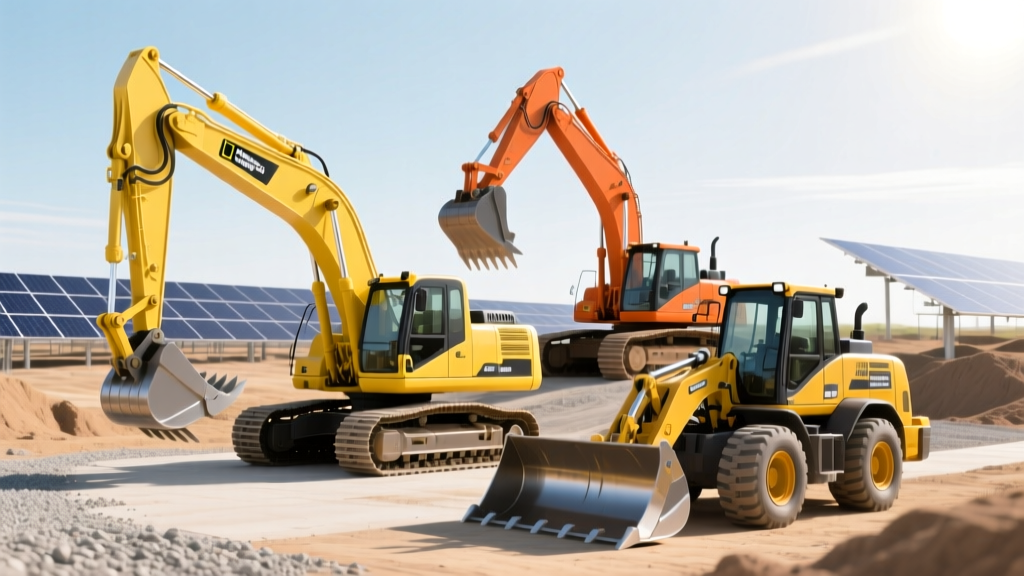
Major manufacturers (including Caterpillar, Volvo CE, and Liebherr) are actively offering premium trade-in values for late-model diesel equipment to offset the capital expenditure of their new 2026 electric and hydrogen lines. If your fleet consists of standard site-prep dozers and excavators used in solar grading, inquire directly with your regional OEM dealer about 'Green Fleet Transition' buyback incentives, which often guarantee 10% above wholesale book value.
4. Specialized Brokerages for Oversized Assets
For wind farm blade transporters and super-heavy cranes, standard logistics make them nearly impossible to sell on open-market classifieds. Specialized brokerages (such as Global Cranes & Heavy Haulage brokers) maintain private databases of global heavy-lift contractors. They handle the complex disassembly, permitting, and port-logistics required to move a 600-ton crane to a buyer in another hemisphere.
Valuation Matrix: Standard vs. Renewable-Spec Machinery
Understanding how the market values your specific equipment type is essential for pricing. The table below outlines the depreciation dynamics and buyer requirements for renewable-specific machinery versus standard construction equivalents in the current market.
| Equipment Category | Standard Model Example | Renewable-Spec Model Example | Secondary Market Premium | Key Value Drivers for Buyers |
|---|---|---|---|---|
| Solar Pile Driving | Standard Excavator + Auger | Vermeer PD10 w/ RTK-GPS | + 35% to 50% | GPS calibration logs, software license transfer, hammer energy logs. |
| Wind Turbine Lifting | Standard 250-Ton Crawler | Liebherr LR 13000 (VPC-MAX) | + 20% to 40% | Boom section NDT (Non-Destructive Testing) reports, counterweight transport logistics. |
| Site Prep / Grading | Cat D5 Dozer | Cat D6 XE (LGP / Electric Drive) | + 15% to 25% | Ground-bearing pressure specs, battery health (if electric), 3D machine control licenses. |
| Cable Trenching | Standard Walk-Behind Trencher | Ditch Witch H1150 w/ Auto-Fill | + 25% to 30% | Depth-control sensor calibration, rock-wheel wear metrics, conveyor condition. |
Step-by-Step Liquidation Protocol for Tech-Heavy Fleets
To maximize your return when selling specialized renewable construction equipment, follow this strict liquidation protocol before listing the asset on any platform.
Step 1: Extract and Package Telematics Data
Modern buyers treat heavy equipment like enterprise software. Before powering down the machine, download the last 24 months of telematics data. For a solar pile driver, this means extracting the 'piles driven per day', 'hydraulic pressure variance', and 'auto-plumb engagement frequency' reports. Package this data into a secure, shareable digital room (like a secure Dropbox or dedicated data room) to provide to serious buyers during due diligence.
Step 2: Audit Software Licenses and Proprietary Attachments
⚠️ Warning: The Software License Trap
Many contractors lose tens of thousands of dollars during asset liquidation by failing to verify software transferability. Proprietary 3D grade-control software (e.g., Trimble or Topcon packages) and OEM auto-plumb licenses are often tied to the original corporate account, not the machine's VIN. Contact the OEM to initiate a formal 'License Transfer of Ownership' prior to listing the equipment. A GPS-guided dozer sold without its active software license is effectively a standard dozer, and buyers will bid accordingly.
Step 3: Commission Specialized NDT Inspections
For wind-energy cranes and heavy-lift transporters, standard mechanic inspections are insufficient. Commission a third-party Non-Destructive Testing (NDT) firm to perform ultrasonic and magnetic particle inspections on the boom pins, weld joints, and hydraulic cylinder mounts. Publishing a clean NDT report alongside your listing instantly elevates your machinery above competing assets and justifies a premium asking price.
Step 4: Select the Right Liquidation Channel
Match the asset to the channel based on its value and specialization:
- Assets > $1M (Super-heavy cranes, specialized transporters): Use specialized heavy-lift brokerages or direct private-treaty negotiations.
- Assets $250k - $1M (GPS pile drivers, LGP dozers): List on global platforms (Ritchie Bros., Mascus) with full telematics and NDT documentation attached.
- Assets < $250k (Standard site prep, trenchers): Leverage OEM buyback programs or regional heavy equipment dealers specializing in utility contracting.
Final Considerations for the 2026 Market
The secondary market for renewable energy construction equipment is highly sophisticated. Buyers are no longer just purchasing steel and hydraulics; they are purchasing data, precision, and verified operational history. By recognizing the unique technological attributes of your green-tech fleet and targeting the specialized channels outlined above, you can navigate the complexities of fleet turnover and ensure your heavy machinery assets command the premium they deserve in the evolving energy landscape.