How Heavy Equipment Appraisers Value Compact vs Full-Size Safety Compliance
Discover how heavy equipment appraisers evaluate compact vs full-size machinery based on OSHA safety compliance, emissions standards, and residual value.
The Intersection of Site Safety Mandates and Asset Valuation
When fleet managers and general contractors select machinery for a project, the immediate focus is typically on production capacity and earthmoving metrics. However, a secondary, often overlooked factor dictates the long-term financial viability of that purchase: how certified heavy equipment appraisers will value the asset at the end of its lifecycle based on its safety and compliance profile. The decision between deploying compact versus full-size construction equipment is no longer just a matter of site footprint; it is a complex compliance calculation that directly influences functional obsolescence and residual market value.
Under the Uniform Standards of Professional Appraisal Practice (USPAP), appraisers must account for regulatory compliance when determining fair market value. A full-size excavator that struggles to meet urban emissions mandates or requires extensive, costly OSHA-mandated site modifications will suffer a measurable depreciation penalty compared to a compact, zero-tail-swing (ZTS) alternative that inherently satisfies those same safety parameters. This guide breaks down the specific safety standards, emissions tiers, and compliance metrics that drive equipment selection and subsequent appraisal valuations in the 2026 market.
The Compliance Footprint: Swing Radius and OSHA Mandates
One of the most stringent safety regulations governing heavy machinery on active job sites is OSHA Standard 1926 Subpart O (Motor Vehicles, Mechanized Equipment). Specifically, OSHA 1926.600 mandates strict protocols for equipment operating in reverse or with a rotating superstructure to prevent crushing and struck-by incidents.
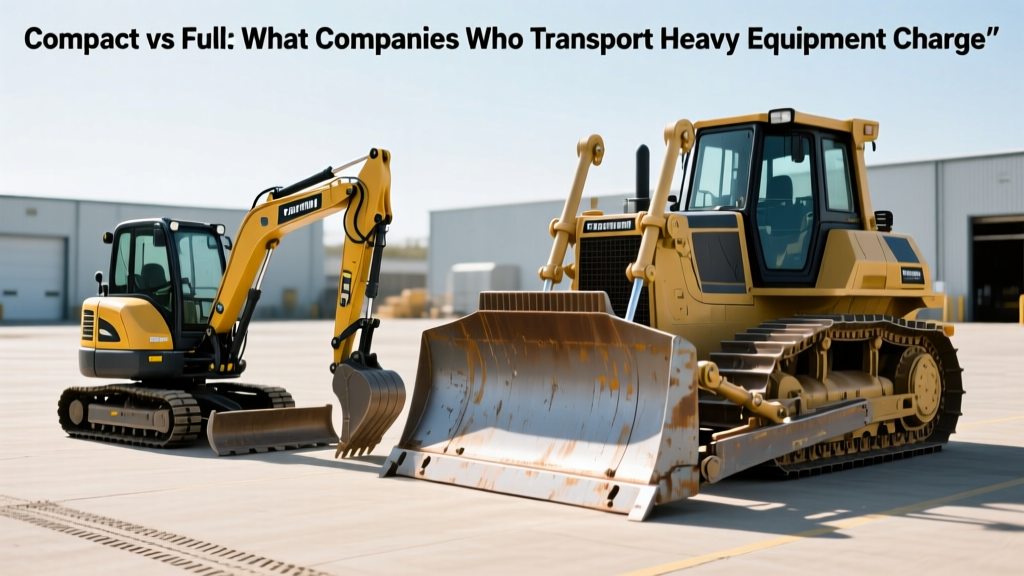
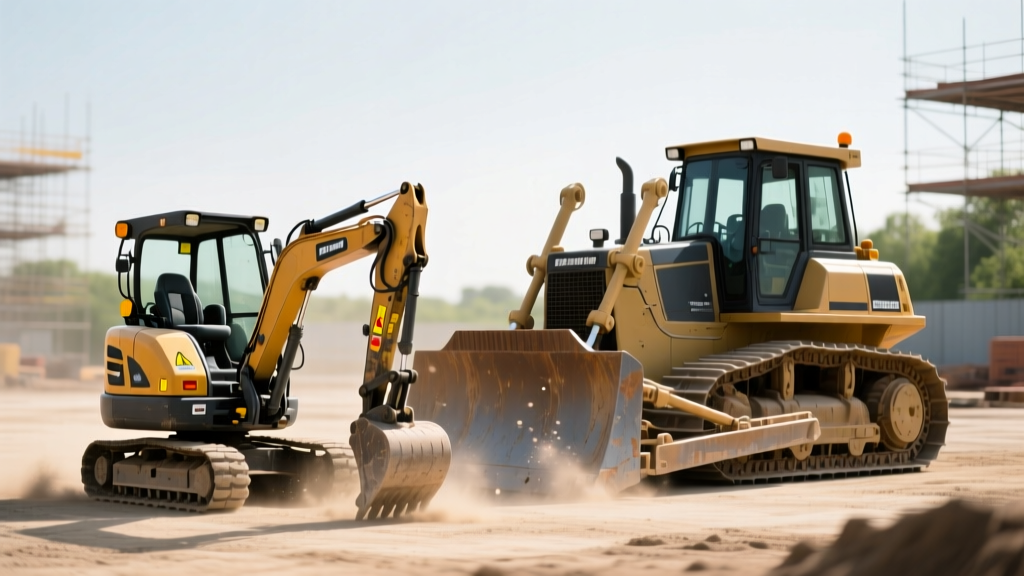
OSHA Swing Radius Warning: For full-size excavators like the Caterpillar 330 or Volvo EC300, the rear swing radius often exceeds 11 feet. OSHA requires the employer to barricade this swing zone to prevent worker entry, or utilize a dedicated spotter. On congested urban sites or active hospital campuses, erecting physical barricades for a full-size machine's swing radius is often physically impossible or cost-prohibitive.This is where compact equipment gains a distinct compliance and appraisal advantage. Compact zero-tail-swing (ZTS) models, such as the Bobcat E35z or Kubota KX040-4, are engineered so the rear counterweight remains within the track width during rotation. Because they eliminate the overhang hazard, heavy equipment appraisers recognize ZTS compact machines as possessing higher utility and lower compliance-risk profiles in restricted-access markets. When appraising a fleet, machines with inherent ZTS safety designs retain up to 8% to 12% more of their residual value in urban-heavy regions because they do not require supplementary site safety infrastructure to operate legally.
Emissions Tiers: The Appraiser’s Depreciation Trigger
Safety compliance extends beyond physical site hazards to environmental health and safety (EHS) standards. The EPA’s Nonroad Diesel Engine regulations dictate allowable particulate matter (PM) and nitrogen oxides (NOx) emissions. As of 2026, Tier 4 Final is the baseline for full-size equipment, while many compact machines have transitioned smoothly into Stage V equivalents.
Heavy equipment appraisers apply severe functional obsolescence deductions to full-size machines lacking modern exhaust aftertreatment systems (like Diesel Particulate Filters and Selective Catalytic Reduction) when valuing assets for use in EPA-designated non-attainment zones (e.g., California's CARB-regulated districts, the Northeast corridor).
The Cost of Non-Compliance in Full-Size Rigs
- Tier 3 Full-Size Excavator (e.g., older John Deere 250G): Appraisers will deduct 15% to 22% from the baseline market value due to restricted bidding eligibility on municipal and state-funded infrastructure projects.
- Tier 4 Final Compact Loader (e.g., ASV RC-50): Retains premium valuation because its smaller engine displacement inherently requires less complex, failure-prone aftertreatment systems, lowering the buyer's perceived compliance maintenance risk.
According to EPA nonroad diesel guidelines, the transition to cleaner engines is non-negotiable for public works. Appraisers factor in the $15,000 to $25,000 cost of retrofitting or replacing failed DEF (Diesel Exhaust Fluid) systems on poorly maintained full-size rigs, directly subtracting this from the appraised value.
Valuation Matrix: Safety Features That Move the Needle
Modern safety technology is a primary driver of value retention. Heavy equipment appraisers utilize the Sales Comparison Approach, adjusting values based on the presence or absence of factory-integrated safety tech. Below is a breakdown of how specific compliance features impact appraisal values across compact and full-size categories.
| Safety / Compliance Feature | Equipment Class | Typical Factory Cost Add | Appraisal Value Retention Impact |
|---|---|---|---|
| 360-Degree Bird's Eye Camera | Full-Size (20-30 ton) | $8,000 - $12,000 | +6% (Mitigates blind-spot struck-by claims) |
| Zero-Tail-Swing (ZTS) Design | Compact (3-5 ton) | Included in base ZTS model | +9% (High demand for urban compliance) |
| Proximity Radar / Ultrasonic | Full-Size Wheel Loaders | $4,500 - $7,000 | +4% (Reduces insurance premiums for buyers) |
| ISO 3471 ROPS / FOPS Cab | Both Classes | $2,000 - $5,000 | Baseline Requirement (0% premium, but -30% if missing) |
| Telematics Operator Scoring | Both Classes | $1,200 / year subscription | +3% (Proves compliant, non-abusive operation) |
ROPS, FOPS, and Telematics: The New Baseline
Roll-Over Protective Structures (ROPS) and Falling Object Protective Structures (FOPS) governed by ISO 3471 and ISO 3449 are non-negotiable. If a compact skid steer or a full-size dozer is appraised without certified, unmodified ROPS/FOPS, appraisers will flag the machine as a severe liability. Many full-size machines operating in demolition or forestry face FOPS degradation; appraisers will deduct the exact cost of OEM-certified FOPS replacement (often $4,000 to $8,000 for heavy-duty grating) from the final valuation.
Furthermore, telematics systems like Cat VisionLink or John Deere JDLink have evolved from simple GPS trackers into vital safety compliance tools. These systems monitor seatbelt usage, engine derates due to safety faults, and harsh-braking events. When heavy equipment appraisers evaluate a 2024 or newer full-size excavator, a downloadable telematics report proving the machine was operated within safe, compliant parameters (no chronic over-speeding, no ignored safety alarms) provides a documented maintenance history that justifies pushing the appraisal value to the higher end of the market spectrum.
The Appraisal Decision Framework: Matching Machine to Mandate
To optimize both immediate site safety and long-term asset valuation, procurement teams should apply the following compliance-driven selection framework before purchasing or leasing equipment.
Step 1: Evaluate the Site’s OSHA Footprint Tolerance
If the site is an active roadway, indoor warehouse, or congested urban center, the cost of OSHA-mandated barricading and dedicated spotters for full-size equipment will erode project margins. Decision: Select compact ZTS equipment. Appraisers will reward this asset with higher liquidity and value retention in the secondary urban rental market.
Step 2: Verify Municipal Emissions Mandates
Check local CARB or EPA non-attainment zone requirements. If the project requires Tier 4 Final or Stage V compliance, avoid purchasing older, cheaper full-size Tier 3 machines. Decision: The initial capital savings on a non-compliant full-size rig will be entirely wiped out by the functional obsolescence deductions applied by heavy equipment appraisers when you attempt to liquidate the asset.
Step 3: Mandate Factory-Integrated Safety Tech
Do not rely on third-party, post-factory retrofits for critical safety systems like 360-degree cameras or proximity sensors. Appraisers heavily discount aftermarket safety installations due to wiring vulnerabilities and lack of OEM warranty. Decision: Specify factory-integrated safety packages on full-size rigs to ensure the appraisal value reflects the technology investment.
Valuation Takeaway: The choice between compact and full-size equipment is a financial strategy as much as an operational one. By aligning your equipment selection with the strictest anticipated OSHA and EPA compliance standards, you insulate your fleet from the steepest depreciation curves used by modern heavy equipment appraisers.Ultimately, understanding the metrics that govern equipment valuation allows contractors to build fleets that are not only safe and compliant on today's job site but are also highly liquid, premium-valued assets in the secondary market.