Rent to Own Heavy Equipment: Compact vs Full-Size Tech Guide
Compare compact vs full-size construction equipment for rent to own heavy equipment contracts. Analyze 2026 smart tech, EV batteries, and ROI metrics.
The Telematics and AI Divide in Fleet Acquisition
Fleet acquisition strategies have fundamentally shifted from pure mechanical depreciation models to software-driven lifecycle management. When evaluating whether to rent to own heavy equipment, the technological gap between compact machinery (3 to 8 tons) and full-size earthmovers (30 to 50 tons) dictates not just the monthly payment, but the long-term data ownership and operational efficiency of the asset. Modern rent-to-own contracts are no longer just financial instruments; they are technology leasing agreements wrapped in equipment financing.
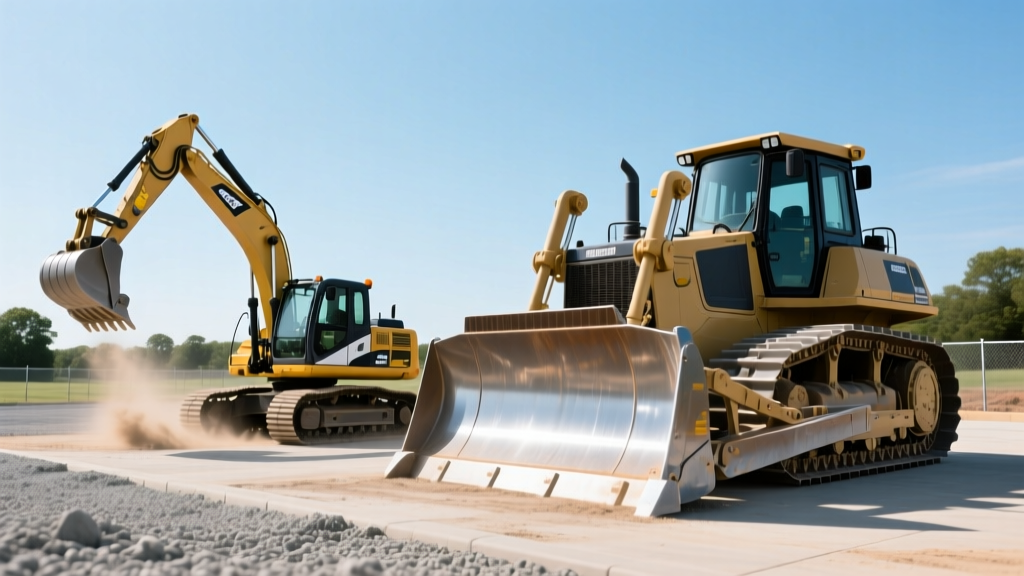
Full-size machines, such as the Caterpillar 336 or Komatsu PC360LC-11, are equipped with advanced 3D GNSS (Global Navigation Satellite System) machine control and high-frequency CAN-bus telematics. These systems stream real-time hydraulic pressure, payload weights, and sub-inch bucket coordinates to cloud dashboards. In contrast, compact equipment like the Bobcat E35z or John Deere 333G typically relies on basic ISO 15143-3 (AEMP 2.0) API integrations, pushing simple GPS geofencing, engine hours, and basic fault codes. Understanding this data divide is critical when structuring a buyout clause, as the proprietary software ecosystems attached to full-size machines often carry hidden post-buyout subscription costs that compact machines avoid.
Electrification Realities: 48V Compact vs. High-Voltage Full-Size
The push toward Battery Electric Heavy Equipment (BEHE) has created a bifurcated market that heavily influences rent-to-own viability. According to the Department of Energy's electric vehicle infrastructure guidelines, site charging capabilities must match the equipment's voltage architecture. Compact electric machines, such as the Volvo ECR25 Electric, utilize 48V to 96V lithium-iron-phosphate (LFP) battery packs. These can be charged overnight using standard 240V/3-phase site receptacles, making the rent-to-own transition seamless for urban contractors.
Full-size electric excavators and wheel loaders, however, require 800V+ architectures and 50kW to 150kW DC fast chargers. If your rent-to-own contract includes a full-size electric machine, you must factor in the $45,000 to $120,000 capital expenditure required to install heavy-duty site transformers and DC charging pedestals. If the machine is returned at the end of the rental term without exercising the purchase option, that infrastructure investment becomes a sunk cost. Therefore, compact electric units present a significantly lower barrier to entry for rent-to-own agreements in 2026.
Financial Framework: Rent to Own Heavy Equipment ROI Matrix
To determine the optimal equipment class for a rent-to-own contract, fleet managers must analyze the utilization threshold against the technology depreciation curve. The following matrix breaks down the real-world financial and technical parameters for compact versus full-size acquisitions.
| Parameter | Compact Class (e.g., 3.5-Ton Mini Ex) | Full-Size Class (e.g., 35-Ton Excavator) | Rent-to-Own Implication |
|---|---|---|---|
| Average Monthly Rent-to-Own Rate | $3,800 - $4,500 | $11,500 - $14,000 | Cash flow constraints favor compact for multi-unit scaling. |
| Estimated Buyout Cost (Month 36) | $65,000 - $85,000 | $280,000 - $340,000 | Full-size requires capital reserve planning for balloon payments. |
| Telematics Hardware | Basic GPS / Geo-fence Module | Integrated 3D GNSS & Payload Scales | Full-size tech offsets higher buyout costs via material savings. |
| Post-Buyout Software Fees | Rarely applicable ($0 - $50/mo) | Common ($150 - $350/mo per machine) | Full-size contracts must negotiate software inclusion in buyout. |
| Undercarriage / Wear Tech | Standard rubber/steel tracks | Automated greasing & wear sensors | Full-size automated maintenance reduces post-buyout OPEX. |
⚠️ Warning: The "Tech-Lock" Trap in Buyout Contracts
Many contractors exercise their rent-to-own purchase option on full-size machines, only to discover that the OEM telematics suite (e.g., Cat Connect, JDLink, Komtrax) is licensed, not owned. Upon title transfer, the OEM may lock the machine's advanced grade-control profiles or remote-fleet management features behind a $250/month proprietary software subscription. Actionable Fix: Before signing a rent-to-own agreement, explicitly add a clause stating that all OEM software licenses, 3D machine control profiles, and diagnostic access codes transfer to the buyer at no additional recurring cost upon final buyout.
Site-Specific Selection Decision Tree
Choosing between compact and full-size equipment for a rent-to-own contract requires evaluating the physical and regulatory constraints of your primary job sites. Use this decision framework to align your acquisition with site realities.
- Assess Ground Bearing Pressure Limits: If you frequently work on finished concrete, landscaping, or utility easements, full-size machines (exerting 8 to 12 psi) will cause costly remediation. Compact track loaders and mini excavators (exerting 3 to 5 psi) are the only viable rent-to-own options here.
- Evaluate Digital Twin Integration Requirements: For large-scale earthmoving projects requiring BIM (Building Information Modeling) integration, full-size machines with factory-installed 3D GNSS masts are mandatory. The data generated by these machines justifies the higher rent-to-own premiums by reducing surveyor costs by up to 40%.
- Check Noise and Emission Ordinances: Urban centers increasingly enforce strict decibel and particulate limits. As highlighted by OSHA construction safety and health guidelines, mitigating noise and exhaust exposure is a regulatory priority. Compact electric machines allow for night-shift work in noise-restricted zones, accelerating the ROI on the rent-to-own contract through extended operational hours.
- Analyze Transport Logistics: Full-size equipment requires lowboy trailers and CDL drivers, adding $1,200+ per mobilization. Compact equipment can often be towed on standard heavy-duty trailers with a Class A or B license, keeping mobilization costs low and protecting the profit margin on the equipment's utilization.
Strategic Recommendations for 2026 Fleet Managers
The decision to rent to own heavy equipment should never be based solely on the monthly payment. It must be viewed as a technology procurement strategy. For contractors focused on high-volume, greenfield earthmoving, full-size machines with integrated AI payload scales and 3D grade control offer a mathematical advantage that easily absorbs the higher buyout costs and software fees. The material savings and reduction in manual surveying pay for the premium.
"The smartest fleet managers in 2026 aren't just buying iron; they are buying data streams. A rent-to-own contract on a full-size excavator is only profitable if the contract guarantees you own the data architecture and the machine control profiles at the end of the term. Otherwise, you're just renting a very expensive computer."
— Fleet Technology Analyst, Association of Equipment Manufacturers (AEM)
Conversely, for utility contractors, landscaping firms, and urban developers, compact equipment represents the superior rent-to-own asset class. The lower capital risk, absence of complex software lock-ins, and compatibility with standard site power for electric models make compact machines highly liquid, easily transferable assets. When drafting your next rent-to-own agreement, mandate a clear technology transfer addendum, verify the battery degradation warranty for electric models, and align the machine's digital capabilities with your firm's actual BIM and telematics infrastructure.