North Georgia Heavy Equipment: Earthmoving Maintenance Schedules
Optimize your North Georgia heavy equipment with tailored earthmoving maintenance schedules designed for red clay, mountainous terrain, and high humidity.
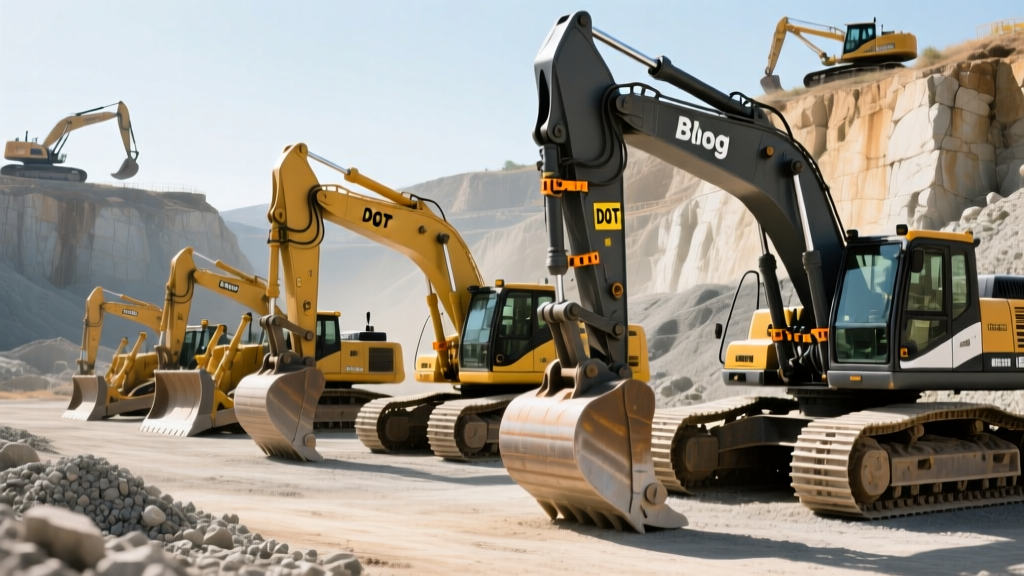
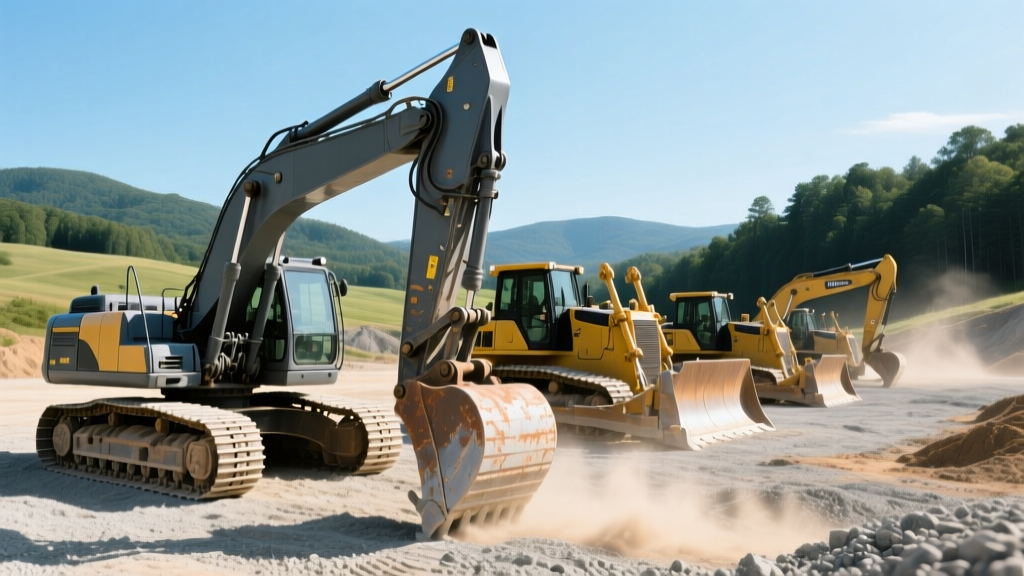
Operating earthmoving machinery in the foothills of the Blue Ridge Mountains presents a unique set of mechanical challenges. North Georgia’s topography is defined by two primary adversaries for heavy machinery: the highly abrasive, moisture-reactive Cecil soil series (commonly known as Georgia red clay) and sustained 15% to 20% operational grades. Standard OEM maintenance schedules are calibrated for average global conditions; applying them blindly to North Georgia heavy equipment fleets guarantees premature component failure and inflated operating costs.
Earthmoving equipment types—specifically hydraulic excavators, crawler dozers, and wheel loaders—require localized service intervals to survive the region's extreme seasonal shifts from saturated spring clays to high-heat, high-humidity summers. Below is a comprehensive, field-tested maintenance and service schedule framework tailored specifically for earthmoving applications in this region.
The Red Clay Factor: Undercarriage & Track Tensioning
Red clay behaves as a severe abrasive when dry and cures to a concrete-like density when packed wet. For crawler dozers (e.g., John Deere 850L, Komatsu D65) and large excavators (e.g., Caterpillar 336 Next Gen), the undercarriage accounts for up to 50% of total machine repair costs. In North Georgia, improper track tensioning accelerates idler and sprocket wear by an estimated 35% compared to sandy loam environments.
CRITICAL FIELD ADJUSTMENT: Standard OEM manuals typically recommend 1 to 1.5 inches of track sag. When operating in wet North Georgia red clay, increase track sag to 2.0 to 2.5 inches. This prevents packed clay from bottoming out the track chain against the carrier rollers, which can snap track links or blow out final drive seals under high-torque tramming loads.Daily Undercarriage Protocol for Earthmoving
- End-of-Shift Washouts: Pressure wash the undercarriage (minimum 2,500 PSI) before the clay dries. Dried Cecil clay trapped between the track chain and sprocket acts as a grinding compound.
- Idler & Roller Inspection: Check for 'flat spots' on bottom rollers. Red clay accelerates roller flange wear; replace rollers when flange thickness drops below 1.2 inches on standard 336-class excavators.
- Rock Guard Clearance: Ensure track guides and rock guards are cleared of debris. Packed clay here forces the track chain outward, causing derailments on side-hill trenching applications.
According to undercarriage wear analyses published by Construction Equipment, failing to clean tracks daily in heavy clay environments reduces undercarriage lifespan from an expected 6,000 hours to fewer than 3,500 hours, resulting in premature replacement costs exceeding $22,000 per machine.
Hydraulic System Integrity in High Humidity
North Georgia summers routinely push relative humidity past 85% while ambient temperatures exceed 90°F. Earthmoving equipment types that rely on high-flow hydraulics—such as wheel loaders (Volvo L120H, Cat 966) moving stockpiles or excavators trenching in wet conditions—are highly susceptible to hydraulic fluid degradation via moisture ingress.
Moisture in hydraulic fluid destroys the zinc dialkyldithiophosphate (ZDDP) anti-wear additives, leading to pump cavitation and valve stiction. Standard OEM oil change intervals (often 4,000 to 5,000 hours) are inadequate for these conditions.
Hydraulic Service Schedule Adjustments
- Desiccant Breather Installation: Replace standard hydraulic tank breathers with color-changing desiccant breathers (e.g., Donaldson or Schroeder models). Replace the desiccant element when it turns from gold to dark green, which in a North Georgia summer may occur every 3 to 4 weeks.
- Fluid Sampling Frequency: Increase oil sampling from the standard 500-hour interval to 250 hours. Target an ISO 4406 cleanliness code of 18/16/13 or better. If water content (measured in ppm) exceeds 500 ppm, initiate immediate offline filtration.
- Cylinder Rod Wipers: Inspect polyurethane wiper seals on boom and stick cylinders weekly. Micro-scratches from dry, abrasive red clay dust bypass standard wipers, dragging silica into the hydraulic system.
'In high-humidity, high-clay environments, the hydraulic tank breather is the most ignored failure point on an earthmoving machine. A $40 desiccant breather saves a $14,000 hydraulic pump.' — Field Service Engineering Report, Fluid Power Systems
Cooling Systems on Mountainous Grades
Earthmoving applications in counties like Dawson, Lumpkin, and White involve continuous operation on steep inclines. Operating a 40-ton articulated dump truck or a large crawler dozer on a 15% grade forces the engine to operate at high load and low ground speed, drastically reducing ram-air cooling through the radiator cores.
Furthermore, North Georgia's dense pine and oak forests mean radiator cores are constantly bombarded with pine needles, cottonwood, and red dust, creating an insulating layer that triggers engine derates.
Cooling System Maintenance Matrix
| Component | Standard OEM Interval | North Georgia Adjusted Interval | Specific Action Required |
|---|---|---|---|
| Radiator Cores | Weekly blowout | Daily (End of Shift) | Use compressed air (max 30 PSI) from engine side outward to prevent packing pine needles deeper into fins. |
| Fan Belts | 500 Hours | 250 Hours | Check tension and micro-cracking. High ambient heat and continuous high-RPM fan operation accelerate rubber degradation. |
| Coolant Concentration | Annually | Bi-Annually (Spring/Fall) | Test with a refractometer. Maintain 50/50 OAT coolant mix to prevent cavitation erosion in wet sleeve liners under heavy grade loads. |
| Reversing Fan Settings | N/A | Every 2 Hours (Automated) | Program ECM to trigger hydraulic reversing fan cycles every 2 hours to purge forest debris from the cooling package. |
Linkage and Pivot Greasing in Abrasive Dust
During the late summer and autumn, North Georgia experiences severe dry spells where red clay turns into a fine, talc-like dust. This dust infiltrates the pivot points of wheel loader buckets and excavator boom/stick joints. Standard greasing intervals are insufficient to purge this abrasive material from the bushing cavities.
For a standard Cat 966 Wheel Loader operating in a dry clay borrow pit, the bucket linkage pins and bushings must be greased every 8 hours (down from the standard 10-12 hours). Use an NLGI #2 lithium-complex grease with 3% to 5% molybdenum disulfide (moly) content. The moly provides a solid film lubricant that protects the pin surface even when the abrasive clay dust breaches the primary lip seals.
Pro-Tip for Auto-Lube Systems: If your earthmoving fleet utilizes automatic lubrication systems, increase the system's cycle frequency by 20% during dry months. More importantly, inspect the distribution blocks weekly. Red dust mixed with slight grease weeping creates a grinding paste that can clog secondary metering valves, leaving critical pivot points completely starved of lubrication without triggering a cab alarm.Troubleshooting Earthmoving Hydraulic Overheating
When excavators or dozers overheat during heavy trenching or ripping applications in North Georgia's summer climate, operators often misdiagnose the root cause. Use this decision framework before authorizing expensive component replacements:
- Symptom: Hydraulic oil temp exceeds 210°F (99°C) under load, but engine coolant temp remains normal.
- Cause 1: Hydraulic oil cooler core clogged with red dust/cottonwood on the exterior. Fix: Wash with low-pressure water and degreaser; do not use high-pressure washers which will bend the cooling fins.
- Cause 2: Internal relief valve bypassing. Fix: Use a thermal imaging camera on the main control valve bank. A localized hot spot indicates a spool stuck open or a damaged load-check valve continuously dumping high-pressure oil back to the tank.
- Symptom: Both engine coolant and hydraulic temps spike simultaneously on uphill grades.
- Cause: Fan pump or fan motor degradation. The hydraulic fan drive is not achieving maximum RPM to pull air through the stacked cooler package. Fix: Test fan pump pressure and flow. Replace the fan motor if flow drops below 85% of OEM spec.
Adhering to these localized, terrain-specific maintenance schedules ensures that earthmoving equipment types deployed across North Georgia maintain peak productivity, minimize unscheduled downtime, and preserve resale value in a demanding regional market. For further reading on extending component life in severe conditions, reference the undercarriage management guidelines provided by For Construction Pros and the operational wear analyses from Equipment World.